Malaria’s vaccine breakthrough moment is here, but a funding gap and fragile systems risk stalling lifesaving gains just as they begin to take hold.
At dawn in Western Kenya, before the first rooster breaks the silence, mothers are already awake, tying babies to their backs and preparing for another quiet battle against one of Africa’s oldest killers. Malaria does not arrive with drama. It begins with a fever, a child refusing porridge, a body suddenly too weak to stand. By nightfall, it can become a race against time.
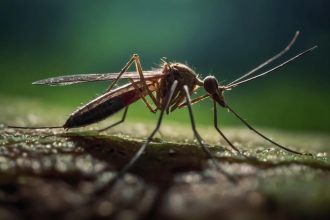
For decades, this has been the rhythm of life across much of Africa, where rainy seasons bring long hospital queues and mosquito bites carry the threat of funeral songs. Malaria remains endemic in 80 countries worldwide, half of them in Africa. In 2024, just five countries, Nigeria, the Democratic Republic of Congo (DRC), Uganda, Ethiopia and Mozambique, accounted for half of all global malaria cases.
It is a disease so familiar that many families know its symptoms before they know its science. But for the first time in generations, the story is shifting.
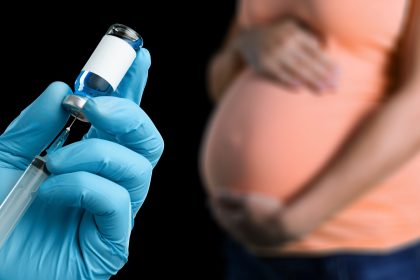
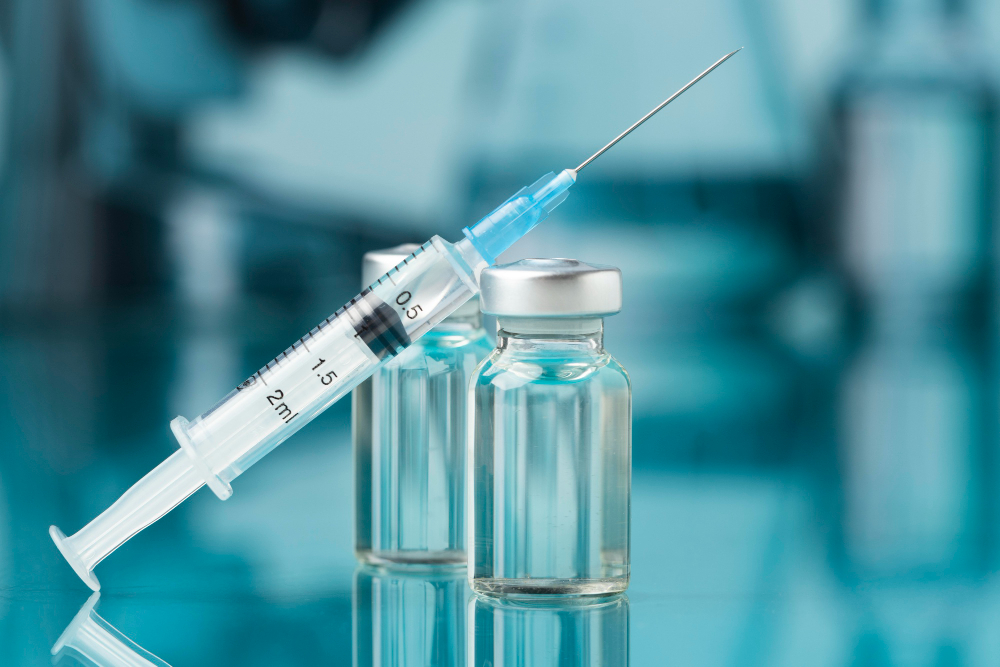
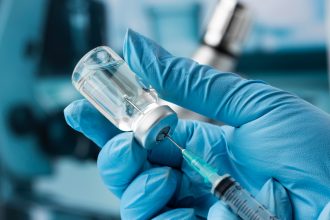
From clinics in Kisumu County to Cameroon, from Ghana to Burkina Faso, tiny syringes are carrying something larger than medicine. The malaria vaccine, once a distant scientific ambition, is now becoming part of routine childhood immunisation, and early signs suggest it is beginning to change lives.
Through the Gavi-supported malaria vaccine programme, implemented in partnership with the World Health Organisation (WHO), UNICEF and national governments, more than 52 million doses have been delivered since 2023 in some of the world’s most fragile and high-burden settings.
After decades of research, RTS,S became the first malaria vaccine ever recommended for widespread use
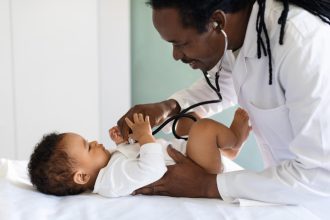
Early reports from Kenya, Malawi, Ghana and Cameroon show reduced severe malaria and fewer hospital admissions among children, confirming what earlier pilot studies had suggested: the vaccine works not only in controlled trials, but in crowded villages, flood-prone towns and overstretched rural hospitals where malaria kills fastest.
The rollout centres on two vaccines: RTS,S/AS01 and R21/Matrix-M. Both target Plasmodium falciparum, the deadliest malaria parasite and the most prevalent in Africa. After decades of research, RTS,S became the first malaria vaccine ever recommended for widespread use, followed later by R21, which showed similar protection with promising seasonal performance.
In phase three clinical trials, both vaccines reduced malaria cases by more than 50 per cent in the first year of life, a critical window when children are most vulnerable. When administered seasonally in high-transmission areas, effectiveness rose to around 75 per cent. A booster dose in the second year extends protection, making the vaccines suitable for routine childhood immunisation.
In Burkina Faso, the transformation has been striking. The country introduced the malaria vaccine nationwide across all 70 health districts. Combined with bed nets, seasonal chemoprevention, sanitation campaigns and mosquito breeding site control, the results have been dramatic. Between 2024 and 2025, reported malaria cases dropped by 32 per cent. Cases among children under five fell sharply, while malaria-related child deaths were nearly halved.
For families already stretched by fragile incomes, the financial relief has also been significant. Initial estimates from Burkina Faso’s Ministry of Health indicate households saved more than US$26.6 million (Ksh3.4 billion) in direct healthcare costs.
For a continent where malaria was long treated as an unavoidable inheritance, the stakes remain high
“For decades, malaria placed a heavy burden on Burkina Faso’s health system and on families, especially during the rainy season,” said Dr Robert Lucien Jean-Claude Kargougou, Burkina Faso’s Minister of Health. “Thanks to strong political commitment and the expansion of malaria vaccination to all 70 health districts, combined with the distribution of bed nets, seasonal chemoprevention and community mobilisation for sanitation and elimination of mosquito breeding sites, we are recording a drastic and historic decline in cases and deaths, fewer hospitalisations, and real savings in healthcare costs.”
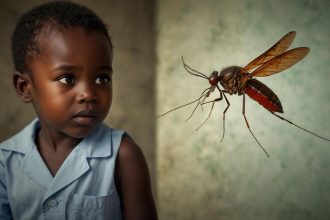
For a continent where malaria has long been treated as an unavoidable inheritance, the stakes remain high. Children under five, who account for the vast majority of malaria deaths, are particularly vulnerable. According to the WHO, malaria killed an estimated 432,000 children in Africa in 2023 alone. In 2024, Africa recorded more than 270 million cases, representing 96 per cent of the global total, and nearly 595,000 deaths, representing 97 per cent of global malaria mortality.
Evidence also shows that nearly three-quarters of infant and early childhood deaths are not caused by a single illness but by a dangerous combination of malaria, malnutrition and pneumonia, among others.
The vaccine does not erase that burden overnight. It is not a miracle cure. But it offers something often missing in low-resource settings: prevention before panic.
“HPV and malaria vaccines have enabled us to open up new frontiers in healthcare against one of Africa’s deadliest cancers and oldest diseases,” said Thabani Maphosa, Chief Country Delivery Officer at Gavi, the Vaccine Alliance. “The success of these programmes is testament to the commitment and hard work of governments, partners and healthcare workers, and a reflection of strong community trust in the ability of vaccines to save lives and protect families. Today, these hard-won gains are under threat, leaving hundreds of thousands of children in danger. The world must continue to prioritise investment in immunisation.”
That threat is not scientific but financial. The malaria programme currently faces a nearly 30 per cent budget shortfall, forcing a scale-back at the very moment momentum is building. Without additional domestic and donor financing, progress risks slowing before it becomes permanent.
Across Africa, locally driven, evidence-based interventions are already changing outcomes
In 15 countries across Sub-Saharan Africa, life expectancy has climbed from 49 to 61 years while under-five mortality has been cut by half. But that progress now stands on fragile ground. With funding gaps widening, Gavi estimates that by the end of the decade, up to 600,000 fewer lives could be saved as countries are forced to choose which vaccines they can afford and which they cannot.
Across the continent, locally driven, evidence-based interventions are already changing outcomes. Kenya offers one of the clearest examples. At the Kenya Medical Research Institute (KEMRI), working alongside the KEMRI-Wellcome Trust Research Programme, researchers have built an integrated model where science is not separated from the people it is meant to serve.
Communities are treated not as passive subjects but as partners. Families, schools and frontline health workers are involved from the beginning, ensuring studies are culturally grounded and solutions are practical. That trust improves data quality and ensures evidence does not remain trapped in reports.
Through initiatives such as the Child Health and Mortality Prevention Surveillance, real-time data is already shaping decisions on child mortality, antimicrobial resistance and hidden causes of death. Advances in vaccines and immunisation strategies helped save at least 1.8 million lives across Africa in 2023, a reminder that science, when paired with delivery, can mean the difference between crisis and survival.
In Africa, vaccines are delivering some of the most effective and high-impact interventions
The ambition ahead is vast. Ten more African countries plan to introduce the HPV vaccine with Gavi support by 2030. Five more are expected to introduce the malaria vaccine within the same period. The goal is to reach 50 million children across Africa with a full course of malaria vaccines by the end of the decade.
Between 2026 and 2030, Gavi will hand over more than 90 per cent of its procurement decisions directly to countries, allowing governments to prioritise based on their own needs. But with that autonomy comes difficult trade-offs.
“In Africa, vaccines are delivering some of the most effective and high-impact interventions we have,” said Dr Mohamed Janabi, WHO Regional Director for Africa. “HPV vaccination offers exceptional public health returns and brings us closer to cervical cancer elimination. At the same time, the malaria response is entering a new phase driven by country ownership. Ending these diseases is achievable when we act decisively, together.”