

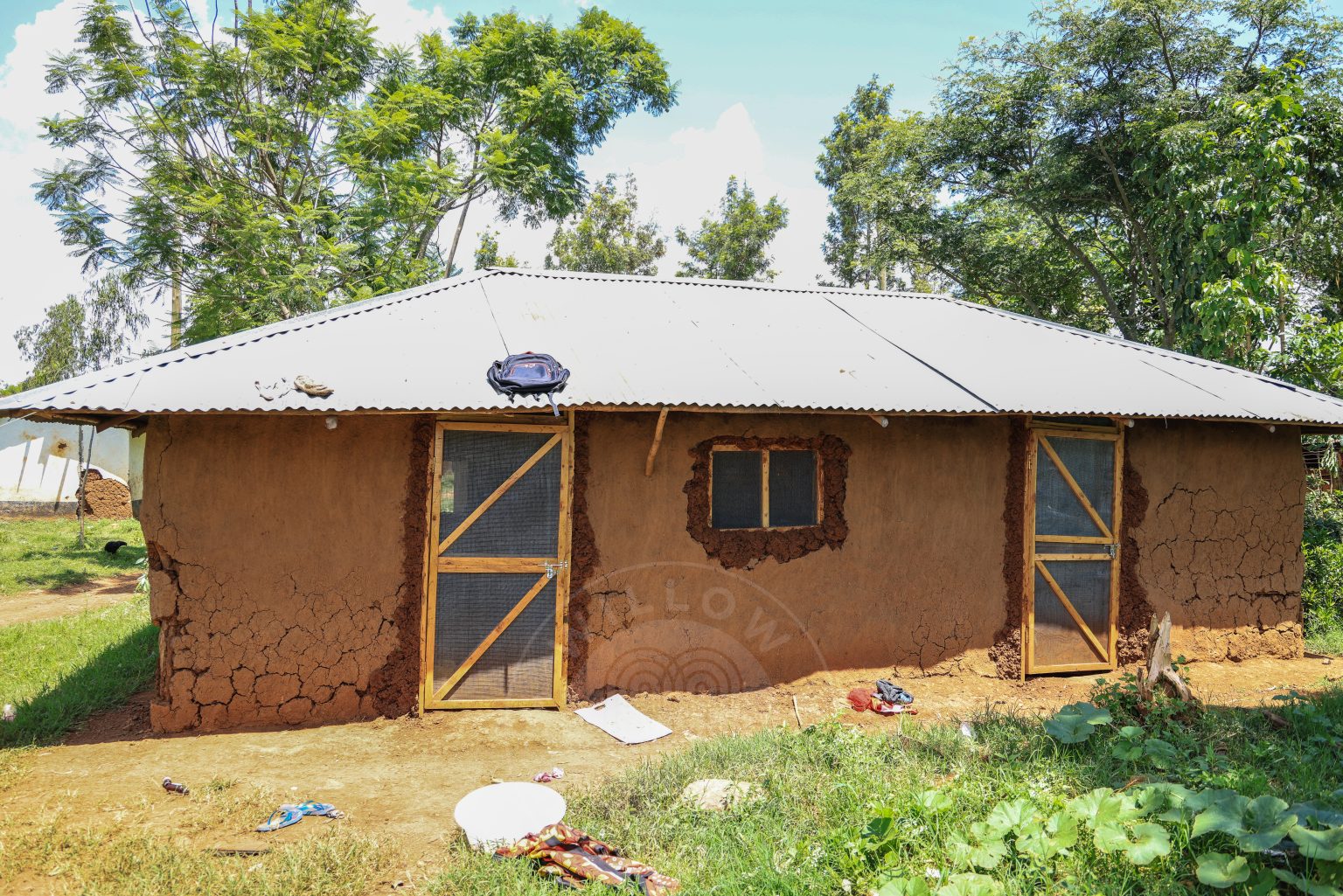

Researchers from KEMRI blocked mosquito entry using mesh on open eaves, doors, and windows, and tested simple cooling measures such as reflective roof paint, papyrus mat ceilings, and better ventilation. All materials were locally available, making the approach practical and scalable.
As evening descends, Kanyamaji village near Lake Kanyaboli falls into an old and fearful rhythm. For generations, families have prepared for night by burning leaves and dung, a smoky, desperate ritual against malaria, which thrives, striking young and old in the rising heat and humidity, thanks to a changing climate.
Rising temperatures and unpredictable rains make mosquito breeding easier, among the worst hit areas being Siaya County, where malaria prevalence rate stands at 26 per cent against the national average of six per cent. Some health facilities have reported test positivity rates of between 30 per cent and 70 per cent.
Siaya is part of a Western Kenya belt, including Busia, Kakamega, Migori and Kisumu, that accounts for a large share of cases nationwide.
In 2023, Kenya recorded about 3.3 million malaria cases, with transmission concentrated in lake and coastal counties such as Siaya, with a malaria prevalence rate of 26%, far above the national average of about 6%. Some health facilities have reported test positivity rates of between 30% and 70%. Siaya is part of a Western Kenya belt, including Busia, Kakamega, Migori and Kisumu, that accounts for a large share of cases nationwide.
But now, there’s hope from new housing solutions that keep mosquitoes out and families safer.
“From around 7pm, we used to light smoke so that we could sleep well,” recalls Kamlus Owuor Olendo, a fisherman and farmer who has lived here most of his life. “Mosquitoes were very many.”
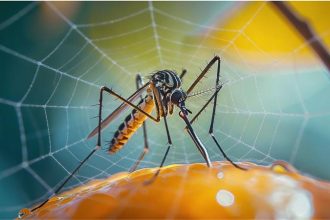
In this lakeside community, malaria was once a constant presence. Children often fell sick. Adults missed work. Money meant for school fees or livestock was consumed by hospital bills. But inside Olendo’s house today, the air feels different. It is cooler. Quieter. And noticeably free of mosquitoes.
“Since getting this door made, together with closing the gaps around the house with the people from KEMRI, I do not even see mosquitoes in the house,” explains Olendo. “There are no small openings for them to enter.”
Olendo has not been treated for malaria since his house was modified, including having the roof painted white, with the effect being that “I sit outside and do not feel heat. Inside the house, I also do not feel heat” even in January, which is one of the hottest months of the year.
This modification has kept mosquitoes out, and Olendo hardly contracts malaria. “I only went to the hospital for a check-up after experiencing persistent back pain,” he says.
The modifications in Olendo’s house are part of a deceptively simple research by scientists from the Kenya Medical Research Institute (KEMRI): Instead of relying on mosquito nets and sprays, why not stop mosquitoes from entering houses in the first place?
To answer this question, researchers carried out a pilot randomised controlled study in 40 households in Siaya County.

They tested four housing approaches: reflective cool roofs, improved cross-ventilation, locally made mat ceilings and unmodified control homes. All intervention houses were fully screened at doors, windows and eaves to prevent mosquito entry.
The study found that cool-roof technology of using white reflective paint on metal roofs delivered the strongest results, reducing daytime indoor heat by 3.3°C and night-time temperatures by 2.4°C. Mat ceilings provided moderate cooling, while cross-ventilation alone had limited impact due to inconsistent window-opening practices.
Crucially, house screening reduced female Anopheles funestus mosquitoes, the main malaria vectors, by 77 per cent. It also achieved a 58 per cent reduction in Culex mosquitoes, confirming that mosquito proofing and improved thermal comfort can be achieved at the same time.
“A bed net only protects you when you are under it,” explains Dr Bernard Abong’o, a senior researcher at KEMRI’s Centre for Global Health Research in Kisumu. “Before you go to bed, and when you wake up in the morning, you are exposed.”
“Our study is about stopping mosquitoes from coming into the house altogether,” Dr Abong’o says. “In effect, making the whole house function like a bed net.”
Researchers sealed mosquitoes’ entry points open eaves, gaps in doors, and unscreened windows, using mesh without insecticide. They also tested non-electric cooling methods, including white reflective paint on metal roofs, papyrus reed mat ceilings, and improved cross-ventilation. All materials used were locally available, making the interventions practical and scalable.
“We are working with rural communities that do not have access to electricity or air conditioning,” Dr Abong’o said. “So, the solutions had to be affordable and practical.”
The house modification project has other benefits beyond health.

Michael Otieno, another resident from Kanyamaji village, says houses still had mosquitoes even with mosquito nets, which are also not practical all the time, considering “You can’t put kids inside a mosquito net every moment” but “In a protected house like this, you can do your things peacefully…as there are very few porous spaces where mosquitoes can enter.”
Rose Akinyi Otieno, a grandmother in Kanyamaji says the changes are visible at the community level as residents are not as sick from malaria as before and thus hardly spend money on hospitals and medication.
However, she noted a growing divide, as residents who are not part of the KEMRI project of building doors and closing roof spaces suffer the menace of mosquitoes in their houses, even with nets.
This research is timely, as climate change is reshaping disease patterns and worsening two key problems in Africa: it allows mosquitoes to breed more easily and makes many homes dangerously hot, especially those with metal roofs.
“Much of exposure to rising temperatures happens indoors,” Dr Abong’o explains. “And people spend most of their time inside buildings.”
In many rural areas, fans and air conditioners aren’t an option due to unreliable electricity. Dr Abong’o says that’s why simple, electricity-free cooling methods are so important. Using white roofs, better airflow, and ceilings made from local materials can make homes much cooler.
Prof Elijah Songok, Acting Director General of KEMRI, has praised the research project.
He states that it “Is the kind of science Africa needs-practical, locally grounded, and immediately actionable.” He says its success proves that “By rethinking how we build our homes, we can protect families from the health threats of climate change while strengthening malaria control. This research provides a clear pathway for policy, investment, and large-scale implementation.”
Roland Pearson, Vice President and Executive Director, said: “Housing is at the centre of today’s greatest challenges: climate, health, gender equality, and urban growth. This breakthrough demonstrates that Habitat for Humanity can catalyse inclusive housing markets that serve everyone, especially the most vulnerable, by scaling proven solutions that benefit millions more.”
Building on these results, KEMRI is now leading a large cluster-randomised controlled trial in Siaya and Kwale counties to assess long-term health, economic, and climate benefits, alongside national policy engagement on healthy housing standards.
Housing, mosquito cases and malaria impact and global evidence – Where similar projects have been tested
Researchers say the idea of using housing design as a malaria-control tool is not new and has been tested in several African countries over the past two decades, with measurable results.
In The Gambia, one of the largest and most cited trials was carried out between 2006 and 2007.
According to a randomised controlled study published in Malaria Journal and archived by the U.S. National Institutes of Health (NIH), researchers found that homes fitted with full screening on doors, windows and eaves recorded 59 per cent fewer malaria-carrying mosquitoes indoors than unscreened houses.
The study also reported that children living in screened homes were about 50 per cent less likely to suffer from malaria-related anaemia, a widely used indicator of malaria burden.
The authors said the findings showed that “simple house modifications can substantially reduce exposure to malaria vectors”.
In Uganda, similar conclusions were drawn from observational research published in PLOS ONE.
According to the study, children living in modern, well-constructed houses had around 56 per cent lower odds of malaria infection compared with those in traditional homes.
Researchers attributed the difference largely to reduced mosquito entry, noting that “housing quality plays a critical role in malaria risk”.
Evidence from Cameroon and Tanzania further supports this approach. According to systematic reviews published in Malaria Journal, studies from both countries showed that screening houses and closing open eaves significantly reduced indoor mosquito densities and human–vector contact.
Scientists concluded that improved housing design should be considered a complementary malaria-control strategy alongside bed nets and spraying.
To place the findings in context, they pointed to broader evidence.
A 2022 Cochrane review of housing-modification trials across sub-Saharan Africa found that such interventions were associated with about a 32% reduction in malaria parasite prevalence and 30% lower moderate-to-severe anaemia, though the review noted that results on clinical malaria incidence were mixed, with some trials showing reductions and others not.
“The evidence is strong that housing improvements reduce exposure,” the review concluded, “but the impact on clinical disease varies by setting.”
How malaria was eliminated in some first-world countries
Public health historians say malaria was eliminated in several high-income countries long before modern vaccines, largely through aggressive vector control, environmental management and improved housing.
In the United States, researchers at the U.S. Centers for Disease Control and Prevention (CDC) note that malaria was once endemic across the southern states.
According to the CDC, the launch of the National Malaria Eradication Program in 1947 combined indoor residual spraying with DDT (dichloro-diphenyl-trichloroethane), large-scale drainage of mosquito breeding sites, improved housing, and active case surveillance.
By 1951, indigenous malaria transmission had been eliminated. “The coordinated use of insecticides, environmental management and public-health infrastructure proved decisive,” the CDC has reported.
In Greece, malaria was widespread well into the early 20th century, affecting both rural and urban populations. According to historical reviews published by the World Health Organization (WHO) and European public-health agencies, elimination was achieved through systematic mosquito control, wetland drainage, insecticide spraying and improved living conditions, with local transmission disappearing by the 1970s.
Researchers note that economic development and better housing have reduced human exposure to mosquitoes over time.
In Italy, malaria was once responsible for hundreds of thousands of cases annually. According to historians cited by the National Institutes of Health (NIH), nationwide anti-malaria campaigns in the mid-20th century, combining wetland reclamation, house screening, insecticide use and improved sanitation, led to the disease’s disappearance. By the late 1950s, Italy had eliminated endemic malaria.
Experts say these experiences show that malaria elimination has historically depended as much on housing and environment as on medicine, a lesson now being revisited in malaria-endemic regions facing climate change.
We believe in the free flow of information
Republish our articles for free, online or in print, under Creative Commons licence.