


Kenya hopes to reduce maternal mortality and end preventable newborn deaths by 2030. Yet reality remains complex. Distance to facilities, overstretched health systems, financial constraints and gaps in timely information continue to shape outcomes.
Late one evening in Busia County, a heavily pregnant woman paced her home, pausing now and then as waves of pain tightened across her lower back and abdomen. She told herself it could wait. There were children to feed, chores to finish, and the quiet calculation many mothers make: whether the journey to a health facility is worth the cost, the time, the disruption.
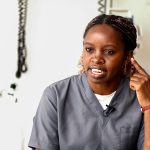
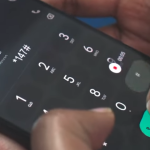
But the pain kept returning, sharper each time. Unsure and alone with her thoughts, she picked up her phone and called a telehealth hotline. On the other end, a clinician listened carefully, asking questions, piecing together symptoms the woman herself had dismissed. The conclusion was immediate: she was already in labour.

“The doctor told the mother to go to the facility, and within a few hours, the mother delivered,” recalled Edna Anab, Global Innovation Manager at Living Goods, during a session at the 2026 International Maternal and Newborn Health Conference (IMNHC) in Nairobi. Then she posed the question that lingered over the room: what would have happened if that call had never been made?
That moment involving one woman, one phone call, and one life-changing decision captures the wider challenge facing maternal and newborn health systems: the gap between uncertainty at home and timely medical care. It is a gap that continues to cost lives, even as global and national commitments intensify.
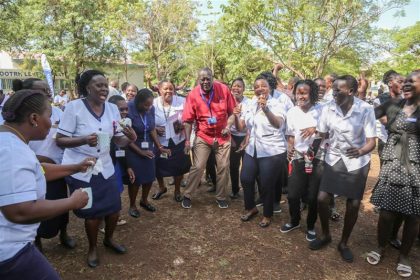
Held under the theme “Moving Forward Together,” the Nairobi conference brought together governments, health experts and innovators seeking to accelerate progress in ending preventable maternal and newborn deaths. Opening the meeting, Health Cabinet Secretary Aden Duale framed the urgency in stark human terms, calling it “a shared declaration that no woman should die while giving life, and that every newborn must have the chance not only to survive, but to thrive.”
This ambition aligns with Sustainable Development Goal 3, which aims to reduce maternal mortality and end preventable newborn deaths by 2030. Yet in many parts of Kenya, particularly underserved communities, the reality remains complex. Distance to facilities, overstretched health systems, financial constraints and gaps in timely information continue to shape outcomes.
Frontline workers often operate with constrained clinical decision support, transport challenges, supervision gaps and weak referral systems
In recent years, Kenya has made notable progress in maternal and child health. However, pregnancy and childbirth still carry significant risks, especially for women in low-resource settings. Community Health Providers (CHPs) form the backbone of frontline care, registering pregnancies, promoting antenatal visits, conducting home check-ins and identifying danger signs. But their reach, while critical, is not limitless.

According to Living Goods, frontline workers often operate with constrained clinical decision support, transport challenges, supervision gaps and weak referral systems. These barriers can delay diagnosis and reduce the chances of timely intervention.
For mothers, these gaps translate into deeply personal decisions. A woman may ignore swelling, assuming it is normal. Another may delay seeking care because she cannot afford transport. Some rely on past pregnancy experiences, believing they can manage complications on their own. Others simply need reassurance but have no one to ask.
As Duale emphasised, “Maternal mortality remains unacceptably high. Newborn deaths and stillbirths have persisted.” Behind those statistics, he added, are “a name, a face, a family and a future lost.”
It is within this space, between doubt and decision, that telehealth is beginning to make a measurable difference.
In Malaba, Busia County, Living Goods partnered with county health authorities, HealthX Africa and the Children’s Investment Fund Foundation to pilot a hybrid telehealth model designed not to replace existing systems, but to strengthen them. The approach combined digital access with community-based care.

Women enrolled in the program received access to a 24-hour clinician hotline, SMS reminders, and self-triage tools via USSD and Interactive Voice Response. At the same time, CHPs continued their in-person visits, referrals and follow-ups, ensuring continuity of care.
The pilot initially aimed to reach 246 households, based on expected monthly pregnancy registrations, but went on to exceed that target significantly.
“We were able to surpass that target, and we reached up to 388 households,” said Marlyn Ochieng’ from Monitoring, Evaluation and Learning at Living Goods.
In total, the program reached 521 clients, including 288 pregnant women and newborns enrolled after delivery. About half of the households actively used the service.
“We saw close to a 50 per cent adoption rate,” Ochieng’ noted. “That is 189 mothers engaging with the telehealth platform, either by calling doctors through the toll-free number or sending messages.”
The strongest adopters were younger women, particularly those in their twenties and in their second or third trimesters
For many digital health initiatives, uptake is a major hurdle. In Busia, usage reflected genuine need. Women turned to the service because it offered immediate, practical support.
The strongest adopters were younger women, particularly those in their twenties and in their second or third trimesters. Many were either first-time mothers or had experienced complications in previous pregnancies.

“Either because you’re a first-time mom and unsure what the journey will look like, or because you’ve had complications before and want to connect with doctors,” Ochieng explained.
In contrast, some non-users were older mothers with multiple children who felt confident relying on their own experience. Access to mobile phones also influenced participation; women without personal or consistent phone access were less likely to engage.
Trust, however, proved to be the most powerful driver of growth. Word-of-mouth recommendations spread quickly among expectant mothers.
“Once a woman is registered, they would tell others, ‘Have you been registered on this platform? It’s good, we talked to doctors,” Ochieng’ said.
Over 15 months, the platform logged 1,108 calls from 308 mothers and caregivers. The data revealed patterns often invisible in traditional systems. Nearly a quarter, or 23 per cent, of clinical calls occurred after normal working hours, when many lower-level facilities are closed or understaffed.

Almost half (49 per cent) of cases were classified as moderate to high risk for mothers or infants. Yet 64 per cent of concerns were resolved immediately without requiring a referral.
“This is very important,” Ochieng’ said. “Most community-level facilities are level two, and after five, you have to access a referral facility. This system helped bridge that gap.”
A common concern with telemedicine is whether it discourages in-person care. In Busia, the opposite was observed.
“For the services we provide through telehealth, we are not replacing a mother going to the facility,” Anab clarified. “After speaking with doctors, they are still encouraged to visit the clinic.”
Clinicians routinely checked on antenatal attendance and emphasised completing recommended visits. CHPs maintained their follow-ups, ensuring continuity. The result was improved care-seeking behaviour, with 64 per cent of users showing better antenatal and postnatal attendance.
Technology offers clinical backup while preserving the human connection that underpins trust
Tariq Taye, Manager for Maternal, Child Health and Nutrition at the Children’s Investment Fund Foundation, described telehealth as a complementary tool rather than a substitute.
“The goal is to bring care closer to the community and make people owners of their own health,” he said. “It’s one of the tools in our arsenal to decentralise care and make it more accessible.”

Through filtering cases by resolving minor concerns remotely, while directing high-risk cases to facilities, the system helps reduce unnecessary visits while ensuring urgent needs are addressed.
Crucially, the model strengthens rather than sidelines community health workers. Technology enhances their reach, offering clinical backup while preserving the human connection that underpins trust.
This hybrid approach aligns with Kenya’s broader digital health ambitions, which sit at the intersection of improving health outcomes and advancing gender equity. Systems that combine local presence with rapid clinical support are likely to be the most effective.
Kenya is not alone in exploring this path. In Malawi, the widely recognised Chipatala Cha pa Foni (Health Centre by Phone) program has demonstrated the potential of scaled telehealth. Through a free hotline and SMS service, it provides health advice, referrals and reminders nationwide. During the Covid-19 pandemic, it became a trusted source of information while reducing unnecessary facility visits.
Reflecting on its impact last year, VillageReach President and CEO Dr Ahmed Ogwell noted that the success of the telehealth model is measured not just in numbers, but in outcomes: children vaccinated on time, mothers receiving safe care, and lives improved.

For Kenya, Malawi offers a blueprint for scaling beyond pilot projects. The Busia experience shows what is possible in improved referrals, extended access to care, and faster clinical guidance. The next step is integration into policy and sustained investment.
Duale outlined key priorities moving forward: sustainable financing, workforce strengthening, reliable medical supplies, strategic partnerships and digital transformation.
“What gets measured gets done, and what gets done saves lives,” he told delegates.
The Busia pilot brings that principle to life. It demonstrates that sometimes, the difference between risk and survival is not a distant hospital or advanced equipment, but a timely conversation.
The Busia pilot proves that it is possible, offering a practical, numbers-driven example of the principle. Sometimes, the barrier to saving lives is not a nonexistent health facility, but rather a missed conversation. A woman in pain assumes she can hold on and wait. A newborn’s fever is dismissed. A danger sign goes unnoticed in the dark. Then someone answers the phone, and from one call, a whole journey of care can begin.