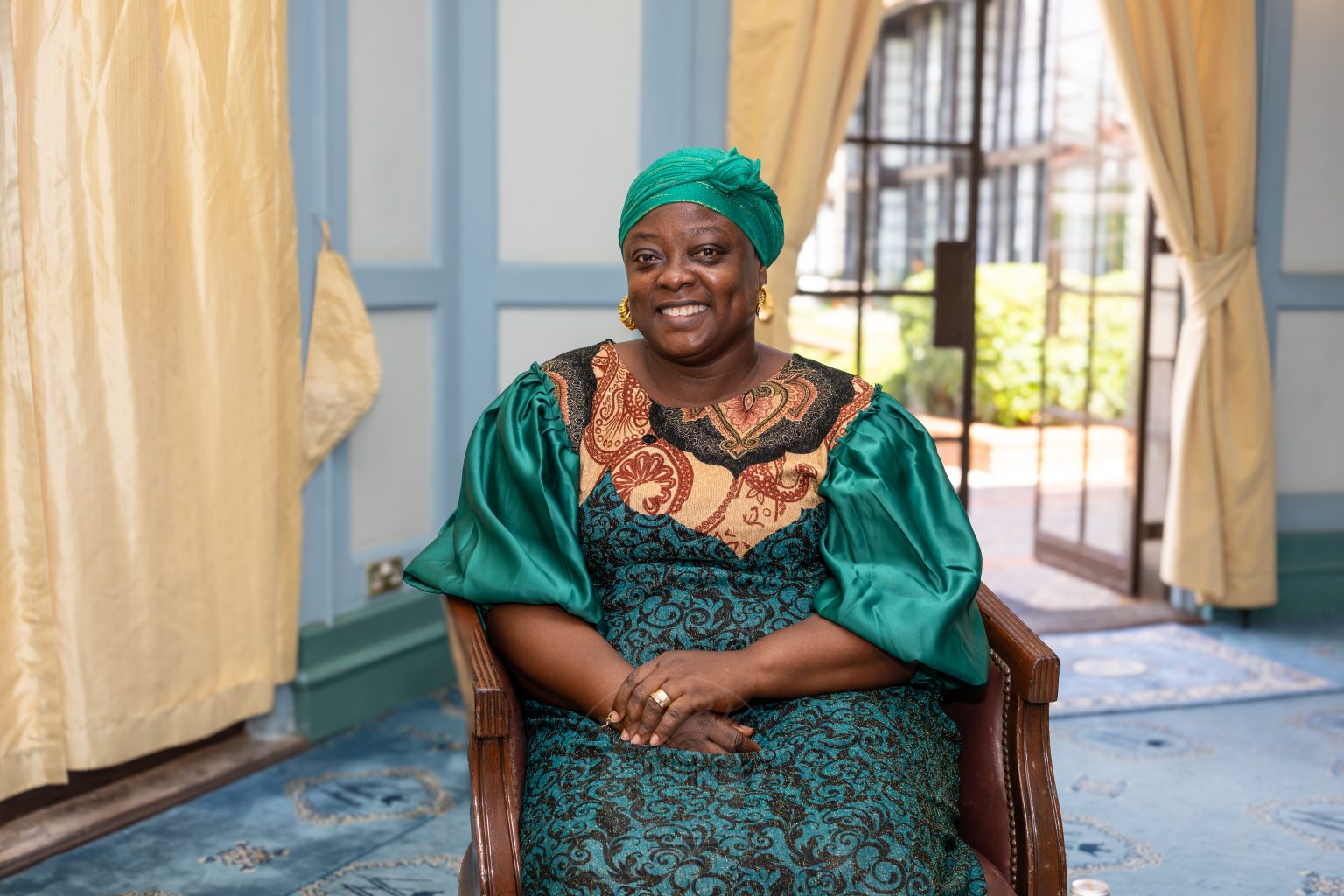

Dr Airat Bakare watched antiretroviral drugs scar fertility. Now she’s walking into schools with nothing but truth, a phone and a low-cost, ground-level revolution.
For many girls and women across Africa, conversations around sexual and reproductive health are buried beneath silence, stigma and cultural restrictions. Young girls grow up without accurate information about sexually transmitted infections (STIs), HIV or fertility, and often without knowing where to seek help. Many women only discover infections when complications have already set in, while others live with HIV without ever knowing their status.
The scale of the problem is stark. According to the World Health Organization (WHO), the African region had about 25.6 million people living with HIV in 2022, with women and adolescent girls among the most affected. Young women aged 15 to 24 are especially vulnerable due to gender inequality, limited access to sexual and reproductive health services, and exposure to sexual violence.
Globally, about 4,000 adolescent girls and young women are newly infected with HIV every week, with 3,100 of those infections occurring in sub-Saharan Africa alone. HIV incidence and other STIs remain particularly high in East and Southern Africa, where access to integrated prevention and treatment services is inadequate.
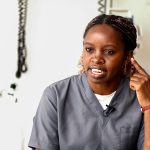
It is this reality that Dr Airat Adeola Bakare, a lecturer and researcher at the Department of Anatomy, College of Medicine, University of Lagos, Nigeria, is working to change. Through a community-centred, low-cost intervention that combines reproductive health education, early disease detection and access to care, Dr Bakare is translating years of laboratory research into practical action for women and girls in underserved communities.
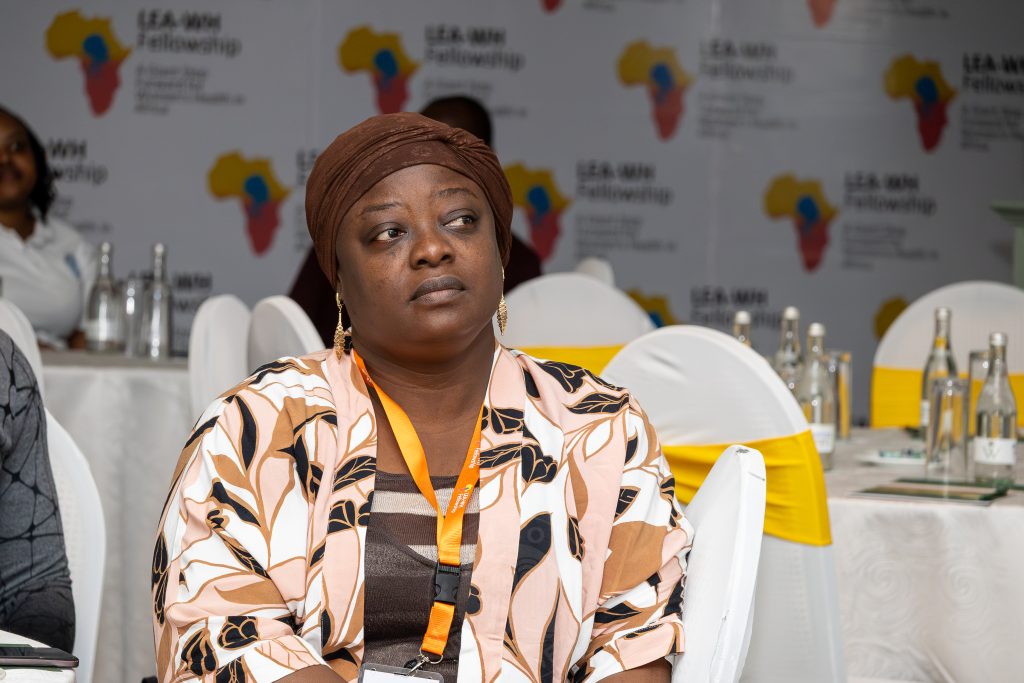
Her project, titled “Integrating Reproductive Health Education, Early Detection and Care for STI and HIV Infections among Girls and Women in Nigeria,” is being developed under the Leadership for Innovation and Excellence in Accelerating Research on Women’s Health (LEA-WH) Fellowship Programme, run by the National Academy of Medicine in partnership with the Kenya Medical Research Institute (KEMRI).
I have been able to establish that antiretroviral drugs affect reproductive organs
“My work centres around HIV and, by extension, sexually transmitted diseases. Whether we like it or not, in Africa, HIV is there. It is prevalent, and we need to do something about it,” Dr Bakare said.
Her research background focuses on understanding how antiretroviral drugs affect fertility and reproductive organs. The LEA-WH fellowship has given her the platform to bring those findings out of the laboratory and into communities. “I have been able to establish that antiretroviral drugs affect reproductive organs. This is what I’m translating into community impact,” she explained.
Unlike conventional HIV interventions that tend to treat awareness, testing and care as separate activities, Dr Bakare’s model connects them into a single coordinated system. The project integrates reproductive health literacy, peer mentorship, digital education tools, early testing and referral pathways to treatment and professional support.
She argues that information alone is not enough if women and girls cannot detect infections early or access care without fear. “A lot of people are not even ready to come out that they have this infection. A lot of people are positive, but they are not even aware of it,” she said. “So, if people are highly educated or highly informed on how to detect it early enough and seek care when they are down with it, it is going to help curb the spread of this disease.”
The project targets two overlapping groups: adolescent girls and women of reproductive age. For younger girls, the intervention focuses on foundational reproductive health knowledge, STI and HIV awareness, and prevention, delivered in age-appropriate and culturally sensitive ways. For women of reproductive age, the programme additionally addresses infertility, reproductive disorders and the long-term effects of infections on reproductive health.
The programme will take interventions directly to schools, communities, reproductive health clinics, hospitals
“Young girls will definitely transform into older women. It is even better to tailor the intervention more to young girls because they are the leaders of tomorrow,” Dr Bakare noted.
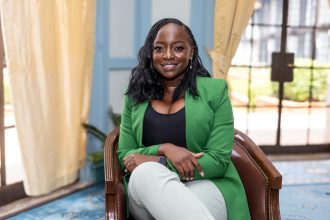
In many African societies, discussions around sexuality remain sensitive, particularly with adolescents. Dr Bakare’s project is designed with this in mind, avoiding content that conflicts with local cultural contexts. “We are going to be informed with age-appropriate messages. We do not want to go outside the age bracket,” she said.
To reach those most in need, the programme will take interventions directly into schools, communities, reproductive health clinics and hospitals. Schools serve as the primary entry point for adolescent girls, while community and health facility engagements will target women who may already be experiencing reproductive health challenges. “We will visit schools, especially for the girls. Also in communities, then we can visit reproductive health centres and hospitals,” Dr Bakare explained.
Community-based structures and peer engagement are central to the approach, a design choice Dr Bakare says reflects how African societies function. “Because it is going to involve community engagement, when one is down with it, the other members of the community can come assist,” she said.
Cultural beliefs and gender inequalities limit access to info, discourage women from seeking HIV testing or treatment
The project also incorporates digital tools to extend reach, particularly among young people. “As we know that the world now is evolving technologically, we intend to leverage technological devices in further educating people on this disease,” Dr Bakare said.
These layers of engagement are a direct response to the barriers that continue to block women and girls from accessing reproductive health services across the continent. Cultural beliefs, gender inequalities and entrenched taboos limit not only access to information but also discourage women from seeking HIV testing or treatment, often out of fear of discrimination.

“In African settings, we have a lot of disadvantages that impound on them in allowing them to have access to reproductive education. We have taboos and cultural beliefs where women are perceived in a particular way,” Dr Bakare said. “My research intends to bridge this gap by bringing this information to them. This is in helping to equip them with reproductive health literacy.”
The project is currently at the translational proposal stage under the fellowship, but its foundations rest on years of prior work. Dr Bakare has already conducted community engagements in which she delivered reproductive health education to young girls, using pre- and post-test evaluations to measure impact.
“Before now, I’ve been involved in community engagement where I discuss reproductive health education with young girls,” she said. “We do pre- and post-test evaluations, and we have been able to see that the girls are well informed about reproductive health, and it is helping them.”
The model has potential to scale across Africa without significant financial or technological resources
The results have been encouraging beyond health outcomes alone. Girls who participated in earlier engagements have gone on to pursue their education and set goals for themselves, an outcome Dr Bakare says demonstrates the wider social value of equipping girls with health knowledge.
“Most of the girls that we engage are now furthering their education and are able to achieve their goals and dreams,” she added.
What distinguishes the model further is its potential to scale across Africa without requiring significant financial or technological resources. Many health interventions fail in low-resource settings because they depend on specialised equipment or infrastructure that is difficult to sustain. Dr Bakare designed this project to avoid that trap.
“The proposal is going to fit perfectly into normal African settings because it is low-cost driven,” she explained. “It also involves community-based engagement that is very familiar with African settings. We live in groups and relate so well, so this is going to be applicable to African countries.”
Rather than relying on expensive systems, the intervention draws on community structures, schools, health facilities, peer networks and locally adaptable education strategies. This makes replication across African countries feasible, regardless of differences in health system resources.
For Dr Bakare, the project is ultimately about more than disease prevention. It is about giving women and girls the knowledge, confidence and support systems they need to take charge of their reproductive health in environments where silence and stigma have for too long shaped outcomes.
If the model succeeds, it could offer a practical, African-led answer to one of the continent’s most persistent public health challenges.