



Joel Olang is a Kenyan innovator using Artificial Intelligence to bring reproductive healthcare to the women most likely to be left behind. And it all began with a misguided online search, a neighbour who could never reach her gynaecologist, and a healthcare system that kept failing.
Joel Alex Olang did not set out to build a healthcare platform. He set out to survive one.
Before the Covid-19 pandemic, Olang was diagnosed with a heart murmur. When Kenya went into lockdown and relocated away from the city, accessing his medication became a struggle. He turned to the internet, searched for providers at random, and ended up taking the wrong drugs for nearly three years.
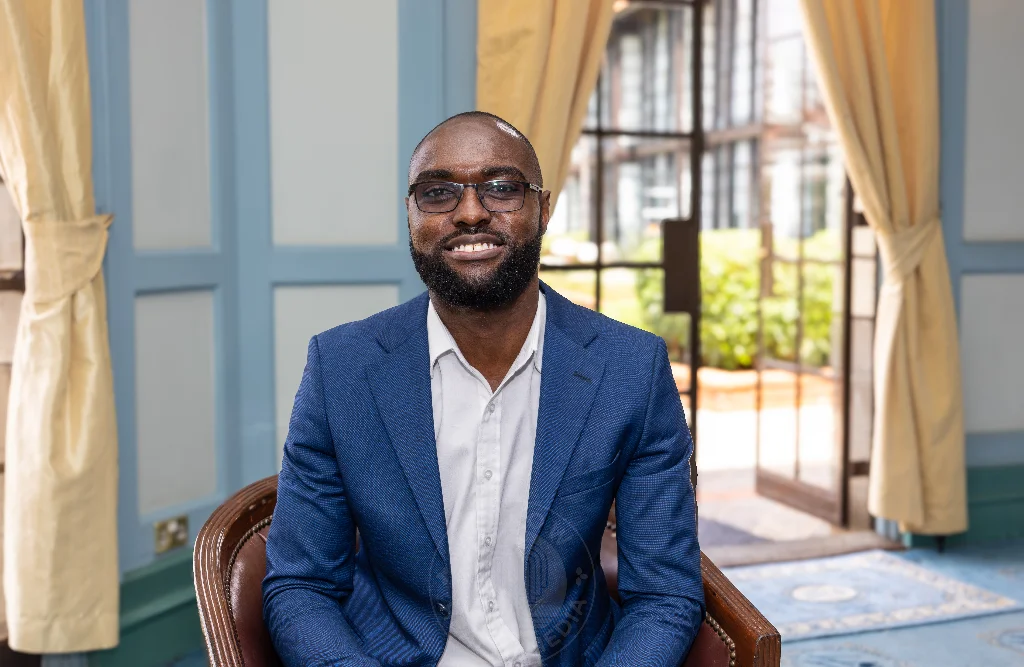
“Unfortunately, the medications that I took two to three years after that were wrong medications,” he said. “These are service providers that I googled randomly.”
That experience stayed with him. It also opened his eyes to a much wider problem: struggling pharmacies, overworked doctors, and patients unable to find care they could trust. But it was a neighbour he met in 2017 who made the stakes feel most concrete. She was pregnant and trying to attend her antenatal clinic appointments, but every visit ended in disappointment.
“She would go, and it’s like the gynaecologist is available on Thursday. Goes on Thursday, but the gynaecologist is not available. Try again,” Olang recalled. “She spent a lot of money. The mismatches it was a draining process, and there was a pain point.”
For many Kenyan women, that pain point is the norm. Seeking contraception or reproductive health services remains a frustrating, expensive and deeply personal journey. Some travel long distances only to find a doctor unavailable. Others rely on unverified online information, risking dangerous self-medication. In rural areas, limited internet access and shortages of trained specialists continue to lock women out of timely care. For those who fear judgment because of their age, religion or cultural background, simply asking questions about contraception can feel impossible.
Burden falls hardest on poor women in rural areas, informal settlements, disabilities, and those who have recently delivered
The numbers behind this reality are stark. Kenya’s Ministry of Health National Family Planning Guidelines 2025 show that use of modern contraception among married women rose to 57 per cent in 2022, up from 53 per cent in 2014 and just 18 per cent in 1989. Total fertility has fallen to 3.4 births per woman, and teenage pregnancy has dropped from 18 to 15 per cent over the last Kenya Demographic and Health Survey (KDHS) period. Progress, clearly, has been made.

Yet the gaps remain wide. Unmet need for family planning among married women stands at 14 per cent, down from 18 per cent, but still represents a significant number of women who want to space or limit births and are not using any method. Some counties record unmet need as high as 38 per cent, others as low as two per cent, reflecting sharp geographic and equity divides.
The burden falls hardest on poor rural women, women in informal settlements, women with disabilities, and those who have recently delivered. Among adolescents, the picture is more troubling still: 35 per cent of sexually active unmarried girls aged 15 to 19 have an unmet need for contraception, and around 15 per cent of girls in that age group have already begun childbearing, exposing them to health risks, unsafe abortion, HIV and interrupted education.
It is this reality that Olang set out to change. Between 2020 and 2021, under his broader company Urban Tech for Hope, he began building M-Kliniki, an artificial intelligence-powered telehealth platform designed to improve contraceptive access and advance women’s health equity in Kenya.
“My pain point became the users’ pain point,” Olang said. “For long I wanted individuals’ lives to be better.”
Through mobile phones, desktops and eventually offline-compatible systems, women can consult healthcare workers
M-Kliniki combines artificial intelligence, telehealth services and digital healthcare tools to connect users with licensed medical providers and verified pharmaceutical services. Through mobile phones, desktops and eventually offline-compatible systems, women can consult healthcare workers, receive reproductive health guidance, book appointments and access contraceptive information. The platform is designed specifically for women who face the highest barriers: young women, those in rural areas, low-income earners, and those uncomfortable discussing contraception openly in physical clinics.
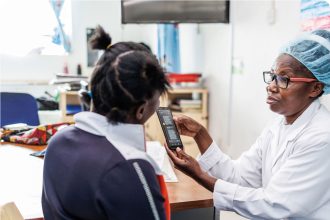
“What M-Kliniki does is we onboard licensed medical service providers and medical product providers who are genuine and licensed and provide the right medication,” Olang explained.
Women will also know in advance when providers are available, the expected consultation costs, and which providers are closest to them. “So you save time, you pick what works with your budget and your schedule,” he said.
At the heart of the platform is an AI assistant called Nia, a Swahili word meaning “purpose.” Nia evolved from an earlier reproductive health chatbot prototype called Shauri Wako, launched in 2021, which provided basic guidance but struggled to handle the diversity and complexity of users’ questions. “There were many instances that you would prompt a question, and it would be like, ‘Sorry, I don’t understand that,'” Olang said.
The upgraded version has been rebuilt from the ground up. Olang says Nia has been trained to understand the diversity of Kenyan women rather than offering generic responses. “Kenyan women come from different religions, cultures, ages and locations,” he noted. The AI operates in English and Swahili, with Zulu already integrated as the company prepares to expand into South Africa. Crucially, Olang believes the emotional texture of the interaction matters as much as the information itself.
AI systems in healthcare have faced global scrutiny over inaccurate or misleading information
“The users are going to realise that the accent is Kenyan, the accent is African,” he said. “That relatable accent we believe is going to bring users closer and make them feel these are trustworthy.”
Trust is not a minor consideration in this space. AI systems in healthcare have faced global scrutiny over hallucinations, instances where they generate inaccurate or misleading information. It was a lesson Olang learned the hard way with Nia’s predecessor. The company spent years retraining and rebuilding the system before releasing the upgraded version.
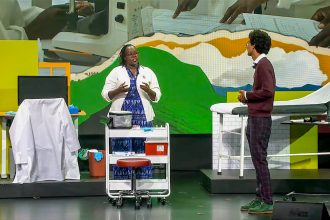
“Nia does not hallucinate completely,” he said. “It has top-notch data standards and data processes.”
Even so, the platform requires users to verify any AI-generated reports with a licensed provider before taking medical action. “You have to verify whatever medical report you download from your conversation with Nia with the right licensed medical service provider,” Olang explained. That human verification layer is one of the ways the platform attempts to balance innovation with patient safety.
Accessibility is the other major design priority. While many telehealth platforms depend on smartphones and stable internet connections, M-Kliniki is being built to work for women with basic phones or limited connectivity. “We will use a USSD code for those without smartphones,” Olang said. Offline-compatible features will allow women to use airtime rather than internet bundles to consult doctors, interact with the AI and schedule appointments. “M-Kliniki is meant to cut across and reach even those who do not have smartphones,” he said.
User privacy is built in, with the platform preventing screenshotting and screen recording during consultations
The platform also addresses provider needs, offering clinics and organisations tools for financial planning, donor reporting and operational coordination. The broader vision is an integrated digital healthcare ecosystem, not simply another chatbot. Appointment scheduling, provider verification, reproductive health education, telemedicine and AI guidance sit within a single system. User privacy is built in, with the platform preventing screenshotting and screen recording during consultations.

Olang is among 20 participants in the first cohort of the Leadership for Innovation and Excellence in Accelerating Research on Women’s Health Fellowship Programme (LEA-WH), run by the National Academy of Medicine in partnership with the Kenya Medical Research Institute (KEMRI), drawing participants from 11 countries across Africa.
The project enters an unsettled regulatory environment. Kenya is still developing policies on AI in healthcare, data governance and digital patient protection. Questions of affordability, accountability and oversight are unresolved, and scepticism from some users, healthcare providers and regulators remains real. Olang acknowledges all of this, but insists technology should complement licensed professionals rather than replace them.
“We decided we could harness technology and just make something work,” he said.
Whether M-Kliniki succeeds at scale will depend on regulation, affordability and public trust. But for women who have long struggled to access reliable contraceptive information and care, the promise is straightforward: healthcare that listens, understands, and reaches them wherever they are.
We believe in the free flow of information
Republish our articles for free, online or in print, under Creative Commons licence.