



Millions of African women suffer vaginal infections in silence and Dr Kadryn Kadasia wants to end both the wait for a diagnosis and the shame using Artificial Intelligence.
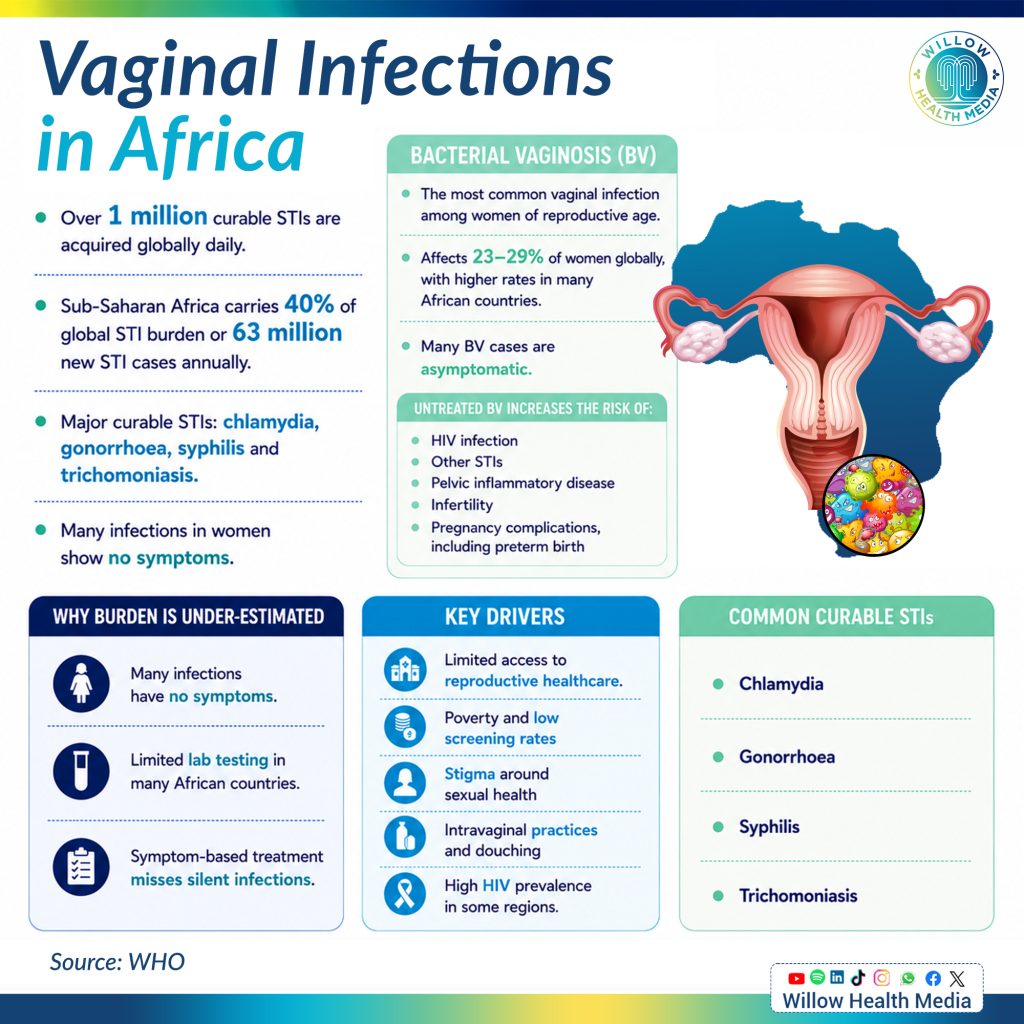
For millions of African women, vaginal infections remain one of the most common yet least openly discussed health challenges. Conditions such as bacterial vaginosis, candidiasis and sexually transmitted infections continue to affect women across all age groups, often causing pain, discomfort, infertility risks and emotional distress. Despite their prevalence, diagnosis remains slow, inaccessible and, in many cases, inaccurate.
The World Health Organization (WHO) estimates that Africa carries nearly 40 per cent of the global sexually transmitted infection burden, translating to roughly 63 million new cases annually of major curable STIs, including gonorrhoea, syphilis, chlamydia and trichomoniasis.
Bacterial vaginosis, one of the most common vaginal infections among women of reproductive age, frequently goes undiagnosed because many women show no symptoms at all. Health experts warn that untreated infections increase the risk of HIV transmission, infertility and pelvic inflammatory disease.
A Kenyan biotech startup is trying to change that through artificial intelligence.
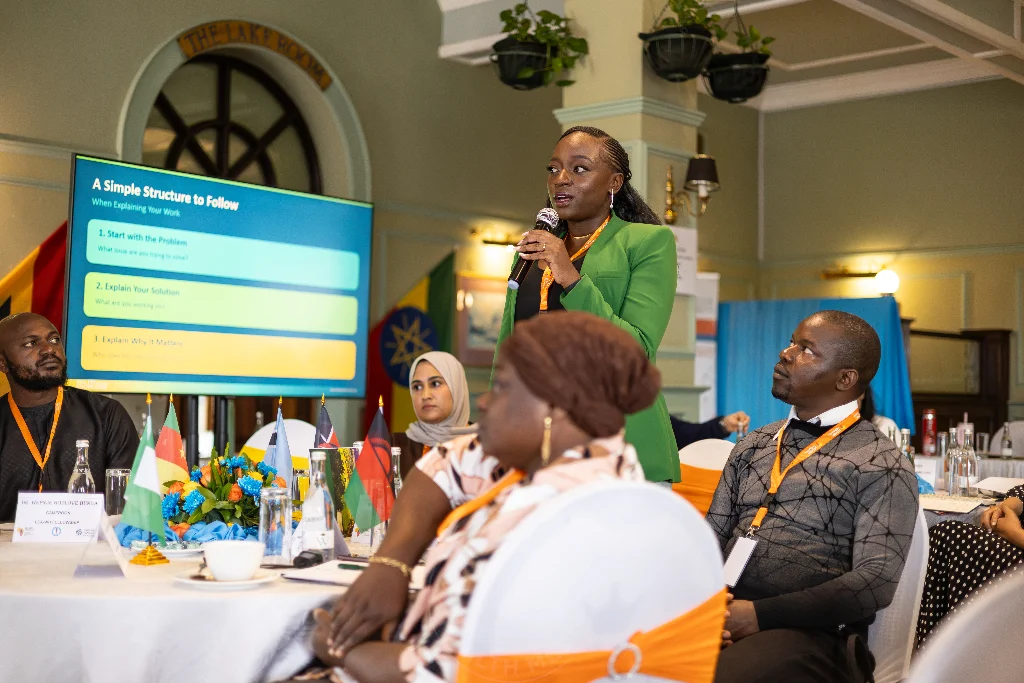
Dr Kadryn Kadasia, founder and CEO of Misala, is leading a project titled “Context-Specific AI Diagnostics for Rapid Vaginal Health Assessment in African Women” under the Leadership for Innovation and Excellence in Accelerating Research on Women’s Health Fellowship (LEA-WH) Programme, run under the auspices of the National Academy of Medicine in partnership with the Kenya Medical Research Institute.
The project aims to develop an AI-powered diagnostic tool that can rapidly analyse vaginal samples and deliver accurate results to clinicians within minutes, rather than hours or days.
Kenya and Africa still lack rapid and reliable methods for diagnosing vaginal infections
Dr Kadasia says the project was born out of two significant gaps in women’s healthcare, and “We aim to address two gaps with this project. One is practical and the second is structural,” she told Willow Health Media.
On the practical side, many health facilities in Kenya and across Africa still lack rapid and reliable methods for diagnosing vaginal infections. As a result, women are frequently treated based on symptoms alone rather than laboratory-confirmed diagnoses.

“What tends to happen is that when women visit a clinic, they would either get a syndromic diagnosis, which is a guess and based on the experience and expertise of the healthcare professional,” she said.
This approach often leads to mistreatment, delayed care or missed infections entirely. Women may wait several days for laboratory results, if they receive them at all. For a woman already carrying the weight of pain, discomfort and uncertainty, that wait can be isolating.
The structural challenge runs even deeper. Many AI diagnostic systems being developed globally are trained on datasets that rarely include African women, raising serious concerns about whether such technologies can accurately serve African populations.
Dr Kadasia is building an Africa-first women’s health technology platform layered with AI
“One big question that we ask is, how can a model that has not been trained on data from African women serve the women in this context?” Dr Kadasia said.
To address this, Misala is building what Dr Kadasia describes as an Africa-first women’s health technology platform, one designed from the ground up around local populations, local disease patterns and local healthcare systems.

The AI tool is built to integrate into existing clinical workflows rather than replace them. For bacterial vaginosis, clinicians already rely on microscopy as the primary diagnostic method. Under the current system, healthcare workers collect vaginal swabs, prepare slides and depend on trained microscopists to manually analyse bacteria under a microscope, a process that can take hours, particularly in busy facilities with limited personnel.
Misala’s innovation adds an AI layer onto this existing process.
“A healthcare professional will collect a vaginal sample swab from a woman who has come to visit. They would prepare it, stain it, load it onto the microscope, everything routinely as they would do,” Dr Kadasia explained. “However, instead of needing an expert microscopist to read, analyse and count the number of bacteria on the slide, our technology comes in and does that.”
Kenya, Rwanda recruiting participants for microscopy samples for training the AI model
The result is a dramatic reduction in waiting times, shrinking the process from hours or days to a matter of minutes. For a woman sitting in a clinic, afraid and in pain, that difference is not merely clinical. It is the difference between leaving with answers and leaving with nothing.
Misala is already engaging clinical partners in Kenya and Rwanda to recruit participants and collect microscopy samples for training the AI model. The company is also in late-stage talks with biorepositories, including KEMRI, to access previously collected and clinically validated samples that could strengthen the model further.

The project confronts a significant scientific challenge in distinguishing between overlapping vaginal conditions such as bacterial vaginosis, candidiasis and sexually transmitted infections. Dr Kadasia acknowledges that microscopy has limitations in differentiating some infections compared to more advanced molecular diagnostic methods, such as nucleic acid amplification testing. Even so, she is clear about the immediate priority. “We’re taking the tools that already exist and making sure that more women are able to get treatment faster and for the conditions that they are facing,” she said.
The focus, for now, is on improving speed and accessibility within existing workflows, before eventually expanding the system’s ability to distinguish between multiple infections.
Collecting intimate reproductive health data raises significant ethical concerns, and Dr Kadasia does not shy away from them. Consent, privacy and data ownership sit at the heart of the project’s design.
Shame is one of the greatest barriers to vaginal healthcare and is something harder to measure
“One of the most immediate concerns is consent,” she said. “And I’m not talking just about legal consent, but also what consent means in terms of literacy, socio-economic status and how it affects a woman who is culturally adapted to not speaking openly about her own experiences.”
Ethical safeguards are being embedded into the project from the outset, ensuring participants fully understand how their data will be used. Data sovereignty is equally non-negotiable. “When you collect data from African women, what is built out of that must serve African women first,” Dr Kadasia said.
But beyond the science and the ethics, Dr Kadasia believes one of the greatest barriers to vaginal healthcare is something far harder to measure: shame. “Shame is a big point and honestly something that I’m very passionate about,” she said.
Stigma surrounding vaginal health does not exist only within women themselves. It lives in relationships, workplaces and cultural systems. “There is a shame experienced by the woman but there is also the shame caused by the people who are next to her,” she said.
To confront this, Misala has developed an education and awareness initiative called IN HER ERA, which addresses vaginal health, reproductive wellness and women’s lived experiences through digital content and public engagement. This educational approach is woven into every stage of product development, from packaging and language to marketing and communication, to ensure women feel safe and respected when using the technology.
A woman walking into a clinic with fear and leaving same day with answers, treatment, dignity
“We want women to know that while we are scientists and innovators, we are also thinking about how our tools are going to be used and how patients feel comfortable looking into the solutions we’re building,” Dr Kadasia said.
If the project succeeds, Dr Kadasia envisions something quietly transformative: a woman walking into a clinic with fear and leaving the same day with answers, treatment and dignity.
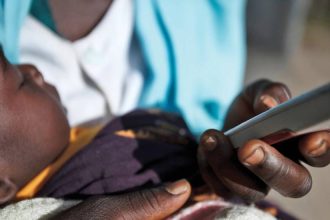
“When a woman walks into a doctor’s office feeling afraid, experiencing pain and symptoms that are not pleasant, in that same visit, the healthcare professional will be able to accurately say, ‘This is exactly where this issue is coming from, and this is the plan for how we would address it,'” she said.
Beyond diagnostics, she hopes the project sparks a wider cultural shift, one where women can speak openly about vaginal health without embarrassment.
“I want women to be openly talking about things like bacterial vaginosis or vaginal microbiome and to know exactly what that means in their own understanding.”














What ethical concerns does Dr. Kadryn Kadasia highlight regarding the collection and use of women’s reproductive health data?