
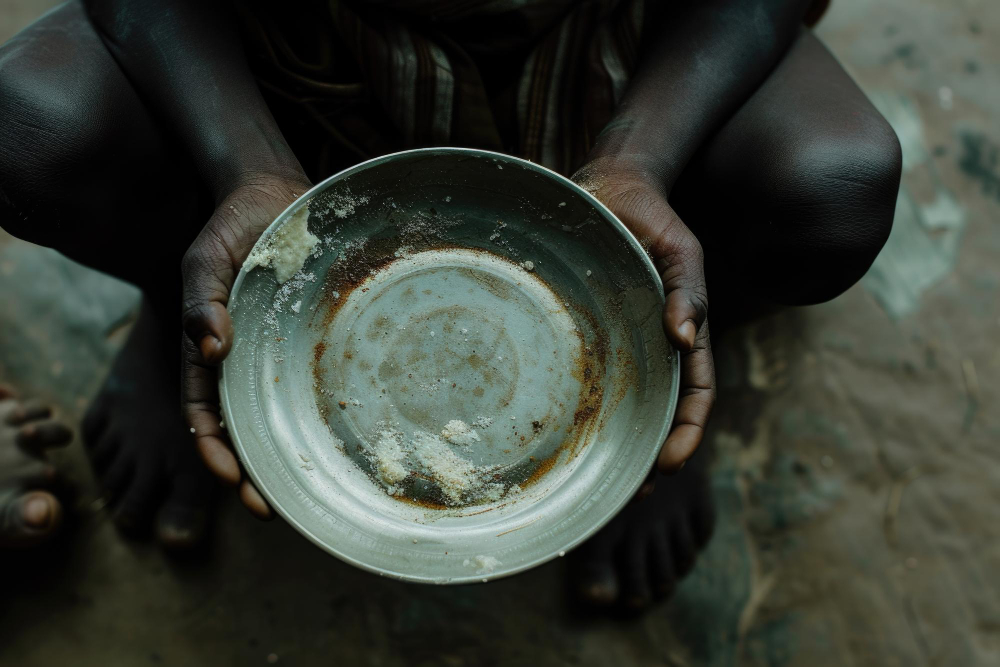

Drought means less food, stunted growth for children, and mothers facing higher risks during pregnancy and delivery. Here is how Kenya’s Ksh125 billion climate budget plans to fix that.
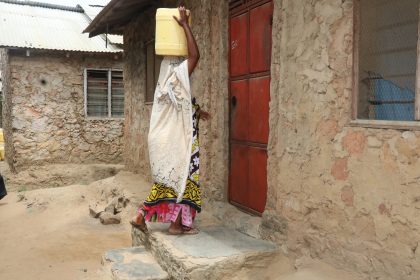
At 4am, while most teenagers are still asleep, Dorcas Mwadzina of Kifyonzo village in Kinango, Kwale County, is already on her feet searching for water. By the time she finds any, she has lost hours that might have gone to school. Her story is not unusual along the Kenyan Coast, where water scarcity shapes not just daily life but the health, education and safety of an entire generation of girls.
Hundreds of kilometres north, in Loitoktok, Kajiado South, a single mother named Mary Mutui watched the 2022 to 2023 drought take almost everything she had. By the time the rains finally returned, her herd of more than 200 cattle had been reduced to six. With the livestock went her income, and with her income went her family’s access to food and healthcare.
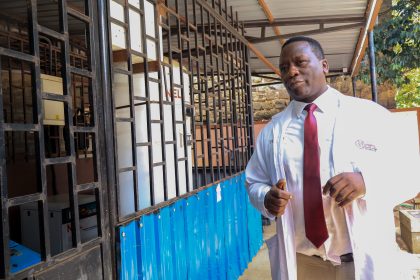
These are the human faces behind Kenya’s 2026/27 budget, which has committed Ksh124.8 billion ($960 million) to climate-related programmes – the country’s largest such allocation in recent years. Treasury Cabinet Secretary John Mbadi, presenting the budget to Parliament, framed climate resilience not as an environmental concern sitting at the edge of development, but as central to it.
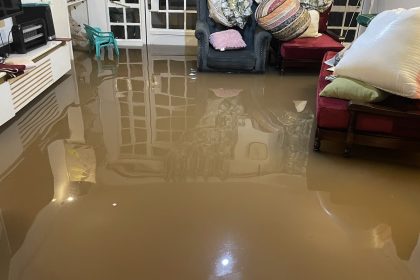
For many Kenyans, the link between worsening weather and worsening health is a lived experience, not a policy paper. When the rains fail, families eat less, children’s growth falters, and mothers face higher risks during pregnancy and delivery. When the floods come, roads to hospitals wash out. In Kilifi County, for instance, women in flood-prone areas are forced to deliver babies at home under candlelight, cut off from clinics by rising water.
A warmer, wetter climate also expands the range of disease. Mosquitoes that carry malaria thrive in new areas. Poorly stored grain, spoiled by heat and moisture, produces aflatoxin – a toxic mould that is silently stunting children’s growth across Kenya. When communities lose their livelihoods to drought or flooding, they lose the money they need to visit a health facility or afford medication. Climate resilience, then, is not only an environmental or economic priority – it is a health priority.
Clean, reliable water within reach means girls like Dorcas in Kwale no longer have to wake before dawn to find it
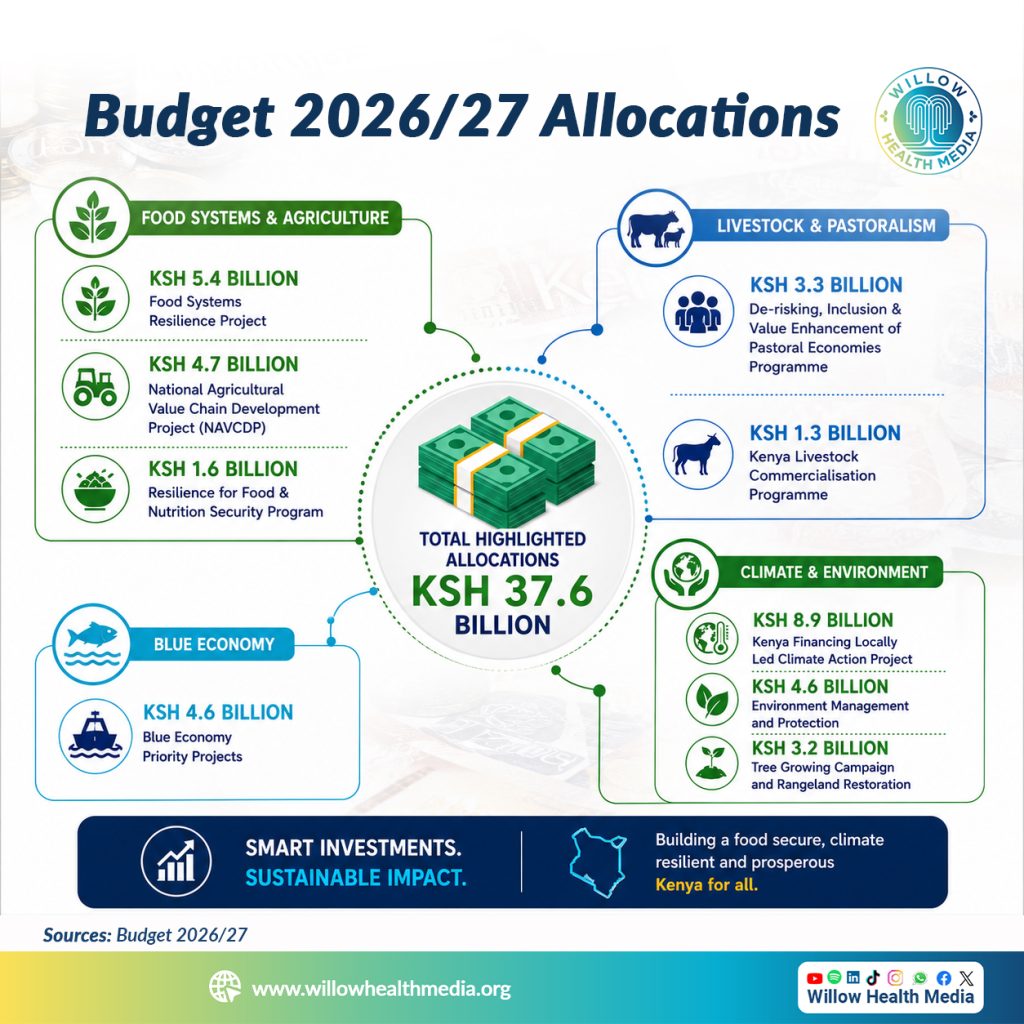
The budget’s most direct intervention is Ksh8.9 billion ($60.3 million) for the Financing Locally Led Climate Action (FLLoCA) programme, a World Bank-supported initiative that puts climate money in the hands of counties and communities rather than routing it through central government offices. The programme already operates across 1,380 wards in 45 counties and has benefited more than 2.5 million Kenyans.
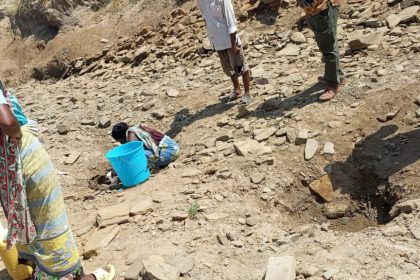
What does this look like on the ground? Mbadi pointed to specific examples: a 58-kilometre rehabilitation of the colonial Yata canal in Machakos, a Reverse Osmosis water treatment facility in Makueni and a water project in Busia’s Kolanya area. These are not abstractions. Clean, reliable water within reach means girls like Dorcas in Kwale no longer have to wake before dawn to find it. It means mothers in flood-prone counties can prepare for delivery without wondering whether the road to the clinic will hold.
For communities like Mary Mutui’s, the budget proposes Ksh3.3 billion for the De-Risking, Inclusion and Value Enhancement of Pastoral Economies programme, alongside Ksh1.3 billion for the Kenya Livestock Commercialisation Programme and Ksh400 million for the Livestock Value Chain Support Project. The allocations target better market access, animal health services and financial resilience for pastoral households. The government also plans to establish agricultural insurance as a standalone class of insurance, which could give farmers and herders some protection when the rains fail again – because they will.
For food systems more broadly, the budget sets aside Ksh5.4 billion for the Food Systems Resilience Project and Ksh4.7 billion for the National Agricultural Value Chain Development Project. Stable food systems mean more predictable prices, better nutrition and households that are less one bad harvest away from crisis.
Beyond direct community spending, the budget signals ambitions to build Kenya’s position as a green finance hub. The government is establishing the Kenya Green Investment Facility and finalising a framework for sustainability-linked bonds tied to forestry and electrification targets – tools designed to attract private money into environmental projects.
The time between crisis and funding can mean the difference between recovery and lasting poverty
Kenya received significant external recognition in March 2026, when the Green Climate Fund (GCF) Board selected Nairobi to host its regional office for Eastern and Southern Africa, following a competitive process that drew proposals from 47 countries. The GCF is the world’s largest dedicated climate finance institution. The Nairobi office is expected to improve access to climate funding for governments and communities across the region. Climate experts caution, however, that hosting a regional office does not automatically mean more money for Kenya – project quality and national priorities remain the deciding factors.
A new Disaster Risk Financing Strategy for 2026 to 2030, backed by the recently enacted National Disaster Risk Management law, aims to ensure money is available quickly when emergencies strike – because when floods hit Kilifi or drought returns to Kajiado, the time between the crisis and the funding can mean the difference between recovery and lasting poverty.
The 2026/27 budget is Kenya’s most ambitious climate finance package in recent years. Whether it reaches the girl in Kwale fetching water before sunrise, or the mother in Kajiado rebuilding her herd, will depend on how quickly money moves from parliament to the county, from county to ward, and from ward to the people who need it most. Kenya’s climate programmes have faced questions about delays in disbursement and governance in the past. The commitments are real. The test now is delivery.