




Dr Fezile Khumalo, a South African researcher, is building a molecular diagnostic tool simple enough for any clinic, affordable enough for any budget and precise enough to catch what symptoms miss.
For millions of women across Africa, a visit to a health facility for reproductive health services often ends with treatment based on symptoms alone. Yet many sexually transmitted infections and reproductive tract infections present no symptoms at all, leaving countless women undiagnosed, untreated and vulnerable to long-term complications including infertility, chronic pelvic pain and increased susceptibility to HIV.
A University of Cape Town researcher, Dr Felize Khumalo, is working to close that gap with a simple, affordable molecular diagnostic tool that can be used at the point of care, even in settings with no reliable electricity or laboratory infrastructure.
The scale of the problem makes the stakes clear. According to the World Health Organization (WHO), more than one million sexually transmitted infections are acquired every day globally, with an estimated 374 million new infections of chlamydia, gonorrhoea, syphilis and trichomoniasis occurring each year worldwide.
Many of these infections disproportionately affect women and go undetected because they produce few or no symptoms. When left untreated, they can lead to infertility, ectopic pregnancies, adverse pregnancy outcomes and chronic pelvic pain. In low-resource settings across Africa, where diagnostic infrastructure is limited and syndromic management remains the norm, the burden falls heaviest on those least able to access alternatives.
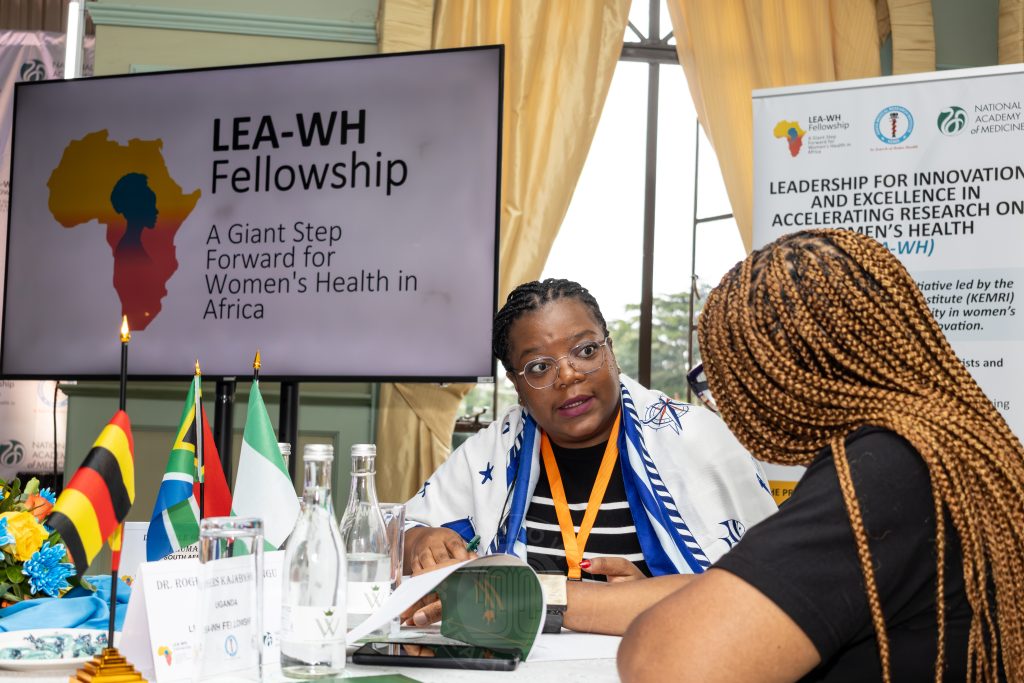
It is this critical gap that Dr Khumalo hopes to address. A Research Fellow in the Leadership for Innovation and Excellence in Accelerating Women’s Health Research (LEA-WH) Fellowship Programme under the National Academy of Medicine in partnership with the Kenya Medical Research Institute (KEMRI), Dr Khumalo is leading the development of a Modular LAMP (Loop-Mediated Isothermal Amplification) Based Diagnostic Platform for Women’s Reproductive Health in Africa, a technology designed specifically for settings where laboratory infrastructure is limited or absent.
Where electricity is unreliable or labs are limited, the technology works as it only requires one temperature
“Currently, much of women’s reproductive healthcare in low- and middle-income countries relies on syndromic management, where treatment is based on symptoms alone. The challenge is that many women are asymptomatic, meaning they never present with symptoms and are therefore completely removed from care,” Dr Khumalo explains.

At the heart of the project is Loop-Mediated Isothermal Amplification, a molecular testing method that detects genetic material from disease-causing organisms. While it performs a function similar to Polymerase Chain Reaction (PCR), widely regarded as the gold standard in molecular diagnostics, it is significantly simpler to operate.
Unlike PCR, which requires expensive thermocyclers and sophisticated laboratory equipment, LAMP operates at a single temperature of about 60 degrees Celsius, meaning the test can be performed using basic heating equipment.
“In places where electricity is unreliable or laboratory facilities are limited, the technology can still work because it only requires one temperature. You could even achieve that temperature using a simple heating source,” she notes.

This simplicity makes the platform particularly suited to rural clinics, community health centres and other underserved settings. The project’s target users include nurses, clinicians, community healthcare workers and reproductive health service providers who often serve as the first point of contact for women seeking care.
The initial focus is on STIs that are treatable but frequently missed due to limited testing, specifically gonorrhoea, chlamydia and trichomoniasis, three infections that commonly affect women and often remain undiagnosed.
The technology identifies the genetic material of disease-causing organisms, enabling healthcare workers to detect infections even when women have no symptoms. This matters because asymptomatic infections can persist for months or years while causing irreversible damage to reproductive health.
Rather than detecting one disease, the system is designed to incorporate additional infectious agents over time
Although molecular diagnostic technologies already exist, Dr Khumalo argues that many remain inaccessible to the communities that need them most. Platforms such as GeneXpert have revolutionised molecular diagnostics but often require expensive consumables and centralised laboratory systems.
“The science itself is already established,” she notes. “The challenge is that existing technologies are costly and are usually concentrated in central laboratories. My team’s innovation lies not necessarily in inventing a completely new scientific principle, but in redesigning how diagnostics are produced, distributed and used within African healthcare systems.”

Rather than detecting only one disease, the system is designed so that additional infectious agents can be incorporated over time. As new health priorities emerge in different regions, healthcare providers could add new diagnostic modules without replacing the entire system, allowing the platform to evolve alongside changing public health needs while maximising the value of existing investments.
Another distinguishing feature of the project is its emphasis on local production. Dr Khumalo envisions a future where African countries manufacture diagnostic reagents and components locally, reducing dependence on imported supplies. The COVID-19 pandemic exposed the vulnerability of global supply chains, with many countries struggling to access essential medical products due to export restrictions, shipping delays and manufacturing bottlenecks. By promoting local manufacturing and regional technology transfer, the project seeks to strengthen what Dr Khumalo describes as diagnostic sovereignty.
“It means everything comes out of African soil. If we can develop and manufacture reagents locally, it changes how we access healthcare. Local production could also lower costs, improve supply reliability and create opportunities for scientific and industrial growth across the continent,” she explains.
The technology is such that tests can be performed by healthcare workers with minimal specialised training
One of the major obstacles facing diagnostic deployment in remote settings is the need for cold-chain storage. Many diagnostic reagents require refrigeration during transport and storage, making them difficult to distribute in areas with limited infrastructure.

To overcome this, Dr Khumalo says her team is exploring reagent stabilisation and lyophilisation, commonly known as freeze-drying, which could enable reagents to remain stable at room temperature for extended periods, reducing transportation costs and extending shelf life.
The project is also focused on simplifying sample processing and result interpretation so that tests can be performed by healthcare workers with minimal specialised training. The ultimate goal is to create a system as straightforward and user-friendly as a home pregnancy test while retaining the accuracy of molecular diagnostics.
While the project remains in its early stages, significant groundwork has already been laid. Dr Khumalo has established partnerships across multiple departments at the University of Cape Town, bringing together expertise in molecular biology, engineering, enzyme development and diagnostic hardware design. Research teams are working on individual components while fundraising continues to secure resources needed for large-scale development and validation.
For Dr Khumalo, success will be measured by whether the tool reaches women who need it most
Looking ahead, the platform could also contribute to better antimicrobial stewardship by enabling accurate diagnosis before treatment is prescribed, reducing unnecessary antibiotic use and helping address the growing threat of antimicrobial resistance.

For Dr Khumalo, success will not be measured by scientific publications or laboratory breakthroughs alone. It will be measured by whether the tool reaches the women who need it most.
“If this test can be in every clinic, everywhere, that would be success,” she says.
In a continent where millions of women still lack access to timely reproductive healthcare, that vision could represent a transformative step toward more equitable, data-driven and patient-centred care.