
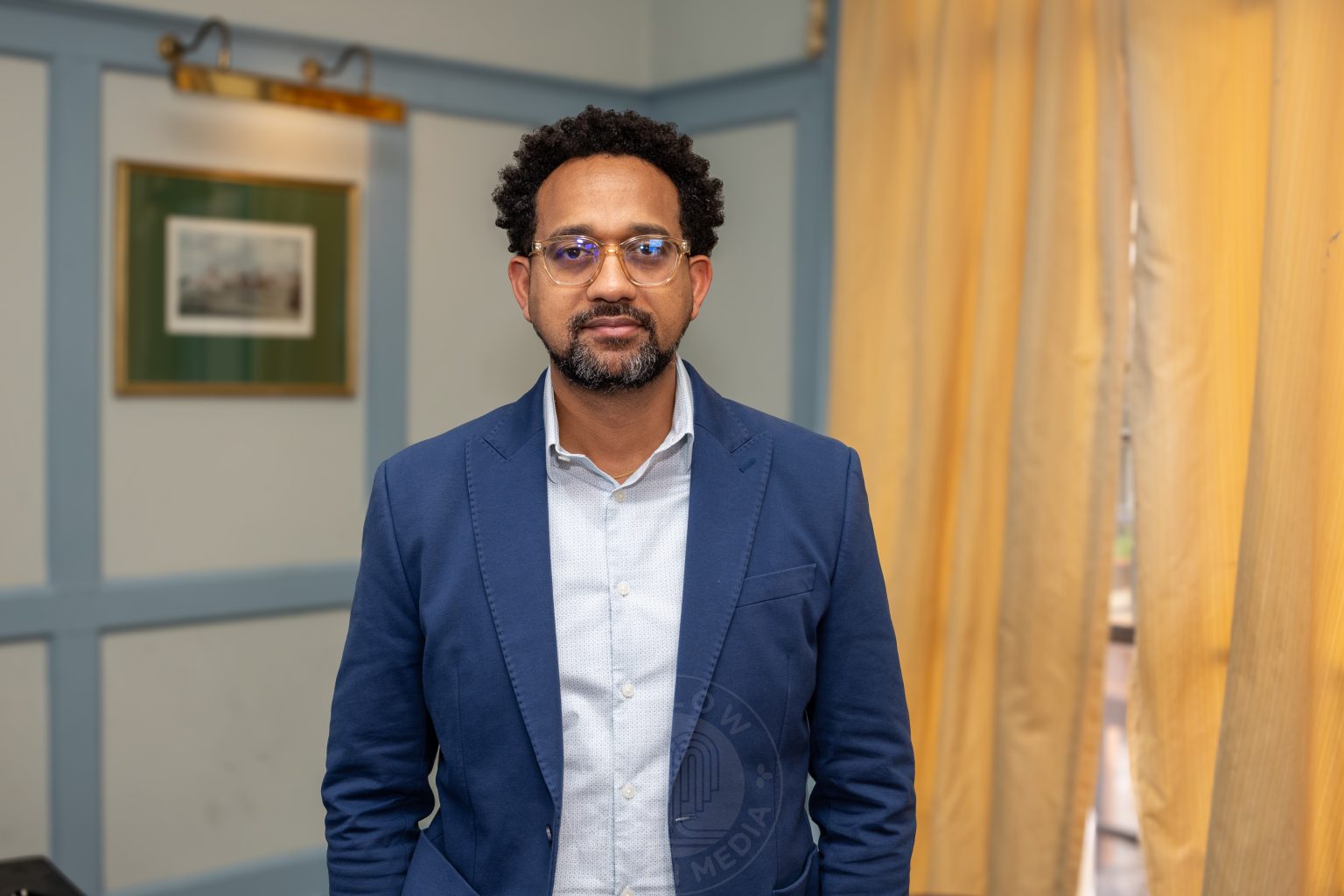
Frustrated by Africa’s reliance on foreign funding and imported medical solutions, Dr Yaw Bediako launched a biotechnology company that uses African genetic data to advance cancer research.
For years, Dr Yaw Bediako believed medicine chose people rather than the other way round. Instead, the Ghanaian immunologist built a career studying why disease behaves differently across populations, taking him from malaria research in Kenya to founding one of Africa’s most watched biotechnology companies.
Much of global medical research has been conducted in Europe and North America, so scientific databases and clinical studies remain heavily biased towards Western populations, and researchers long assumed findings there could be applied universally.
But the co-founder and CEO of Yemaachi Biotech said that assumption is now being challenged: “Science has historically been skewed towards datasets derived from certain populations, typically in Europe and North America, but we are learning very quickly that we cannot just superimpose that on populations elsewhere.”
Dr Bediako was in Nairobi this May for the Leadership for Innovation and Excellence in Accelerating Research on Women’s Health (LEA-WH) immersion week, where he was a mentor to the Fellows on how science, entrepreneurship and innovation can work together to address health challenges in Africa.
He told Willow Health Media how his own research in malaria immunology offered compelling evidence.
While at the Kenya Medical Research Institute (KEMRI), he studied how people develop natural immunity to malaria and found significant differences depending on geographical exposure. “Individuals living in malaria-endemic regions such as Kenya’s coast developed immune responses that differed greatly from people living in Nairobi, where malaria transmission is much lower,” he notes.
More striking still was the observation that immunity changes over time: people who grew up in malaria-endemic areas but later moved away gradually lost their protection and resembled those never exposed. The lesson, he says, is that biology is contextual.
While most focus on disease-causing pathogens, my curiosity was on the body’s defence mechanisms
Dr Bediako recalls that as a young student excelling in biology, everyone assumed he would become a doctor, the obvious path for many talented African science students. He had a different vision. “I was interested in biology, I was interested in medicine, I was interested in disease, but I knew I didn’t really like hospitals very much,” he recalls. He instead pursued biotechnology; Yemaachi Biotech is a Ghana-based company using African genomic data to transform cancer research.
His fascination with science traces to his undergraduate years, when he first encountered immunology and, unlike many students who found it intimidating, found it captivating. “It remains probably my favourite class that I have ever taken. For me, the immune system represents one of the most fascinating puzzles in biology. While most people focus on disease-causing pathogens such as viruses and bacteria, my curiosity was on the body’s defence mechanisms,” he admits.
That curiosity shaped a career spanning malaria and, more recently, cancer immunology. “The immune system is one of the best places to see the interface between our genes and our environment. That interface reveals why African populations cannot simply rely on scientific data generated elsewhere,” he explains.
The same principle, he says, is emerging in cancer research, where scientists are uncovering evidence that cancer biology differs among populations by genetic origin. “Certain cancers display unique genetic features in African populations that may influence how the disease develops and responds to treatment. Breast cancer provides a striking example.
Research has shown that black women are more likely to develop triple-negative breast cancer, an aggressive subtype associated with poorer outcomes,” he explains, referring to cancer cells that test negative for estrogen receptors, progesterone receptors and the HER2 protein.
When it comes to diseases, West Africa and East Africa may be quite different
He notes important differences within Africa itself, too: “What we are finding is that West Africa and East Africa may be quite different,” meaning broad labels such as “Black populations” reveal little about a far more complex picture. Large-scale African-led research is needed, without which treatments developed elsewhere may fail African populations.
That realisation helped inspire Yemaachi Biotech, which generates African genomic and clinical data to improve cancer diagnosis and treatment. For Dr Bediako, the motivation was both scientific and political. “I became increasingly frustrated by Africa’s dependence on foreign research funding and imported innovations. Our research ecosystem is incredibly dependent on external sources of funding,” he says. African governments face competing priorities and limited resources, he acknowledges, but relying solely on public funding leaves research vulnerable, so his solution was entrepreneurship.
In the United States, about 75 per cent of research and development activity occurs within the private sector; in Africa, biotechnology remains largely underdeveloped, and he saw an opportunity to build an entirely new industry. “My motivation with Yemaachi was to be part of what I hope is an explosion of private sector-led research in Africa. The journey has been far from easy because biotechnology requires substantial financial investment, long development timelines and considerable patience,” he says.
The COVID-19 pandemic strengthened his conviction to launch the business, he says. When vaccines first became available, African countries struggled to secure supplies while wealthier nations prioritised their own populations, exposing vulnerabilities African scientists had long warned about. “It showed us that we have become too comfortable receiving innovations from elsewhere,” he says.
The pandemic also raised intriguing scientific questions. Predictions of catastrophic COVID-19 mortality across Africa largely failed to materialise; although the continent experienced significant losses, many countries recorded lower mortality rates than expected. One explanation involves Africa’s youthful population, with a median age of about 19 years compared with much older populations in Europe and East Asia. Dr Bediako points to emerging research suggesting long-term exposure to malaria could have influenced immune responses to COVID-19.
Health records in Africa remains fragmented, paper-based or inaccessible for large-scale analysis
As artificial intelligence transforms medicine and research, Bediako sees both opportunity and risk for Africa. AI will accelerate discovery at unprecedented speed, but it is only as good as the data it learns from, and Africa remains dramatically underrepresented. “AI is a consumer of data, and what Africa lacks is data. Health records across many African countries remain fragmented, paper-based or inaccessible for large-scale analysis. Meanwhile, AI models are being trained primarily on data from Europe and North America,” he explains.
Future medical innovations, he warns, may increasingly reflect populations already represented in those datasets while overlooking African realities, so Africa must urgently invest in generating high-quality health, genomic and clinical data.
“Rather than focusing solely on training more scientists, countries should prioritise creating scientific products, databases and research outputs that generate knowledge. We need to stop making capacity building the end goal. The end goal should be good science,” he says. Training researchers, he adds, should be a by-product of solving meaningful scientific problems, not the primary objective.
Beyond Yemaachi, Dr Bediako recently became Dean of Research and Innovation at Ashesi University in Ghana, shaping how the next generation of African scientists think about research. His message is simple but ambitious: “Africa should not limit itself to solving African problems. Instead, African researchers should aim to solve global problems from an African perspective,” he says.
Africa is the most genetically diverse continent on the planet, an asset in medical breakthroughs
That vision challenges narratives portraying the continent primarily as a recipient of aid and innovation. Bediako instead imagines Africa as a producer of intellectual property and breakthrough discoveries, pointing to its extraordinary genetic diversity as a scientific advantage: because modern humans originated in Africa, studying African populations can reveal biological insights relevant to all humanity. “Africa is the most genetically diverse continent on the planet. That diversity is not merely a scientific curiosity but a strategic asset capable of driving the next generation of medical breakthroughs.”
Despite leading a fast-growing company and advocating for scientific transformation across the continent, Dr Bediako remains grounded by hope in Africa’s future. “I am a very proud African. The Africa I see in my imagination is not yet reflected in everyday reality, but I believe the continent possesses immense untapped potential.” What frustrates him most, he says, is not a lack of talent but a tendency to dwell on problems without organising around solutions. “We are very good at agonising. We need to begin to organise,” he says, a mantra that fuels his persistence through entrepreneurship, research and slow systemic change.
He believes the current generation of African scientists and entrepreneurs has a unique responsibility to shape the future. With Africa’s population projected to grow rapidly, the stakes are high: success could make the continent a global centre for innovation; failure could turn its demographic dividend into a burden of unemployment and instability. At the heart of his vision lies a conviction that African data, research and innovation will help shape the future of global health.












What did Dr. Bediako’s malaria research reveal about differences in immune responses among populations?