

Over 4,000 Kenyans are waiting for one, but cultural and religious fears are keeping donor corneas scarce, and doctors say prevention has never mattered more.
Dr Sheila Nangena has spent her career trying to catch a thief that moves quietly. Keratoconus, a progressive condition that thins and bulges the cornea, can rob patients of their sight if it goes undetected, and Dr Nangena, a researcher and clinician at Masinde Muliro University of Science and Technology (MMUST), is among those working to change that.
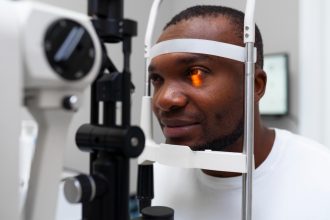
A new study has found troubling gaps in how well Kenyan eye-care practitioners can spot the condition early. Surveying 134 optometrists, ophthalmologists, ophthalmic clinical officers and cataract surgeons across Nyanza and Western Kenya, researchers found that only 36.6 per cent demonstrated good knowledge of early keratoconus diagnosis, while 60.4 per cent had fair knowledge and three per cent had poor knowledge.
Awareness of the disease’s early warning signs was even weaker: just 15.6 per cent showed good knowledge of these signs, against 80 per cent with fair knowledge and 4.4 per cent with poor knowledge. The study, “Knowledge of Early Keratoconus Diagnosis and Management in Nyanza and Western Kenya: Practitioners’ Perspective,” was published in The Open Ophthalmology Journal on November 20, 2025.
The stakes of missing the disease are high. Left undetected, keratoconus can progress to the point where a corneal transplant becomes the only option, and Kenya already has a severe shortage of donated corneas.
Dr Nangena says one hospital that performs the procedure has a waiting list of more than 4,000 patients, and some corneas have to be imported from India and the United States.
One warning sign of keratoconus is frequency of changing eyeglasses
Dr Nangena says keratoconus can be difficult to catch early because its symptoms often mimic ordinary short-sightedness. “One of the warning signs is the frequency of changing the glasses,” she says.
While a patient with ordinary myopia might keep the same prescription for years, someone with keratoconus may need a new one after only a few months as their vision deteriorates. Persistent eye rubbing, allergies, light sensitivity and seeing distorted or doubled images, particularly at night, are other red flags.
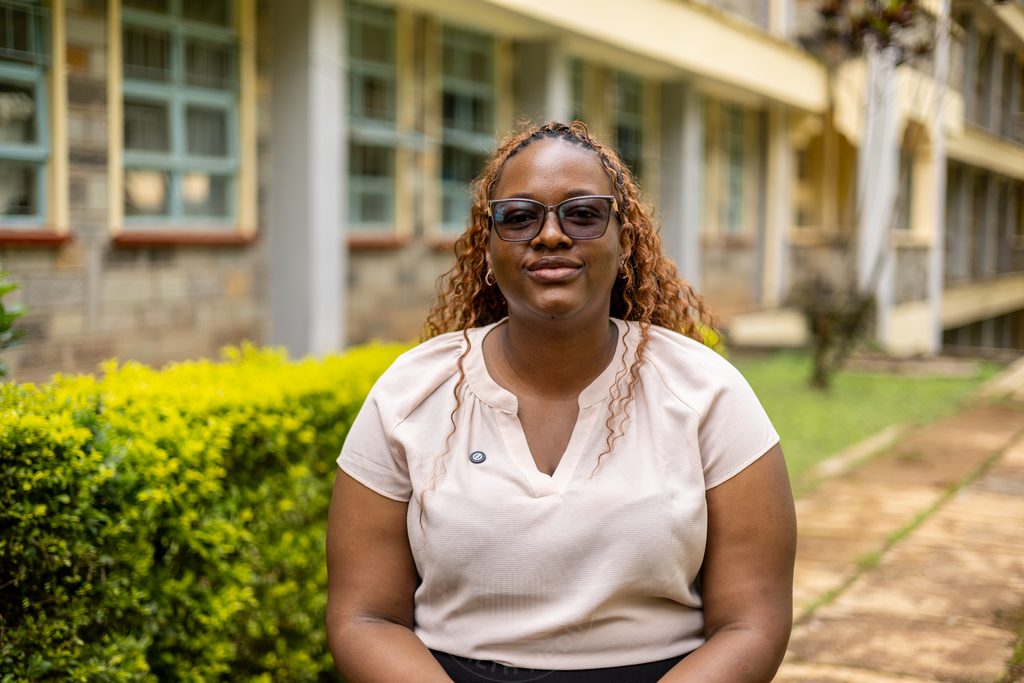
Caught early, Dr Nangena says, keratoconus can often be managed with spectacles or specialised contact lenses, and treatment can slow or halt its progression, preserving the patient’s natural cornea.
“We need greater public awareness about corneal donation. Some people believe the body must remain intact after death, yet donating a cornea could restore sight to another person,” she says. “The shortage of donated corneas makes prevention even more important, while stronger professional training, continuing education and access to diagnostic technology are needed to detect keratoconus early.”
The study found a significant link between practitioners’ qualifications and their knowledge of early keratoconus management, though factors such as age, gender, professional cadre and years of experience showed no such association.
Myopia, long-sightedness and astigmatism the most common eye conditions in children
Researchers also point to limited access to specialised equipment, including corneal topographers, tomographers and pachymeters, as a likely contributor to delayed diagnosis.
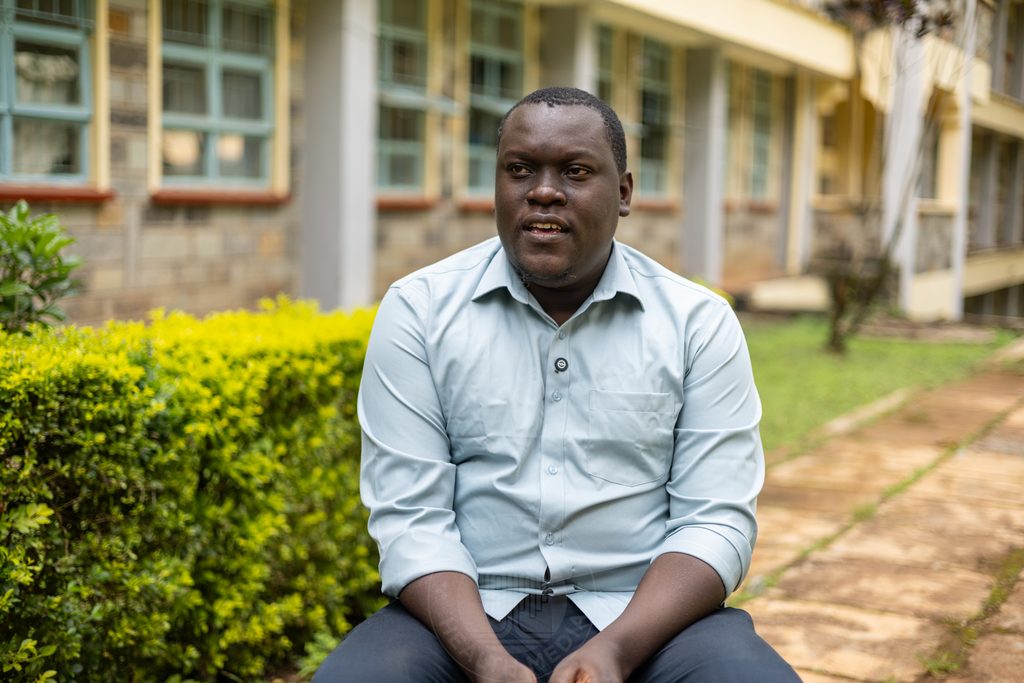
Dr Alfred Ragot, a consultant in paediatric optometry and binocular vision, is focused on a different but related concern: the growing burden of myopia among children. Refractive errors, including myopia, long-sightedness and astigmatism, are among the most common eye conditions affecting children, he says, and often go unnoticed because children assume their vision is normal: “Children assume everyone sees the way they do.”
Dr Ragot says parents may mistake signs like sitting close to the television or struggling to read the classroom board for inattentiveness or poor academic performance.
Research by MMUST has found that about 7.5 per cent of school-going children in Kakamega County have myopia, with boys appearing disproportionately affected. Dr Ragot estimates that around 30 per cent of the world’s population currently has myopia, a figure that could reach half the global population by 2050.
The concern extends beyond the need for spectacles. “Myopia can progress, and when it becomes severe, it can increase the risk of serious eye complications, including retinal detachment and choroidal degeneration,” Dr Ragot says. “A child may start with a small prescription and gradually develop severe short-sightedness, yet newer interventions to control myopia progression are still not widely available in Kenya.”
More time spent indoors on smartphones, tablets and computers are contributing factors
He points to lifestyle shifts, including more time spent indoors on smartphones, tablets and computers, and less time outdoors, as contributing factors. “Children need more time outdoors, while parents, schools and health workers must recognise that myopia can progress and ensure affected children receive timely eye examinations and appropriate management.”
Astigmatism, caused by an irregularly shaped cornea, can compound the problem, causing a child to see letters or objects as distorted rather than simply blurred. It can occur alongside myopia or long-sightedness, Dr Ragot says, making comprehensive eye examinations important, and the earlier such conditions are identified, the greater the opportunity to manage them.

For Dr Julius Rono, the science of vision extends into international para-sport. An internationally certified visual impairment classifier for the International Paralympic Committee and the International Blind Sports Federation, Dr Rono assesses athletes with visual impairment to determine their eligibility and sporting class.
“Classification is done by trained optometrists and ophthalmologists working as a panel. We examine athletes, review their investigations and collectively determine the appropriate class. No individual classifier makes the final decision alone,” Dr Rono says.
Strengthening Kenya’s eye-care workforce critical to tackling vision loss
Athletes whose conditions are expected to change may receive a review status, while those considered stable are given a fixed status. The process, he says, demands impartiality, even when assessing Kenyan athletes. His path into the role began with encouragement from a university lecturer while he was training as an optometrist.
All three specialists agree that strengthening Kenya’s eye-care workforce is critical to tackling preventable vision loss.
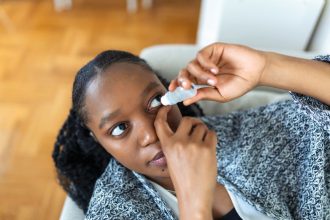
Dr Rono, who chairs the Department of Optometry and Vision Sciences at MMUST, wants the university to train optometrists who can meet international standards, along with greater research into eye conditions specific to the region. “Our region has very unique conditions being in the tropical areas,” he says, arguing that some remain insufficiently studied.
Dr Nangena agrees that Kenya needs more optometrists working across the country. “Increasing the number of eye-care professionals will bring services closer to communities, allowing conditions to be detected and treated earlier. It will also reduce the need for patients to travel long distances to access specialised eye-care services,” she says. “Some of the most rewarding cases are people who believe they are going blind, only to discover that their vision can be restored with something as simple as spectacles. Seeing that transformation is one of the joys of this profession.”
Children with cataracts, she adds, can also benefit from timely referral for surgery and a swift return to school. For Dr Nangena, such cases are proof that early diagnosis remains central to good eye care, though achieving it will take more than clinical treatment alone.
We believe in the free flow of information
Republish our articles for free, online or in print, under Creative Commons licence.