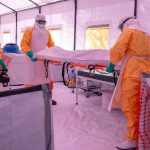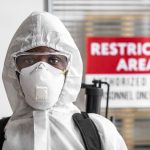


The government says the Ebola isolation facility in Laikipia is not just for Americans and is a crucial investment that will strengthen Kenya’s outbreak preparedness with specialised infrastructure, training and equipment.
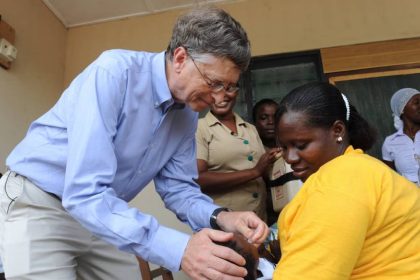
Seven American humanitarian workers are quarantining at the Laikipia Ebola isolation facility under a 21-day observation period, after working on the frontline of the Ebola response in the Democratic Republic of Congo (DRC). Their presence has reopened the contentious public health disputes over whether the country is protecting its interests or exposing its citizens to a deadly disease.
The workers entered Kenya around July 13, 2026, as the country’s attention was focused on a by-election in Ol Kalou. None of the seven has shown symptoms of Ebola. All are employees of Samaritan’s Purse, a US humanitarian organisation that has been operating Ebola treatment centres in Bunia and Nyankunde in the DRC, areas at the centre of the outbreak response.
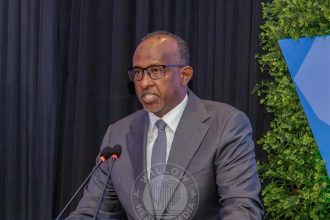
Kenya’s Ministry of Health is yet to issue any public response on the quarantine, but according to a US State Department official, the Americans voluntarily moved to the Laikipia facility “out of an abundance of caution,” under the observation of US Public Health Service clinicians, after new US travel restrictions required anyone who had visited the DRC to quarantine outside the US for three weeks.
For many Kenyans, the issue has never simply been about whether the facility can contain Ebola. It has been about who made the decision, who would be protected, who would bear the risk, and whether Kenya’s public health system was being used to solve a problem created elsewhere.
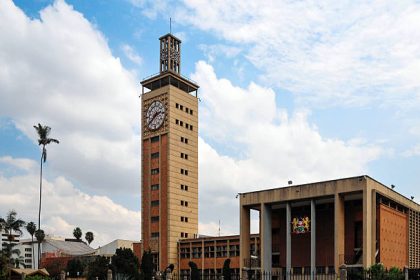
Opposition has been particularly strong in Laikipia, where residents staged demonstrations against the proposed facility.
Laikipia Deputy Governor Reuben Kamuri said regarding the Ebola isolation facility in Laikipia, “People have said they do not want it. If there are issues that require engagement, then all stakeholders must be involved.”
Kenya becoming a destination for foreign patients because the US did not want to bring them home
The anger was driven partly by fears that the facility would expose local communities to Ebola and that the project was presented to them as a decision already made, rather than one requiring meaningful public participation.
Archbishop Maurice Muhatia Makumba, chairman of the Kenya Conference of Catholic Bishops, also questioned the arrangement, arguing, “There is an inherent threat to the life of Kenyan citizens that must be addressed because we would be importing a deadly disease.” He also asked what Kenya stood to gain from hosting foreign patients “not welcome in their own country for fear and danger of infection, yet accommodated in our country at the risk of our people.”
In May, the High Court issued conservatory orders restraining the government from establishing, operationalising, facilitating, approving or permitting an Ebola exposure, quarantine, isolation or treatment facility in Kenya under any arrangement with the United States or another foreign government or agency. The order also required the government to disclose the terms of any agreement, public health and biosafety assessments, and approvals obtained from relevant authorities.
The legal challenge was mounted by the Katiba Institute, with the Law Society of Kenya (LSK) also opposing the arrangement, on the grounds that the project had been advanced without adequate public participation and posed risks to Kenya’s health system.
The court order became a central point of the dispute after construction activities were reported to have continued regardless.
Health CS Aden Duale said he had directed immediate cessation of construction, site preparation in Laikipia
Health Cabinet Secretary Aden Duale was found in contempt of court over the continued construction. He told the High Court he had ordered an immediate halt to the work and apologised. “It was never the intention of the ministry or myself as the Cabinet Secretary to disregard, undermine, or act in defiance of the orders,” Duale said, adding he would be the last person to disregard a court order. The Ministry of Health later confirmed construction had been halted.
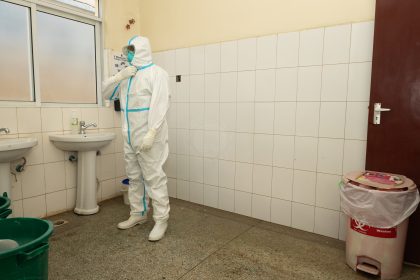
The arrival of the seven American aid workers has now brought the dispute back into the spotlight. Their quarantine has prompted activists, including the Katiba Institute, to accuse the government of effectively operationalising a facility that had been blocked by the court, with the group describing the reports on social media as “an absolute outrage” if confirmed.
The government has defended the broader partnership with the United States as an investment in Kenya’s preparedness against infectious disease outbreaks.
Medical Services Principal Secretary Dr Ouma Oluga has argued the facility should not be viewed merely as a centre for Americans, saying Kenya stands to gain from the specialised infrastructure, training, equipment and systems that come with the arrangement. The government’s position is that Kenya’s geographical position, as a regional hub for trade, travel and commerce connected by air and land to countries facing outbreaks, makes preparedness essential.
Kenya also borders Uganda, which has recorded Ebola cases linked to the wider outbreak, meaning the movement of people, goods and humanitarian workers can quickly turn a regional outbreak into a domestic concern.
Kenya should not become a “containment colony” for a pathogen it did not generate
The United States pledged $13.5 million (Ksh1.7 billion), to support Kenya’s Ebola preparedness efforts, presented as part of a wider health-security partnership covering preparedness, surveillance and response capacity. Duale has said the arrangement forms part of a broader plan to strengthen Ebola preparedness, including additional centres across the country, arguing Kenya was chosen because of its regional infrastructure, international connectivity and strategic position. Critics counter that these benefits cannot substitute for transparency.
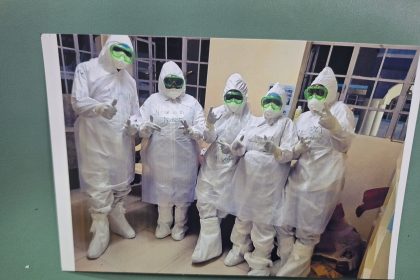
The Kenya Medical Practitioners, Pharmacists and Dentists Union (KMPDU) strongly condemned what it termed backdoor negotiations and issued a 48-hour ultimatum threatening a nationwide strike. The union argued Kenya should not become a “containment colony” for a pathogen it did not generate, rejected trading biosecurity for aid, and highlighted the inconsistency of flying exposed individuals to Kenya when it was deemed too risky to bring them home to the US.
It opposed what it called an “apartheid healthcare model.” Dr Clarence Eboso and fellow medics publicly warned: “No amount of funding, no amount of diplomatic goodwill, no amount of international recognition can justify exposing Kenyans to avoidable risk.” Speaking in Parliament, Dr James Nyikal, chairman of the National Assembly Health Committee, challenged the rationale for routing Ebola-exposed individuals through Laikipia.
Cases linked to the Ebola outbreak have also been reported in France and Germany
The dispute is unfolding against the backdrop of the worst phase of the current Bundibugyo Ebola outbreak. By July 19, the DRC had reported 2,344 confirmed cases and 930 deaths, with a further 20 confirmed cases and two deaths reported in Uganda. Cases linked to the outbreak have also been reported in France and Germany. The World Health Organization (WHO) reported 119 confirmed infections among healthcare workers, including 36 deaths, as of July 15.
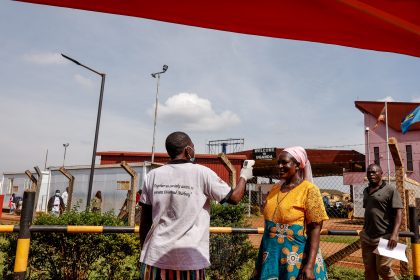
France reported its first imported case on June 24, after a health worker returned from a humanitarian mission in the DRC. The patient recovered and was discharged on July 4 following two negative PCR tests, with no secondary transmission identified. Germany has treated two evacuated American workers, one of whom has since recovered while the other remains in stable condition.
The outbreak is caused by the Bundibugyo virus, for which there is no approved vaccine or treatment, making isolation facilities central to the response. For Kenya, the American workers’ quarantine has turned a once-hypothetical project into a live test of the country’s preparedness and legal accountability.
We believe in the free flow of information
Republish our articles for free, online or in print, under Creative Commons licence.