Women with disabilities are quietly powering Kenya’s medical device industry in Kilifi County, one precisely fitted clip at a time.
By 6.30 in the morning, the factory is already awake. Everline Auma, a mother of three with a hearing impairment, is at her station in the clipping department. Sign language has always been the language through which she understands the world, and this morning it carries a conversation with someone standing just beside her: her daughter, Monica Adhiambo.
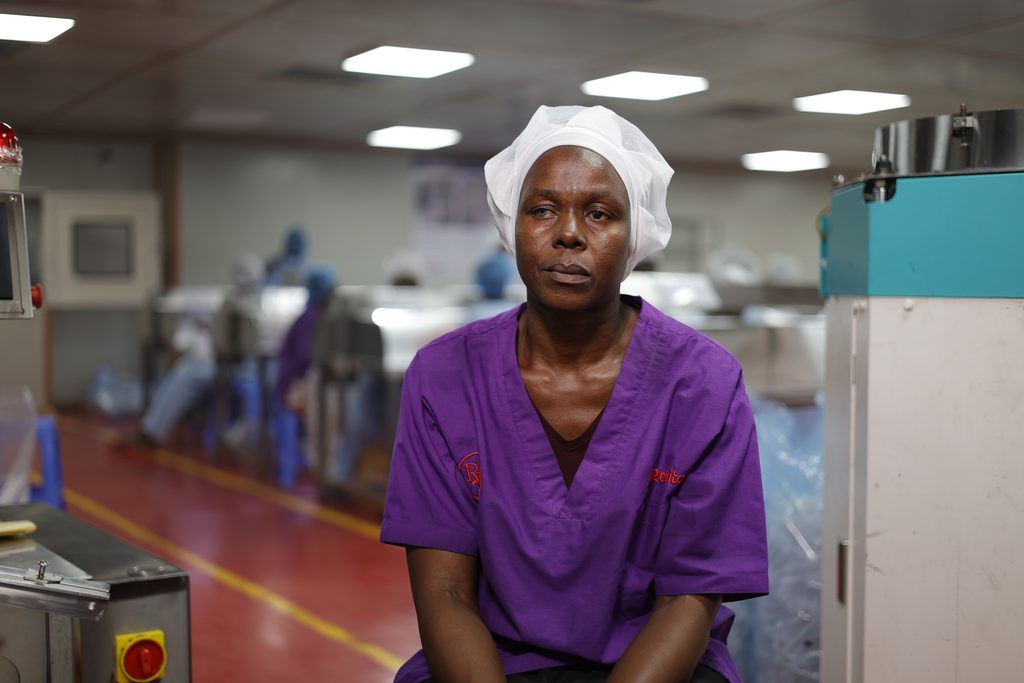
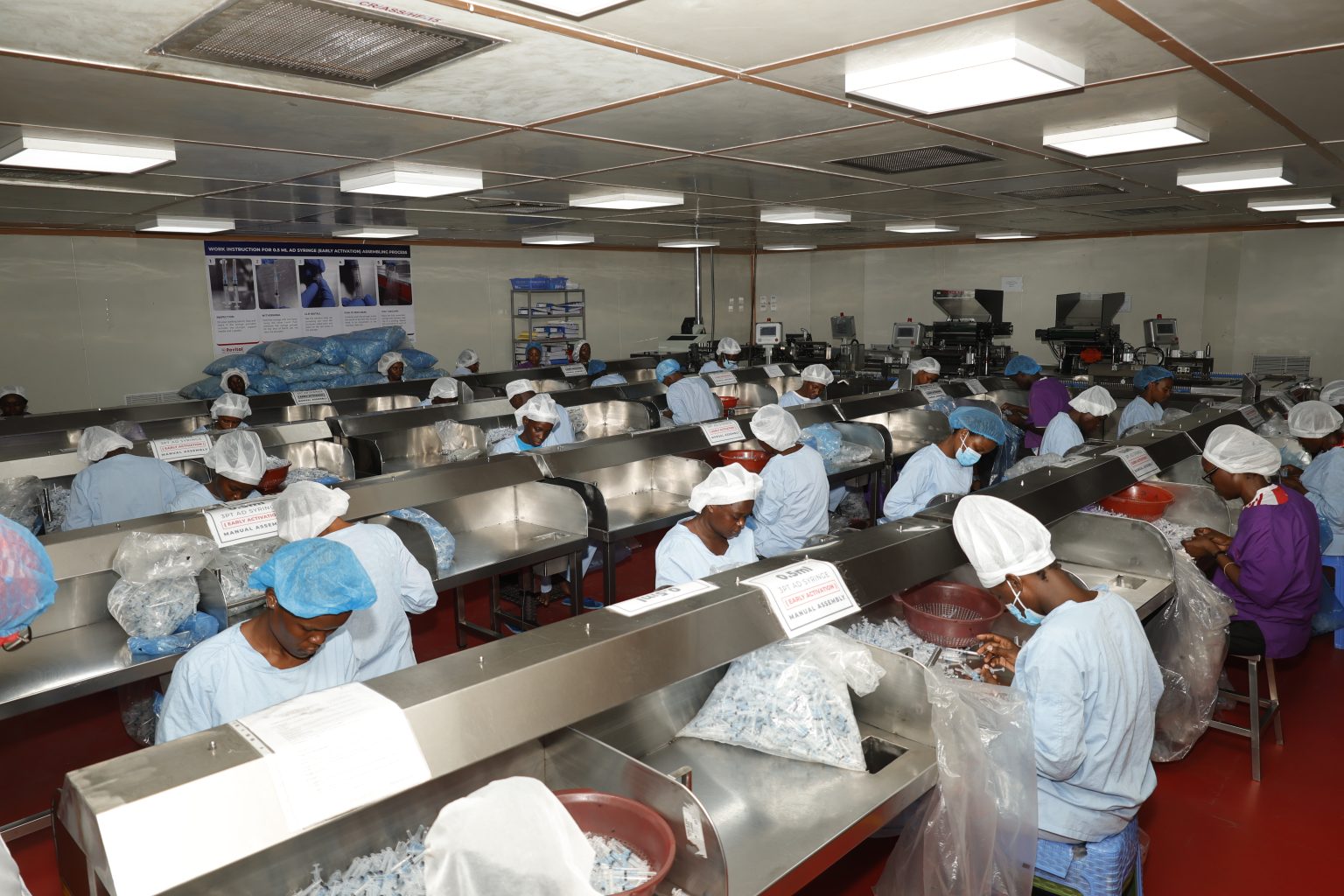
Their hands move quickly. Their expressions carry meaning only they can fully read. This is how every workday begins for the mother and daughter duo at Revital Healthcare in Kilifi County, where they work side by side attaching tiny clips to auto-disable syringes, small components that ensure a syringe can only be used once before locking permanently. The work demands precision. A tiny mistake could compromise a medical device destined for a hospital thousands of kilometres away.
For Everline, the job represents something far bigger than assembling medical devices. It restored her confidence after years of struggling to find decent work as a person with a hearing impairment. Speaking through a sign language interpreter, she recalls the rejection that became all too familiar. “Before I got this job, they said a disabled person cannot get a job,” she says. Communication was often the biggest barrier. “The challenge was interacting with hearing people because they could not understand sign language,” she explains.
Everything changed when a friend told her about a vacancy at Revital Healthcare. In April 2022, she walked through the factory gates for the first time. Today, more than four years later, she is one of the experienced workers in the clipping department, helping assemble syringes that will eventually be used in vaccination programmes across Kenya and around the world. “The products we make help save lives globally,” she signs, before adding: “This job has really changed my life. Now I can support myself, my family and I feel worthy.”
Walking beside her every day is Monica, who joined the company in November last year in the same department as her mother. Growing up with a deaf parent meant sign language became second nature long before Monica ever set foot in the factory; she had spent years interpreting for her mother at home, in public, and wherever communication became difficult.
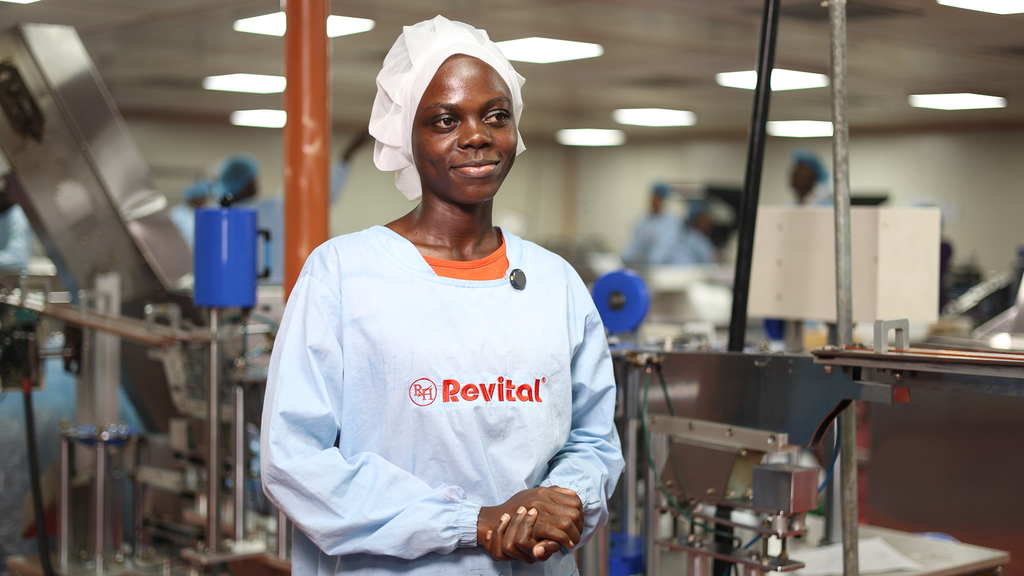
I feel proud when I find the syringe in a chemist near me because I know I have saved lives
Today their relationship has evolved. They are no longer simply mother and daughter but workmates, each focused on her own responsibilities during the shift, comforted by knowing they are only a few workstations apart. “My mother is hardworking,” Monica says. “I help her whenever she wants to communicate, both at home and at work.”
Although she studied baking technology, manufacturing was never part of Monica’s original career plan. Yet she has embraced it. “This work has taught me teamwork and time management,” she says, adding that she hopes it challenges a stereotype too: “People think manufacturing is for men, but in reality, women are also skilled and they can support.”
That belief is visible across the factory floor, where women occupy production lines many would traditionally associate with men, inspecting products, operating equipment and overseeing quality standards. For Monica, one of the most rewarding moments comes outside the factory altogether. Sometimes she walks into a pharmacy and notices one of the company’s products on a shelf and “I feel proud when I find the syringe in a chemist near me because I know I have saved lives.”
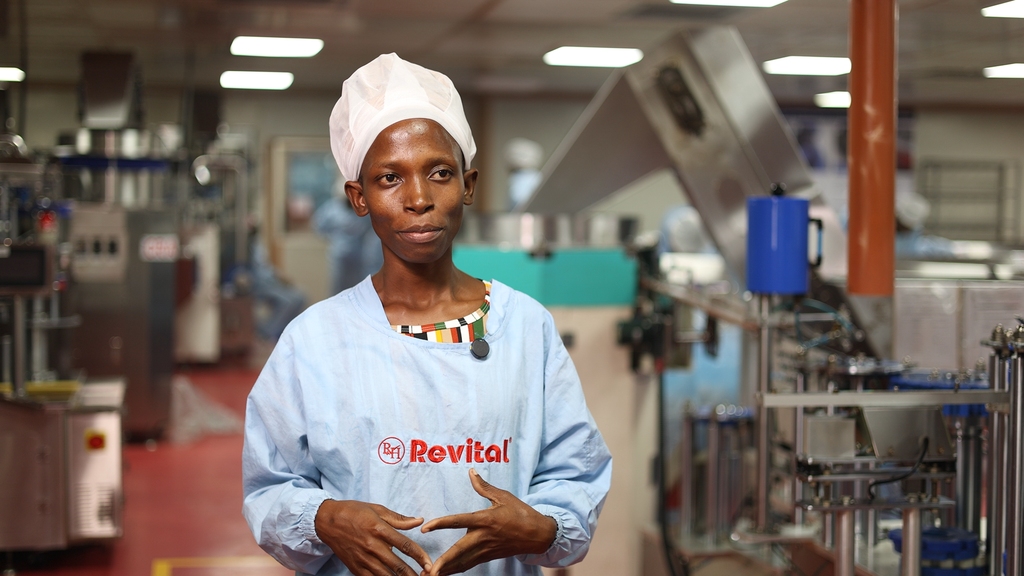
Moving between the production stations is Eunice Medza Munga, the clipping department supervisor, who bridges two worlds inside the factory: hearing and non-hearing. Sign language was never part of her original career path. She learnt it for someone she loved. “My favourite cousin is deaf,” she explains. “I realised I couldn’t communicate effectively with her.” Determined to change that, she began teaching herself Kenyan Sign Language in 2021 before undertaking an attachment at a school in Mtwapa to sharpen her skills, never imagining those lessons would one day shape her career.
When Eunice joined Revital Healthcare in March this year, she started in the clipping department, but her interpretation duties increasingly pulled her away from production, as visitors and employees with hearing impairments needed her help communicating. Rather than treating this as a distraction, management recognised it as part of the job and promoted her to supervisor, giving her the flexibility to oversee production while supporting colleagues who needed her.
Anna Juma Fondo now recalls how ‘I thought I wouldn’t get the job because of my physical disability’
The work has taught her that communication is rarely as straightforward as many hearing people assume. “Some workmates here did not go to school or dropped out in, let’s say, Grade Four,” she explains. “So, they do not know the sign language taught in school. We use what we call local sign language.” For Everline, that has made a real difference: she no longer relies entirely on her daughter to interpret every workplace conversation, since her supervisor now speaks to her directly.
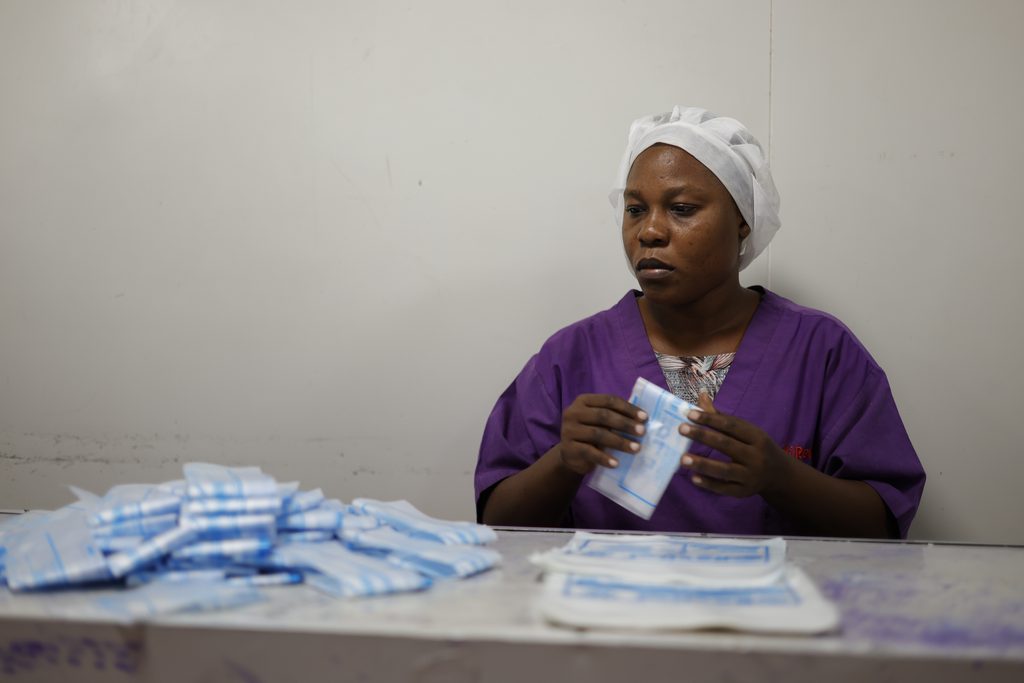
Elsewhere in the factory, another story of resilience unfolds. Anna Juma Fondo arrives at work every morning from Shariani to the infusion department, yet she recalls how “I thought I wouldn’t get the job because of my physical disability.” Today, she can pay for her own transport to work and buy herself a meal. But when she reflects on the workplace, kindness is what comes to mind. Not money, as “Whenever I need assistance, like carrying a box, they always help me.”
Stories like Everline’s and Anna’s remain uncommon in Kenya’s manufacturing sector. According to the 2019 Kenya Population and Housing Census, about 2.2 per cent of Kenyans, roughly 900,000 people, live with some form of disability. Women account for 57 per cent of that figure, compared with 43 per cent for men, and disability is more prevalent in rural areas, at 80 per cent, than in urban areas, at 20 per cent. The most common disabilities relate to mobility, at 42 per cent, and vision, at 36.4 per cent, followed by cognition at 23.2 per cent, hearing at 16.7 per cent, self-care at 15.3 per cent and communication at 12.1 per cent.
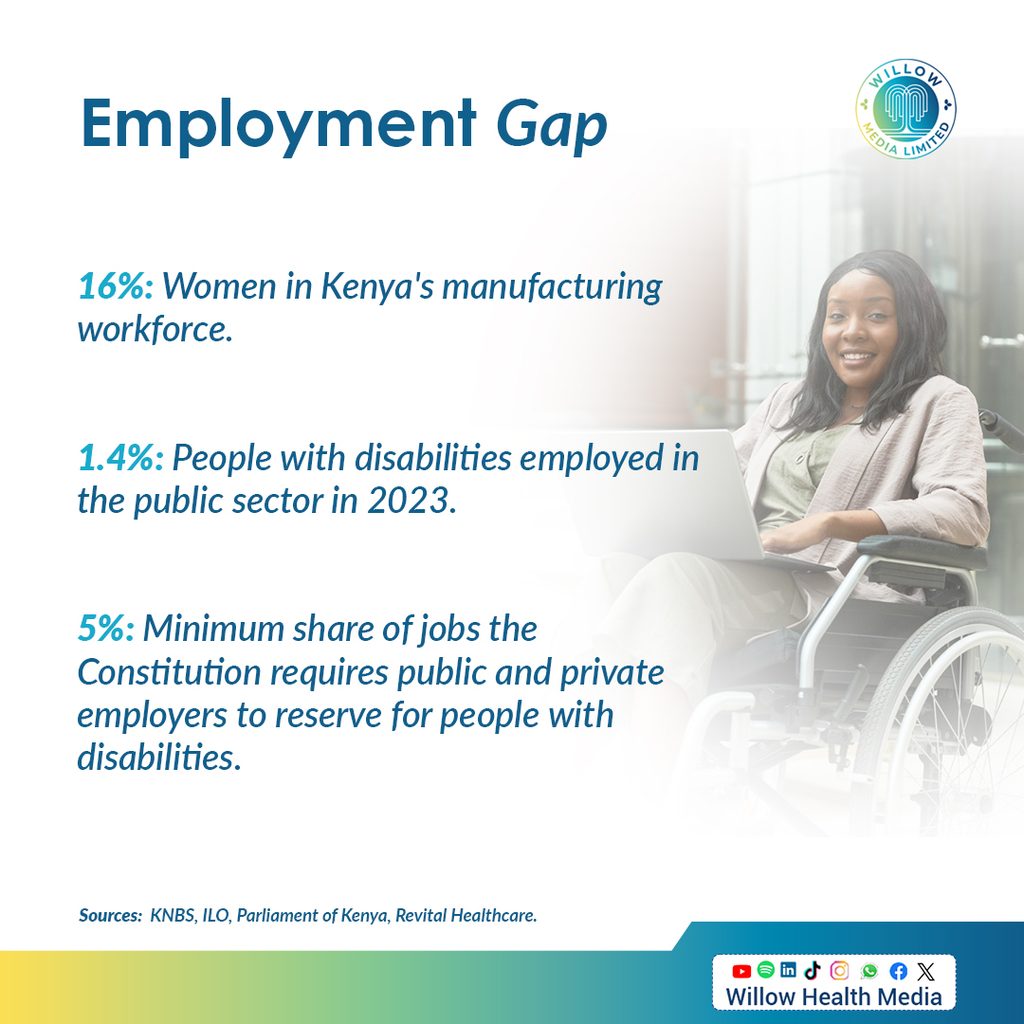
Despite constitutional protections and disability legislation, many persons with disabilities continue to struggle to secure formal employment, a challenge evident in manufacturing. Women make up only 16 per cent of Kenya’s manufacturing workforce, according to International Labour Organization data, and their representation shrinks further when disability is factored in. In 2023, then Labour Cabinet Secretary Florence Bore told Parliament that only 1.4 per cent of persons with disabilities had been employed in the public sector, well below the constitutional requirement that at least five per cent of positions in public and private institutions be reserved for persons with disabilities.
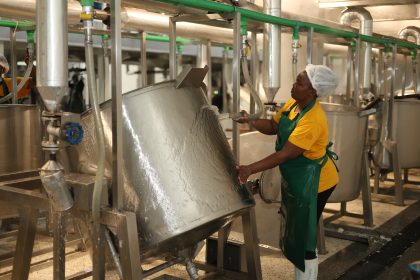
The stories of Everline, Monica, Eunice and Anna did not happen by chance. According to Roonek Vora, Revital Healthcare’s Sales and Marketing Director, the company’s workforce today is the result of a deliberate decision made several years ago. The factory now manufactures more than two billion medical devices annually, exporting to more than 58 countries. From fewer than 60 employees when the company started in 2009, it has grown to nearly 700 employees, with women making up almost 80 per cent of the workforce.
Men used to disappear and come back on the 5th of every month asking for salary advance
“When we relocated ourselves to Kilifi County in 2018 and started recruiting and training people again, we noticed a pattern,” Vora recalls. “At the end of every month, the men used to disappear, and they would come back on the 5th of every month asking for an advance salary before starting work again.” The company saw an opportunity to rethink its hiring strategy. “So, we changed the system in the factory,” he says. “The chairman asked, ‘Why don’t we employ women?'”
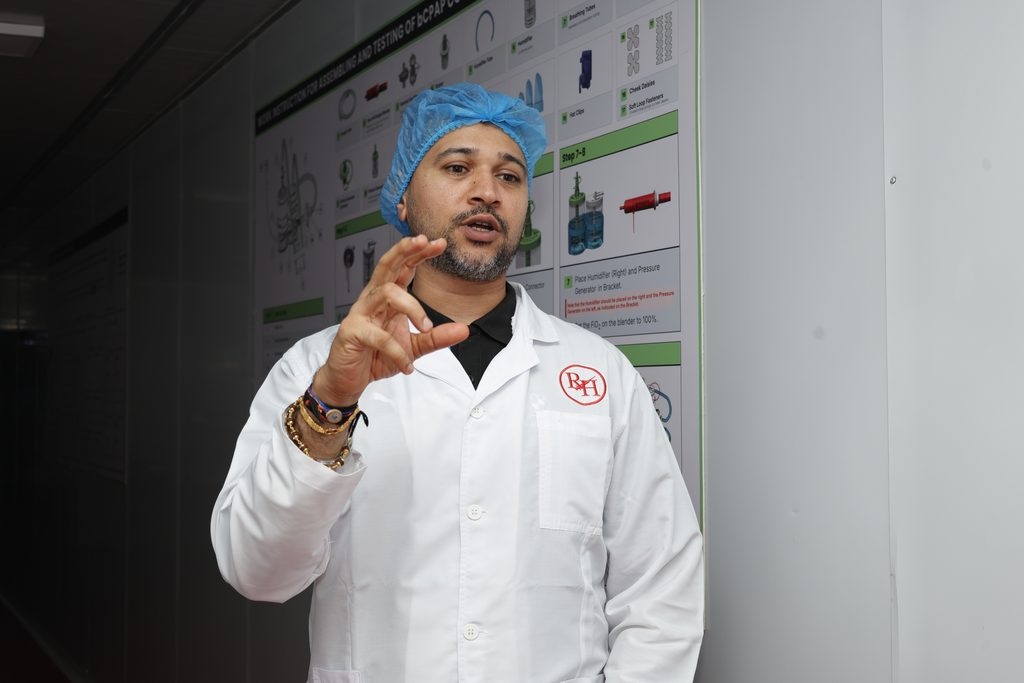
The decision was based on what the company observed. “First and foremost, women are hardworking. Women will take their salaries home, feed the children, pay rent, pay school fees, and make sure the household is running.” Rather than simply filling vacancies, the company began redesigning its production lines around women’s employment. “If we are launching a new product, we analyse the workmanship that we require and, where women are suitable, we put women.”
That philosophy later shaped one of the company’s biggest manufacturing projects. In 2021, with support from the Gates Foundation, Revital received funding to manufacture what Vora describes as Africa’s first activation syringe. The agreement went beyond producing syringes at an agreed price. It also required the company to keep expanding production capacity while creating employment opportunities. “But the third commitment,” Vora says, “was to employ women as much as possible.”
The production line established under that project now employs between 120 and 130 workers, most of them women. Among them are between 15 and 20 women with hearing and speech impairments, many of whom underwent nearly six months of training before production began. They work alongside hearing colleagues, communicating through sign language while assembling medical devices destined for hospitals across Kenya and beyond.
Kenya still has a long way to go in creating equal employment opportunities for persons with disabilities. As the afternoon sun begins to set over Kilifi, the factory gradually slows. By 4pm, mother and daughter leave together, just as they arrived. Their workday may be over, but not their partnership. Back home, they prepare supper side by side, the conversation continuing in sign language, just as it has throughout their lives.
We believe in the free flow of information
Republish our articles for free, online or in print, under Creative Commons licence.