

As a young boy, I heard a vet tell my mother to slaughter all sick animals because there was no cure. That day, I vowed to find a vaccine.
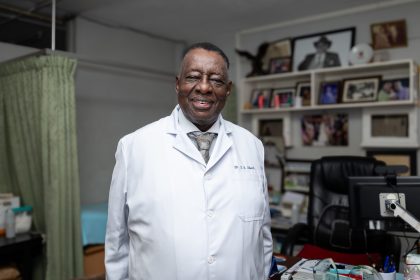
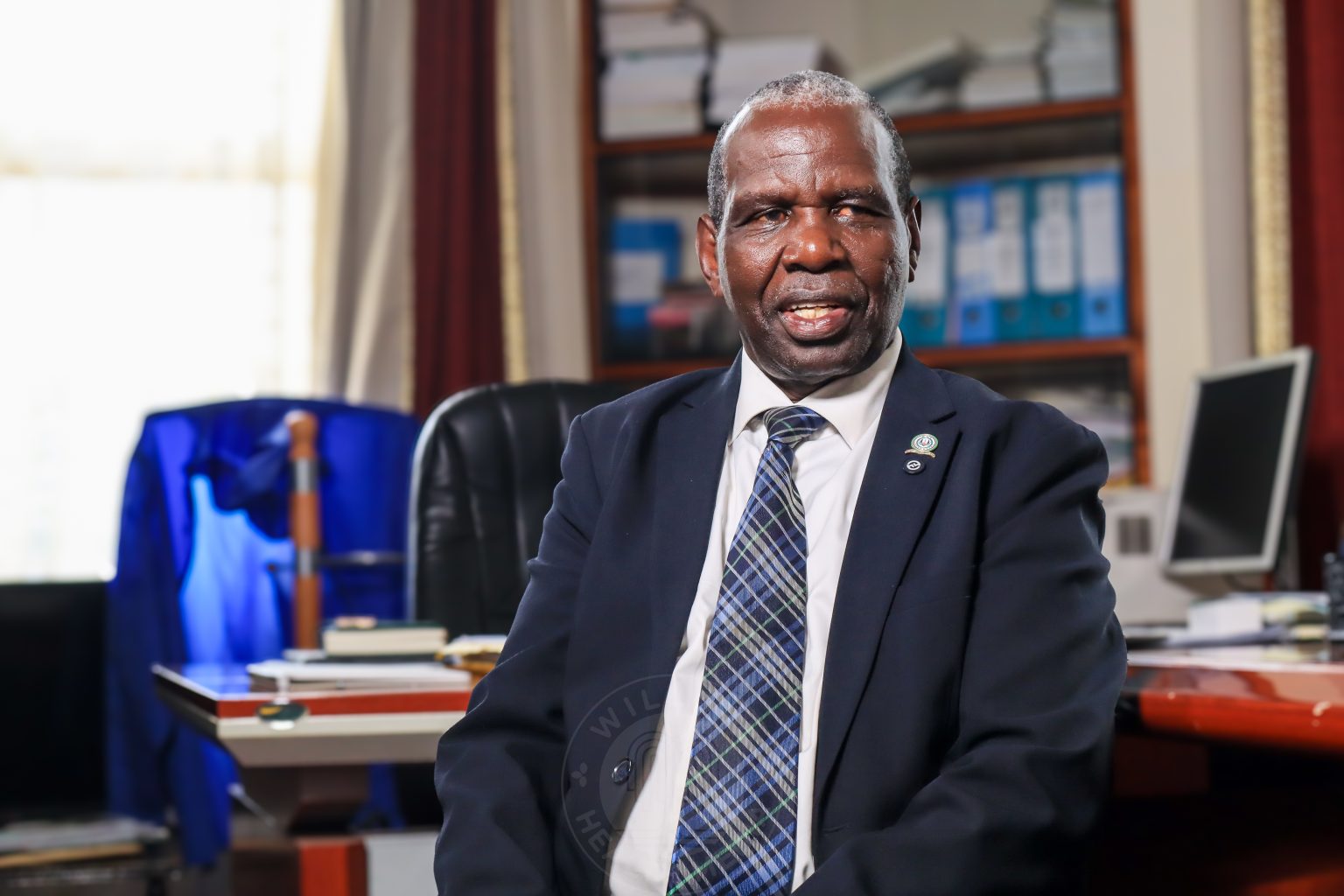
Prof Simeon Mining set out to save his parents’ livestock. He ended up shaping the careers of some of Kenya’s finest medical doctors, warning a sitting president about a premature HIV cure announcement, and earning an honorary doctorate from a Swedish university for his contributions to malaria and cancer research. His journey from a rural Nandi home to the corridors of Moi University is one of the more unlikely stories in Kenyan academia.
As a young boy, Prof Mining watched helplessly as a veterinary officer advised his mother to slaughter all their sick animals because there was no cure for the disease killing them. “I vowed to find a cure for the disease when I grew up,” he recalled. His curiosity led him to identify the culprit: East Coast Fever, a disease spread by the brown-ear tick. The only way to find a solution was to study veterinary medicine.
In 1979, an advert about studying for a Doctor of Veterinary Medicine in Moscow caught his eye. After a rigorous interview, he joined the Moscow State Academy of Veterinary Medicine in 1980 for his undergraduate studies, followed by a master’s degree. He also served as Secretary General of the University Students’ Union during his time there.
An unexpected moment in 1982 would prove consequential years later. Prof Mining was in Kenya for the holidays when Kenya Air Force soldiers staged a military coup that ultimately failed. Being the vocal leader he was, Mining sent a message to State House Comptroller Abraham Kiptanui congratulating President Daniel Moi’s regime for crushing the coup. The message was deemed controversial at the time. He had no idea it would one day open a door to the president’s ear when he needed it most.
Farmers would go for lunch and not come back until the following day. I quit after nine months
After completing his studies, Prof Mining was employed by the Kenya Agricultural and Livestock Research Organisation (KALRO) in 1985 and posted to Trans Nzoia County. The excitement faded quickly. “We were seven officers at the station and all we could do was to wait for farmers to report health concerns about their livestock. People would go for lunch and not come back until the following day. Everything there contradicted my ambition, and I quit after nine months,” he said.
Leaving KALRO pushed him deeper into research. Between 1988 and 1992, he pursued a PhD in Veterinary Parasitology at the University of Liverpool in the United Kingdom. His dissertation investigated maternally derived immunity in calves against Theileria parva, the parasite that causes East Coast Fever. It was during this period that he crossed paths with celebrated researchers, including the late Dr Davy Koech, founding member and former Director of the Kenya Medical Research Institute and a pioneering figure in immunology and molecular medicine.
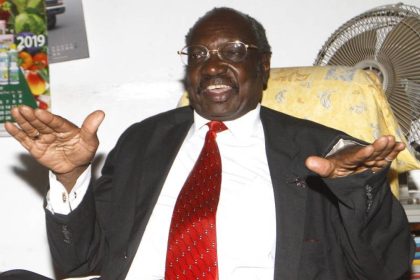
It was also during this period that Prof Mining became entangled in one of Kenya’s most sensitive scientific controversies. The late Prof Arthur Obel had developed a purported HIV cure known as Pearl Omega, and KEMRI, under Dr Koech’s leadership, had developed and patented KEMRON. The government had been persuaded to announce the drugs as cures for HIV.
Prof Mining, Dr Frank Lule and Dr Koech were deeply worried. Prof Mining’s Zambian colleague from Liverpool, whose country had sought after KEMRON, had established that the drug was a virus inhibitor, not a cure. Canadian laboratories later modified the drug into antiretrovirals and made it tolerable to the human body.
The three decided they had to act. They first approached the late Mwai Kibaki, who had been moved from the Vice Presidency to the Ministry of Health in 1988. Then came the harder task: getting to President Moi. “Together with Dr Lule, we looked for President Moi and explained to him that the purported HIV cure by Prof Obel was not tried and tested, and KEMRON, which helped prevent HIV cells from multiplying, was still under trials in Zambia, hence couldn’t be pronounced as a cure,” Prof Mining recalled.
President Moi remembered Prof Mining after meeting at a wedding in his Kabarak home
The message from years earlier proved its worth. Prof Mining had encountered the president at a wedding in Kabarak in 1989, and the earlier congratulatory message had left an impression. “The president remembered me, and he listened to our insights as experts calmly,” he said.
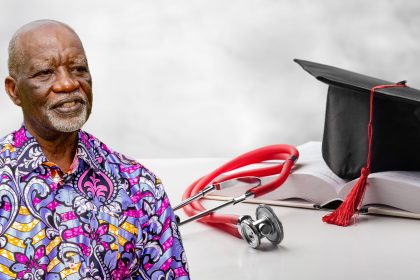
In 1993, with persuasion from Prof Aaron Mengech, Prof Mining joined Moi University’s School of Medicine, which had been established in 1988. His transition from veterinary science to medical education raised eyebrows, but he was clear about the logic. “I came to Medical School after my PhD in Veterinary Parasitology from Liverpool University. The concepts of immunology in animals and humans are the same. In fact, you do more animal work in medical research,” he explained.
The move proved fruitful. He went on to teach medical students on immune systems research and was eventually elevated to Director of Research, a role he served in for eight years. He is currently Registrar for Administration, Planning and Strategy at Moi University and president of the Kenya Society for Immunology, which fosters immunology development, research and mentoring.
Prof Mining is passionate about the need for African researchers to generate knowledge that addresses local challenges rather than relying on frameworks developed elsewhere. “Teaching is basic, but whose knowledge are we using to teach? We must create our own knowledge,” he said.
He cited the example of breast cancer medicine that works better for Caucasian women than for Africans, because the drug trials were designed with Caucasian populations in mind. “Precision in medicine is important. The Caucasian women can contain the toxicity of the medicine as its trials were targeted at them,” he explained. “Institutions must live up to the training and research goals they promise to offer. Kenya cannot rely on foreigners to address its challenges.”
The measure of good research should not be publication in prestigious journals but translation into policy
He also called for better training in grant writing and research collaboration, pointing to Moi University’s model of matching every United States dollar received in grants with three dollars of its own. “This way we meet halfway and can uphold standards and knowledge to prevent foreign countries from dumping into our country,” he said.
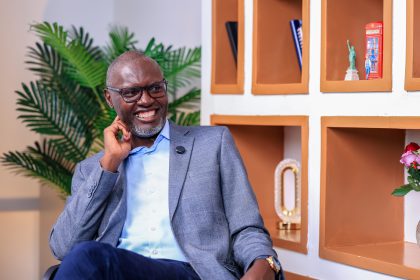
On funding, Prof Mining was direct. According to the World Bank, Kenya invests 0.8 per cent of its GDP in research and development, below the one per cent recommended by the African Union and well short of the two per cent national target set under the Science, Technology and Innovation Act of 2013. “We must confront governments to interact about the gap in funding and how to fill it,” he said.
He also argued that the measure of good research should not be publication in prestigious journals but its translation into policy. “Focus should not be on publishing papers in revered journals but on turning them into policies. It should be about how we do prestigious research in conferences useful to society,” he said.
Kenyan immunologists, he noted, demonstrated this principle during the COVID-19 pandemic by championing local solutions such as sanitisers and hand washes, which allowed Kenyan learners to return to school faster than in countries that kept schools closed for up to three years.
I was there with my nine-year-old daughter when Kenyan national anthem was played, flag flown
Although Prof Mining did not develop a vaccine for East Coast Fever during his PhD research, other scientists built on his findings to produce one, though it remains expensive. He hopes it will be subsidised soon.
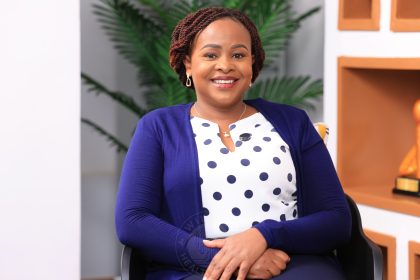
His contributions to malaria and cancer research earned him an Honorary Doctor of Medicine degree from Linköping University in Sweden. He recalls the moment vividly. “I was there with my nine-year-old daughter when the Kenyan national anthem was played and flag flown,” he said.
Away from academia, he retreats to his farm in Nandi and chairs the board of management of Kapsabet Boys High School. “My professional fulfilment is in good leadership and mentorship. I’m glad that I chair the board of management of Kapsabet Boys High School, where I’m privileged to mentor young boys,” he said.
The boy who vowed to cure a cattle disease never quite did. But the journey that vow set in motion changed medicine, policy and the lives of countless students in ways he could never have imagined.