


Nine years after a Collective Bargaining Agreement (CBA) was signed, nurses lament that key promises remain unmet triggering a strike over broken promises now being measured in lives lost.
Dr Amakove Wala, a medical doctor and founder of Beyond the Stethoscope, recounted on her social media page that a close friend’s child died after developing jaundice, a death she linked directly to the strain the ongoing nurses’ strike in Kenya has placed on public hospitals. The child, Elizabeth, was rushed to the nearest public facility, but staff there were already stretched thin by the prolonged walkout, now in its 42nd day. Her parents then searched for a private hospital that could treat her, eventually finding one closer to Kisumu County. She did not survive the delay.
Dr Wala’s post on Facebook captures, in human terms, what the numbers have been signalling for weeks.
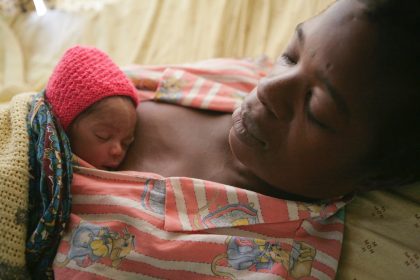
The Kenya National Commission on Human Rights (KNCHR) has recorded 79 deaths linked to the disruption, comprising eight maternal, 16 neonatal and 55 perinatal deaths, though it has stressed that the figures require independent verification before any conclusions are drawn about direct causation.
Even with that caution, the commission has described the strike as having escalated from a labour dispute into a national public health and human rights crisis.
The pressure is now spreading beyond nursing. On Monday, September 7, 2026, Kenya Medical Practitioners, Pharmacists and Dentists Union (KMPDU) Secretary General, Dr Davji Atellah, gave the government seven days to resolve the nurses’ strike, warning that doctors would issue a nationwide strike notice if the impasse continued. “What is unfolding across the country is no longer a labour dispute that can be managed through delays, threats or court processes. It is a national healthcare emergency,” Atellah said.
Dr Atellah said doctors could not simply absorb nurses’ duties, warning that public hospitals were operating at bare minimum capacity. “Doctors cannot do the nursing jobs,” he said, adding that essential services had been disrupted to the point where patients needing nursing care, which he called key to any functioning health service, could not access it. The longer the strike continued, he warned, the greater the pressure on doctors and other health workers, adding that the government could not keep assuming things were normal when a core part of the health system had been on strike for more than 40 days.
At the heart of the dispute is the unresolved 2017 Collective Bargaining Agreement (CBA) and its return-to-work commitments, alongside ongoing negotiations over a new 2025 to 2029 CBA. Nurses are demanding implementation of outstanding provisions, including the nursing service allowance, uniform and commuter allowances, and career progression guidelines, as well as permanent and pensionable employment for Universal Health Coverage (UHC) workers.
Kenya National Union of Nurses (KNUN) Secretary-General Seth Panyako has said the 2017 CBA remains the central sticking point, and that nurses will not return to work until the outstanding issues are resolved and cleared by the Salaries and Remuneration Commission (SRC).
The dispute has also exposed a deeper fault line over who should employ and finance UHC workers. The Council of Governors (CoG) argues that counties cannot be expected to permanently absorb these workers without guaranteed long-term financing. CoG Chairperson and Wajir Governor Ahmed Abdullahi said governors agree that UHC staff should be made permanent and pensionable, but insist the funding must be secured well beyond the current budget cycle. “We are all in agreement that UHC staff ought to be PnP. All we are saying is that the money must be in perpetuity, this year, next year and 20 years from now,” Abdullahi said. He also maintained that the strike was continuing despite a court order suspending it, and that negotiations for a new CBA were already under way. “There’s a court order suspending this strike. As we speak, negotiations for a new CBA are ongoing, so we don’t know what they’re striking about. Let’s obey the law,” he said.
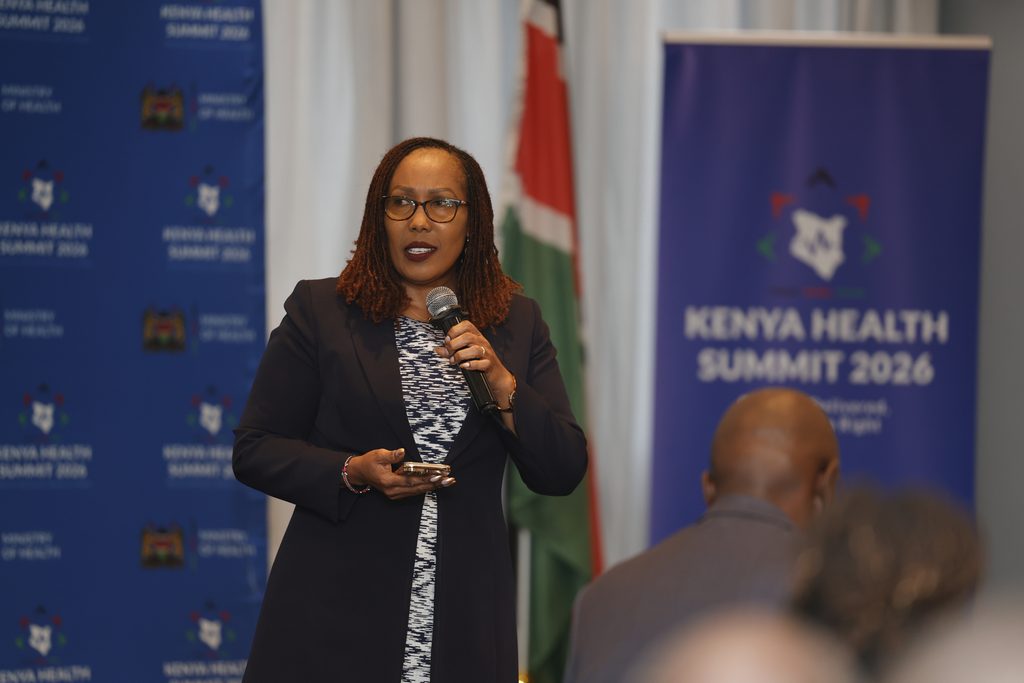
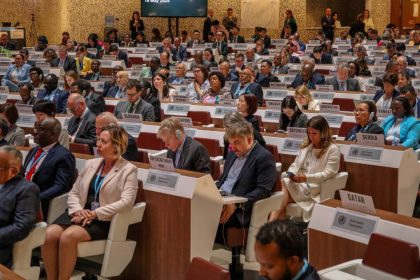
Speaking at a media roundtable ahead of the Kenya Health Summit, CoG Chief Executive Officer Mary Mwiti acknowledged the scale of disruption, warning that industrial action was significantly affecting service delivery across county facilities. “Industrial action affects outpatient, inpatient and specialised clinics across county-owned facilities,” she said, adding that continued strikes were hurting county governments, health workers and the public alike. Her comments point to a wider structural problem: health is a devolved function, yet the national government remains deeply involved in its financing, policy and employment programmes.
The result is a recurring cycle of blame. Nurses point to unimplemented agreements. Counties point to inadequate and uncertain financing. The national government points to devolution and existing legal frameworks. Caught between all three, as Dr Wala’s post illustrates, is the patient, whether a mother in labour, a newborn needing monitoring, or a child like Elizabeth who needed care faster than the system could give it.
The disruption has also pushed some patients towards private facilities, driving up out-of-pocket costs for families already under financial strain. Reports from public hospitals indicate patients have been transferred or referred elsewhere because of reduced capacity, a shift that falls hardest on those who depend on public care precisely because they cannot afford the alternative.
With KMPDU’s ultimatum now in effect, the crisis carries a further risk: a dispute that began with nurses could widen into a broader shutdown of the public health system. The negotiations may be about CBAs, allowances and financing, but the outcome will ultimately be measured in something more basic: whether a patient can get care when they need it.
We believe in the free flow of information
Republish our articles for free, online or in print, under Creative Commons licence.