
CS Duale defends SHA’s billions, admits its failures, and makes his case that Kenya’s health reforms are working, numbers and all.
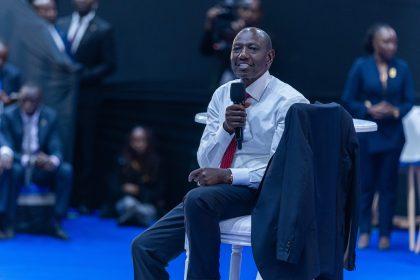
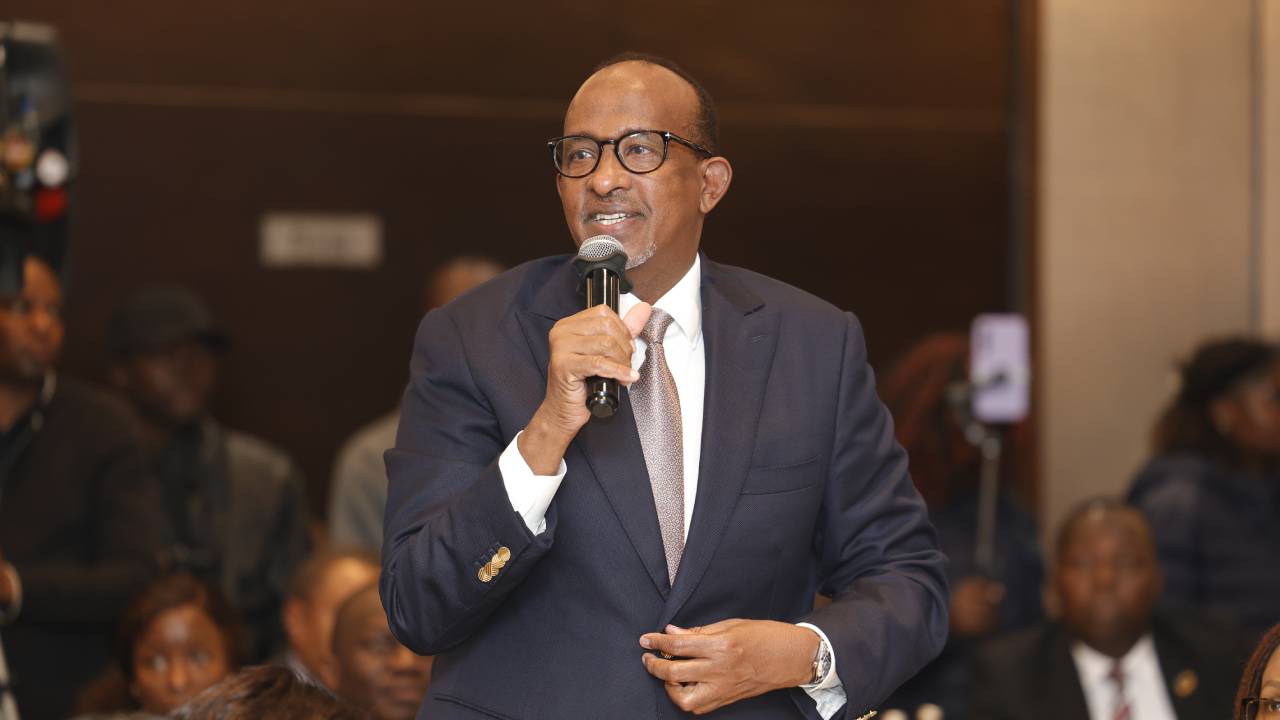
There is a phrase Aden Duale returns to so often that it stops sounding like an argument and starts sounding like an article of faith. “Numbers and data don’t lie,” he tells Dr Mercy Korir, Editor-in-Chief of Willow Health Media. By the end of the conversation, it has become the Cabinet Secretary for Health’s personal motto: a man betting his legacy on a spreadsheet, in a country that increasingly argues with him on Twitter instead.
Duale admits the public mood around him is souring, but refuses to let sentiment set the terms of the conversation. Instead, he arrives armed with figures, reciting them with the fluency, hoping the story Kenyans tell each other online will eventually catch up to the one written in the ledgers of the Social Health Authority (SHA).
Since 2022, the administration of President William Ruto has staked much of its domestic legacy on dismantling the National Health Insurance Fund (NHIF) and replacing it with SHA, a four-stream financing model meant to widen coverage and end Kenya’s dependence on out-of-pocket payment. “President Ruto will be remembered for taking very bold decisions in forming and transforming our healthcare system,” Duale says, and then the numbers start coming.

Registration under SHA now stands at 32.2 million Kenyans, up from eight million under NHIF. Healthcare facilities, be they public, private and faith-based, have received Ksh178 billion. Domestic resource mobilisation has crossed Ksh203 billion. Cancer patients now have a benefit package worth Ksh800,000, covering lab tests through to chemotherapy. Kidney patients can access two free dialysis sessions a week, a lifeline more than 16,000 Kenyans have already used. More than Ksh27 billion has gone into primary healthcare at level two and three facilities, the ones Duale insists matter most.
“Seventy per cent of the disease burden in our country is found in that place,” he says, explaining the decision to prioritise lower-tier facilities over national hospitals.
Remote dispensaries now receiving hundreds of thousands through the Facility Improvement Fund (FIF)
At Kenyatta National Hospital (KNH), 98 per cent of patients are now inside the SHA ecosystem, he adds. The authority disburses Ksh12 billion monthly across its four funds, covering primary healthcare, the social health insurance fund proper, the emergency chronic and critical illness fund, and the scheme for teachers, civil servants and police. Even remote dispensaries, he says, are now receiving hundreds of thousands of shillings through the Facility Improvement Fund (FIF), money that never used to reach them.
It is a formidable pile of statistics. Yet Duale concedes that his data tells a different story from the one Kenyans are telling each other online.
He does not dismiss the gap outright.
He questions its source instead, reaching for an anecdote from India’s defence minister, who told him online chatter there regularly predicts the collapse of Prime Minister Narendra Modi’s government, despite Modi’s unbroken electoral dominance. Duale’s conclusion is that “Those who are online criticising are people who are not very happy” and who could be dissatisfied political actors, not the ordinary public.
His prescription for doubting Thomases is to go “Do a spot check in health facilities, in faith-based, in private, in public”, insisting Kenya is now cited internationally as a reference point for health financing and digitisation. “If you want to learn more about health financing, sustainable health financing, go to Kenya.”
Dr Korir presses him on a persistent complaint: that FIF money, though legally ring-fenced for healthcare use, does not always reach the facilities it is meant to serve. It is here that Duale’s answer becomes the most revealing part of the conversation.
He explains that public facilities at levels two to four already receive the largest share of SHA disbursements, roughly 67 per cent, while specialised treatment funds tend to favour private and faith-based providers. The real problem, he admits, is not the design of the system but its implementation on ring-fenced funds should be spent, be it on staff, medicine, laboratory reagents, equipment, or upkeep.
People use money from SHA to make a gate, do cabro, when that facility has no medicine, enough staff
He names two distinct failures. The first is governance: facility management boards sometimes divert funds toward visible but hollow projects while medicine shelves stand empty. “People will use the money from the social authority to make a gate, to do cabro (paving), when that facility has no medicine, that facility has shortage of staff,” he says. The second is structural: in some counties, FIF money is returned to the county treasury rather than retained by the facility that earned it, a practice he says the national government has already raised with the Council of Governors. He adds that Parliament and Senate committees have conducted their own county-level reviews, and that many facilities are using the fund correctly.
On one point, though, he leaves no room for interpretation. Kenyans should never be asked to pay informally for services covered under the Primary Health Care Fund, not even for something as small as an exercise book. “If you are asked to pay something that is illegal, that is criminal, and I think Kenyans must be aware of that,” he warns.
Dr Korir pushes further, into sustainability. Global health funding is contracting, the memory of COVID-19 still shadows every budget conversation, and an Ebola outbreak is unfolding across the border in the Democratic Republic of Congo. She asks what the ministry is doing to finance its reforms domestically without leaning entirely on external donors.
Duale points first to SHA itself, a model built on contributions from both citizens and government. But he is candid about the gaps that remain: non-communicable diseases such as cancer, diabetes and hypertension, alongside the older, unfinished battles against malaria, HIV and tuberculosis.

For the first time, the government has ring-fenced counterpart funding to institutions such as the Global Fund and Gavi, the global vaccine alliance, within the Ministry of Health’s own budget, insulating vaccination and immunisation programmes from disruption. “Our obligation to international donors has been reinforced,” he says, crediting the president for protecting those commitments through recent budget adjustments.
On infrastructure, he describes a push to stop patients in far-flung counties, West Pokot among them, from having to travel to KNH or Moi Teaching and Referral Hospital just for a CT scan, an MRI or dialysis. The National Equipment Support Programme (NESP) is meant to close that gap at sub-county level.
If a health facility completes a patient’s full treatment but fails to dispense medicine, the medical claim is not reimbursed
He also tackles one of Kenyan healthcare’s most enduring symbols of dysfunction: the Kenya Medical Supplies Authority (KEMSA), long associated with stockouts that left facilities without basic medicine even as patients paid consultation fees.
“KEMSA refill rate is at 95 per cent,” he says, attributing the turnaround to recapitalisation, an expanded budget, and new financing arrangements with private financial institutions.
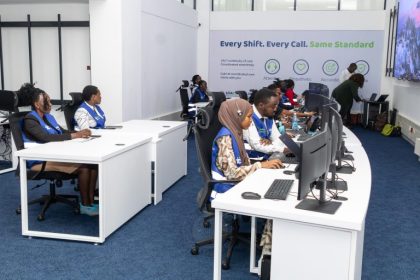
Perhaps the most striking reform he describes is quieter: a digital accountability mechanism embedded directly into SHA’s claims system. If a facility completes a patient’s full treatment journey but fails to dispense the medicine, the medicine component of that claim simply will not be reimbursed.
“If you don’t give a Kenyan medicine in your facility, then the Social Health Authority will not reimburse that claim,” Duale says, calling it a built-in deterrent within what he terms the digital health superhighway.
A healthier population means children stay in school, adults remain productive, economy has room to grow
He links this to the workforce question hanging over the conversation, arguing universal coverage cannot be achieved while medical interns remain unposted, CBAs go unimplemented, and staffing shortages persist. “There’s no way we can have universal health coverage achieved in our country if interns are not posted,” he says, listing headship allowances, CBA implementation and broader recruitment among the unresolved priorities his administration has nonetheless prioritised.
Duale closes on a familiar theme: health as an economic multiplier. A healthier population, he argues, means children who stay in school, adults who remain productive, and an economy with room to grow. “The health of our nation has a direct correlation to productivity,” he says, adding that Kenya now ranks second in Africa on health outcomes and should be aiming for the top, globally.
Whether the sentiment gap he so readily admits to narrows before the next election remains uncertain. What is unmistakable is where Duale has placed his bet: on numbers, patiently repeated, eventually overtaking the anecdotes that currently dominate the conversation.
“I have a difficult job,” he tells Dr Korir, “but somebody has to do it.”