
With eye care now in the national benefits package, free services for children across the country, and a bold investment case on the table, Kenya stepped into Nairobi’s global spotlight ready to lead.
For millions of children who cannot read a classroom blackboard, workers forced to leave jobs because of failing eyesight, and older people slowly losing their independence, blindness is often not inevitable. It is preventable. Nairobi became the centre of that argument from June 4 to 6, 2026, when hundreds of global health leaders, policymakers, researchers, and development partners gathered for the 2030 In Sight Live Conference. Countries came not only to discuss the burden of vision loss but to share solutions that are already helping people see, learn, and work again.
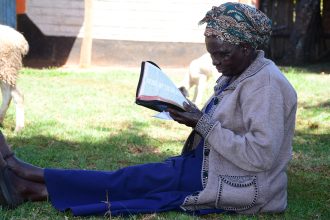
“Eye health is not just a health issue. It is an education issue, a productivity issue, a development issue and above all, an equity issue. Vision determines opportunity, and opportunity determines the future,” Health Cabinet Secretary Aden Duale told delegates during the opening ceremony.
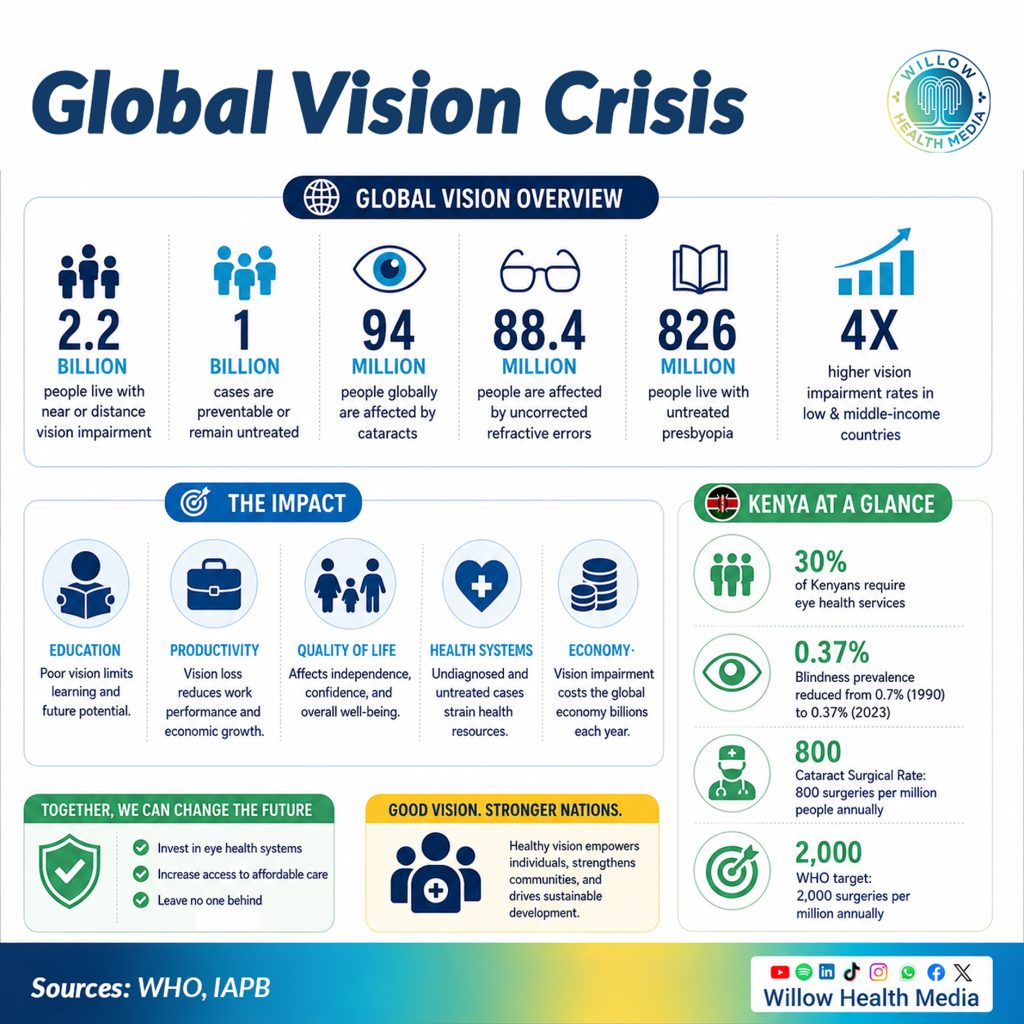
According to the World Health Organization (WHO), at least 2.2 billion people globally live with near or distance-vision impairment. In at least one billion of those cases, the condition could either have been prevented or has yet to be treated.
The burden falls disproportionately on low and middle-income countries, where rates of distance vision impairment are estimated to be four times higher than in high-income regions. Across western, eastern, and central sub-Saharan Africa, more than 80 per cent of people with near vision impairment remain untreated, compared to less than 10 per cent in many high-income regions.
About 30 per cent of Kenyans require eye health services to prevent vision loss
The leading causes are largely treatable. Cataracts affect 94 million people, and uncorrected refractive errors affect 88.4 million, while age-related macular degeneration, glaucoma, and diabetic retinopathy account for millions more. A further 826 million people live with untreated presbyopia, the age-related condition that makes it difficult to focus on nearby objects. Yet despite advances in treatment, experts warn that population growth and ageing are driving a steady increase in the number of people affected worldwide.

For Kenya, the picture is both encouraging and concerning. About 30 per cent of Kenyans require eye health services to prevent vision loss, according to Dr Monica Bitok, Head of the National Eye Health Program, who told the press ahead of the conference on June 3.
The country has made notable progress, reducing blindness prevalence from 0.7 per cent in 1990 to 0.37 per cent in 2023. But major gaps persist in access to cataract surgery, refractive error services, specialist workforce distribution, and early diagnosis of chronic eye diseases.
“Cataract remains the leading cause of blindness in Kenya, accounting for nearly half of all blindness cases,” Dr Bitok said. She noted that Kenya’s Cataract Surgical Rate currently stands at about 800 surgeries per million people annually, less than half the WHO target of 2,000 per million. At the same time, glaucoma and diabetic retinopathy are becoming increasingly significant causes of vision loss, largely because many patients are diagnosed too late.
Reducing blindness rates calls for expanded access to screening, treatment, and rehabilitation
Data from the IAPB Vision Atlas underlines the scale of the challenge. While the prevalence of blindness has fallen, the actual number of Kenyans living with vision impairment has continued to rise due to population growth and increased life expectancy. The number of people living with blindness increased from about 150,000 in 1990 to 290,000 in 2020. Moderate to severe vision impairment rose from 330,000 to 810,000 over the same period, while near vision impairment more than doubled from 680,000 to 1.61 million people.
The figures reveal an important reality: reducing blindness rates alone is no longer enough. Countries must also expand access to screening, treatment, and rehabilitation services to keep pace with growing demand.

In a video message to delegates, Bloomberg Philanthropies founder Michael Bloomberg said the solutions already exist for most people living with vision loss. “Today, more than one billion people are living with untreated vision problems, and most are in low and middle-income countries. But the good news is we can treat the vast majority with simple interventions like vision screenings, eyeglasses and cataract surgery,” he said. “When someone puts on a pair of glasses for the first time, or walks out of surgery and says, ‘I can see,’ it opens up a whole new future.”
Recent economic analyses presented by the International Agency for the Prevention of Blindness suggest that every $1 (Ksh130) invested in eye health can generate about $10 (Ksh1,295) in economic returns through improved productivity, educational outcomes, and workforce participation.
For Kenya, researchers estimate that an investment of $25.5 million (Ksh3.3 billion) in eye health interventions between now and 2030 could generate about $265 million (Ksh34.3 billion) in economic benefits. That framing is significant: it shifts eye health discussions from charity and welfare toward development and economic planning.
Primary healthcare facilities in Kenya are providing free vision screening, diagnostics and spectacles
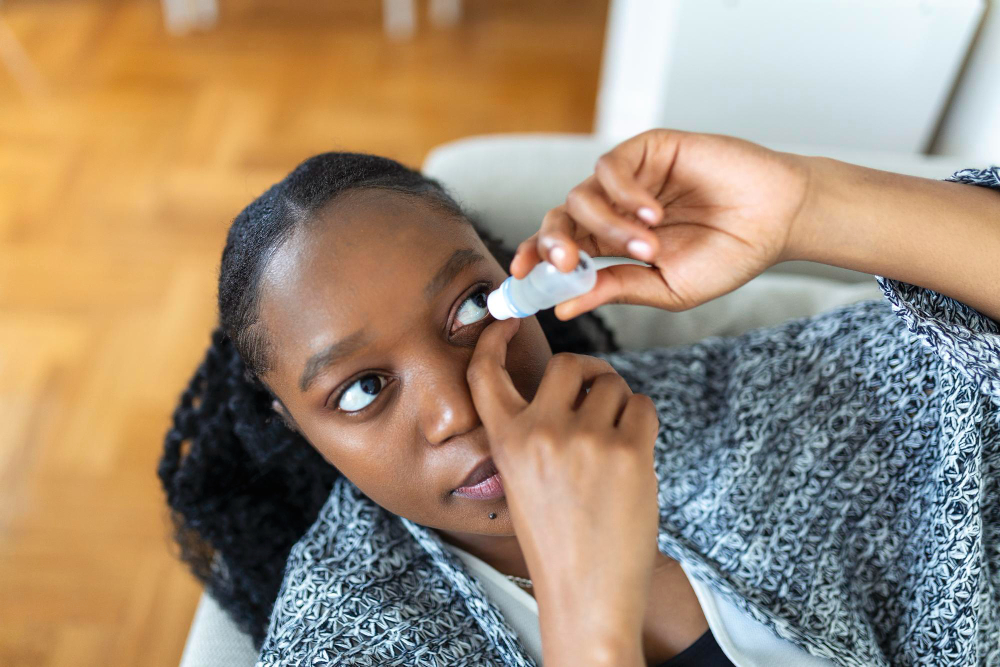
For Kenya, many of those solutions are already being integrated into broader health reforms. CS Duale told delegates that eye health is now included within the country’s Social Health Authority (SHA) benefit package, covering preventive, diagnostic, medical, and surgical services, including treatment for cataracts and refractive errors. Primary healthcare facilities across the country are providing free eye services for children, covering vision screening, diagnostics, and spectacles, while eye care services are now available in all 47 counties.

The government is also integrating eye health into its expanding digital health infrastructure, allowing for improved referrals, patient tracking, and real-time reporting. “We recognise that vision is central to learning, productivity, dignity and economic participation. We are deliberately integrating eye health into our digital platforms to ensure it is fully embedded within routine service delivery,” Duale said.
Caroline Casey, the IAPB President, said the sector is entering a new phase focused on collaboration, accountability, and measurable impact, with growing momentum toward the first-ever Global Summit for Eye Health later this year. “We will end avoidable sight loss. This is possible. Look what we have done with so little in such a short amount of time,” she said.
The tools needed to prevent millions of cases of blindness already exist. The challenge now is ensuring they reach the people who need them most. For the child unable to read because they lack a pair of glasses, the farmer struggling to work because of cataracts, or the older person losing independence due to untreated vision loss, access to eye care can mean far more than restored sight. It can mean a chance to learn, earn a living, and participate fully in society. As countries work toward the 2030 goal of universal eye health, delegates in Nairobi argued that ensuring that opportunity may be one of the most achievable public health victories of the decade.