
Health experts say Africa has strengthened surveillance and laboratories since Covid-19, but donor funding cuts, an unresolved pandemic treaty and weak local manufacturing capacity still leave the continent exposed as Ebola spreads anew in the DRC.
By July 27, the Bundibugyo Ebola outbreak tearing through the Democratic Republic of Congo had infected 3,380 people and killed 1,489, according to the Africa Centres for Disease Control and Prevention (Africa CDC), making it the fastest-growing epidemic of the disease in the country’s history.
As neighbouring states tighten surveillance at border points and activate emergency response mechanisms to stop the Bundibugyo strain crossing over, health experts are now asking a question that has shadowed Africa since the Covid-19 pandemic: Has the continent actually learned enough to withstand the next pandemic, or will it be caught off-guard again?
The answer, according to experts who spoke at the second joint webinar by Strathmore University Business School and Willow Health Media, is neither reassuring nor damning. It is, in the words of Professor Omu Anzala, a virologist and immunologist at the University of Nairobi, “yes and no.”
“There is some amount of preparation and preparedness,” said Anzala, who is also a former Director of the KAVI-Institute of Clinical Research. “However, we cannot say that we are fully prepared because challenges still exist in terms of supply chain, human resources, and infrastructure.”
Dr Martins Livinus, Team Lead for Emergency Preparedness and Response at the World Health Organization (WHO) Kenya country office, put it more bluntly.
“No country in Africa is fully prepared to independently prevent, detect and respond to the next major pandemic,” he said, “but compared to where we were before Covid-19, there has been significant improvement.”
He pointed to the coordination now visible in the Ebola response, with disease surveillance systems, laboratory networks, emergency operations centres and cross-border collaboration all strengthened since 2020. “There is a little bit more solidarity among countries,” he said. “If you look at the way WHO and Africa CDC are operating, they are operating in a highly unified front.”
The WHO Pandemic Agreement commits countries to prevent, prepare for and respond to future health crises together
That solidarity is being tested by a treaty years in the making. The WHO Pandemic Agreement, adopted by the World Health Assembly to close gaps Covid-19 exposed, from broken supply chains to what Livinus called “vaccine nationalism,” commits countries to prevent, prepare for and respond to future health crises together.
Its core promise to Africa is equity, a framework meant to stop wealthier nations cornering vaccines while poorer ones wait. It also establishes a pandemic fund to strengthen surveillance and health systems, while protecting national sovereignty, so no single body can order borders shut.
But adoption is not delivery. The panel made clear that the mechanism meant to make equity real, a system for sharing pathogen samples and genomic data in exchange for guaranteed access to the vaccines and treatments built from them, is still being worked out.
“The most consequential provision would be to get up a pathogen access and benefit sharing system,” said Dr Noelle Orata, a laboratory ecosystem pathologist and co-founder of The Pathology Network. Without it, she warned, Africa risks supplying the data that drives global research while waiting last in line for the products it produces. She called for binding licensing commitments modelled on the WHO mRNA hub, “obligations rather than goodwill,” and said the African Union and Africa CDC should negotiate on behalf of the whole continent rather than leaving states to bargain alone.
Underneath the diplomacy sits a harder problem: money. Anzala said the funding landscape for pandemic preparedness has shifted sharply in the past two and a half years, as donor governments cut back and shrinking overseas development assistance forces African health systems to compete for scarcer resources.
“The funding landscape has changed,” he said. “That has also affected preparedness towards outbreaks.” Rather than wait on the world to fix it, he argued, African governments should look inward first. “We hear these issues of equity all the time,” he said. “But honestly, colleagues, we must ask ourselves, what does the world owe us? What is Kenya doing? What is Uganda doing? What is DRC doing for itself before looking outside?”
Kenya’s latest Ebola preparedness assessment scored only 66 per cent against a target of 80
Kenya offers a case study in both the progress made and the gaps that remain. Dr Victoria Kanana, the Acting Head of Public Health Intelligence at the Kenya National Public Health Institute (KNPHI), said the country has faced Covid-19, cholera outbreaks, Mpox and regional Ebola threats in recent years, and is markedly better equipped than it was five years ago.
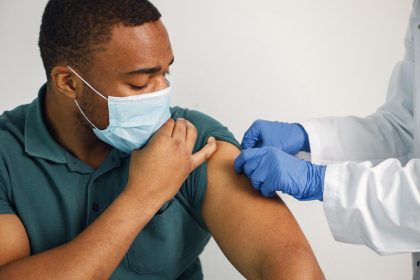
The creation of KNPHI itself improved coordination, she said, and expanded laboratory capacity, meaning Kenya “can practically test for most, if not all, of the outbreaks that we experience here.”
Even so, Kenya’s latest Ebola preparedness assessment scored only 66 per cent against a target of 80, exposing continuing weaknesses in infection prevention and control and in logistics.
Kanana also stressed that pandemic readiness stretches well beyond hospitals. She cited a recent cholera outbreak, linked to an unplanned mining settlement between Narok and Kajiado counties that had no sanitation infrastructure, as proof that health security depends on town planning, water services and local government working together long before a patient falls ill.

“Health security is everybody’s responsibility,” she said. “It is really a multi-sectoral, whole-of-government and whole-of-community issue.” She also credited Kenya’s Community Health Promoters as the frontline of outbreak detection, though she said the pathways for their reports to reach decision-makers still need strengthening.
Laboratories were the clearest success story of the Covid-19 years, according to Orata. “The biggest lesson is coordination,” she said, describing how previously fragmented public, private and faith-based laboratories were pulled into national emergency coordination systems, with diagnostic platforms built for diseases such as tuberculosis repurposed for Covid-19 testing. “Our strength was adaptability.”
Emergency response should be embedded in routine primary healthcare using existing facilities, cross-trained staff and shared supply chains
But she cautioned that laboratory gains mean little without sustained investment in trained personnel, resilient supply chains and integrated information systems, alongside continued community trust.
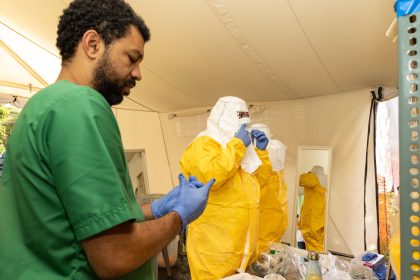
Livinus argued that trust and resilience both depend on refusing to treat preparedness as a separate, crisis-only program. Emergency response should be embedded in routine primary healthcare, he said, using existing facilities, cross-trained staff and shared supply chains rather than building parallel systems that are difficult to fund once a crisis passes.
“When you strengthen the health system itself, the system becomes more resilient and more adaptable,” he said.
Manufacturing remains Africa’s most stubborn weakness. Anzala said most of the continent still imports finished pharmaceutical products rather than developing them, and argued that discovery science, not assembly, should be the priority.
“We need scientists on the continent really honed down on discovery,” he said. “Manufacture means we are having new targets.” He called for investment in Biosafety Level Three and Four laboratories, genomic surveillance and faster regulatory pathways to move vaccines and therapeutics through clinical trials during outbreaks.
Dr Collins, a Ugandan pharmacist and public health scholar who helped draft the East African Community’s pharmaceutical manufacturing plan of action, told the session that regulatory readiness is a major bottleneck.
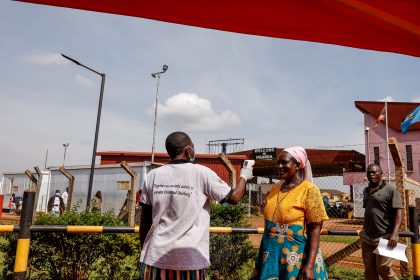
Of the Community’s eight member states, only Tanzania and Rwanda have regulatory authorities that have reached maturity level three, the threshold required for vaccine manufacturing, he said. “We are still doing badly in regard to pharmaceutical manufacturing,” he said, pointing to continued dependence on imports and on donor funding even for vaccines the region urgently needs.
For all the gaps, the panel converged on a shared prescription rather than shared despair.
Preparedness must be built between crises, not during them, by strengthening surveillance and laboratory networks, training and retaining health workers, embedding response systems into everyday primary care, closing the pathogen access and benefit sharing gap in the Pandemic Agreement, and investing in discovery science and regulatory capacity so Africa is not left waiting on the world when the next outbreak comes.
With Ebola still spreading in the DRC, the experts agreed that how much of that prescription gets implemented, and how quickly, may decide how the continent’s next emergency unfolds.