



Confirmed cases have topped 6,843, with the case fatality rate holding above 48 per cent. Now health authorities are betting on a household-by-household strategy to close the gap between communities and treatment centres.
The Democratic Republic of Congo (DRC) is taking its fight against the country’s largest-ever recorded Bundibugyo Ebola outbreak directly into villages and households, as officials warn the epidemic remains far from controlled.
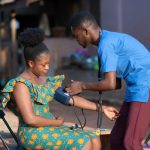
Under a new 180-day response plan, authorities are pushing surveillance and care down to the lowest possible level rather than waiting for sick people to reach health facilities. Village leaders are now expected to identify community health workers who move door to door, spot symptoms, trace contacts, and connect pregnant women and other vulnerable people to care.

Africa CDC calls it the “village-centred approach,” and Prof Yap Boum II, the organisation’s head of emergency preparedness and response, said it is already showing results in parts of the country, even as the overall outbreak remains serious.
“It is important to emphasise today that six out of 71 health zones, almost 10 per cent, have exceeded the 42-day active transmission window without a subsequent documented confirmed case,” Prof Yap said during Africa CDC’s weekly briefing, describing the improvement as “some light after the darkness,” particularly in Ituri, the outbreak’s epicentre, though he cautioned progress remains uneven.
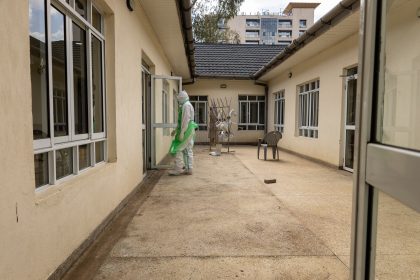
Africa CDC’s latest data puts confirmed cases at 6,843 and deaths at 3,100, a case fatality rate of 48.1 per cent. There are 833 patients currently in isolation, and treatment capacity stands at roughly 1,300 beds, though this is unevenly spread across affected areas.
Training, stronger prevention control measures and greater awareness helping curb infections among frontline staff
Healthcare workers have paid a heavy price: 208 have been infected, and 49 have died. Prof Yap said most infections happened early in the outbreak, when workers struggled to tell Ebola apart from illnesses such as malaria, and when some patients were being cared for at home. Training, stronger infection prevention and control measures, and greater awareness have since helped curb infections among frontline staff. “The numbers are no longer increasing,” he said, while acknowledging the toll already suffered.

The village-centred strategy responds directly to one of the outbreak’s clearest lessons: people are often reaching care too late. Prof Yap said the average time between symptom onset and seeking care has fallen sharply, from about 10 days in mid-May to just one or two days by 31 August, a sign communities are recognising symptoms and acting faster.
Even so, a critical gap remains, with people still dying before they reach treatment centres. “The reduction in deaths inside Ebola treatment centres suggests that clinical care is improving and that patients who arrive early have a better chance of receiving appropriate treatment. The village approach is therefore intended to close the gap between the community and the health system,” Prof Yap explained.
Community workers will now carry out door-to-door surveillance, flag possible symptoms, support contact tracing, help ensure suspected patients are assessed quickly, and assist with household disinfection where needed.
The urgency is sharpest in North Kivu, where cases and deaths are rising even as Ituri shows signs of improvement. Treatment capacity in North Kivu is under severe pressure, with bed occupancy at about 115 per cent, compared with 48.4 per cent in Ituri. That imbalance means the response cannot rely on building more centralised facilities alone; it must reach people before they become critically ill.
Fearing Ebola, pregnant women may be avoiding or delivering outside formal health facilities
The outbreak is also straining essential health services, particularly maternity care. Dr Landry Dongmo Tsague said the latest assessment from Ituri showed facility deliveries had dropped by almost 1,200 compared with the period before the outbreak. “The decline raises concern that pregnant women may be avoiding health facilities or delivering outside formal health facilities because of fear of Ebola or disruptions to services,” he said, adding that the new response plan includes a specific approach to identifying pregnant women in communities and linking them to facilities equipped for safe maternity care.
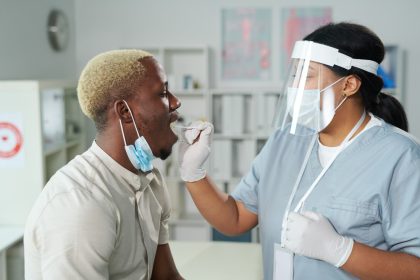
Under the model, community teams will identify pregnant women during household visits and help them develop delivery plans, so that Ebola control does not create a second health emergency by cutting women off from maternity services. Prof Yap said community consultations made clear what women wanted: to be followed throughout pregnancy and to deliver in properly equipped, monitored facilities. The response, he said, is increasingly framed not just as an Ebola operation but as a chance to protect the wider health system.
On the medical front, Dr Placide Mbala said the DRC had received 70,000 doses of the Ervebo Ebola vaccine, well short of the 500,000 doses requested, with more than 2,300 healthcare and frontline workers vaccinated as of Wednesday. Africa CDC also reported a major rise in enrolment for trials of remdesivir and the monoclonal antibody MBT134, alongside an expanding post-exposure prophylaxis study involving Obeldesivir.
Funding remains one of the biggest obstacles. Dr Tedros Adhanom Ghebreyesus, World Health Organization (WHO) Director-General, Dr Mohamed Janabi, WHO Regional Director for Africa, and Dr Jean Kaseya, Africa CDC Director-General, said the response needs to scale up two to threefold, calling for predictable funding, timely payment of frontline workers, and direct support for local organisations. Africa CDC separately warned that emergency funding alone will not end the outbreak, pointing to deeper weaknesses in the global system for developing, manufacturing, procuring and stockpiling vaccines, diagnostics, therapeutics and protective equipment.
Ebola can’t be beaten from treatment centres and next battle will be fought at household level
“The pledges that were made by donors and by other stakeholders must reach the last mile where they are critically needed,” Prof Yap said.

He pointed to falling transmission in parts of Ituri, shorter delays before people seek care, better protection for health workers, and expanding vaccine and treatment research as grounds for cautious optimism. But with 3,100 deaths recorded, 96 people still dying in communities, and North Kivu’s treatment capacity exceeding 100 per cent, he insisted the outbreak remains an emergency.
The strategy marks a recognition that Ebola cannot be beaten from treatment centres alone. The next battle, officials say, will be fought at household level, where symptoms are first spotted, where pregnant women decide where to give birth, and where health workers need protection to keep responding. The goal now is not simply to treat those who reach an Ebola centre, but to reach people before Ebola does.