


Kenya’s Ebola preparedness is improving, but the picture remains uneven. In Uasin Gishu, health officials are leaning on Moi Teaching and Referral Hospital to close critical gaps before an outbreak strikes.
Kenya has identified 23 counties as high or very high risk for Ebola after the World Health Organisation (WHO) declared the outbreak in the Democratic Republic of Congo (DRC) and Uganda a Public Health Emergency of International Concern (PHEIC) on May 17. Although the country’s overall preparedness stands at 66 per cent, the response remains uneven: some counties have functioning isolation units and trained response teams, while others admit they are still hoping the virus does not arrive.
The PHEIC declaration followed the virus crossing from Ituri Province in the DRC, where the outbreak was first reported on May 5, into neighbouring Uganda. The WHO listed Kenya, South Sudan and other countries bordering the DRC as high-risk, a classification maintained in subsequent weekly assessments and one that prompted Kenya to urgently elevate its preparedness to prevent cross-border infections and community spread.
To heighten surveillance, Kenya classified Nairobi, Mombasa, Uasin Gishu, Busia, Kisumu, Bungoma, Trans Nzoia, Siaya, West Pokot, Turkana, Homa Bay and Migori, most of which lie along the country’s borders, as very high risk. Vihiga, Kakamega, Nakuru, Kericho, Nandi, Kiambu, Machakos, Kilifi, Makueni, Taita Taveta, Isiolo, Elgeyo Marakwet and Garissa were listed as high risk due to their proximity to the very high-risk counties, high business traffic and location on regional transit routes.
The classifications guide which counties are prioritised for public health measures against the outbreak, caused by an orthoebolavirus strain with no vaccine or cure.
Health Cabinet Secretary Aden Duale announced that the government had designated 22 isolation and treatment centres nationwide, including the Kenyatta National Hospital (KNH), Moi Teaching and Referral Hospital (MTRH) and the National Police Service Hospital. He said KNH had an eight-bed isolation and treatment unit and was set to activate 22 more beds at the National Police Service Hospital.
Busia County Referral Hospital received mobile lab to speed up testing, a Alupe Sub-County Hospital a quarantine centre
Busia County, which borders Uganda and has about 19 informal entry points besides the two gazetted ones, heightened surveillance at all crossing points.
Working with the Kenya National Public Health Institute (KNPHI), WHO, the Kenya Medical Research Institute (KEMRI), the Intergovernmental Authority on Development (IGAD) and the U.S. government, the county established rapid response teams across all eight sub-counties, comprehensively training healthcare workers, surveillance teams, immigration officials and community leaders. The Busia County Referral Hospital received a mobile laboratory to speed up testing, and Alupe Sub-County Hospital was set aside as a quarantine and treatment centre.
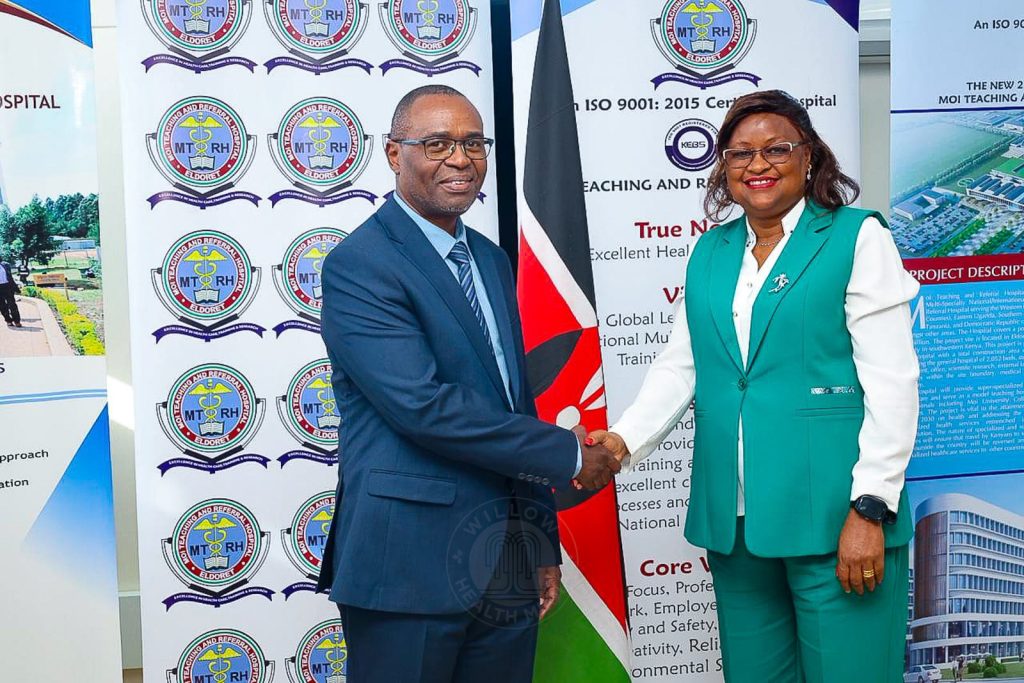
Uasin Gishu, another high-risk county, deepened its partnership with MTRH, a national level-6 hospital, to enhance disease surveillance, improve emergency preparedness and increase access to specialised healthcare.
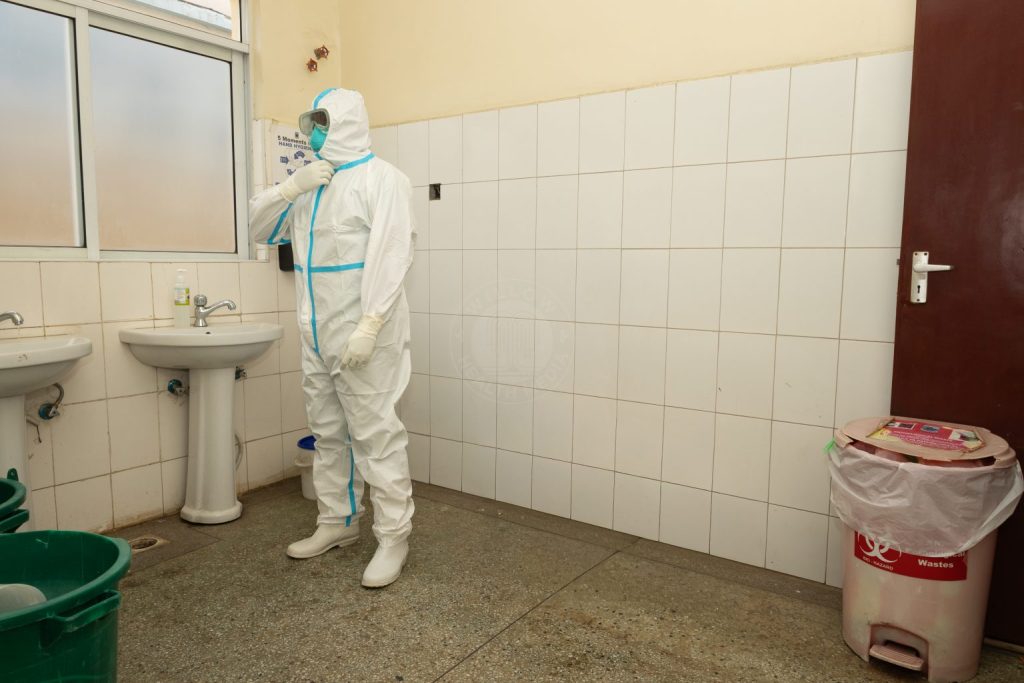
Janet Kurgat, the county’s Executive Committee member for health, met MTRH’s head of Clinical Services, Dr Andrew Wandera, to streamline the arrangement, under which MTRH will support Uasin Gishu with patient referrals and emergency response beyond the current outbreak. The level-6 facility, which has its own Ebola isolation and treatment unit, agreed to support quarantine preparedness, disease diagnosis, treatment and the establishment of incinerators, which are critical for preventing infections through contaminated waste.
“We have an Ebola preparedness team tasked with training county healthcare workers, setting up procurement systems and using Personal Protective Equipment. We are offering technical support to establish incineration facilities and critical health infrastructure to manage public health threats,” Dr Wandera said.
Better response to outbreaks requires collaborative coordination, not operating in silos
Kurgat said Uasin Gishu will dedicate an ambulance for regional emergency response, provide Personal Protective Equipment and support training for healthcare workers and community health promoters (CHPs). “We are well prepared and are grateful that MTRH has always been open to supporting us. Better response to outbreaks and health emergencies requires collaborative coordination, not operating in silos,” she said. She added that the county was raising funds from existing health facilities to build its own incineration facilities to reduce hazards from gaps in medical waste management.
Dr Billy Lubanga, Chief Officer for Preventive and Promotive Health Services, said the county was working closely with the Kenya Red Cross to strengthen emergency response. “At the moment, most, if not all, facilities across the county have been prepared on how to receive and manage suspected cases. We have also built the capacity of community health promoters to lead community awareness drives,” he said.
Uasin Gishu County Director of Health Dr Evans Kiprotich stressed the importance of sustained public sensitisation, calling public health measures the first line of defence for a disease with no cure or vaccine. He confirmed the county had designated Kamalel Health Centre as its Ebola isolation centre, and that its systems were tested when Kenya’s first suspected Bundibugyo virus case, a Zambia-based Kenyan driver with travel history to the DRC, tested negative after coordinated handling by county and national surveillance teams.
Stephen Koech, Chairperson of CHPs in Uasin Gishu, urged counties to match their commitments with action. He said most CHPs feared the public health threat due to a lack of support. “It’s discouraging that county leaders delay our monthly stipends, and sometimes vital gadgets, like those we use to check blood pressure and run other tests, lack batteries,” he said, adding that such gaps compromise CHPs’ efficiency and motivation, denting emergency coordination. “They should learn from the national government and pay our stipends on time. Demotivated CHPs mean a compromised response unit.”
A KEMRI research scientist in Uasin Gishu identified only as Too said proactive preparedness was the best defence. “Equipping healthcare facilities and points of entry with essential protective commodities is an effective strategy to mitigate the impact of outbreaks and ensure rapid, coordinated responses,” Too said.
The isolation unit should be permanent and physically separate from other hospital services
The picture looks different in neighbouring Elgeyo Marakwet County. Mark Kwambai, Medical Superintendent at Tambach Sub-County Hospital, a designated isolation centre that also served as a COVID-19 quarantine site, said preparedness needed real investment, not just pronouncements.
“Most preparedness measures have not been put in place to make this facility live up to the status of an infectious disease isolation centre. Serious upgrades are needed. For now we are just offering standard level-four hospital services,” he said, adding that proper preparedness requires upgraded infrastructure, personnel and equipment, and that the isolation unit should be permanent and physically separate from other hospital services.

Monica Rotich, the county’s health CEC, assured after a facility visit that Elgeyo Marakwet was set, though she could not point to specific measures in place. Asked what steps had been taken against an Ebola threat, she said: “We are set. Working with the MOH. But we are praying it doesn’t come.”
At KNH’s specialised unit for handling dangerous pathogens, infectious diseases specialist Dr Duncan Nyukuri said training and drills were ongoing, and that preparedness meant more than having an isolation unit. It required a coordinated system capable of identifying, testing and managing patients safely from the moment suspicion arises.
On July 2, chairing a consultative meeting with U.S. representatives to assess Kenya’s readiness, Duale confirmed the current state of play. “Our Ebola preparedness score is at 66 per cent. This reflects encouraging progress and underscores the need for more investment to attain full operational readiness,” he said, urging development partners to prioritise equipping isolation centres across counties.
We believe in the free flow of information
Republish our articles for free, online or in print, under Creative Commons licence.