

According to the Ministry of Health, pain relief remains out of reach for most Kenyans, with only 30,000 of the 800,000 people who need palliative care receiving it, while just five per cent of children who need such care have access to it.
It took Mary Nafula three months to look at her own scar. Diagnosed with breast cancer in 2020, she thought the diagnosis was the most painful moment of her life, until she learnt what treatment entailed.
“The word cancer was frightening enough, but the thought of losing my breast, something I had lived with all my life, brought another kind of pain,” she said.

A psychologist at the hospice finally gave her the confidence to ask for the mirror. “It took me three months before I accepted to look at myself with the scar in front of a mirror,” she recalled. She did not like what she saw, yet the psychologist’s quiet presence, with no lecture and no counsel, steadied her in that trying moment.
Nafula, who lives with metastatic breast cancer and founded Warriors of Hope Pwani, told her story on October 28 at a webinar hosted by the Ministry of Health, the Kenya Hospices and Palliative Care Association (KEHPCA), and the Healthy Ageing, Palliative Care and Older Persons Division (HAPCOP) to mark World Hospice and Palliative Care Day 2026.
This year’s theme is “Pain management: An essential part of palliative care.” Her account, told with flashes of humour, showed why pain is never only physical. For most Kenyans, relief remains out of reach. Of the 800,000 people who need palliative care, only 30,000 receive it, according to the Ministry of Health.
Patients need a safe space to discuss treatment’s effects, their fears, relationships and the questions they find embarrassing to ask
“Inasmuch as I knew that the surgery was necessary for me to heal, it did not make the loss of the breasts easy to accept. I was grateful to be alive but grieving the loss of my breast,” Nafula said.
Holding both feelings left her questioning her femininity. Her body had once made her feel beautiful and feminine, and now her confidence faltered at every mirror.
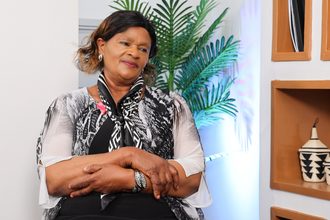
“I’ve had to remind myself that my worth is not measured by the number of breasts I have or my shape. I am still a beautiful woman worthy of dignity,” she said.
Public ignorance and bias deepened the hurt. When chemotherapy left her bald, someone asked whether she had lost her husband. In some African cultures, married women shave their heads when their husbands die.
“That question hurt me to the core, and I just walked off with no response. Sometimes people celebrate the strength of survivors but don’t realise we may be still dealing with private moments of sadness, insecurity, and grief,” she said.
Chemotherapy also forced her to defer her studies. She could not concentrate in class, and no one at school understood. Surviving surgery is one thing, she learnt, and adjusting to how it changes you is another. Patients need a safe space to discuss treatment’s effects, their fears, their relationships and the questions they find embarrassing to ask.
She found that space among health workers who offer a listening ear and a helping hand when she goes for treatment. “Holistic and compassionate care matters and has really helped me to get where I am now,” she said. Patients, she added, can acknowledge what illness took from them while remaining grateful to be alive.
SHA covers palliative care under the Emergency, Chronic and Critical Illness Fund, but limited awareness among health workers holds services back
Living with treatment-related pain reminds her daily why pain management belongs at the heart of cancer care. “The pain medication I receive helps me calm it down, thus making a big difference in my daily life. I’ve learnt that pain relief is not a luxury,” she said.
Dr Rose Wafula, Head of the Division for Healthy Ageing, Palliative Care and Older Persons at the Ministry of Health, agreed that pain management is essential, not a luxury. “Nafula is walking a journey of resilience which also challenges us at a policy level. There’s no end to the conversation of dignity and pain management,” she said.

She defined palliative care as restoring dignity, relieving suffering and sustaining hope for patients and families across the full spectrum of serious illness. “Pain goes beyond cancer, HIV, physical injuries, mental health and cardiovascular conditions,” she said.
Policy places palliative care under Universal Health Coverage, and Article 43 of the Constitution guarantees every Kenyan access to the highest attainable standard of health care, an obligation Wafula said all stakeholders must meet. “Palliative care is not a nice-to-do work but something we are obligated by the constitution to provide,” she said.
The Kenya Palliative Care Policy 2021-2030 puts pain relief and quality of life at its centre. It aims to reach 400,000 patients a year, integrate hospices and care facilities in all 47 counties, train 5,000 personnel, including 1,000 opioid-prescribing nurses, and allocate one per cent of county and national health budgets to palliative care.
Neighbouring Uganda shows what such a change can do. A 2004 statute allowed nurses and clinical officers trained in palliative care to prescribe oral morphine in their own right, without a doctor’s cover. Prescribers complete a nine-month course at Hospice Africa Uganda.
By 2015 more than 250 nurses had qualified, eHospice reported, and annual morphine consumption had risen from 1kg to 35kg. The government also turns powdered morphine into a cheap oral solution that patients receive free.
NACADA found about one in 500 Kenyans aged 15 to 65 currently using prescription drugs as substances of abuse
The Social Health Authority (SHA) now covers palliative care under the Emergency, Chronic and Critical Illness Fund (ECCIF), as well as inpatient and facility-based management. But limited awareness among health workers holds services back.
“Ignorance among palliative healthcare workers and myths in healthcare and community settings are inhibiting progress,” Wafula said. Support for families and caregivers, she added, is vital.
The most stubborn myths surround opioids, the strong painkillers severe pain demands.

“To us, opioids are a must-have not only in facilities like Kenyatta National Hospital, but everywhere because severe pain just strikes anywhere,” said David Musyoki, Executive Director of KEHPCA.
A 2024 Lancet Global Health study of International Narcotics Control Board data found Kenya consumed 86 standard daily doses of opioid painkillers per million people per day in 2019 to 2021, up from no recorded use in 2011 to 2013 and above the African average of 55. Still, the authors called African consumption “insufficient and stagnant”. High-income countries, home to 17 per cent of the world’s population, consumed 92 per cent of available opioids.
Caution has its reasons. A 2018 Nation Newsplex review recorded 1,338 drug-related deaths in Kenya in 2016, with opioid overdoses the leading cause, and found morphine and pethidine reaching the illegal market.
In 2022 the National Authority for the Campaign Against Alcohol and Drug Abuse (NACADA) found about one in 500 Kenyans aged 15 to 65, or 60,407 people, currently using prescription drugs as substances of abuse. Morphine is controlled under the Narcotic Drugs and Psychotropic Substances (Control) Act of 1994.
A crying child is expressing pain, and so may a child who withdraws, becomes agitated, refuses to feed or falls silent
Specialists counter that clinical risk is small. KEHPCA has cited 2005 research by Joranson and colleagues indicating that fewer than one per cent of patients with life-limiting illnesses show signs of addiction to strong opioids under proper administration.
The sharper problem is supply. Dr David Wata, a clinical and oncology pharmacist at Kenyatta National Hospital (KNH), said morphine, available in tablet and solution forms, is sometimes inaccessible. He urged pharmacists to ensure facilities stock at least morphine powder and to tackle the bureaucracy around access. Prescribing is another bottleneck.

A 2025 Annals of Palliative Medicine review flagged physician restrictions on opioid prescribing, though most community-based services in Kenya are nurse-led. The policy’s 1,000 opioid-prescribing nurses target that gap.
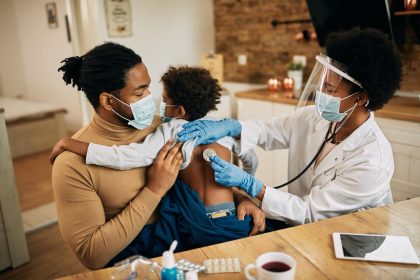
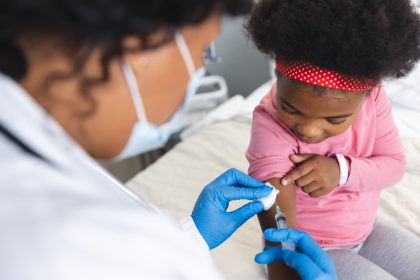
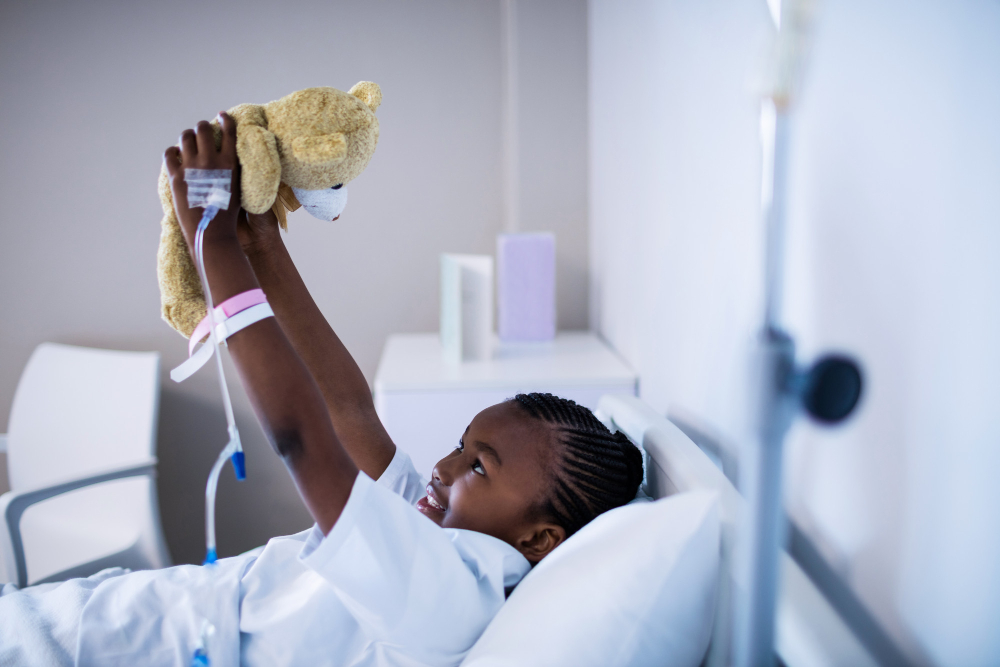
Children face their own gap, as only five per cent of those who need palliative care receive it, Wafula said, observing that “This is a concern because palliative care is aimed at restoring human dignity.”
Josphat Nthae, who works in paediatric palliative care at KNH, set out to dismantle the myth that children do not feel pain.
“Both children and adults experience pain, but it differs in how they process their pain, how they express their pain, and how they understand and cope with it,” he said. Infants and young children are particularly vulnerable, he explained, “because their nervous systems are still developing”, and they cannot easily communicate what they feel.
Adults too often dismiss it. “We shout at children, ‘stop crying, this is a small injection!’ Really? It is not,” he said.
He urged parents and health workers to drop the cultural belief that crying signals weakness, stubbornness or poor parenting. A crying child is expressing pain, and so may a child who withdraws, becomes agitated, refuses to feed or falls silent. Pain, he said, should be assessed routinely like any other vital sign and recorded on paediatric observation charts.

Medicine matters, but so does play. Nthae recommended storytelling, music, dance, cartoons and guided imagery to distract children during procedures. “Imagine building a castle as a procedure is ongoing. Before they build their castle, the procedure will be over,” he said. Trusted people should stay close, while holding, positioning, skin-to-skin contact, warmth, cold and massage all bring comfort.
For facilities, his prescription was practical. Train staff in therapeutic play, teach communities about the harm of untreated pain and refer children early. “Let us link children early to palliative care,” he said. “Let us advocate within our facilities and make orders that medicines are made available, and especially morphine and other adjuvants.”
Nthae further urged parents not to scold or slap children who cry after a cut. “They are expressing their pain.” he said “Children are not small adults, and they deserve seriousness, compassion, dignity, and pain relief.”
Musyoki called child-friendly environments “very key”. “We have a responsibility to continue to enhance paediatric palliative care and, more specifically, pain management,” he said.
“There are patients who feel God has forgotten them after they get diagnosed for serious illnesses”
Because pain takes many forms, Dr Racheal Wairigia, an oncology palliative care specialist at Kenyatta University Teaching, Research and Referral Hospital (KUTRRH) called for a multi-stakeholder approach. Doctors treat physical pain, she said, but a psychologist is needed for social effects such as changes in sexual function after treatment for conditions like cervical cancer.
“There are patients who feel God has forgotten them after they get diagnosed for serious illnesses,” she said. Such pain, she added, is best addressed by an expert in spirituality and health, while health workers should create a safe space and refer patients to palliative care services.
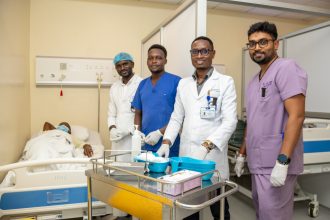
At KUTRRH, every new oncology patient is expected to see an oncologist, a palliative care specialist and a nutritionist.
The panelists called for building and sustaining partnerships, and for integrating palliative care into hospital settings to reduce stigma and help more patients manage pain. KUTRRH shows such integration is achievable.
“We need strengthening across all levels and offer services like post-breast surgery care by looking at our local data and creating solutions from it,” Wafula said. Delivering the policy’s own targets, from 1,000 prescribing nurses to a 1 per cent budget share, would turn commitment into access.
Wata’s advice to pharmacists was blunt. “Work hard at it, nag your bosses, and do the back and forth to push people so that you’re able to get the morphine available to your patients,” he said.
For Nafula, the case needs no statistics. “Being comfortable enough to rest, move around, or simply enjoy an ordinary moment really matters,” she said.
We believe in the free flow of information
Republish our articles for free, online or in print, under Creative Commons licence.