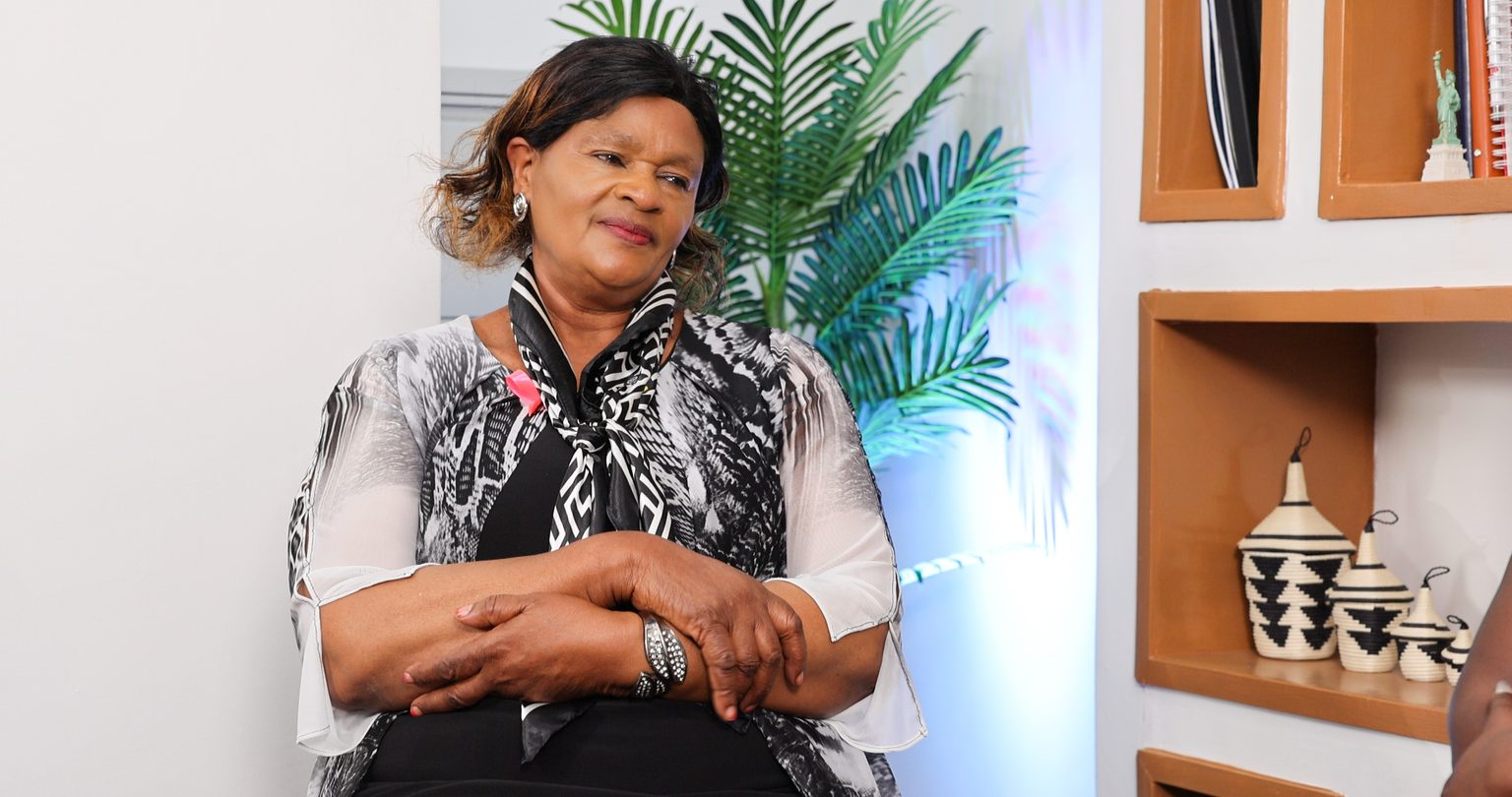

Agnes Ng’ethe waited 15 years for a diagnosis, then let fear delay her surgery. Nearly two decades on, she urges women not to wait while her doctor advises men to “know your wife’s breasts, so that you can tell when something is abnormal.”
Agnes Ng’ethe laughs easily when people tell her she looks well, and they often do. When she mentions that she survived breast cancer, the reaction is almost always the same. “They say, ‘Really?’ They don’t believe it, because they see you looking healthy and strong,” she says. “I tell them, yes, that was me.”
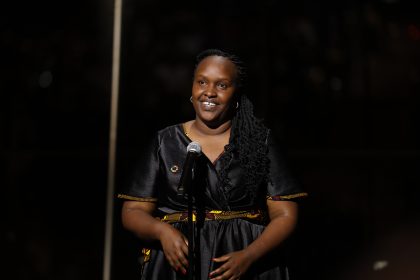
Her story spans three decades, several hospitals, six rounds of chemotherapy, and one decision she says nearly cost her everything: delaying surgery because she was afraid. She shared it on Lifeline Dialogues with Willow Health Media’s CEO and Editor-in-Chief, Dr Mercy Korir, during Breast Cancer Awareness Month.
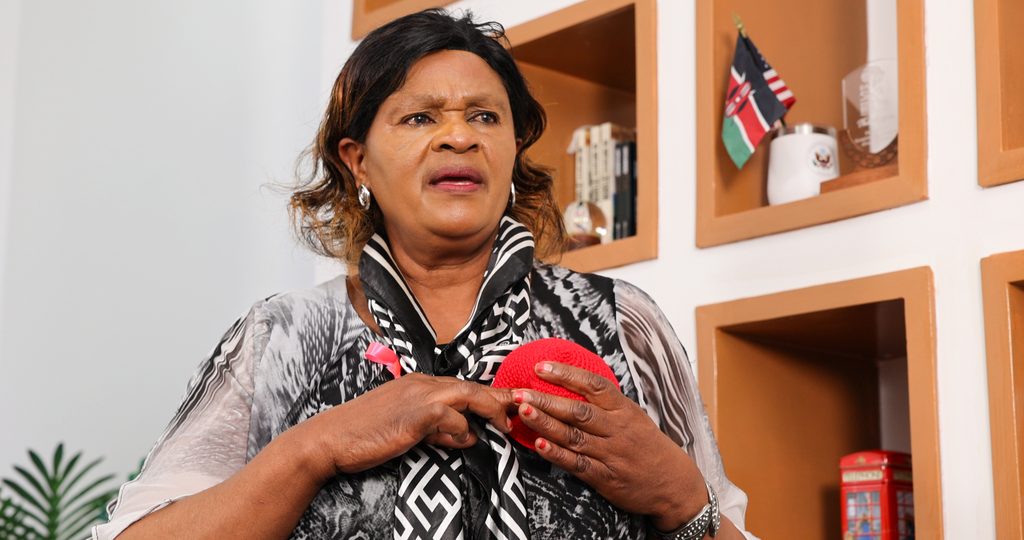
Joining her was radiation oncologist Dr Santana Dikirr, who says Agnes’s path is common. Early breast cancer is usually painless, early signs are often misread, and many Kenyan women reach specialists only after the disease has spread.
It began in 1992. Agnes was a young mother who had just lost two babies and was living with high blood pressure she had not yet recognised. Something in her body felt wrong. A doctor suggested it might be milk with nowhere to go after the babies died. “I did not understand, so I just kept quiet,” she recalls. “I carried on living like that.”
She went on to have two sons. The sensation settled on the upper part of her breast, like the sting of an insect bite. There was no pain and, at first, no lump she could hold between her fingers. She only knew, when she looked, that something was not right.
Breast cancer usually has no pain. People like to come to hospital when there is pain, or when someone is bleeding
Fifteen years passed before anyone named it. In 2007, a biopsy at St Mary’s Hospital confirmed stage 2B breast cancer. “Misdiagnosis is really common,” Dr Dikirr says. “A woman who has recently had a baby is told it is just the breast filling with milk.”
“Breast cancer usually has no pain,” she explains. “People like to come to hospital when there is pain, or when someone is bleeding. A lump that starts the way Agnes described is usually painless.”
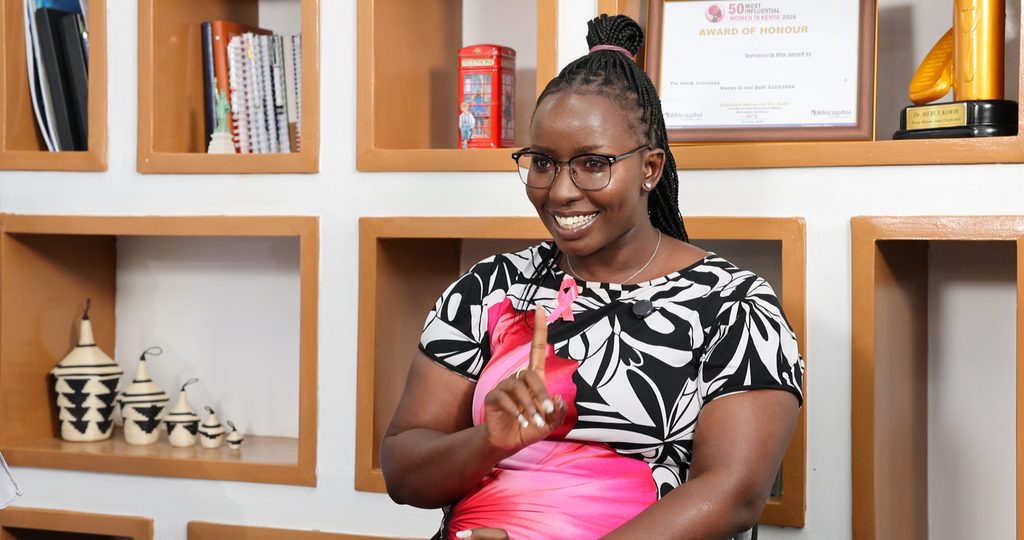
The signs to watch for include skin that dimples or looks like orange peel, a nipple that turns inward or produces a discharge, sometimes bloodstained, and a new lump. Many breast lumps are harmless, she adds, and a biopsy, which examines a small tissue sample under a microscope, settles the question.
The reasons for late diagnosis are layered. Cultural beliefs lead some patients to refuse tests. Facilities outside Nairobi have too few doctors and too little equipment. And people seek care only when ill. “As Africans, we go to hospital when we are sick,” she says. “Screening does not happen.”
“Early breast cancer has no symptoms,” Dr Dikirr says. By the time a visible lump appears, the cancer has often reached the lymph nodes or travelled to the bones, liver or chest.
She lost sleep, imagining going into theatre and never waking up, or the cancer spreading once the breast was opened
When doctors told Agnes her breast would have to be removed, her mind went to her children. “Mothers, when we are sick, the first thing we think about is our children,” she says. “Who will I leave them with if I die?”

She lost sleep, imagining going into theatre and never waking up, or the cancer spreading once the breast was opened. Instead of going to Kenyatta National Hospital, she followed relatives’ advice and took treatment from another doctor in Westlands for five months. “I felt the disease was increasing,” she says. A new swelling had appeared.
Still afraid, she tried Nairobi Women’s Hospital. A young doctor read her file. “He told me, ‘Mama, I see all your papers are from Kenyatta. You were supposed to have the surgery there. Why have you come here? Go back,’” she remembers.
She felt rejected at first, then reconsidered. “I sat down and thought, this doctor is a young man, and he has looked at all my papers. He said, “Go back to Kenyatta National Hospital.” She went back. “It was a journey to acceptance,” she says. “I told myself I would go, and I did.”
Surgery was on a Wednesday, and by Saturday she was home. Many people in her husband’s home village never knew she had been ill.
She often meets patients told to give up tea with sugar, rice or ugali. Yet cutting out one food group does not help cancer treatment
Six cycles of chemotherapy followed, three weeks apart. She went to work after the first two. Each later cycle was harder, and by the sixth she wondered whether the treatment would carry her through. She spent five days in bed. Then came 25 days of radiotherapy. She told her doctor whenever she felt nauseous, ate everything she could, and drank plenty of water. “When you drink, you feel better,” she says.

Dr Dikirr welcomes that appetite. She often meets patients told to give up tea with sugar, rice or ugali. “Cutting out one food group does not help cancer treatment,” she says.
Agnes returns again and again to her husband. “Every time, my husband told me, ‘You are beautiful. Nothing has changed,’” she says. “When he said that, it boosted my self-esteem and my morale.”
Her children said the same. She had braced for judgement and found acceptance instead.
Finding the right prosthesis took time. Real tissue has weight, and a light replacement can ride up or shift. Her daughter eventually brought her better ones, and today nobody can tell which side is which unless she points it out. Three months at Faraja Cancer Support Trust gave her the company of women on the same path. “You see that you are not the only one,” she says. “People are many. You talk to one another, and the stress reduces a little.”
She wishes someone had explained more at the start. Fear grows in silence, she says, and a woman who knows what to expect walks into theatre differently.
Both women say families carry much of the burden. Agnes recalls a woman from her husband’s home area who could not raise money for surgery. “She was never operated on,” she says. “When you hear that your sister or relative has cancer, help her. When you help her, you have saved her.”
Patients ask whether God is calling them. She answers that God has not called them as they have an illness
Dr Dikirr calls the cost of care financial toxicity. The Social Health Authority (SHA) covers imaging, including mammograms and ultrasound, she notes, and she urges families to insure mothers and sisters over 40.
Her clinic conversations often follow a pattern. Patients ask whether God is calling them. She answers that God has not called them; they have an illness.
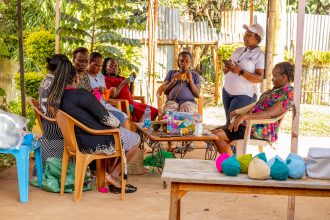
She meets four myths most often. The first is that cancer is a curse. “It is just a disease, like diabetes or hypertension,” she says. “It is your cells becoming abnormal.” The second is that a biopsy makes cancer spread; one Nairobi patient refused one and could not be persuaded. The third is the diet myth. The fourth is that chemotherapy is poison. “It is aggressive treatment for an aggressive disease,” she says. The drugs attack fast-multiplying cells, which is why the lining of the mouth suffers alongside the tumour. Side effects are real but well documented, and doctors plan for them.
Breast cancer is a collection of diseases, she explains. Some tumours feed on oestrogen or progesterone, others are driven by the HER2 gene, and some respond to neither. Early disease can be treated with chemotherapy to shrink the tumour, then surgery that may remove only the lump, then radiotherapy to lower the chance of recurrence. Where cancer has spread, the aim shifts from cure to control, much like managing hypertension. “When you hear someone has cancer, let us not talk about death,” she says. “It is a disease, and it can be cured.”
Both guests end with the same advice: examine yourself. Agnes stands, raises her arms and looks for changes in size or shape, then feels with her fingers, and repeats lying down. “If you feel something small inside and it moves, start the journey,” she says. “Do not wait until it becomes a wound.”
Dr Dikirr adds a medical map. Women over 40 should have a mammogram. Younger women, whose breast tissue is denser, are better served by an ultrasound. People at high risk, such as those with a family history or earlier chest radiotherapy, may need an MRI.
She also has a message for men. “Know your wife’s breasts, so that you can tell when something is abnormal,” she says. If a clinician reassures a woman without testing, she should ask for imaging.
When Agnes had surgery, her youngest child was small. That child is now 25. She does not dwell on how she survived. She credits God, her doctors, and a husband who did not look away, and she speaks freely about her illness because she believes silence keeps women from help. “Cancer is not the end of the world,” she says. “It does not choose. It is for the rich and the poor. It is for everyone.”