
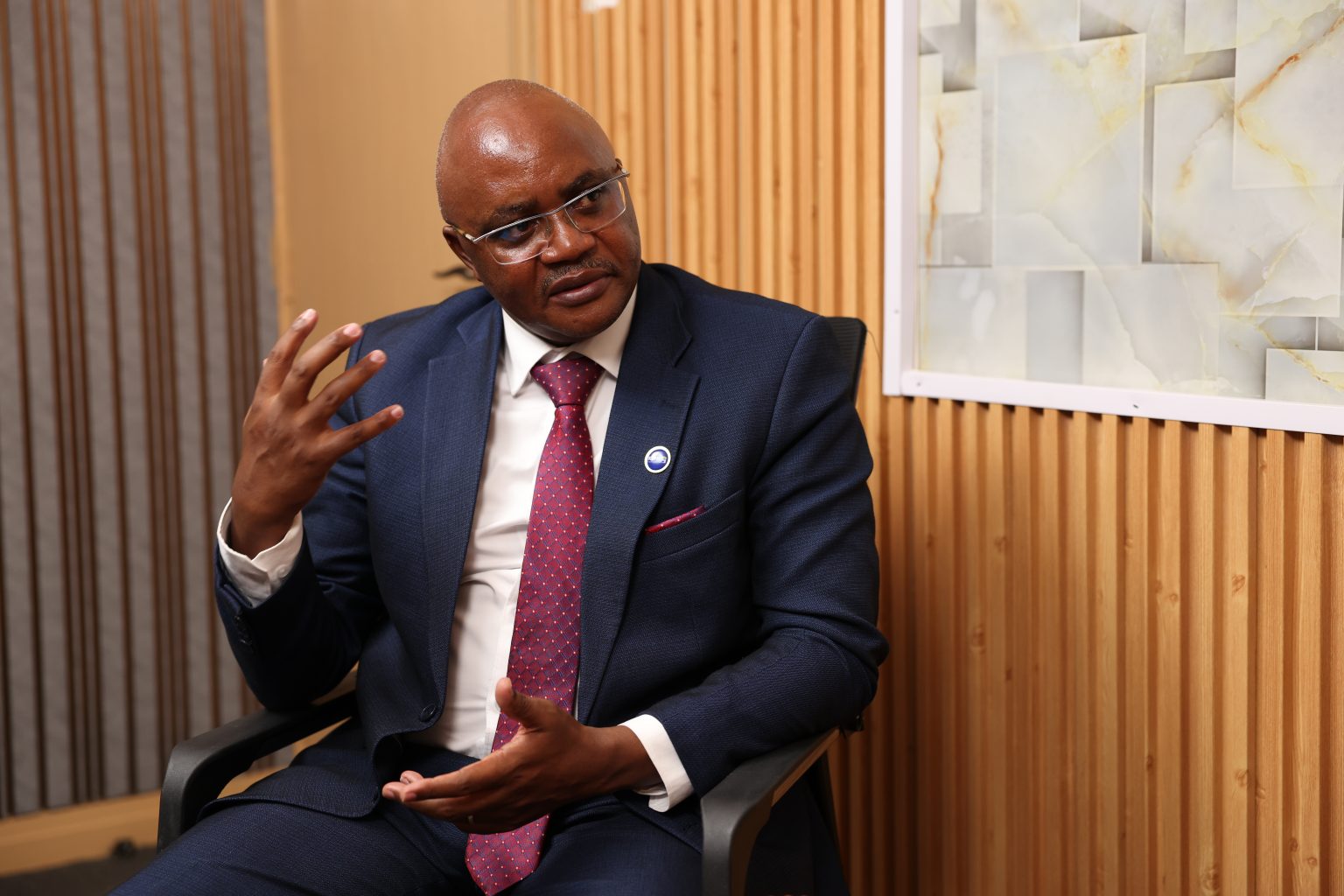

Donor funding cuts have forced a question government long put off: Who pays when foreigners pull off? Dr Eliud Mwangi has spent two decades in the aid system and has an answer.
As an intern at Meru General Hospital at the height of the HIV epidemic, Dr Eliud Mwangi began each morning certifying deaths. The wards were full of patients with tuberculosis (TB) and opportunistic infections, and more kept arriving. “I need to go upstream,” he told himself, rather than wait for the sick to come to him.
The decision ended his plans for cardiology. It was not the first time one moment had changed his course. As a boy in Class Two, he decided he would be a doctor, before he knew what that meant, because an exam question about moving air changed how he saw himself. Born poor, the child of a farmer and a driver, he climbed from near the bottom of his class to the top of his district and won a place at Starehe Boys’ Centre & School.
After Meru, he trained among the first clinicians in HIV management in the region and joined the International Center for AIDS Care and Treatment Programs (ICAP) at Columbia University as a programme officer in Central Province. At the time, only four facilities there offered antiretroviral treatment. About nine years later, he left as director of programmes in a portfolio supporting more than 755 facilities, which he estimates reached around 15 per cent of the country’s clients.
He then spent nine and a half years as country director for the Elizabeth Glaser Pediatric AIDS Foundation, where he says he managed more than $150 million (about Ksh19.4 billion at today’s rates) to serve children living with HIV. His team pioneered point-of-care early infant diagnosis in Kenya, cutting the wait for results from about 160 days to a day or, at worst, under a week. They also pushed for child-friendly medicines when the choices were limited and often bitter.
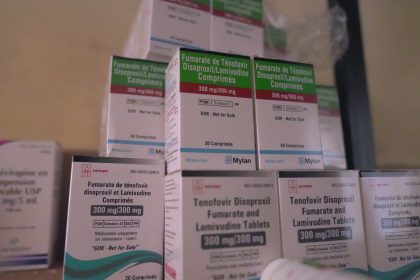
When the United States cut funding to USAID, clinics across Africa felt it quickly especially HIV, TB and malaria programmes
The pilot spared parents months of anxiety. Yet the government and development partners could not take it up nationally because point-of-care testing cost far more than the conventional method, so it was limited to hard-to-reach, arid and high-burden areas. “We are still dependent,” he said of that moment, describing the negotiation as one of the toughest of his career.
That lesson now confronts the region. When the United States cut funding to USAID, clinics across Africa felt it quickly. HIV, TB and malaria programmes long run on external money faced a question governments had long put off: who pays when the donor leaves?
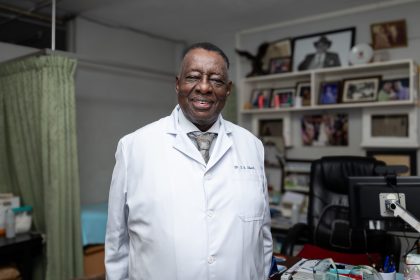
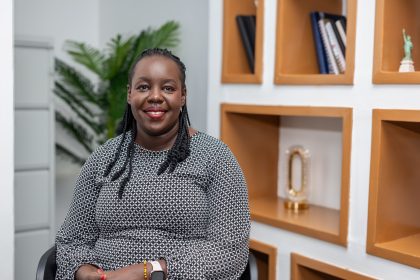
On Willow Health Media’s White Coat Diaries, CEO and Editor-in-Chief Dr Mercy Korir put that question to Dr Mwangi, founder and CEO of the Kenya Institute of Public Health (KIPH). Can a country sustain its health care without leaning on donors? “It is possible,” he said. “But it will call for a lot of intentionality.”
In his view, that means folding diseases such as HIV into primary health care, funding care through universal health coverage (UHC) to which everyone contributes and, above all, managing health projects well enough that the money already in the system goes further. “It’s not about funding,” he said. “It’s about effective project management.”
The cuts, he argues, force countries to own the fight. The old model ran HIV through separate clinics, with their own specialists and stigma. The better one treats a mother with HIV and malaria like any other outpatient. Government-to-government funding, which relies on public systems, should be cheaper in the long run, but the larger answer is UHC, a government-led insurance mechanism that still covers HIV and TB.
Around 385 million people in Africa are pushed into deeper poverty each year by out-of-pocket health spending
His argument sits comfortably with the thinking of the World Health Organization (WHO). At the Regional Committee for Africa, health ministers endorsed the Strategy for Financing the Future of Health in the WHO African Region (2026 to 2035). The decade-long roadmap sets seven priorities, among them stronger financing governance, more domestic resource mobilisation, better pooling of funds and more strategic purchasing of services.
WHO’s regional office says around 385 million people in Africa are pushed into, or deeper into, poverty each year by out-of-pocket health spending. Pooled, prepaid funding of the kind Dr Mwangi describes is meant to prevent that.
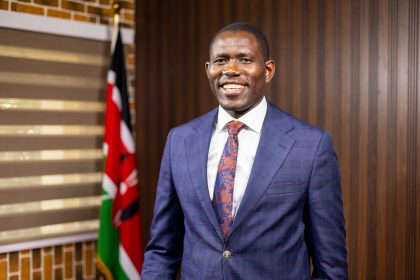
At the Africa Health Sovereignty Summit in Accra, WHO Director-General Dr Tedros Adhanom Ghebreyesus urged African leaders to invest in resilient, country-owned health systems, warning that donor funds often bypass national systems. He said WHO backs governments with tools such as health taxes, public procurement and digital financial systems.
WHO’s guidance frames the cuts as an opportunity to move from aid dependency towards self-reliance, noting that Kenya, Nigeria and South Africa have added health funds or are awaiting parliamentary approval for increases. Still, figures presented at a side event during the 79th World Health Assembly (WHA) put external assistance at roughly 23 per cent of total health expenditure across Africa, and up to 40 per cent of health financing in some low-income countries.
Money, Dr Mwangi argues, is only part of the story. Africa has no shortage of good strategies; the difficulty lies in execution, “where the rubber meets the road”. Medical school taught him to take a history, make a diagnosis and treat. “Nobody taught me how to manage people,” he recalled. He later added an MBA, a master’s in public health and project management certification, and believes this missing skill explains why so many health initiatives fall short.
Plans to eliminate mother-to-child HIV transmission were sound, but nobody treated the effort as a project, with a fixed timeline
Between 2013 and 2015, Kenya pursued an initiative to eliminate mother-to-child transmission of HIV, aiming for transmission below five per cent. The plans were sound, but nobody treated the effort as a project, with a fixed timeline, resources, stakeholders and a register of risks. The target was missed and has since been pushed back to 2030 under a global alliance.
Kenya, he says, has about 2,000 certified project management professionals against some 150,000 people doing the work, and fewer than two per cent of project managers across Africa are certified, against about 600,000 in China. He cites a Project Management Institute (PMI) survey suggesting certified managers improve the odds of success by 2.5 times, while only about half of health projects succeed.
Raising success rates from roughly 50 per cent to 80 per cent would stretch existing resources further. A new dispensary is not finished when the ribbon is cut, he says, but when patients walk in at noon and receive care.
Self-reliance, he adds, begins with a change of mind: budgets that treat health spending, including health workers’ salaries, as an expense miss the point. “When you have healthy people, it means that they’re going to be able to produce,” he said. “You’re going to expand your GDP.”
Early screening for cancer and HIV, wellness checks and health promotion all cost less than late-stage care, echoing WHO’s pillars on efficiency and primary health care.
Dr Mwangi wants the miles he has covered to make the path “lighter or shorter” for those behind him
KIPH is his answer to the skills gap. The institute is an authorised PMI partner and combines certification with leadership coaching. More than 500 health professionals have trained there, including about 30 young doctors who took the Certified Associate in Project Management course last year before internship and are now being mentored. He says KIPH has won PMI’s 2026 Distinguished Contribution Award for Southern Africa for advancing project management in the health and NGO sectors.
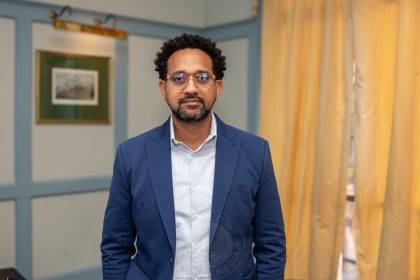
Crediting teachers and mentors at Starehe and in public health for opening doors, he wants the miles he has covered to make the path “lighter or shorter” for those behind him. Asked what he hopes people see in his work, he named hope, honesty, integrity and excellence. KIPH, he says, aims to produce “value-based leaders”, people who can be trusted to manage a project meant to care for children and not mismanage it.
Self-reliance will require domestic financing, integrated services and fair budgets. It will also require managers who can turn plans into clinics that open on time, stocked and staffed. Kenya’s health system will be judged on whether it can supply both.
We believe in the free flow of information
Republish our articles for free, online or in print, under Creative Commons licence.