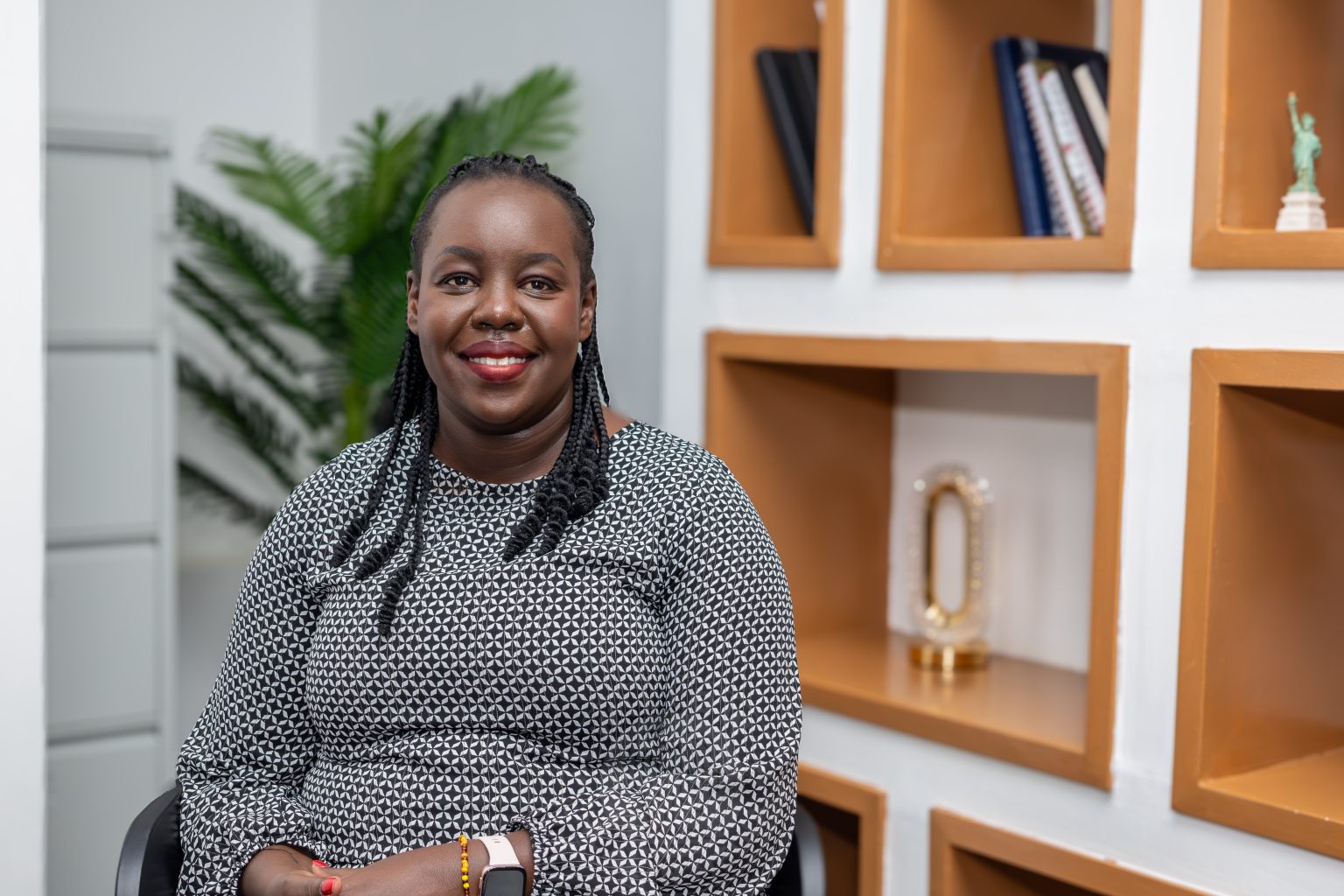
Dr Barsosio grew up in the shadow of eight pregnancies her grandmother lost. Today, she is a maternal researcher who is determined that no woman in Africa should carry that same weight alone.
In Kenya and across much of sub-Saharan Africa, the end of pregnancy does not always bring the joy it promises. For some women, it ends in silence – babies lost before they are named, grief carried quietly, and lives that slip through the cracks of fragile health systems.
The loss of a newborn is not always marked with a funeral. Sometimes it happens in silence. A baby is buried quietly in a shallow grave within the compound, steps away from the family home. There are no announcements, no gathering of mourners, no final rites to acknowledge a life that flickered, however briefly.
In some cases, the child is never even named. The world moves on, but for the mother, time does not. The grief lingers, heavy, unspoken, and often carried alone.
It is this quiet, invisible loss that defines the urgency of Dr Hellen Barsosio’s work. Behind every statistic, she sees a story interrupted, a promise broken, and a life that should have been. When a mother should be going home with a child and isn’t, she says the true failure of the system is laid bare.
Yet when asked why she describes herself as someone who “works for mums and babies” rather than as a maternal and child health researcher, her answer reveals far more than a professional title.
Beneath her grandmother’s strength lay a painful history: She had lost eight pregnancies
“My mission in life is to ensure that every pregnant mother, at the end of her journey, carries a healthy baby,” Dr Barsosio says. “That’s the greatest gift we can give them.”
It is a striking answer, one that shifts the conversation away from science into something more human, more urgent. “I have witnessed what it means to come to the end of your pregnancy and not have that baby to celebrate,” she adds.
Her journey into maternal and newborn health began long before medical school, rooted in the lived experiences of women in her family.
Growing up, Dr Barsosio listened to stories of traditional healers told by her grandmother and great-aunt, women who were respected, sought after, and deeply knowledgeable in herbal medicine. But beneath that strength lay a painful history. Her grandmother had lost eight pregnancies.
“When I say lost, I mean miscarriages, stillbirths, babies who did not survive beyond the first month of life,” says Dr Barsosio. Those repeated losses shaped not just her grandmother’s life, but how she was perceived within the community. In a setting where motherhood is closely tied to identity and social standing, such tragedies carry stigma.
After years of relying on traditional remedies, she began attending antenatal clinics
“There was almost a feeling that something was wrong with her. That she could pass it on to the next generation. The emotional toll was immense over time,” Dr Barsosio explains.
Her grandmother’s personality slowly changed, her once vibrant spirit dimming under the weight of grief that had little space for expression. The turning point came when she made a decision that felt both radical and deeply uncomfortable. She turned to modern medicine.
After years of relying on traditional remedies and travelling long distances searching for solutions, she began attending antenatal clinics at a nearby missionary hospital, where she was advised to remain close, given her history of pregnancy losses. It was there that Dr Barsosio’s father was born prematurely, unlikely to survive under traditional care, but with medical support, he did.
“It was the first time my grandmother tried modern medicine, and it worked,” says Dr Barsosio. The experience revealed that while traditional medicine has its place, modern medicine offers something else, something backed by research and practice.
Driven in part by the legacy of those women, Dr Barsosio pursued medicine despite being actively discouraged. Her school had never produced a grade higher than a B Plain, and she was told to consider other options. At home, her father was equally direct: “You had better pass. There is no money for parallel programmes.”
I felt I could have more impact thinking about mums and babies in the millions
With seven children in the family, the stakes were high. Dr Barsosio broke the school’s records and was admitted to medical school, embarking on a demanding and deeply personal career in which she constantly searched for where she could make the greatest impact.
During her internship in obstetrics and gynaecology, she was drawn to the care of mothers and babies. But the daily reality of clinical work also revealed its limits.
“You can see 40 women in a day,” she says. “But what about the millions of women across Africa?” That question would shape her decision to move from clinical practice into research. “I felt I could have more impact thinking about mums and babies in the millions.”
Her work has since taken her across Kenya, from Kilifi on the Coast to Kisumu in Western Kenya, and into global research institutions in the United Kingdom.
In Kilifi, she was part of research investigating the causes of stillbirths, collecting samples and speaking with mothers who had just lost their babies. Those conversations left a lasting impression.
Her focus turned to maternal immunisation, vaccinating pregnant women to protect newborns
“In many cases, these babies are buried at home. They are not considered children. They are not named,” she says. “The grief is largely borne by the mother alone.” She pauses before adding: “You are told, ‘Don’t worry, you will get another one.’ I find that very insensitive. Babies are not replaceable.”
The deeper she went into research, the more convinced she became that many of these deaths were preventable. Her focus turned to maternal immunisation, vaccinating pregnant women to protect newborns from life-threatening infections in their earliest days of life.
“These babies are exposed to infections before they are even born,” she explains. One such infection is Group B Streptococcus, a bacterium that can be passed from mother to child during delivery. “There was no way to prevent it. The baby didn’t have a chance. But research is changing that. If mothers are vaccinated early, babies have a fighting chance to be born safely, able to breathe, and supported from the very start.”
The science, however, is slow. Vaccine development can take decades, from early laboratory work to clinical trials, regulatory approval, and eventual rollout. “When I started in 2012, we were talking about early-phase research. Now we are entering phase three trials. Even then, it could take several more years before a vaccine becomes widely available. It’s a long journey, and you just have to keep going.”
Research demands resilience. Sometimes your funding is cut, and your work stops
That persistence is tested not only by scientific challenges but by the realities of global health research. Funding can be unpredictable. Projects can be halted abruptly. Collaborations span multiple countries, cultures, and systems, often with unequal power dynamics.
“There are days when things are not going the way you want,” she admits. “Research demands resilience. It’s not for the faint-hearted.” The personal sacrifices are real too. “You carry work home. There are 2am grant deadlines. You have to manage difficult relationships. Sometimes your funding is cut, and your work stops.”
Despite these pressures, Dr Barsosio remains clear about her purpose. “I feel like this is what I was meant to do.”
Her work has taken her to the London School of Hygiene and Tropical Medicine, the University of Oxford, and the Liverpool School of Tropical Medicine, where she gained both technical expertise and access to global networks that shape health policy and research priorities. “It completely changed how I think about research,” she says.
Yet she is acutely aware of the inequalities embedded in global health. “Global health has traditionally been shaped by the global north. We are now beginning to see leadership from the global south.” Back in Kenya, she is part of efforts to build that leadership, training young doctors and researchers in maternal and newborn health.
Outside her professional work, she is involved in supporting vulnerable children
In recent years, Dr Barsosio has stepped into advocacy, a shift she describes as both necessary and uncomfortable. “At some point, you have to move from just doing the work to speaking about it.” That means engaging with policymakers, pushing for resources, and ensuring that the needs of mothers and babies are prioritised. “We need more voices connecting resources to the people who need them most.”
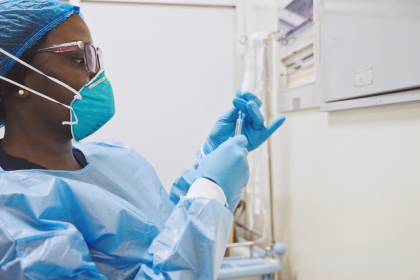
Outside her professional work, she is deeply involved in supporting vulnerable children, including those living on the streets. She jokes that she has about 40 children out there, some reintegrated into families, others supported through school. She has also been a foster parent.
“It gives me a lot of joy,” she says, “because it is about giving back to the society that raised me.”
Her advice to those considering a career in research is simple: “Find what you love and stick to it. The rewards won’t be immediate, but in the long term, it is fulfilling.”
For Dr Barsosio, the work is personal, the science is urgent, and the mission has never wavered. Every mother, at the end of her journey, deserves to go home with a healthy baby.