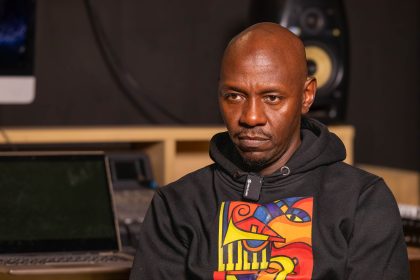


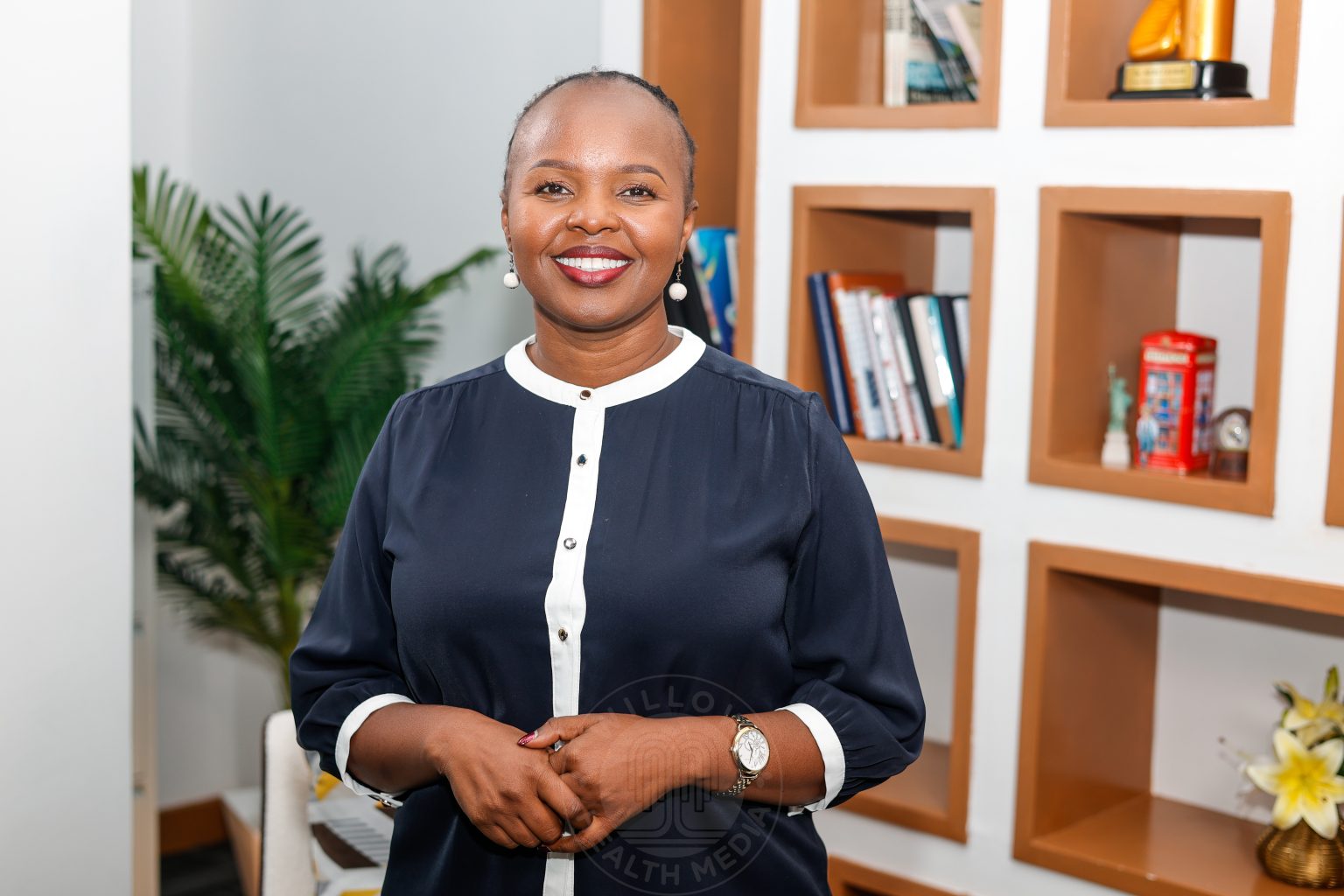
Dr Anne Musuva’s journey from a traumatic ward death to co-shaping the Facility Improvement Financing (FIF) Act is a story about systems, stubbornness and staying the course.
As a third-year medical student at Kenyatta National Hospital, Dr Anne Musuva watched a young boy named Moses die in front of her. Moses had travelled from Kisii with severe malaria that had progressed into acute renal failure. He urgently needed dialysis.
At the time, dialysis services were extremely limited in Kenya, available mainly at Kenyatta National Hospital and Moi Teaching and Referral Hospital. Demand far exceeded supply and patients had to pay upfront before receiving treatment. Moses’ family could not raise the Ksh8,000 needed for a single session. “Before my eyes I watched Moses die,” Dr Musuva recalled.
The experience shook her so profoundly that she almost dropped out of medical school. She disappeared for two weeks as she struggled to process the loss. But eventually she returned and completed her studies, carrying with her a growing conviction that healthcare outcomes depended not only on doctors, but also on the systems governing access to care.
“That was the first time I started thinking there was something wrong with the system,” she said.
Years later, that conviction would help shape one of Kenya’s most significant pieces of health legislation. When President William Ruto signed the Facility Improvement Financing (FIF) Act in 2023, it marked the culmination of a decade of county-level reforms that Dr Musuva had helped design and push through.
Millions of Kenyans held hostage to delayed county disbursements, dysfunctional financing systems
The law allows health facilities to retain revenues they generate, ending a damaging cycle in which hospitals collected money daily but could not access it to buy basic supplies, pay casual workers or keep the lights on. For millions of Kenyans whose care had long been held hostage to delayed county disbursements and dysfunctional financing systems, the legislation represented a tangible shift and “It was something I was incredibly proud to have been part of,” she said.
The road to that moment began with the contrasts she witnessed early in her career.
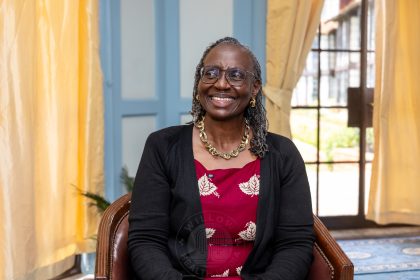
After graduating, Dr Musuva took up a post at Chogoria Mission Hospital, where she encountered what a functioning healthcare system could look like. Consultants were available, medicines and equipment were accessible, and healthcare workers had the resources they needed. “It was a truly satisfying experience as a doctor,” she said.
The defining contrast came in 2008, when she was transferred to a public hospital in Makueni District. She became the only doctor in a large district hospital, working day and night with no off days, rarely taking leave and constantly worrying about what would happen to patients if she stepped away. The hospital struggled with staff shortages, medicine stock-outs and inadequate resources.
When she was later promoted to District Medical Officer of Health, overseeing the district hospital and primary healthcare facilities across the district, the full scale of Kenya’s systemic challenges came into view as “I got to see the entire health system at district level and appreciate the challenges the country faces.”
Determined to find answers, she pursued a Master’s degree in Public Health in Belgium, specialising in health systems and disease control. For the first time, she studied how countries such as Rwanda and Thailand were approaching healthcare financing and universal health coverage, which essentially means “Expanding accessible quality care to all regardless of their financial status.”
A Level Four facility in western Kenya had been closed for two weeks because it lacked soap and detergent
She later joined ThinkWell, an organisation supporting countries to design and implement healthcare financing reforms, rising from Country Director for Kenya to Regional Director overseeing East and Southern Africa. It was here that she became deeply involved in the work that would eventually shape the FIF Act.
The problem she encountered was structural. Before devolution, health facilities in Kenya retained part of the revenue they collected from user fees, using those funds to buy supplies, support operations and hire casual staff. After devolution and the introduction of the Public Finance Management Act, counties were required to channel all collected revenue into county revenue funds.
Although the law allowed exemptions enabling facilities to retain operational money, many counties did not implement those provisions. Facilities lost direct access to operational funds and became fully dependent on county disbursements, which were often delayed.
The consequences played out in ways that were both absurd and devastating. Dr Musuva remembers visiting a Level Four facility in western Kenya that had been closed for two weeks because it lacked soap and detergent, yet “The facility was collecting money every day but couldn’t use that money to buy soap.”
Some hospitals had electricity disconnected because bills had not been paid, and “I’ve been to facilities that hadn’t paid workers for eight months, and yet they still showed up every day.”
The FIF Act’s most significant provisions allow health facilities to retain money generated through SHA
Together with colleagues at ThinkWell, Dr Musuva began supporting counties to develop legislation allowing facilities to retain and use their own revenues. County health departments often backed the reforms, but county treasuries resisted losing control over facility revenues. In some counties, it took nearly two years to pass the legislation. Where the laws were implemented, the impact became visible almost immediately. Facilities addressed operational gaps faster, supported workers and improved service delivery.
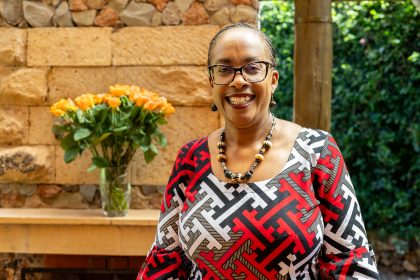
Those county-level successes later informed the development of a national model. Working alongside the Council of Governors, the Ministry of Health and other partners, Dr Musuva and her colleagues developed the framework that became the basis for the FIF Act.
One of the law’s most significant provisions allows health facilities to retain resources generated through mechanisms such as the Social Health Authority (SHA). The reforms have also created new incentives for facilities to improve claims processing. Previously, many facilities saw little reason to invest effort in processing insurance claims because they did not directly benefit from the funds. Now, many have hired dedicated clerks to manage claims because they can directly see the returns.
For Dr Musuva, who now serves as Acting Chief Executive Officer of the Kenya Healthcare Federation (KHF) after more than 15 years in healthcare financing, policy and systems strengthening, accountability remains the unfinished business of reform. Kenya continues to struggle with collecting contributions from the informal sector under the Social Health Insurance framework, and financing gaps persist.
One of her most memorable moments was planning and curating Bill Gates’ tour of Kenya in 2022
“The laws are there. The policies are there. What we need is the courage to be accountable and to hold people accountable,” she said.
One of the most memorable moments in her career came in November 2022, when she helped plan and curate Bill Gates’ visit to Kenya. Her organisation was supporting healthcare financing reforms in partnership with the Gates Foundation, and the visit was designed to help Gates understand the realities of primary healthcare financing on the ground. The delegation visited facilities in Makueni County, including Level Four hospitals and smaller health centres. Gates met county health leaders and participated in policy discussions with health experts and government officials.
“We were trying to help him understand the health system, the pain points and how the Foundation could best support counties in their journey towards universal health coverage,” she explained.
Beyond policy, Dr Musuva has been candid about the barriers women face in leadership. Women make up roughly 70 per cent of the health workforce, yet their representation drops sharply at senior levels. In the private health sector, women account for only about 15 per cent of C-suite positions.
She experienced this tension directly when she applied for a senior deputy CEO role while heavily pregnant. Initially she hesitated to apply at all, and it took repeated encouragement from colleagues before she submitted her application. During the interview, she addressed the issue head-on.
She pushed for a dedicated mothers’ room, complete with refrigeration for breast milk in her previous workplace
“If I am the best candidate, let me get the role,” she told the panel, arguing that women should not be penalised for bringing forth the next generation. Days later she delivered by Caesarean section. A week after giving birth, she learned she had secured the position. “The reality is that women are truly penalised for being women,” she said.
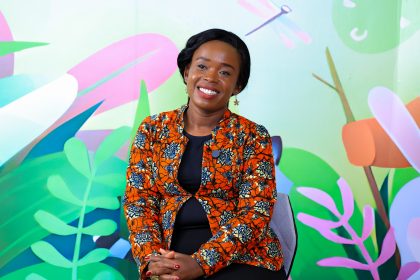
She has since become intentional about mentoring and sponsoring women leaders, helping establish a network of around 30 women in development and health that meets regularly to discuss workplace challenges and leadership experiences. She also pushed to establish a dedicated mothers’ room, complete with refrigeration for breast milk storage, in a previous workplace. Many women had raised the idea before, she notes, but without someone in leadership to champion it, nothing had been done.
Two values have consistently guided her decisions throughout her career: impact and ethics. She rarely takes on roles that are not impactful, even when the monetary reward is high, and she believes African health systems require ethical leadership if the continent is to fully realise its potential.
The boy from Kisii who died in front of her all those years ago never left her. If anything, Moses set the course.