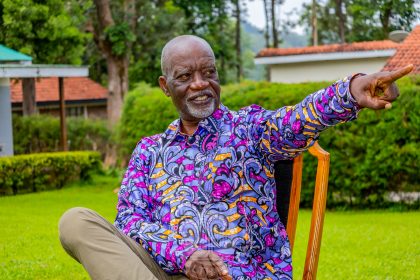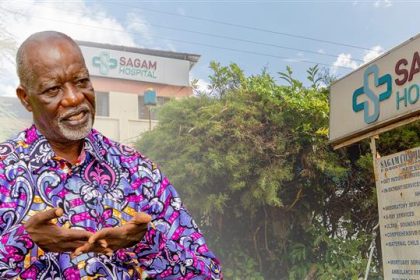


Before he became the man now rebuilding Kenya’s health system, Dr Ouma Oluga was just a curious child near a village phone booth, at the wrong place, at the wrong time, on the worst day of his life.
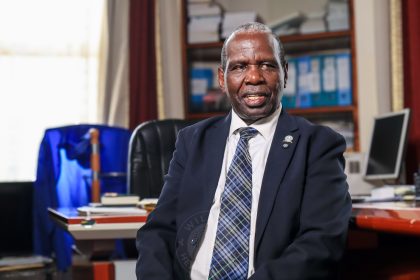
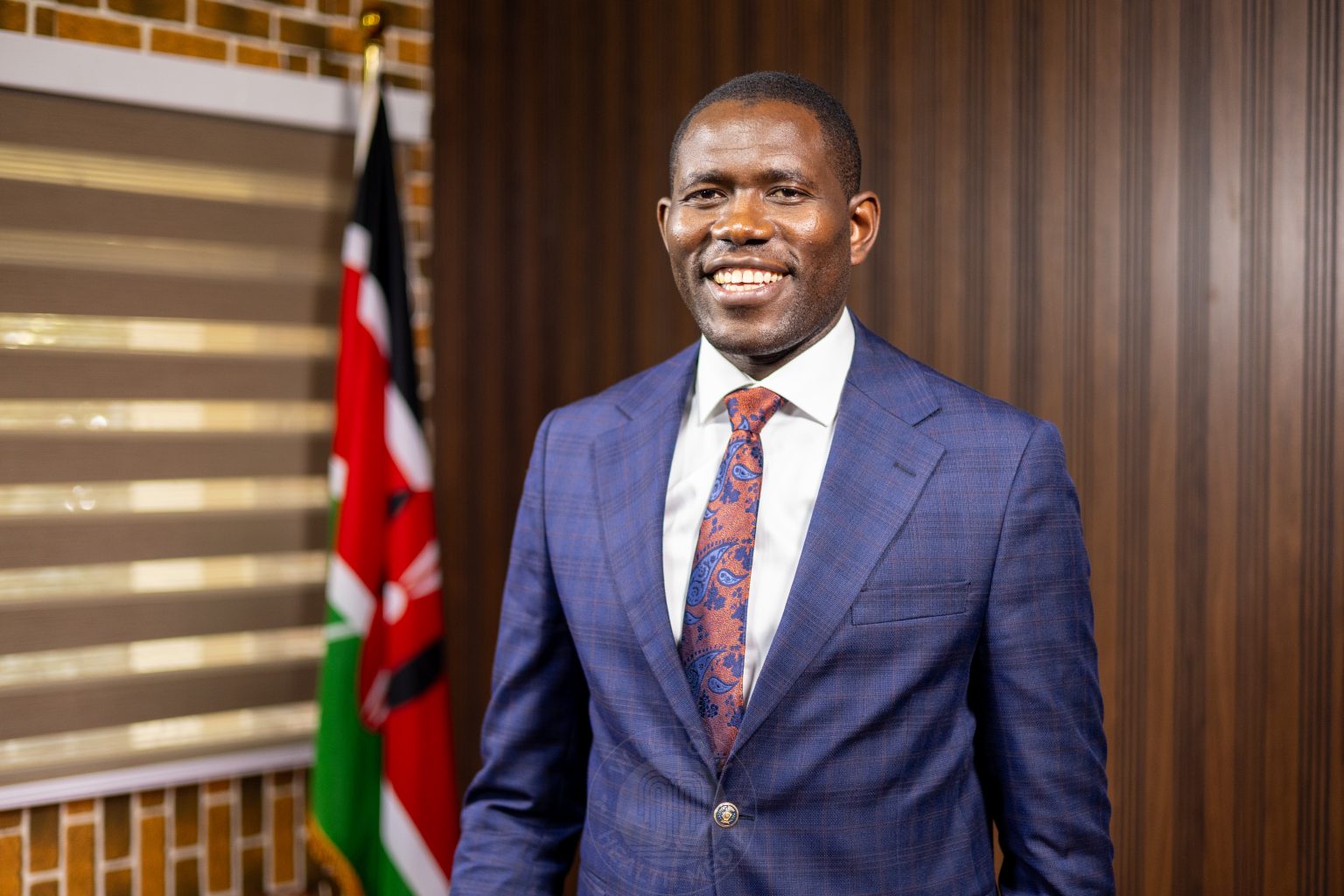
There is a version of Dr Ouma Oluga that Kenyans know well: the union firebrand who marched doctors into a 100-day strike and straight into jail cells, the man now sitting as Principal Secretary for Medical Services across the very table he once banged his fist on. But strip away the title, the microphones, the headlines, and you find an 11-year-old boy standing beside a ringing telephone booth in rural Siaya, about to hear the worst four words of his life. There were no cellphones then. No warning. Just a boy, a phone, and a voice he recognised instantly.
What came down that line would tilt his family’s entire world on its axis, a secret he would carry, alone, refusing to let it go for an entire night.
It is one of the quietest, strangest stories he tells. And it explains almost everything about the man he became, starting with his father.
Dr Oluga’s father was a primary school teacher, the kind who bought a newspaper every evening and pressed it into his son’s small hands to read aloud. There were no bank accounts then, only queues: teachers lining up at month-end to be handed their salary in cash, coin by coin, note by note.
He was riding his bicycle to collect that salary when he collapsed by the roadside. Strangers found him. He was rushed to Siaya District Hospital. His wife sat beside him through the night, holding on to whatever hope the darkness allowed. By morning, he was gone.
“My mum wanted to pass the message, and there was just the telephone booth,” Dr Oluga recalls. His grandmother had sent him to the posho mill that same day, an errand that would collide with catastrophe. “It was such a wrong coincidence that you’ve been sent to the posho mill, and then you are the same one who is near the phone.”
Young Oluga walked home, ate the meal his grandmother cooked, and he said nothing
Curious, as children are, he picked it up. He heard his mother’s voice ask, in Dholuo, who was on the line. He said nothing. Then came the words he was never meant to hear first: go to our home, tell the people of Ng’udi that we’ve lost Japuonj, our teacher.
“It was very clear it was her voice. So I didn’t respond. In fact, I didn’t return it (the phone) there. I just left it hanging.”
He walked home. He ate the meal his grandmother had cooked. And he said absolutely nothing, not that night, not the next morning, until two women came screaming to the gate, the way villages have always broken news too heavy for words. Only then did his grandmother and siblings learn that Mwalimu was dead. Oluga already knew. He had known for hours.
“I knew for the entire night. I didn’t sleep that night. It was a very heavy night.”
Ask him now, decades on, whether he regrets the silence, and he doesn’t flinch. “I have never reflected on whether I should have broken that news. I don’t think it was in my place to say it. Maybe it was my way of grieving.” His mother eventually pieced together whose voice had gone quiet on the other end, two weeks into the funeral rites. “She knew. And I never said anything. I don’t think anyone has ever condemned me for that.”
He tells the story with the calm of a man who made peace with it long ago. But the person he keeps circling back to, every single time, is his mother.
Home, back then, was a thatch-roofed hut, and even before the phone rang, before the bicycle, before the roadside, life was never quite as soft as a teacher’s salary made it sound. “There was still a lot of poverty,” Dr Oluga says. “He was buying books a lot, newspapers a lot, and we were reading a lot. But life was still difficult.” Then her husband was gone, and difficulty turned into something closer to war. Eight children. No income. A widow bending over other people’s farms for less than Ksh50 a day, the price of a single gorogoro (2-kilogramme tin) of maize. “She had to work on farms all her life. And they don’t pay much.”
Oluga read newspapers, absorbing a nation’s politics before he had mastered his times tables
Relatives circled, offering to take the children off her hands. She refused every single time. Whatever the hardship, she was determined to keep her children together and raise them herself.
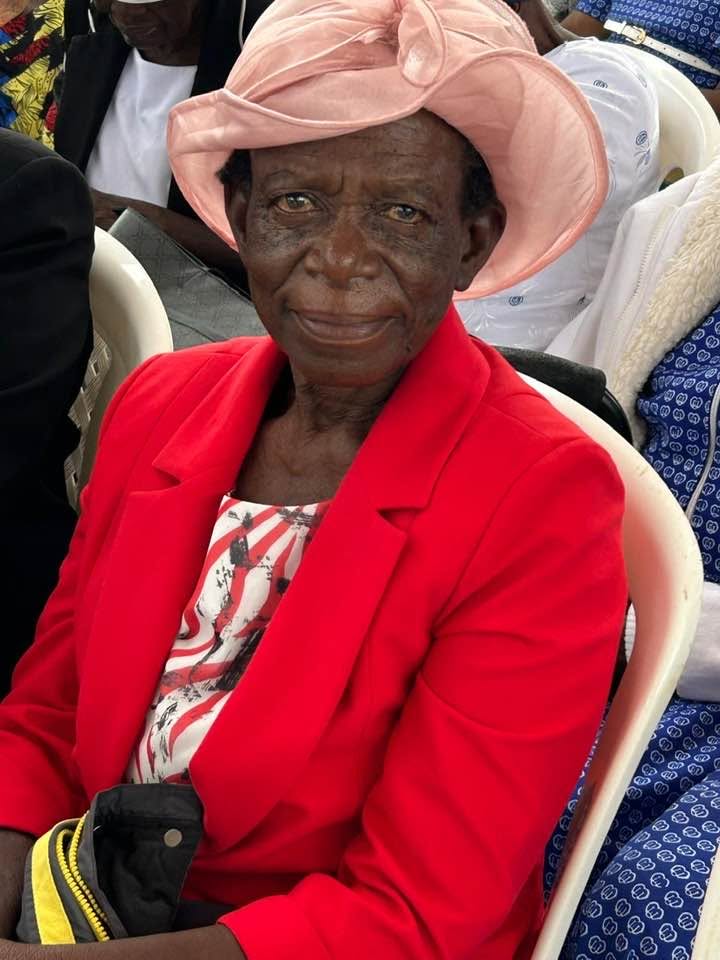
“She said, ‘I’ll take care of my children,’” Dr Oluga recalls. “Whether we were sleeping hungry, and we slept hungry many days, irrespective of what happened, she would do it.”
Ask him what he learnt from watching her carry the family through those years, and his answer is immediate: endurance!
“Or what we may call resilience. Never losing hope. You’ve got to show up irrespective of the circumstances. You’ve got to show up and do something.”
Here is the part that stuns people who only know him as a holder of a Master’s degree in internal medicine and Principal Secretary: for most of lower primary school, Ouma Oluga, a pupil who knew a lot, was always last. Or near last. In a class of 36.
Blame his father. A history and English teacher drunk on newspapers and books, he filled their small home with the political theatre of the 1990s: Attorney General Amos Wako’s name splashed across every front page alongside President Daniel arap Moi’s, the rumble of Kenya’s “second liberation” pressing against the constitution.
Every evening, young Oluga read the newspapers aloud to a father who couldn’t get enough of it, absorbing a nation’s politics before he had mastered his times tables.
“I wanted to be a Wako first,” he laughs now. “You have to be a Wako so that you are the news.” His father gently corrected the ambition. Wako was a lawyer. “I want you to be a doctor.”
But newspapers, not textbooks, were the diet he was fed. “So most of my life, from lower primary, if you look at my report, I was always last, if not near last.” The report cards still exist. His mother, he says, kept every single one.
Then his father died, and something inside him cracked open in a different direction. Watching his mother buckle under the weight of raising eight children alone lit what he calls “a different spirit in terms of work.” He tore through the rankings: from position 36 to 12, from 12 to number two in class seven, and finally, to number one. “And then I never got back anywhere else.”
Oluga worked as an accounts clerk in a bakery, riding a bicycle for hire, selling bread on the side
It is the kind of reversal that begs an impossible question: would he trade the doctor he became for the father he lost? He answers without hesitation. “I don’t think I would be a failure. But perhaps I wouldn’t have been the doctor, because then I needed to work hard.” A pause. “He would have been very proud of me. It’s like he should have been alive to see me now, fulfilling some of those dreams. Perhaps being more than a doctor.”
That turnaround carried him to the gates of Maranda High School, where hard-won grades bought him an easier life: teachers doted on him, he became school prefect, the queues other boys stood in simply didn’t apply to him. But the moment school spat him out, the hustle clawed back. Two years stretched between form four and university admission, years he filled working as an accounts clerk in a bakery, riding a bicycle for hire, selling bread on the side, anything that kept him standing. It was a scholarship, a full ride from Indiana University in the United States, applied for on a whim, that finally lifted the financial weight off his shoulders.
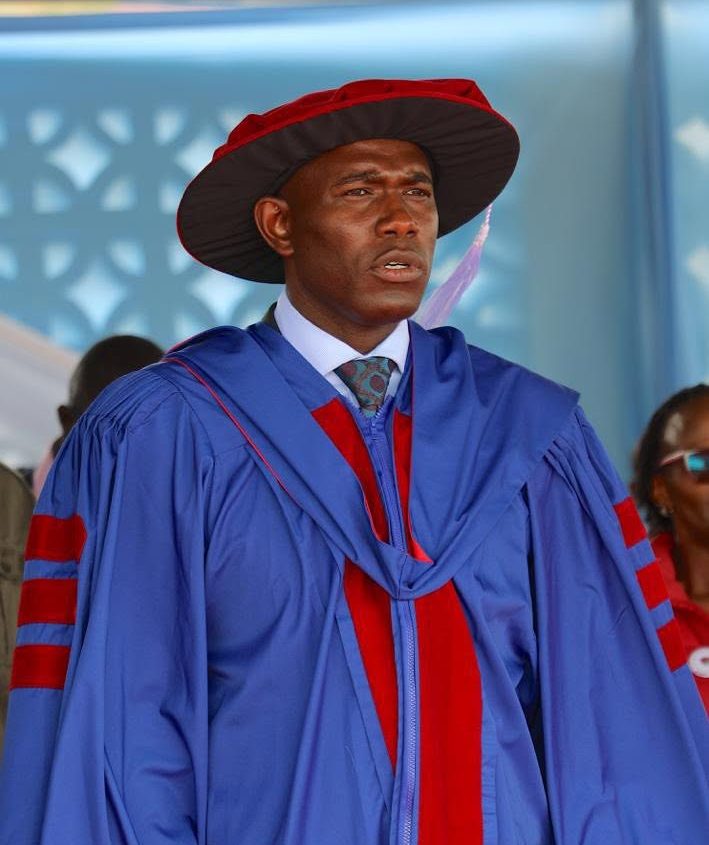
After medical school at Moi University, he wrote to Kijabe Mission Hospital, one of the few faith-based institutions in Kenya where doctors are chosen, not simply posted. Kijabe took him in. It also broke him into shape: six or seven in the morning, work until dusk, no excuses, no exceptions.
That discipline slammed straight into reality when he was posted to Vihiga County Referral Hospital in 2013, just as devolution took its first shaky steps. He arrived at 8am on day one, braced to be the latecomer. Instead, he found a hospital hollowed out. No nurses. No clinical officers. Nothing.
“I’m like, no, no, no, no, this can’t happen. My entire life I’m used to either six or seven.” He went to the senior doctor in charge, Dr Kaguthi, a family medicine physician, and admitted the truth. “I told him I’m really suffering. Can I really survive here? You feel like you’re not alive.”
Dr Kaguthi didn’t hand him a solution. He handed him the floor. Let Dr Oluga call the first staff meeting himself.
Dr Oluga proposed the simplest possible fix: he would start arriving at 8am, conveniently timed around the early-morning hours he was already spending studying for the United States Medical Licensing Exam. Slowly, the hospital followed his lead. “Three months later, the ward is actually working at 8am. And you see real change. You see people who are enthusiastic, who want to do the best for patients, who are now documenting properly.”
Leadership is not a position, says Dr Oluga, leadership is what you do before you are in a position
He brought the SOAP (Subjective, Objective, Assessment, Plan) note format from Kijabe and drilled it into his colleagues. The county noticed and made him medical officer in charge, a promotion he insists arrived in exactly the right order. “Leadership is not a position,” he says, the line rehearsed by repetition and conviction. “Leadership is what you do before you are in a position. You have to do something, show up, and then you get a proof of concept. Many people in the health sector think leadership is being appointed to a position, and then you do something. No. It’s the other way around.”
By 2016, he was Secretary-General of the Kenya Medical Practitioners, Pharmacists and Dentists Union (KMPDU), commanding the historic 100-day doctors’ strike, from December 2016 to March 2017, over pay, terms of service and a Collective Bargaining Agreement (CBA) left to rot since 2013. It ended with him behind bars, and he says the jail cell felt, at first, like relief. Weeks of overnight negotiations, of “responding to duty” at every unholy hour, had hollowed him out.
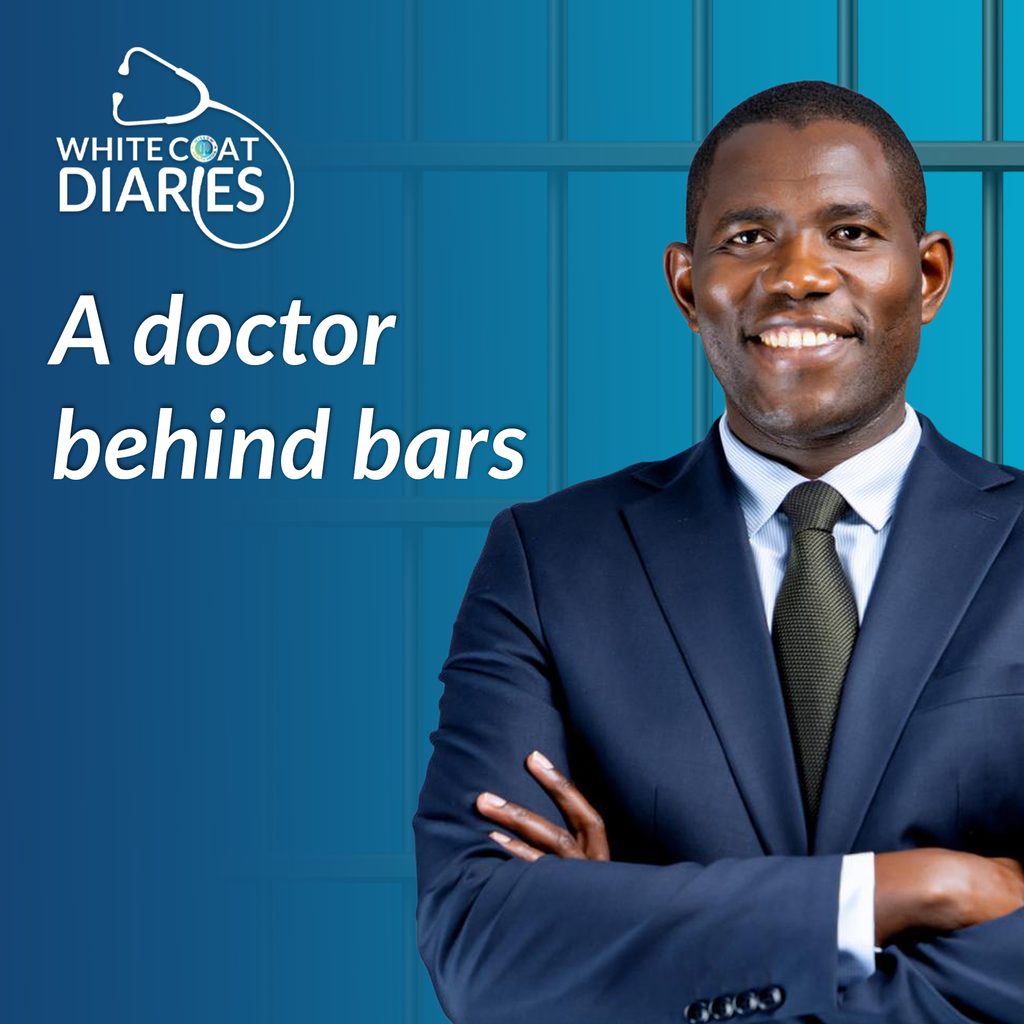
But Kamiti Maximum Prison in Nairobi offered no mercy. He hadn’t eaten properly on the day cell doors were shut. His blood sugar, he suspects, had crashed hard. By 2am he was being admitted to the prison dispensary, his head splitting, after what he calls “a lot of mental torture.”
Before they let him in, a guard demanded his watch that cost USD 300 (KSh38, 000 at current exchange rates). Not just any watch: the one he’d saved years for as a broke medical student in 2009, the first watch he had ever owned, the only one he’d worn since.
“I told him, ‘My friend, you will have to kill me. This one, you are not taking.'” The guard pushed harder. It was just the two of them. Dr Oluga didn’t budge an inch. There is going to be no surrender here. He dared him to do his worst. The watch never left his wrist.
What happened next borders on the absurd. He woke up to the smell of a prison dispensary and rows of eyes, prisoners and wardens alike, staring at him with something close to pity. His instinctual response was to ask for a ward, and he started doing rounds. Within three days, the very officers who had locked him up were lining up to be examined by the highest-calibre physician most of them would ever have access to. “They have never seen such a high-level doctor. Because when they go to Kenyatta (National Hospital), they have to line up for so long. Sometimes they’re taken back without being seen.”
The leap from union leader to government insider invited the obvious accusation: that Dr Oluga been bought
That strike, he insists, delivered what the shorter, narrower 2011 walkout over salaries alone never could. The 2016 negotiations produced Kenya’s first comprehensive employment policy for health workers, covering terms of service, training and CBA obligations, a document that has now outlived a decade without doctors complaining about pay. It also, for the first time, held nearly every Kenyan doctor inside the public service. “When I became Secretary-General, almost no doctor left the public service. We had almost 4,500 doctors. And then it started to become a problem for the government to pay.”
“That strike was very unfortunate,” he reflects. “Every strike is unfortunate. If people engage in good faith, you can solve a problem in two days.”
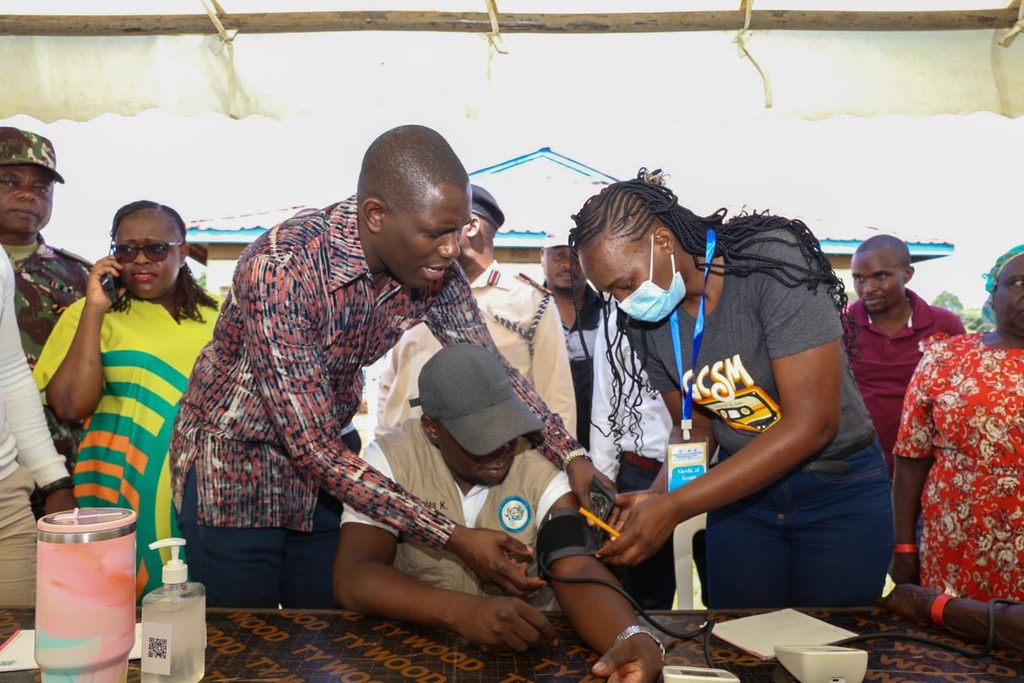
The leap from union leader to government insider invited the obvious accusation: that he’d been bought. He shuts it down flatly, pointing instead to what he built running Nairobi’s health services at the Nairobi Metropolitan Services: 200 more doctors, 32 hospitals, nurses climbing from 500 to 1,300, community health promoters swelling from 3,300 to 7,000, and Nairobi’s public hospitals finally brought onto public insurance.
“The only thing I wanted to do in Nairobi, being in charge of health, was to prove that public service can work.”
As Principal Secretary now, he draws a hard line between the roles. “As a union leader, your tool is advocacy. In government, your tool is implementation.” But the mission, he insists, hasn’t shifted an inch. “I’m very passionate about healthcare for people who would otherwise have no voice. I didn’t go to jail because I love doctors. I went to jail because there is fundamental stuff in the healthcare system that needed to be implemented.”
You can have all the ideas, all the knowledge, but if the president does not say ‘proceed’, there’s nothing you’re doing
He is blunt about what makes reform possible from what was impossible from the outside: political will, plain and simple. “You can have all the ideas, all the knowledge of what the right thing to do is. But if the president does not say ‘proceed’, there’s nothing you’re doing.” He credits that backing for resolved internship arrears, settled clinical officer CBAs, and a nine-year-old UHC absorption dispute finally closed in September 2025. Even the nurses’ ongoing standoff, technically outside his docket, has pulled him into quiet mediation with the Salaries and Remuneration Commission and the Council of Governors. “It’s not my work. But because I am part of government, I report to duty.”
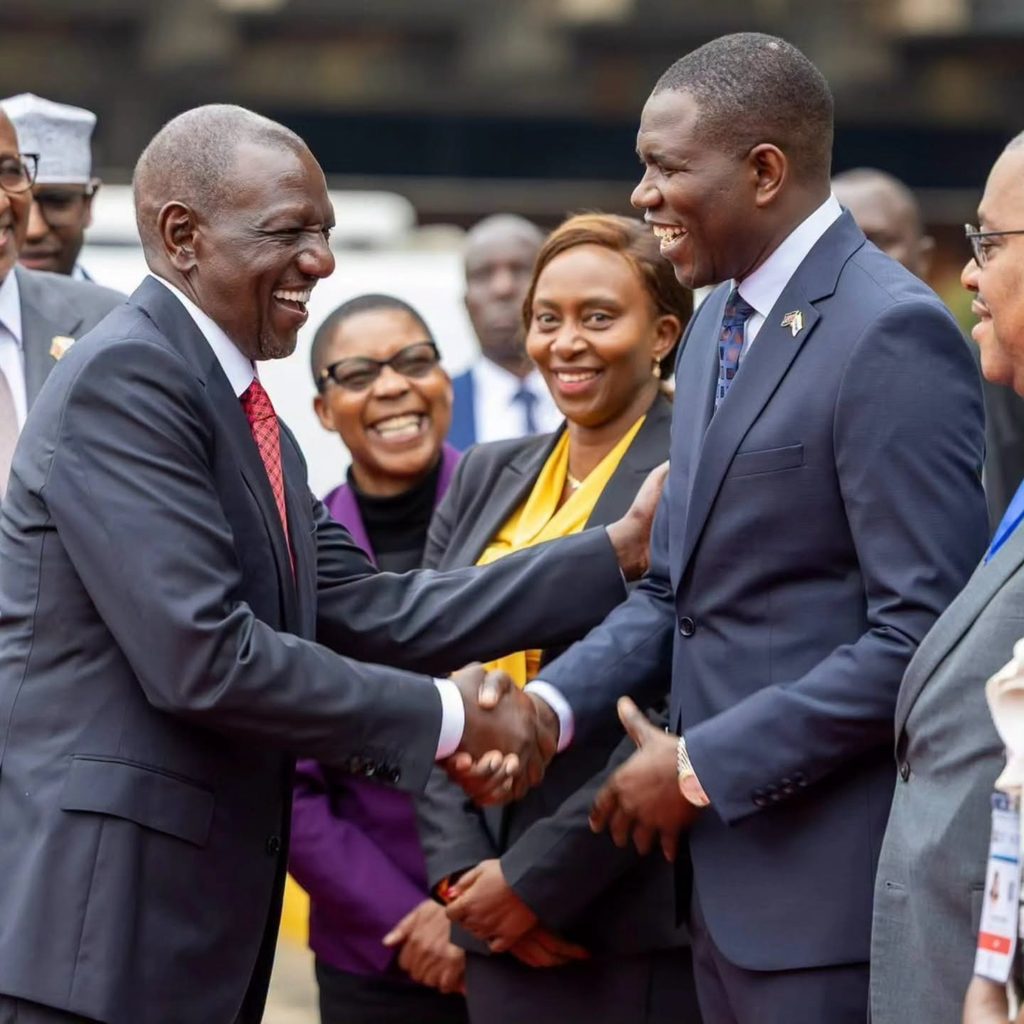
Ask him what success looks like at the end of his tenure, and two measures come back, unrehearsed. First: every Kenyan walking into a facility without dreading the bill. Second, sharper still: no Kenyan dying from something that had an easy fix sitting right there.
It’s on that second measure that he turns unsparing, financing reforms or not. “Right now we have only a 36 per cent match between correct diagnosis and correct intervention,” he says. “That’s a problem.” The Social Health Authority (SHA), in his telling, isn’t the disease; it’s a symptom: hospitals pocketing SHA’s money without delivering the care it was meant to buy.
He reaches for an image blunt enough to sting. “It’s like you go to a hotel, you have the money, and on the menu they’ve printed a beautiful picture of pork chops. Then they bring the pork chops, but they’re not well cooked. Or it’s half the pork chops. And the hotel is still forcing you to pay the full amount.”
The real-world fallout is what he calls revision surgery: harsher, riskier operations to fix a botched first attempt, procedures SHA typically refuses to pay for twice. “The patient is suffering. The patient is justified in saying SHA is not working, but it’s because the hospital took the money for the first surgery, and now needs to revise the second one.” He doesn’t let the blame drift toward State House. “This is not the work of the president. This is the work of doctors and nurses, people who went to school to solve that problem. And I am one of them.”
Strip away the policy jargon, the union scars, the title, and Dr Oluga answers simply: “I’m just a Kenyan. I’m a father. I’m a husband. I am a son. I am a friend to people. I love God.”
Most Saturdays, he’s on the golf course with his seven-year-old son, a habit the boy picked up at four. His daughter gets the outdoors. He no longer sings, though a school choir once claimed his voice, and these days it’s Rumba, Afro music, Benga and Ohangla filling the silence. “I’m more into the bush than the beach,” he says. “I’m more of a nature person.”
Dr Oluga’s wife, he adds, warmth breaking through, gives advice, and never when he asks for it
His mother is still the final word. In 2015, torn between a demanding union post and a full academic load, he nearly deferred his internal medicine studies. It was she, with little formal schooling of her own, who cut straight through the noise with one question: “What took you to Nairobi?” He’d come for school. Everything else, she told him, was static.
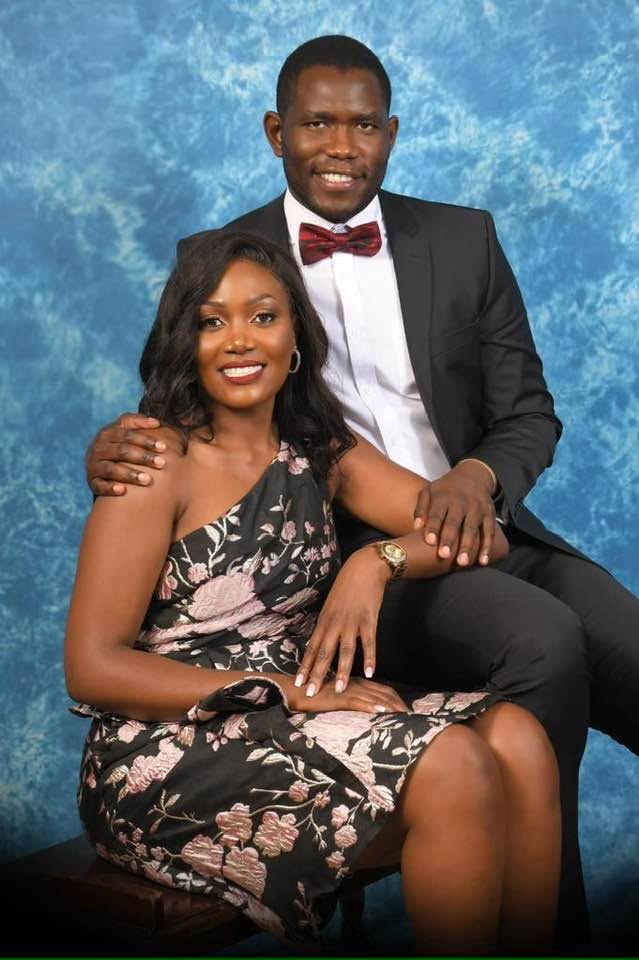
His wife, he adds, warmth breaking through, gives advice constantly, and never when he asks for it. “You didn’t want it. You go and reflect and say, okay, maybe there’s something here.” His oldest friends, ‘The Squad,’ are kept deliberately far from public service, men who’ve known him for decades, want nothing from him, and only ever ask why he puts up with the abuse of the office he holds. “When we go there, I’m just me,” he says. “That’s why they can tell you things.”
On raising his own children, the lesson traces straight back to his childhood. “You can’t have split lives, where you have this life and then another, deliberate life. You only have one life. Parenting is about what the child sees and does with you, not what you’re told to do.” His father dragged him along to school even when headteachers objected to a child underfoot in the classroom. Decades later, strangers in embassies still place him: “that child” who used to trail his father to work.
Ask what he hopes a white coat says about him, and his voice slows, turns almost reverent. “There’s a lot of vulnerability in it. Health is one of those things everyone longs to have, but ill health comes when you don’t expect it, and it makes people very vulnerable. You have to put on your entire humanity at that time. Without that, then the entire system, the CT scans we’re buying, the salaries, the medicines, all of it becomes useless. Because people are vulnerable, so you have to be compassionate. You have to be respectful. You have to care, despite the fact that you already have the knowledge to solve the problem.”
It’s the same instinct, in the end, that made an 11-year-old boy swallow his father’s death whole rather than hand it over before he was ready. The same instinct that made a grown man refuse to surrender a watch inside a prison cell. The same instinct that now sits, quiet but unyielding, behind a Principal Secretary’s desk.
“There is nothing I have ever regretted in my entire journey in health,” Dr Ouma Oluga concludes. “I have to say I am not a changed man.”