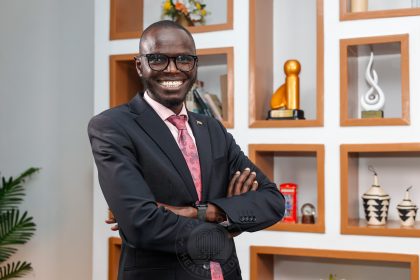


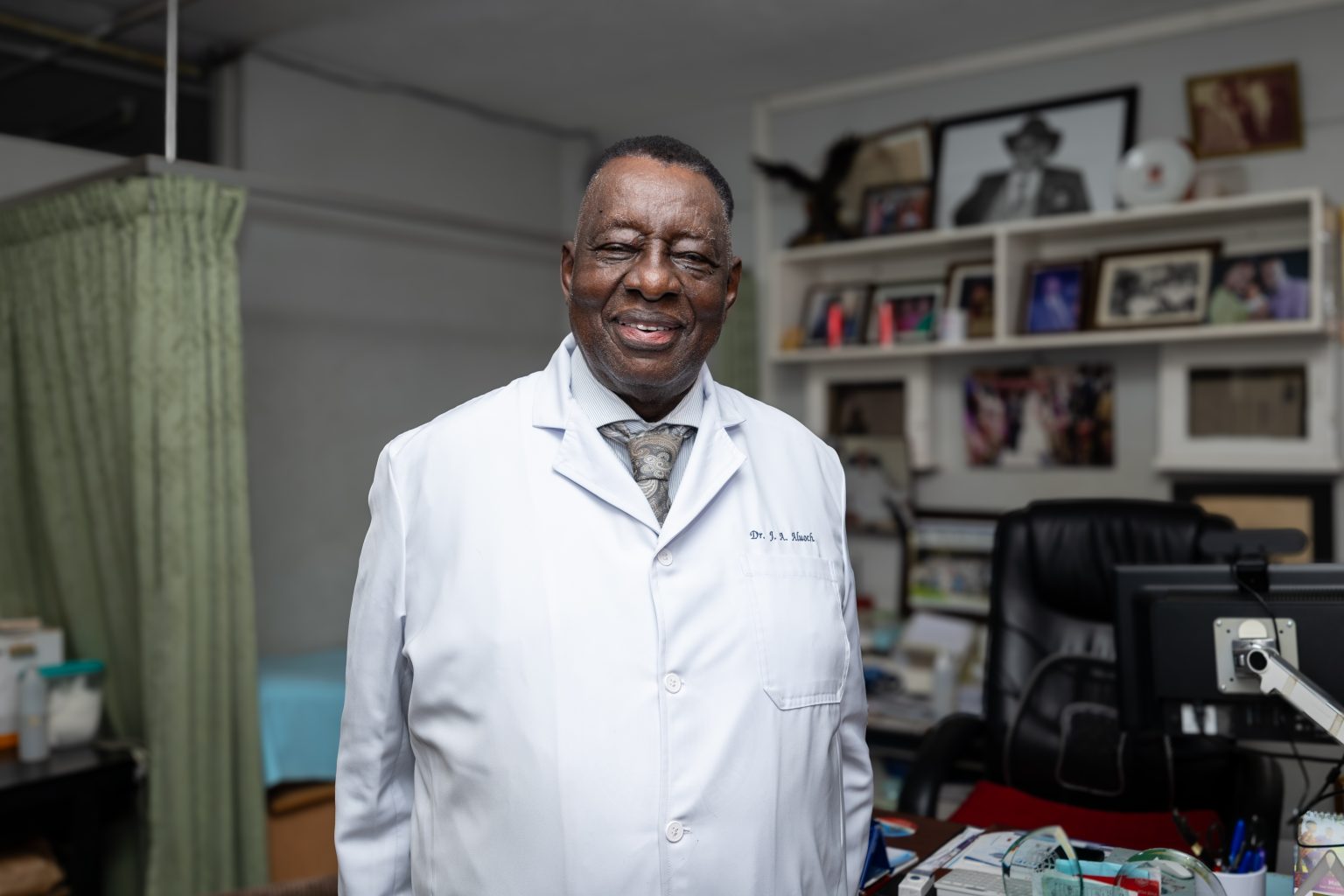
Dr Aluoch has watched medicine drift from a calling into a marketplace of insurance claims, lawsuits and financial incentives, while patients now walk in armed with chatbot diagnoses of their own.
The hospital ward was quiet, but the silence was never empty. Sometimes it carried the faint rattle of a struggling breath. Sometimes the shuffle of anxious relatives outside a patient’s bed. And sometimes, most painfully, it was the silence that came when doctors had run out of answers.
Dr Joseph Aluoch came of age in that Kenya. He saw patients waste away as HIV took hold, while tuberculosis filled hospital wards. Glass syringes were sterilised and reused. Iron needles were routine. Doctors entered TB wards with little protective equipment, armed largely with training, courage and a sense of duty. Medicine had fewer tools, and sometimes hope had to survive without them.
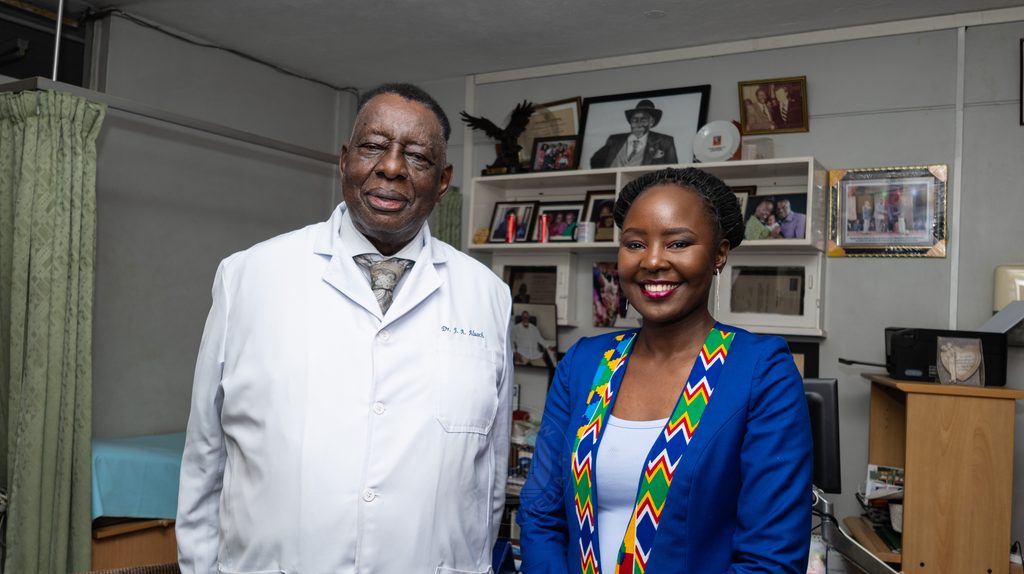
Decades later, Dr Aluoch is still practising, teaching and learning. The doctor who worked in an era of scarcity now looks towards artificial intelligence and machines that could transform diagnosis and clinical care. His life traces medicine’s remarkable journey, from what doctors once could not do to what technology may soon make possible.
“My father was a medical assistant, and as a boy, I watched him leave for work and saw the quiet difference he made in people’s lives. Somewhere along the way, I fell in love with medicine. So when the university asked me to give three choices, there was really only one answer. I wrote medicine. Medicine. Medicine,” said Aluoch.
It was the first decision in a career that would eventually stretch across nearly six decades.
At the time, becoming a doctor was a difficult road. Dr Aluoch recalls a Kenya where only a small number of students passed the university entrance examination. Makerere University in Uganda was the destination for medical students, and he believed from childhood he would get there.
During school holidays, Aluoch accompanied his father to TB wards its devastation at close range, drew him to towards respiratory medicine
His father would later influence another important decision. During school holidays, the young Aluoch accompanied his father around his workstations, which had become focused on tuberculosis, a disease that dominated hospitals and communities. He saw its devastation at close range and found himself drawn towards respiratory medicine, as “those days the major problem was just TB.”
Tuberculosis was not simply a disease of the lungs. In his memory, it was written into the conditions in which people lived. Malnutrition weakened bodies. Crowded homes allowed infection to spread. Poor ventilation turned a cough into something that could travel from one person to another.
Then HIV appeared, and the world Dr Aluoch knew became darker. He was among the doctors working around the early HIV cases in the 1980s, when “HIV felt like a shadow we could see but could not understand.” Patients came to them already very sick, carrying infections that seemed to arrive one after another, he recalls, adding: “We could fight some of those infections, but we had nothing that could stop HIV itself. We were doctors, but there were moments when medicine felt painfully small. Most of the time there was no medical management.”
There was nursing care. There was palliative treatment. There were antibiotics for other infections. There were fluids, food, and medicines for pain. But there was no intervention that could reverse the disease.
The cruelty was sometimes compounded by treatment for another disease. Many patients also had tuberculosis, and some developed severe reactions to the drugs used against it. Dr Aluoch remembers ulcers affecting the mouth, skin, and other parts of the body. Patients became thinner and weaker, and some died after suffering through both disease and treatment. “It was such a misery.”
He watched patients lose weight, and in those days, having HIV was a 100 per cent death certificate
For a doctor, perhaps the hardest part was knowing how the story would end. He remembers watching patients lose weight, struggle to eat, and develop severe pneumonia and fungal infections. He could provide comfort, but not the thing every doctor ultimately wants to offer: a way back to good health. “In those days, having HIV was a 100 per cent death certificate.”
There is a pause in the meaning of that sentence, because Dr Aluoch is speaking from a different era now. He has lived long enough to see the disease that once seemed almost invariably fatal become manageable for millions of people receiving effective treatment.
He witnessed that transformation from inside medicine. In 1996, highly active antiretroviral therapy changed the landscape of HIV treatment, and Dr Aluoch was part of the team that travelled to Lisbon, Portugal, for the launch of the new treatment approach. Patients who began treatment in that era have stayed with him ever since. “Those patients we started treating in 1996, they are alive up till now.”
For someone who had spent years watching HIV take lives, survival became more than a medical outcome. It became proof that the future could be different from the past.
Dr Aluoch later became involved in shaping HIV care in Kenya, and says he drew the country’s first guidelines for HIV treatment in 2001. But his story is not simply about being present when medicine changed. It is about what those changes taught him about time, science, human endurance, and medicine’s move from scarcity to extraordinary technological possibility.
“When I started working, medicine was very different. We had only a handful of antibiotics, syringes were made of glass, and needles were boiled and used again. In the TB wards, we sometimes worked without gloves or masks. We knew there were risks, but those were the realities of medicine then. Looking back today, some of those things seem almost unimaginable,” Dr Aluoch says.
Diseases disappear or evolve. Treatments improve then face resistance. New technologies enter hospitals and now the future is algorithms
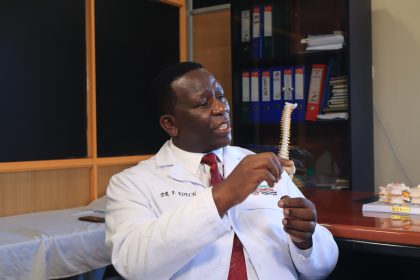
Now, the doctor who began his career in that world lectures on AI and respiratory care. He describes computer-assisted diagnosis being used to screen for tuberculosis, and technology being applied in antenatal care to identify abnormalities and refer patients who need further attention.
Dr Aluoch has spent a lifetime learning how quickly the world can change. Diseases disappear or evolve. Treatments improve and then face resistance. Patients become more informed. New technologies enter hospitals, and now the future is algorithms.
“A doctor who stops learning eventually becomes a relic of his own profession. Medicine does not stand still, and neither can we. Every new discovery reminds us that there is still something more to learn, and every patient gives us another reason to keep learning,” argues Dr Aluoch, for whom medicine was once a calling but has increasingly become entangled with business, insurance, litigation and financial incentives.
He does not deny that hospitals must be funded or that doctors must earn a living. His concern is what happens when money begins to compete with care. “Originally, medicine was a calling.”
His patients, too, have changed. The person who once arrived at a consultation knowing little beyond the symptoms they could feel may now arrive having searched the internet, studied possible side effects, and spoken to an AI chatbot. The doctor is no longer the only source of information in the room. For Dr Aluoch, that means doctors must not fight technology, but understand it, which is why he continues to study AI. The same profession that once had only a handful of antibiotics is now confronting technologies that could alter how diseases are detected, studied, and treated.
Yet technology does not solve everything. This is where his voice becomes quieter.
After decades of witnessing extraordinary advances, Dr Aluoch remains troubled by the basic things that have not changed quickly enough. Healthcare, he argues, must be available, affordable and acceptable. Too many people still live too far from health facilities, or arrive at facilities where essential medicines are unavailable. Even in his own village, he says, the nearest government health centre is about four kilometres away, a small distance on a map, but for someone who is sick, weak or in pain, it can become an enormous journey, and in the end, “you don’t find medicine.”
He has witnessed technology accelerate research. Yet in villages, he still meets people living with problems he remembers from decades ago
It is this distance between medical possibility and ordinary life that appears to trouble him most. He has seen medicine conquer diseases that once seemed impossible. He has seen HIV treatment transform lives. He has witnessed technology accelerate research. He has spent decades teaching doctors. Yet in villages, he still meets people living with problems he remembers from decades ago.
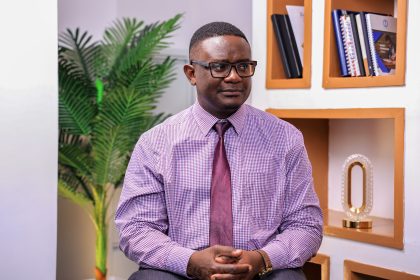
That is why he continues to take part in medical camps, which he says remind him how far the country still has to go. Sometimes, he sees illnesses he thought belonged to another generation.
The experience leaves him with a painful question: after all the advances, why are some people still waiting for the basics? His answer is not found in another award. It is found in teaching.
“Young doctors would sit with me and ask about the old days, how medicine began to change, who shaped it, and what we went through before their careers started. That made me realise that experience can disappear when the people who lived it are gone. If we do not record our stories, we lose a part of our history,” said Dr Aluoch.
That became one reason he wrote In the Footsteps of My Father. The title carries something intimate. His medical life began by watching his father work, and decades later he was recording those memories so that younger doctors could follow the footsteps of the people who came before them.
He has never been interested in abandoning medicine simply to pursue money. His philosophy is not about accumulating more
It is the work that once took him into TB wards and placed him beside dying HIV patients when medicine had little to offer. He remained through the arrival of antiretroviral treatment, new diagnostics and, now, artificial intelligence. Decades later, it still brings him to the bedside of patients, older in years perhaps, but still driven by the same calling.
Asked whether he would have chosen another profession had medicine not been his path, he has an answer that sounds almost inevitable. “Nothing.”
He says he has never been interested in abandoning medicine simply to pursue money. His philosophy, after all these years, is not about accumulating more.
“I’m looking for my life,” he says. “Money you can steal if you want money. But life you have to make it.”