
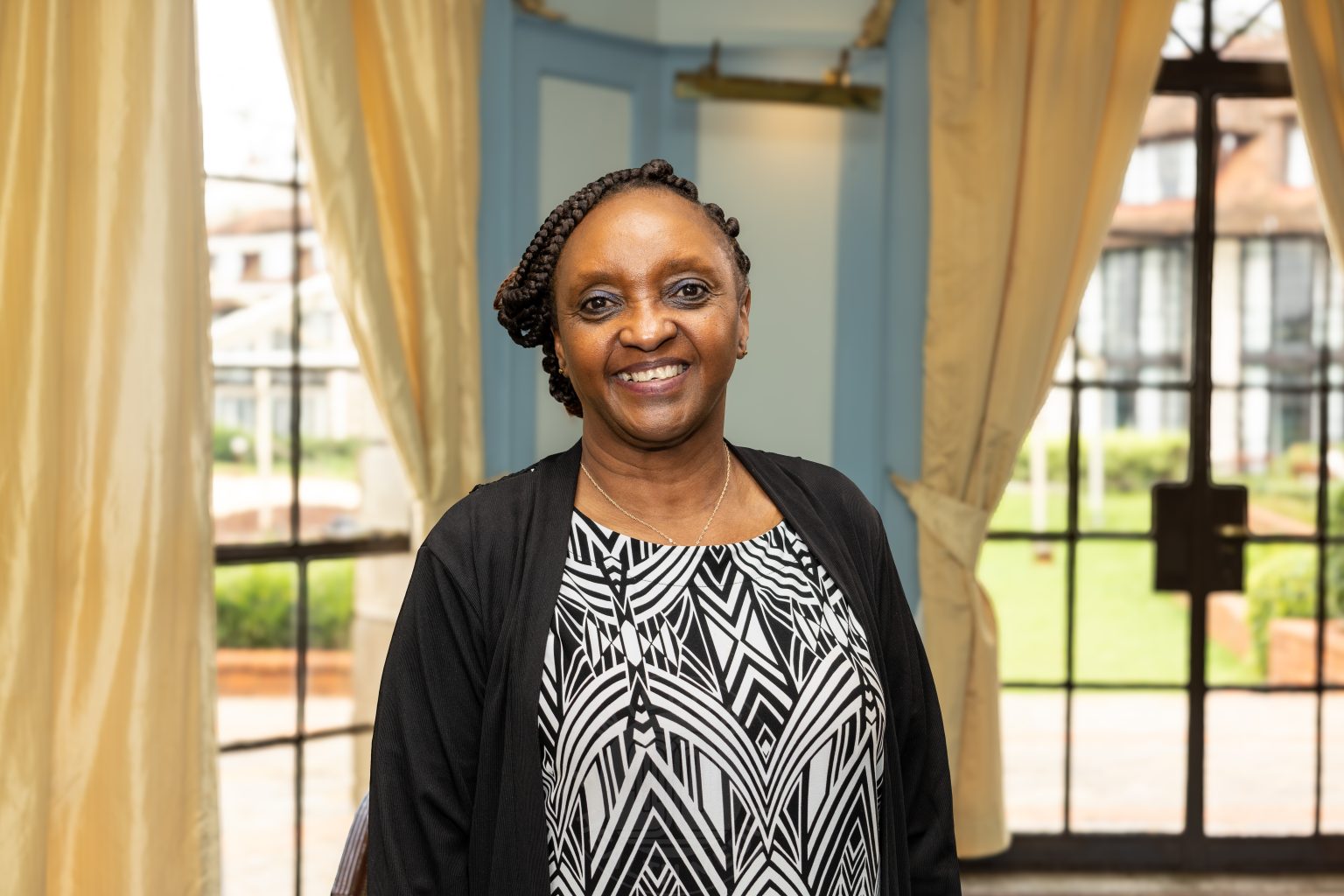

“I got pregnant when I was in medical school at age 22 as a single mum, I remember holding my baby and saying, ‘You know, I have to give the best to you.’ That really was my springboard.” That moment changed everything. “I was denied special exams. It was very traumatic.”
When Prof Anne-Beatrice Kihara walks into a labour ward, she does not just see hospital beds, blood pressure charts or foetal monitors. She sees stories: mothers holding onto hope, frightened teenage girls trying to understand what motherhood means. She sees newborns taking their first breath and sometimes, painfully, she sees families leaving hospitals with empty arms.
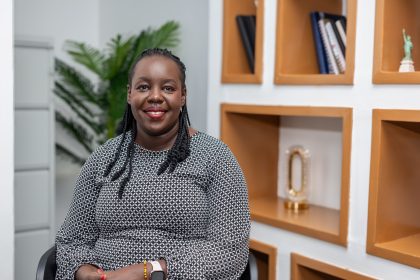
For more than two decades, Prof Kihara has stood at the frontline of maternal and reproductive healthcare in Kenya and across the globe. A Consultant Obstetrician-Gynaecologist, Senior Lecturer at the University of Nairobi, and the immediate former President of the International Federation of Gynaecology and Obstetrics (FIGO), she has become one of Africa’s loudest voices in the fight against preventable maternal and newborn deaths.
Behind the global titles and policy tables is a woman whose passion was shaped by deeply personal experience.
Long before she became a global maternal health leader, Prof Kihara was a struggling young medical student trying to balance motherhood and education. When she got pregnant in her first year, she missed her final examinations while in labour. The university denied her special exams and forced her to repeat the year.
“I got pregnant when I was in medical school at age 22 as a single mum. I remember holding my baby and saying, ‘You know, I have to give the best to you.’ That really was my springboard.”
Her parents became her support system, caring for her daughter while she completed medical school
“When I was denied special exams, it was very traumatic. I said, ‘Here is the gender card at play.’ But instead of breaking my spirit, the experience deepened my resolve. I told myself, repeat the year, but keep going.”
Her parents became her support system, helping care for her daughter while she completed medical school. “If it wasn’t for that sacrifice they made, I don’t think I would be a doctor today,” she says.
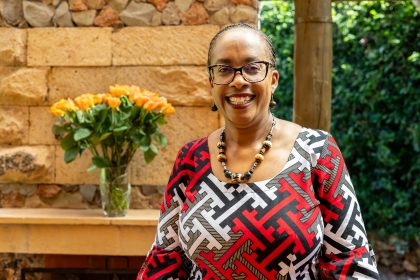
Those experiences continue shaping how she treats vulnerable mothers and adolescent girls. “I understand teenage pregnancies and adolescent pregnancies, and I also understand the lack of health literacy,” she says.
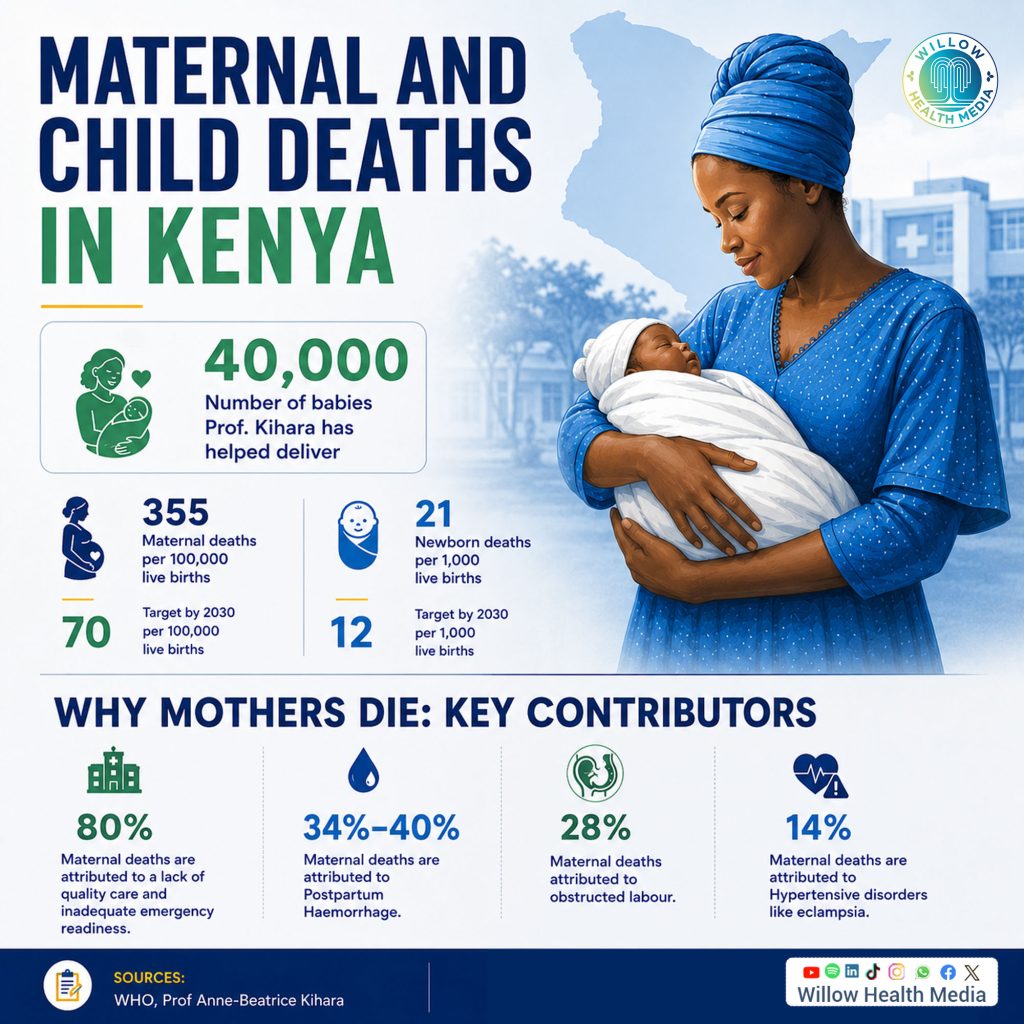
Today, after helping deliver more than 40,000 babies, Prof Kihara continues to push governments, hospitals, communities and doctors to rethink how Kenya treats mothers and newborns. For her, the fight against maternal deaths is not simply a medical issue but a moral one. “We know what’s killing our mothers, we know what’s killing our babies,” she says. “The issue is, is society valuing the woman and the baby enough to save them?”
Despite years of global campaigns and policy reforms, maternal and newborn deaths remain one of Kenya’s most pressing public health crises. Kenya currently records more than 355 maternal deaths per 100,000 live births, far above the Sustainable Development Goal target of fewer than 70 deaths per 100,000 live births by 2030. The country also records about 21 newborn deaths per 1,000 live births, nearly double the SDG target of below 12, and a stillbirth rate of 19 per 1,000 births.
A hospital may have guidelines on emergency obstetric care, but what happens when four nurses are caring for 40 patients?
Behind those statistics are women bleeding after childbirth, mothers arriving at hospitals too late, newborns struggling to survive in under-equipped facilities, and healthcare workers stretched beyond their limits. Postpartum haemorrhage remains one of the leading causes of maternal deaths. “In this nation, it’s the commonest cause of maternal morbidity and mortality,” Prof Kihara says.
What frustrates her most is that many of these deaths are preventable. “Should any woman die? Should any baby die? The fact that I’ve been given the privilege to carry a pregnancy, should I be the one who loses that pregnancy nine months later and have nothing to show for it?”

She insists that maternal deaths are rarely caused by one mistake. Instead, they expose deeper cracks in the healthcare system. A hospital may have guidelines on emergency obstetric care, but what happens when four nurses are caring for 40 patients? “What is the quality?” she asks. “Something is bound to give.”
Solving the problem, she says, requires looking at the entire ecosystem: staffing levels, availability of blood, functioning referral systems, medical supplies, leadership, financing, transport and how communities perceive healthcare. She also believes county governments must use health data more effectively to understand why women are dying and where interventions are most needed. “Use your data for decision-making. In prioritising, contextualising and looking at patient dynamics,” she says.
She points to disparities between counties, with some areas showing stronger systems and more innovation. Makueni and Murang’a, she notes, have begun investing in telemedicine and innovative surgical training platforms. But unless county leadership becomes intentional about improving maternal health, she warns, inequalities will keep widening. “You have to have leadership that’s proactive. Leadership that is keeping abreast with what is going on.”
Online schooling is not the way for medical school. For clinical training, you have to be at the bedside
Trust within communities also matters enormously. “Women talk,” she says with a smile. “If I hear Mercy is going to see that clinician and getting top care, the next thing she will tell her friends? ‘Please go there. That is where respectful and dignified care is happening.'” That trust, she says, can determine whether women seek care early enough or avoid hospitals altogether.
One of Prof Kihara’s deepest concerns is the quality of practical clinical training among new doctors. As student numbers have grown, opportunities for direct patient interaction have reduced dramatically. “Where we were training 100 students, now it is 300. Has the ratio of patients to the tutor to the doctor changed? So where is the hands-on?”
She says COVID-19 worsened the situation by accelerating online learning at the expense of bedside teaching. “I am a firm believer online is not the way for med school. For clinical training, you have to be there. You have to be at the bedside.”
County health systems are already noticing the gap. “They’re not as agile, as strong, as confident and as robust,” she says of younger doctors. To bridge it, she argues Kenya must invest in simulation labs, virtual reality training, telemedicine and mentorship. Experienced doctors, she says, must return to mentorship spaces and actively guide younger clinicians.
Prof Kihara is equally direct about Kenya’s failure to protect its adolescents, particularly girls. Conversations around teenage pregnancy, she says, too often ignore the realities behind the numbers: poverty, coercion, sexual violence, transactional sex and lack of guidance.
Many parents avoid difficult conversations around sex, leaving adolescents to learn from ‘Dr Google’
“Look behind the story of a pregnancy. Was she coerced because she didn’t have fare to pay? Was she genuinely defiled? Was she under the influence of alcohol? What’s the story behind the story?”
She strongly supports comprehensive sexuality education, but insists communities, parents, religious leaders and schools must all be part of the conversation. “We need to go back to the fireside talks because young people are looking for guidance.” Many parents, she says, avoid difficult conversations around sex and reproductive health, leaving adolescents to learn from ‘Dr Google.’

Adolescent pregnancies also carry significantly higher medical risks. “Rapid repeat pregnancies after a teenage pregnancy escalate four to ten times,” she notes. Girls who do fall pregnant, she argues, should not be condemned. “We need to give this girl a springboard of a chance. How would I possibly reach where I am if I wasn’t given an alternative pathway?”
During her tenure as FIGO President, Prof Kihara pushed for technology-driven healthcare solutions across Africa. She established a technology committee focused on digital health and FemTech innovations, a development she describes as her “baby of babies.”
She believes telemedicine, wearable devices, rapid diagnostic tests and digital health platforms could dramatically improve maternal healthcare access in underserved communities. She also cautions, however, that Africa must stop copying solutions from high-income countries without developing its own. “Let us be bold enough to do our own research and come up with homegrown solutions.”
Preventable maternal and newborn deaths are not routine statistics but a national emergency
For all the joy childbirth brings, Prof Kihara acknowledges that maternal deaths leave lasting emotional scars on healthcare workers. “There is a mental anguish that happens, but nobody sees it. Doctors are burning out.” She calls for stronger mental wellness support, clinical audits, continuous training and peer support after difficult outcomes.
Still, despite the heartbreaks, she keeps showing up. “The joy of a healthy mum and baby is next to none,” she says.
As Kenya continues grappling with preventable maternal and newborn deaths, Prof Kihara wants the country to stop treating the numbers as routine statistics and start treating them as a national emergency. She wants investment in healthcare workers, mentorship, training, blood systems, emergency referrals and adolescent health. She wants communities to demand accountability, experienced doctors to guide younger clinicians, and women’s voices to be heard in leadership spaces.
Above all, she wants Kenya to value women’s lives.