

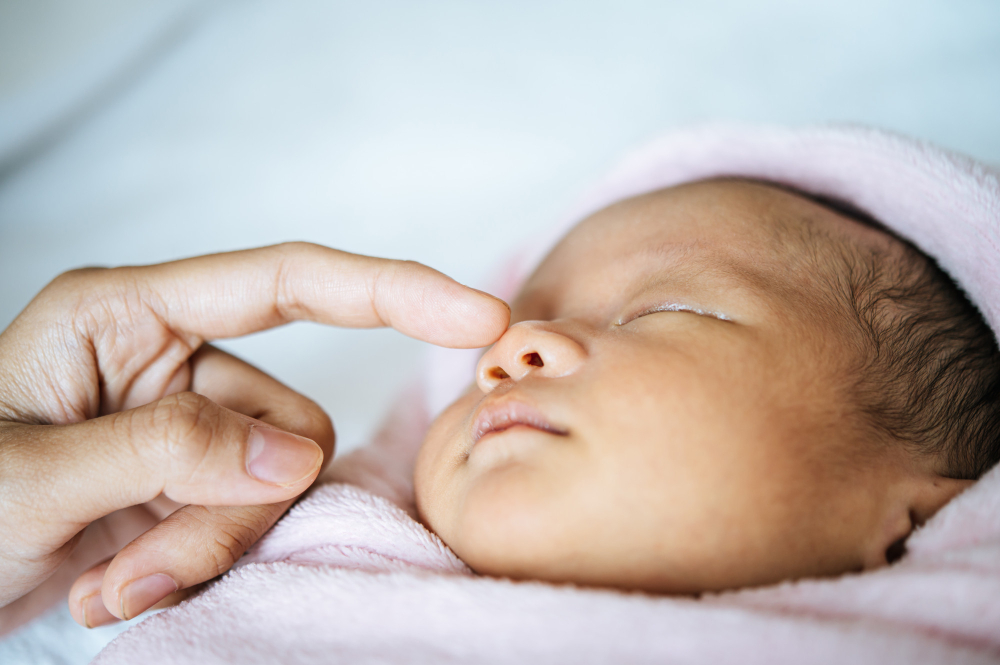

Anencephaly is a serious birth defect caused by insufficient folic acid during pregnancy, where a baby is born missing the parts of the brain that control breathing and other vital functions.
The first obstetric scan image shared by many couples on social media is more than a souvenir. It offers a glimpse into the baby’s development at that stage. Similarly, the purple booklet given to pregnant women serves as evidence of attendance at antenatal clinics (ANC).
For all healthy pregnancies, the World Health Organization (WHO) recommends at least eight ANC visits. The first should occur before 12 weeks of gestation, while the remaining seven should take place at the 20th, 26th, 30th, 34th, 36th, 38th, and 40th weeks, plus one routine ultrasound scan before 24 weeks. Yet according to the Kenya Demographic and Health Survey (KDHS) 2022, only four per cent of pregnant women reached the eight or more visits recommended.

Studies show the median number of ANC visits was about five, while pregnant adolescents attended significantly fewer. In high-risk pregnancies, more frequent visits and scans are recommended for foetal monitoring. Some heed this, others ignore it, and some are held back by financial constraints.
For Emmie, the idea of attending an antenatal clinic never crossed her mind throughout her pregnancy. The mother of two hardly took any folic acid or iron supplements and did not undergo a single obstetric scan, missing the chance for an early diagnosis.
No medical intervention was possible, and only nature was left to take its course
Unkempt and exhausted, Emmie looked far older than her 28 years. Her final contraction brought the baby into the world. What was expected to be a joyful moment instead left jaws dropped. The eagerly awaited strong cry turned out to be an abnormally weak one, a worrying sign that proper independent breathing had not yet begun. Much to everyone’s surprise, the baby’s face resembled that of a frog.

Emmie’s baby had anencephaly, a serious birth defect caused by insufficient folic acid during pregnancy, where a baby is born missing the parts of the brain that control breathing and other vital functions. The condition also results in a flat skull, bulging eyes, and a small jaw, giving the baby a frog-like appearance. No medical intervention was possible. It was a point of no return, with only nature left to take its course. The irregular breathing, minimal movements, and abnormal crying ceased, and the baby’s life was cut short in under ten minutes.
WHO recommends taking 400 micrograms of folic acid daily, starting a month before trying to conceive. The National Institute of Health (NIH) 2016 indicates that folate intake reduces neural tube defects by 50 to 70 per cent.
Here is what puts a woman at risk of folate deficiency
Poor diet is a major factor. Those who avoid leafy greens such as Sukuma wiki (kales), spinach, lettuce, managu (African Nightshade), and saga (Spider plant), as well as citrus fruits, avocados, beans, peas, eggs, and fortified foods like bread, cereal, mandazi, and chapatis are at risk. Eating a folate-rich diet during pregnancy does not, however, replace the need for supplements, which ensure consistent and sufficient intake.

Certain medications also pose a risk. People living with epilepsy, mental health conditions, or migraines who take valproic acid, carbamazepine (Tegretol), or phenytoin during early pregnancy risk anencephaly, as these drugs interfere with folate levels and disrupt development of the neural tube, the structure that develops into the brain and spinal cord. Cancer and autoimmune disease patients on methotrexate also suffer from inadequate folic acid absorption. Alcohol use leads to folate deficiency by reducing absorption, increasing loss through urine, impairing liver function, and encouraging poor dietary intake.
Teenage pregnancy presents another risk, as many teenagers are unprepared and may delay or skip ANC visits due to stigma. Women with closely spaced pregnancies are equally vulnerable, as little time is left to replenish depleted folate stores before the next pregnancy begins.
What other anomalies can folate deficiency cause?
Beyond anencephaly, inadequate folate intake during pregnancy may lead to other conditions, some compatible with life and others not. Encephalocele occurs when part of the brain protrudes through an opening in the skull. Smaller defects can be corrected surgically, while larger ones are far more complicated. Spina bifida results from improper coverage of the spinal cord by the vertebrae.
Mild forms are compatible with life, while severe forms are not. Heart defects, which are structural problems with the heart, can sometimes be repaired surgically depending on the type and severity. Cleft lip or palate, a split in the lips or roof of the mouth, is compatible with life but can affect feeding, speech, hearing, teeth alignment, and self-esteem if left uncorrected. Babies born with low birth weight and growth problems can survive with early specialised care.
When and why is Point-of-Care Ultrasound (POCUS) important?
For early detection and timely decisions, clinicians perform portable ultrasound, known as Point-of-Care Ultrasound (POCUS), at the patient’s bedside rather than in a radiology department. POCUS is best performed between the 11th and 14th weeks of pregnancy, counted from the first day of the last menstrual period, when anencephaly can be detected. Its use in dispensaries, health centres, and rural facilities promotes early detection of neural tube defects, enabling timely decisions about delivery plans while improving reporting of these conditions.

Many babies with anencephaly are stillborn, and those born alive usually survive only minutes to hours, as with Emmie’s newborn. Rarely, some live for weeks or a few months. In Kenya, termination of such pregnancies is generally illegal.
By contrast, Rwanda permits termination in cases of fatal anomalies incompatible with life, with the method depending on gestational age, making early detection through POCUS especially important for the mother’s safety. Kenya’s pregnancy termination laws need revision, with exemptions covering conditions like anencephaly that are incompatible with life.
Anencephaly in Kenya versus Rwanda
According to the KDHS, pregnant women in Kenya typically begin ANC visits around the fourth or fifth month, with only 29 to 31 per cent having their first visit in the first trimester as recommended. This delays early diagnosis, compounded by limited POCUS availability at the primary care level, weak surveillance systems, and under-reporting. Kenya, therefore, lacks sufficient data on anencephaly compared to Rwanda, which is better positioned for reporting, given its stronger community-based tracking and better linkage across pregnancy, ANC, facility delivery, and reporting systems.
How does anencephaly affect a mother’s emotions?
Mothers who give birth to babies with anencephaly are prone to depression, driven by persistent worry, sadness, and feelings of hopelessness about future pregnancies. Grief follows the sudden loss of a long-awaited baby, while mothers whose babies survive only a few weeks may face severe emotional distress. Guilt is also common, even though mothers are not at fault. These emotional burdens can be worsened by sudden shifts in pregnancy and milk-producing hormones. Emotional support and counselling are therefore critical. Joining support groups and speaking openly with family, friends, and spouses can help mothers cope, process their emotions, and protect their mental well-being.
What are the gaps in Kenya?
While most ANC and basic pregnancy checkups are provided under primary health care with obstetric scans included, some public facilities charge 1,000 shillings or more for scans, putting them beyond reach for many mothers. The Social Health Authority’s scan coverage only benefits those with comprehensive health cover.

The iron-folate combination supplement, known as IFAS, is not well tolerated by all pregnant mothers, causing some to stop taking it. Separate iron and folate supplies in public hospitals are inadequate, putting those who cannot tolerate IFAS at risk. Many mothers remain unaware of the importance of early scans or folate supplementation, and both are often unavailable or in short supply in rural areas. Mental health services for mothers remain equally limited.
With a folate-rich diet or an early consultation with a doctor, significant costs and distress can be avoided from conception through delivery. ANC attendance, obstetric scans, and folate supplements can save a baby’s life, protect the baby’s appearance, prevent speech and hearing problems, and reduce the need for corrective surgeries. Had Emmie done this, she could have left the hospital with a bundle of joy. If a previous pregnancy had anomalies, always consult a doctor before conceiving again.
Dr Rachel Kerubo is the Resident Medical Officer, Department of Internal Medicine, Nyamira County Referral Hospital.















may the message reach a big percentage of women so that they can learn and spread the important of ANC visits.Such a great read.keel it up Dr Rachel