
In coastal Kenya, water scarcity is shaping girls’ health, education, and safety, yet the systems meant to manage water rarely account for their daily realities.
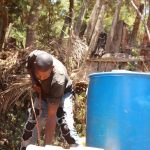
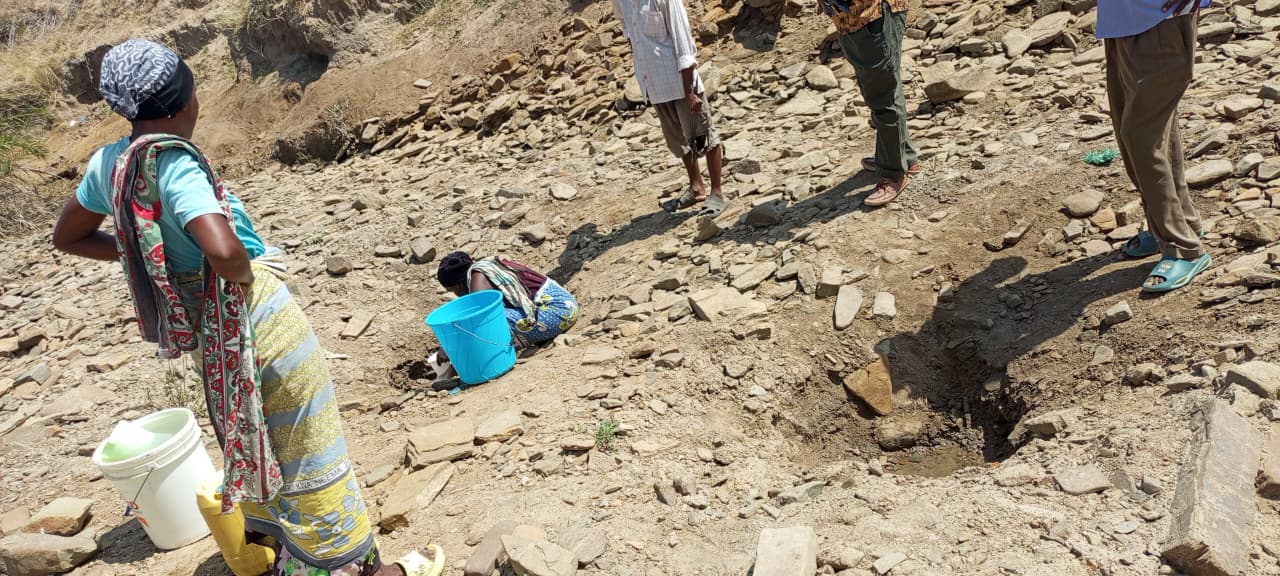
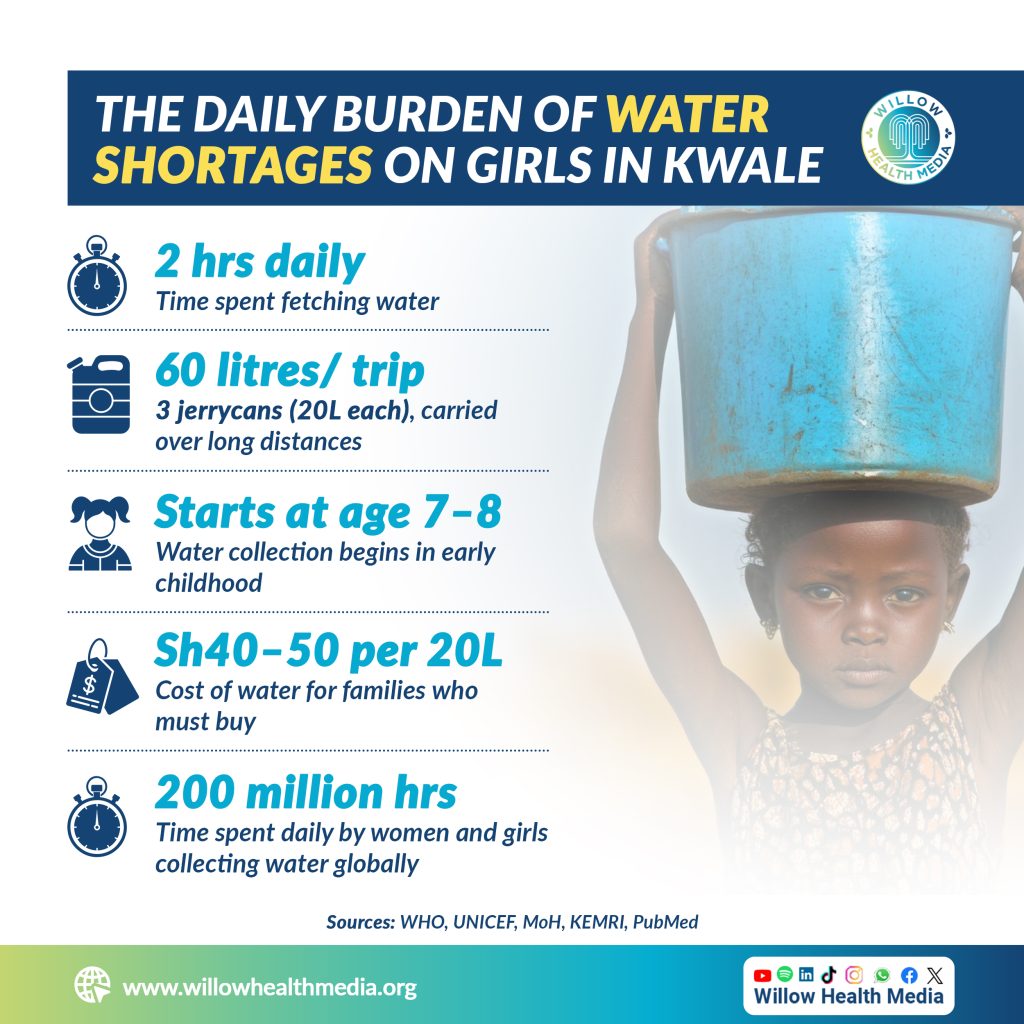
At 4am, while most teenagers are still asleep, Dorcas Mwadzina is already awake. The 19-year-old from Kifyonzo village in Kinango, Kwale County, begins her day searching for water. This routine shapes her health, safety, and whether she makes it to school.
In Kinango, water scarcity affects whether girls can manage their periods safely, avoid infections, stay in school, and move through their day without stress or risk.
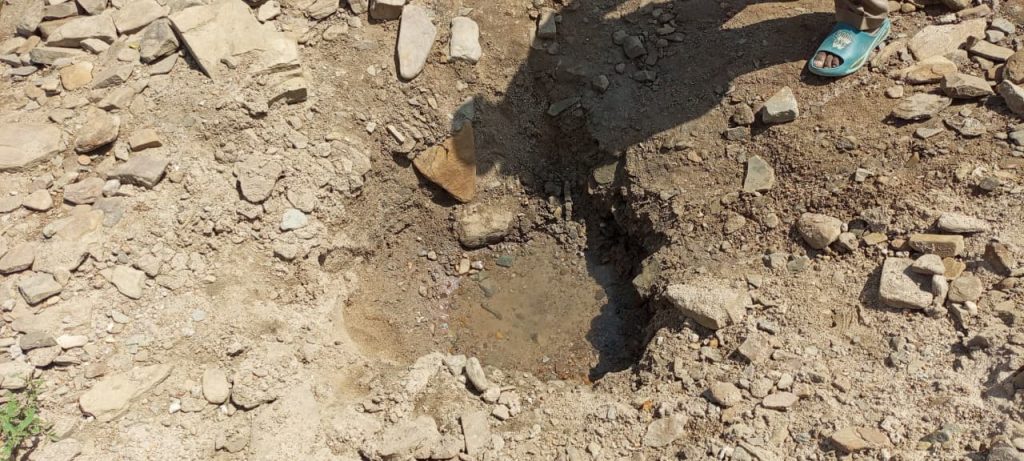
“If the seasonal rivers have dried up, I walk to the nearest dam. It’s about an hour from home,” she says. “By the time you get there and return, you are already tired, yet there is still work waiting.”
During drought, streams disappear. One remaining water source near Mwalikombe Village draws people from across the area. Getting there means leaving before sunrise and often taking risky shortcuts.
“It’s still dark when we leave,” Dorcas says. “If you want to finish early, you avoid the main road. That’s dangerous.”
In Kinango, girls fetch 60 litres of water, while boys focus on school
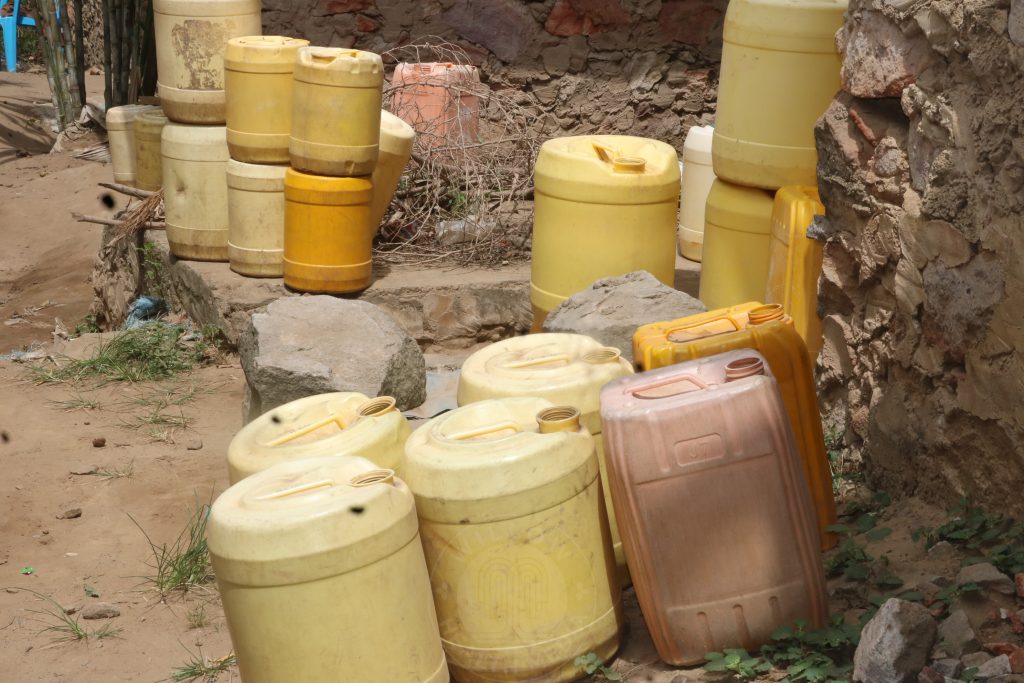
Some days she spends hours fetching just three jerrycans of water, 20 litres per jerrycan. In Kinango, this work falls almost entirely on girls, while boys are expected to focus on school or other responsibilities.
“It is exhausting,” Dorcas says. “And it is worse when you are on your period.”
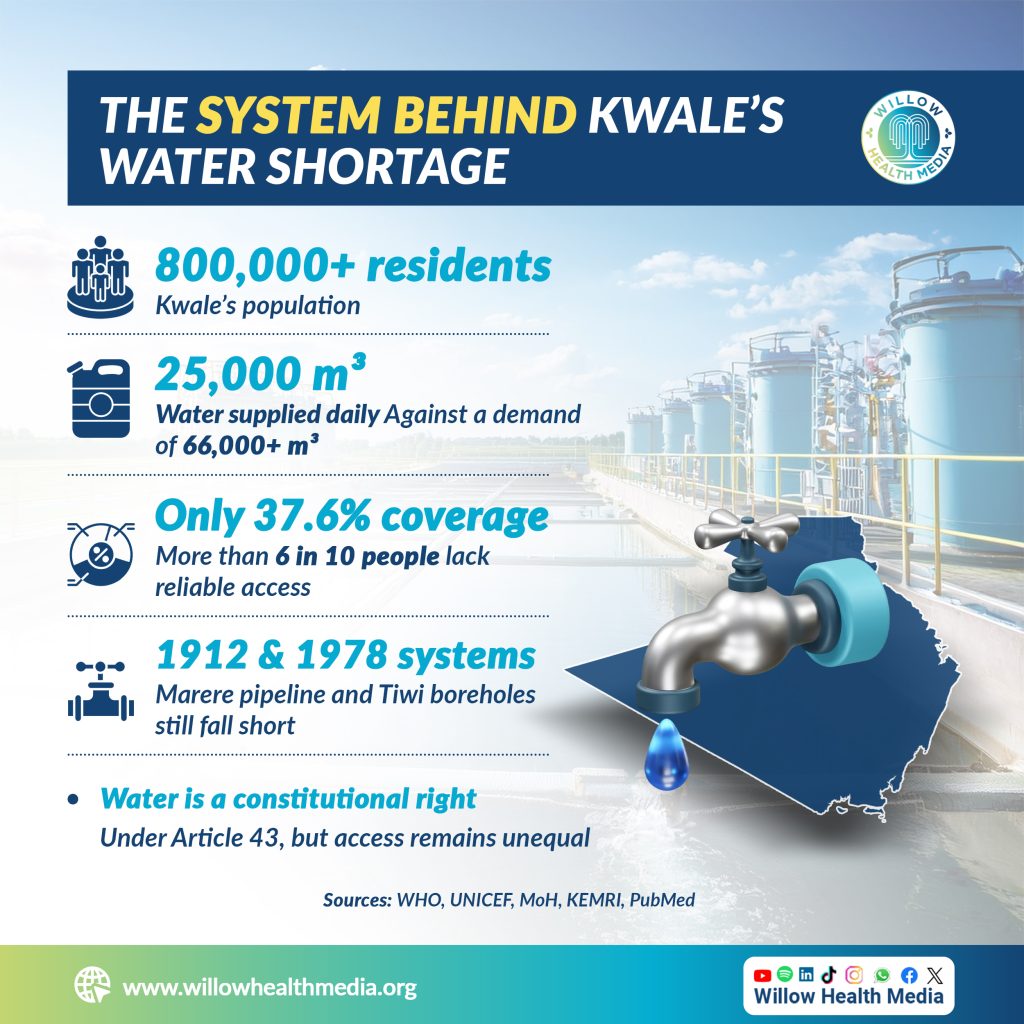
Kwale County has a population of more than 800,000 people and sits on major water infrastructure. The Marere Pipeline, built in 1912, has a capacity of about 10,000 cubic metres per day. The Tiwi boreholes and pipeline system, commissioned in 1978, produces around 12,000 cubic metres daily. Much of this water is channelled to urban centres and tourist areas along the coast, while rural communities remain underserved.
According to the Ministry of Water, the county receives about 25,000 cubic metres of water daily against a demand of more than 66,000. Coverage stands at just 37.6 per cent, meaning more than 60 per cent of residents still lack reliable access. Many rely on water pans, dams, shallow wells, rivers, and natural ponds, while the piped supply remains inconsistent.
Kenya uses satellite imagery, data, rainfall modelling, and early warning systems to track drought and predict water shortages. Researchers are also exploring artificial intelligence to improve water planning.
Water tracking systems don’t track when girls miss class during menstruation
But these systems are built to track supply, not the people carrying the burden when supply fails. They don’t measure how long girls spend walking for water before school, how often they miss class during menstruation, or the health risks of using contaminated sources. These realities do not appear in datasets or planning models.
As a result, decisions about water allocation are made without accounting for the unpaid labour of girls. Early warning systems may flag declining water levels, but they do not trigger targeted responses such as prioritising schools or communities where girls spend the most time fetching water.
This gap reflects what the system values: infrastructure and output, not the human cost.
Globally, women and girls spend an estimated 200 million hours every day collecting water. In Sub-Saharan Africa, they carry most of this burden. Yet their labour remains largely invisible in the data that shapes water policy.
Earlier this year, as drought intensified in Kinango, the county government announced an emergency water distribution. But these are short-term fixes. Large infrastructure projects, including dams, pipelines, and urban water upgrades, are also underway across the Coast region. Even combined, these projects fall short of meeting demand.
Girls often attended class without bathing, or spent free time fetching water, not studying
Under Article 43 of Kenya’s Constitution, every person has the right to clean and safe water. For Dorcas and many girls like her, that right exists mostly on paper.
In primary school, she had to fetch water before class and carry a five-litre bottle daily for cleaning toilets and classrooms.
“You carry water for home and school, plus your books,” she says. “If you don’t bring water, you get punished.”
Even in boarding school, shortages persisted. Girls often attended class without bathing or spent their free time fetching water instead of studying. “You sit in class thinking about how you will get water, especially during your period,” she says.
For some, the burden is too much. Loice Mwaka, 19, says girls have dropped out of school because of it. “I was lucky to finish primary school,” she says.
She carries infant on her back while balancing a 20-litre jerrycan on her head
In Kinango Town, Saumu Bongo, 23, a mother of three, wakes at 4am daily to fetch water for her children. “Even in town, water is a problem,” she says.
Some families buy water, but at Sh40–Sh50 per 20-litre jerrycan, it is often reserved for drinking. Saumu sometimes queues for hours and returns with only one bucket. “We used to have a stream near our home, but it dried up,” she says.
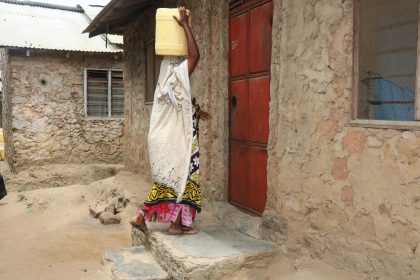
At times, she carries her infant on her back while balancing a 20-litre jerrycan on her head.
“Water is everything,” she says. “When it’s not there, everything becomes a problem.”
Health risks add another layer. Contaminated water sources increase infections, especially where sanitation is poor.
“When hygiene is compromised, infections increase,” says Dr Riggah Hamadi, a gynaecologist in Mombasa.
When you’re on your period, and there’s no water, it’s stressful
Research in Kwale has linked unsafe water to parasitic infections and anaemia, affecting energy, concentration, and long-term health. Studies also show strong links between water insecurity and stress, anxiety, and social pressure.
Zulfa Mohammed from Dzitenge Village says they often go without piped water for months. “When you’re on your period, and there’s no water, it’s stressful,” she says.
Girls here start fetching water as young as seven or eight. By the time they reach their teenage years, it is seen as their responsibility.
Hafsa Mohammed of Nawiri CBO says this reflects deep-rooted norms. “If boys shared the work, girls would have more time to study and rest,” she says.
But she is clear: sharing chores is not enough. Without reliable water, the burden does not disappear. It shifts. “We tell girls to dream big,” she says. “But if they’re waking at 4am every day, how far can those dreams go?”
What is missing is not just water, but how water systems are planned
Water scarcity here is not just about climate. It is about systems, who gets served first, who waits, and who carries the load when taps run dry.
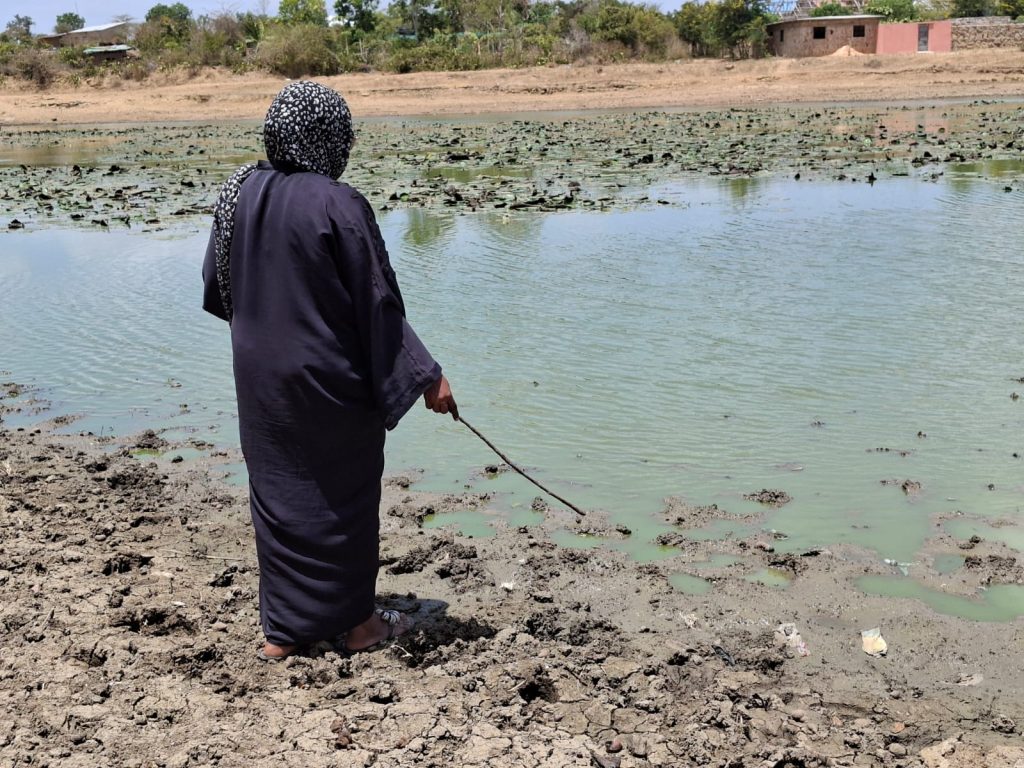
What is missing is not just water, but how water systems are planned. County-level decisions still rely on data that tracks supply while ignoring who carries the burden when that supply falls short.
Without gender-disaggregated data and targeted interventions such as prioritising schools or reducing collection times in high-burden areas, these systems will continue to overlook the most affected.
Addressing this gap falls to county governments and water agencies, which are responsible for planning and allocating water resources. Until those systems account for unpaid labour, health risks, and daily realities, access on paper will not translate into change on the ground.
For Dorcas, it means exhaustion before sunrise and distraction in class.
As the conversation ends, she pauses and imagines something different.
“Maybe we will wake up later,” she says softly. “Maybe we could focus on school.”
But not today. Tonight, she will sleep early. At 4am, the routine begins again.
This article is part of the Gender+AI Reporting Fellowship, with support from the Africa Women’s Journalism Project (AWJP) in partnership with DW Akademie. The journalist used AI tools as research aids to review and summarise relevant policy and research documents and extract key statistics. All analysis, editorial decisions and final wording were done by the reporter, in line with Willow Health’s editorial standards.
This article was first published by Willow Health Media on April 30, 2026.