


With no approved vaccine in sight, the world’s largest private foundation is betting on coordination, surveillance, and speed to contain a fast-moving outbreak.
The Gates Foundation has committed an initial $15 million (over Ksh1.9 billion) emergency fund to support the containment of the Bundibugyo Ebola outbreak in the Democratic Republic of Congo (DRC) and Uganda, distributing the money equally among three organisations already operating on the ground.
In a statement issued on May 24, 2026, the Foundation announced that the Africa Centres for Disease Control and Prevention (Africa CDC), the World Health Organization Regional Office for Africa (WHO AFRO), and WHO Headquarters would each receive $5 million (over Ksh647.7 million) to cover distinct but complementary roles under a unified response.
Africa CDC will use its allocation for regional coordination, rapid deployment, and cross-border surveillance. WHO AFRO will direct its funds toward frontline operational support for affected countries, while WHO Headquarters will oversee rapid procurement, diagnostics, and surge logistics for critical response commodities.
“No single country or institution can contain an outbreak alone, especially when there are risks of cross-border spread. The funding is designed to place the majority of resources as close to affected countries and communities as possible,” the Foundation stated.
The Gates Foundation expressed strong backing for the coordinated approach that regional partners have adopted. “We strongly support the ‘one plan, one budget, one team’ African-led response partners have endorsed, focused on rapid containment and operational coordination,” it noted.
Of the 85 confirmed cases, two are in Uganda, where one death has been confirmed
The funding comes as the outbreak continues to worsen. On May 16, 2026, WHO Director-General Dr Tedros Ghebreyesus declared the Bundibugyo Ebola outbreak a Public Health Emergency of International Concern (PHEIC), at which point 80 suspected deaths, 246 suspected cases, and eight confirmed cases had been recorded across DRC and Uganda.
By May 21, the situation had deteriorated significantly. Suspected cases rose to 746, with 176 deaths among suspected cases reported in DRC. Of the 85 confirmed cases, two are in Uganda, where one death has been confirmed. Uganda’s cases were imported, with no local transmission reported.
Among the confirmed cases is an American national believed to have contracted the virus while performing a medical procedure in DRC on May 11. He developed symptoms on May 16, was confirmed positive on May 20, and was subsequently evacuated to a high-level isolation centre in Germany for treatment.
WHO has identified the disease’s spread as concentrated in Ituri and the North and South Kivu provinces. It also cited several containment challenges, including the absence of standardised isolation and treatment facilities, weak screening and referral pathways, and inconsistent implementation of safe and dignified burial practices.
However, the most significant obstacle remains the ongoing conflict and humanitarian crisis in Ituri and other parts of DRC. “Cross-border transmission risks remain elevated due to insecurity, humanitarian crises, high population mobility, urban and semi-urban transmission hotspots, and porous borders, requiring intensified surveillance and information sharing,” WHO explained.
Misinformation, rumours, and ongoing conflict restricting movement of surveillance teams
The volatile security situation has severely hampered contact tracing efforts. As of May 21, 1,603 contacts had been listed in Ituri, yet the follow-up rate stood at only 21 per cent, with surveillance teams, rapid response teams, and laboratory sample transport all restricted by ongoing conflict and movement limitations. On the same date, 84 new alerts were reported, of which 77 were investigated and all validated.

“Misinformation, rumours, and ongoing conflict in Ituri province are restricting the movement of surveillance teams, rapid response teams, and the transporting of laboratory samples,” WHO disclosed.
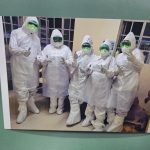
On the supply front, agencies working alongside WHO in DRC confirmed that 17 tonnes of emergency supplies have been shipped to the country. These include personal protective equipment (PPE), viral haemorrhagic fever supplies, tents, body bags, infection prevention and control materials, stretchers, medicines, and other case management supplies.
WHO and its partners are also working to deploy EpiShuttles, telecommunications equipment, laboratory consumables, portable point-of-care diagnostic machines, reagents, and Ebola polymerase chain reaction (PCR) testing kits.
Gates Foundation noted Ksh1.94 billion is initial and complementary to other emergency support it has provided
EpiShuttles are single-patient isolation and transport systems designed for moving highly contagious patients safely. Efforts are additionally underway to mobilise a helicopter, three ambulances, and two armoured vehicles to support the movement of cargo and personnel.
The Foundation noted that its Ksh1.94 billion commitment is initial and complementary to other emergency support it has provided, including backing for collaboration between Africa CDC and WHO AFRO through the Joint Emergency Action Plan (JEAP), a framework designed to deliver unified emergency support to governments during health crises rather than fragmented parallel responses.
The Foundation also continues to support vaccine, therapeutic, and diagnostic development through the Coalition for Epidemic Preparedness Innovations (CEPI). It cautioned, however, that because no approved vaccines or therapeutics currently exist for Bundibugyo Ebola, the immediate priority remains rapid detection, strong public health measures, protection of frontline workers, and coordinated action to halt transmission.
The Foundation said it would continue monitoring the situation with partners to assess where additional support may be needed.
We believe in the free flow of information
Republish our articles for free, online or in print, under Creative Commons licence.