Thirty-six conditions. Nine hospitals. Three countries. The government’s new foreign treatment list maps, in precise detail, the procedures Kenya’s health system cannot yet perform – and the patients who have been waiting for answers.
Kenya’s Social Health Authority (SHA) will now cover the cost of treatment in nine foreign hospitals for 36 specific medical conditions – all of which cannot currently be treated locally due to missing equipment, implants, or specialist staff.
The cover is capped at Ksh500,000 per patient per year and is available only to fully paid-up SHA members. The hospitals are spread across Turkey (4), India (3), and Saudi Arabia (2).
Key facts at a glance
| Conditions covered | 36 – all unavailable in Kenya due to lack of equipment or personnel |
| Annual cap | Ksh500,000 per patient per year |
| Who qualifies | Fully paid-up SHA members only |
| Countries | Turkey, India, Saudi Arabia |
| Phase | Phase one — more conditions will be added over time |
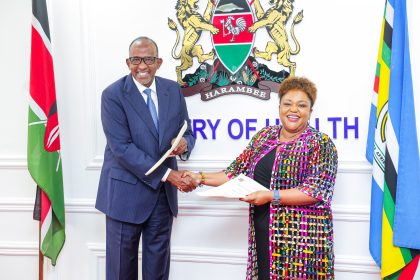
SHA Chief Executive Officer Dr Mercy Mwangangi announced that eligible Kenyans would begin benefitting from the overseas treatment package from April 14, 2026. The facilities were identified based on their capability to offer treatments that are unavailable in Kenya due to lack of equipment, legal framework and skilled personnel.
The 9 accredited hospitals
Turkey, 4 hospitals
- Acibadem Mehmet Ali Aydinlar University Atakent Hospital
- Acibadem Maslak Hospital
- Acibadem Altunizade Hospital
- Acibadem Adana Hospital
India, 3 hospitals
- Wockhardt Hospital
- Apollo Hospitals Enterprise Ltd (Apollo Cancer Centre)
- KIMS Hospital Enterprises Private Ltd
Saudi Arabia, 2 hospitals
- Dr Soliman Fakeeh Hospital
- King Faisal Specialist Hospital
Health Cabinet Secretary Aden Duale emphasised that the cover would only cover the treatment of 36 medical conditions, not available locally.
Majority of the conditions involve highly specialised joint and limb replacement procedures like wrist, ankle, joint, thigh bone and shin replacement.
The 36 covered conditions, by category
Each condition lists why it cannot be treated in Kenya.
| # | Condition | Why it is treated abroad |
| ORTHOPAEDIC — Joint & Bone Replacement | ||
| 1 | Wrist joint arthroplasty | Wrist replacement. Kenya lacks dedicated joint replacement hospitals and the implants needed. |
| 2 | Metacarpal joint arthroplasty | Replaces damaged finger joints, often from arthritis. Limited implant access and expertise locally. |
| 3 | Ankle joint arthroplasty | Replaces damaged ankle bones with plastic or metal implants. Kenya lacks the expertise and advanced implants. |
| 4 | Whole femoral replacement | Replaces the entire thigh bone with a prosthetic. Kenya has no access to the mega-prostheses required. |
| 5 | Proximal femoral replacement | Replaces the upper thigh bone and hip joint. Not done locally due to poor infrastructure. |
| 6 | Distal femoral replacement | Replaces the lower thigh bone with a metal prosthetic. Implants and trained surgeons are unavailable locally. |
| 7 | Proximal tibial replacement | Replaces the upper shin bone after severe bone loss. Not routinely done in Kenya due to resource gaps. |
| 8 | Allograft use | Transplanting donor bones, tendons or tissue. Kenya does not have a national bone bank. |
| The overseas treatment benefits package will also cover complex paediatric cardiac, liver and intrauterine procedures , which require both specialised personnel and equipment to be conducted | ||
| CARDIAC & TRANSPLANT | ||
| 1 | Complex paediatric cardiac surgery (ECMO) | Life-saving heart-lung support for critically ill children. Kenya has no ECMO capacity or the ICU infrastructure needed. |
| 2 | Paediatric liver transplant | Liver replacement for children. There is no paediatric liver transplant programme in Kenya. |
| 3 | Paediatric kidney transplant | Kidney replacement for children. Kenya’s paediatric kidney care services are underdeveloped. |
| Patients in need of specialised cancer therapies not yet available locally in Kenya, like stem cell transplant, CAR T-Cell therapy, Yttrium 90, microwave ablation and intrathecal chemotherapy, will be covered by SHA in the selected facilities that offer these services. | ||
| ONCOLOGY — Cancer Treatment | ||
| 1 | Bone marrow transplant | Replaces diseased bone marrow to treat blood cancers. No dedicated transplant units exist in Kenya. |
| 2 | Intrathecal chemotherapy | Anti-cancer drugs injected directly into spinal fluid. Kenya has very limited paediatric cancer specialists. |
| 3 | CAR T-Cell therapy | Genetically engineers a patient’s own immune cells to kill cancer. Kenya has no regulatory pathway for this therapy. |
| 4 | Bispecific T-Cell engagers | Lab-made antibodies that link immune cells to tumour cells to fight cancer. No production or regulatory pathway exists. |
| 5 | Stem cell transplant | Transfers healthy blood-forming stem cells from a donor to treat blood cancers like leukaemia. Kenya’s capacity is inadequate. |
| 6 | Yttrium 90 | Targeted radioactive therapy for liver cancer. Kenya lacks the isotopes and delivery systems required. |
| 7 | Peptide receptor radionuclide therapy (PRRT) | Targeted cancer treatment for slow-growing neuroendocrine tumours. Kenya has no licensed radiopharmaceutical unit. |
| 8 | DOTA-TATE scans | Specialist imaging to detect neuroendocrine tumours. Kenya lacks nuclear medicine infrastructure. |
| 9 | FAPI PET/CT imaging | Advanced molecular imaging to target cancer-associated tissue. Not available in Kenya. |
| 10 | Microwave ablation of metastatic tumours | Uses high-heat electromagnetic energy to destroy cancer cells. Not available locally. |
| 11 | Photopheresis | Immunotherapy using ultraviolet light to treat cancer and transplant rejection. Not available in Kenya. |
| The overseas SHA Cover will also cover emerging therapies for foetuses, majority of which are in Kenya due to lack of foetal therapy centres, equipment, personnel and policies. Some of the treatments that will be covered include intrauterine blood transfusion, intrauterine shunt replacement, fetoscopy and laser ablation, cord occlusion and fetal reduction to save the lives of foetuses. | ||
| FETAL & MATERNAL — Unborn Baby Procedures | ||
| 1 | Intrauterine blood transfusion | Injects donor blood into a fetus via the umbilical cord to treat severe anaemia. Kenya has no foetal therapy centres. |
| 2 | Intrauterine shunt placement | Drains dangerous fluid from an unborn baby’s bladder or chest. Kenya cannot perform intrauterine surgery. |
| 3 | Vesicocentesis, thoracentesis, paracentesis | Ultrasound-guided drainage of abnormal fluid from a foetus. Kenya lacks the interventional radiology for this. |
| 4 | Fetoscopy & laser ablation | A tiny camera is inserted into the womb to diagnose and treat foetal conditions. No instruments or trained personnel in Kenya. |
| 5 | Amnioreduction & amnioinfusion | Manages dangerous levels of fluid surrounding a baby in the womb. No foetal therapy centres in Kenya. |
| 6 | Foetal reduction | Reduces the number of foetuses in high-order pregnancy to protect survivors. Unavailable — no foetal therapy centres. |
| 7 | Cord occlusion | Stops blood flow to one twin to save the other in complicated shared-placenta pregnancies. No foetal therapy centres in Kenya. |
| 8 | Cordocentesis | Extracts fetal blood from the umbilical cord to diagnose genetic abnormalities or deliver transfusions. No foetal therapy centres. |
| To ensure patients with neurological conditions that cannot be treated locally receive care where it is offered the SHA overseas treatment package will cover therapies like nerve ablation, neural regenerative therapy and sacral neuromodulation. | ||
| NEUROLOGICAL | ||
| 1 | Sacral neuromodulation | A bladder and bowel ‘pacemaker’ that treats urgency, retention and leakage. Kenya lacks the advanced technology needed. |
| 2 | Nerve ablation therapy | Heat destroys specific nerve fibres to block chronic pain signals. Kenya has no neurophysiology equipment or trained personnel. |
| 3 | Neural regenerative therapy | Repairs or replaces damaged nervous system tissue from injury or disease. Lack of trained personnel and equipment. |
| 4 | Brachial plexus injury surgery (birth-related) | Restores arm function in infants who fail to recover after birth injuries. Kenya is limited in neurophysiology expertise and trained surgeons. |
| OTHER | ||
| 1 | Voice box transplant | Larynx replacement. Kenya has no national legal framework for this procedure. |
| 2 | Transjugular intrahepatic portosystemic shunt (TIPS) | An image-guided procedure to reduce dangerous blood pressure in the liver. Kenya lacks essential tools and consumables. |
What happens next
SHA Chief Executive Officer Dr Mercy Mwangangi described this list as phase one of the programme. More conditions will be added through continuous assessment as the authority reviews what else cannot be managed locally.
Health Cabinet Secretary Aden Duale stressed that the cover only applies to conditions that are genuinely unavailable in Kenya, not to procedures that could be done locally but which patients prefer to have abroad.
A reminder: Many procedures are available locally
Renowned neurosurgeon Dr Florentius Koech has noted that many Kenyans travel abroad for services that are actually available at home. He has called on healthcare stakeholders to invest in promoting what Kenya can already do, pointing out that the hidden costs of recovery and social support abroad often make overseas treatment more expensive overall, even when the procedure itself is cheaper.
Source: SHA Gazette Notice