
The real cost of early pregnancy, HIV and gender-based violence among young people in East Africa is finally being counted… and it runs into the hundreds of billions.
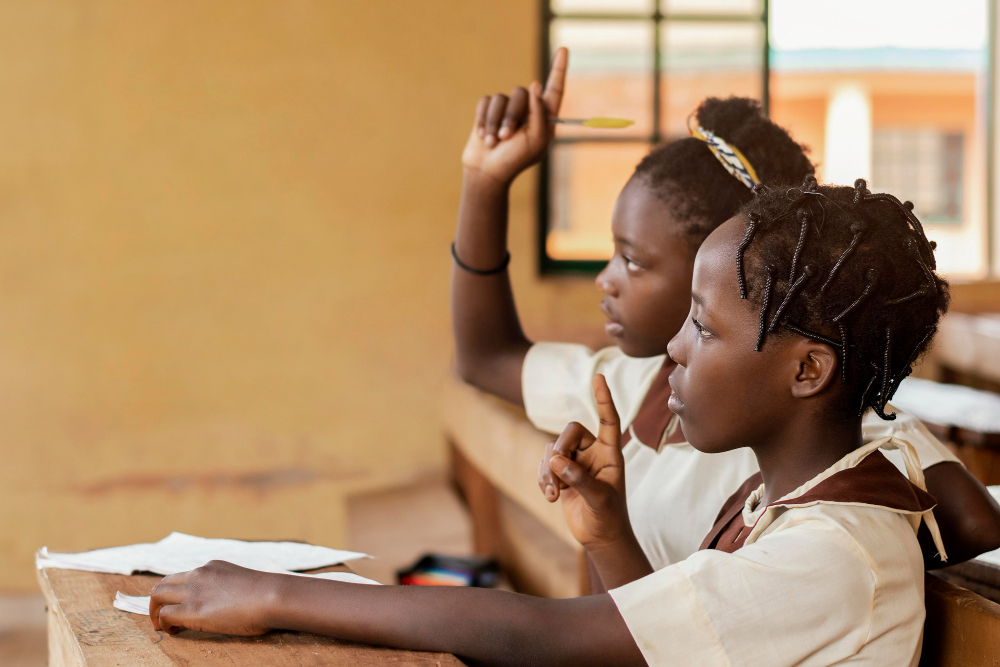
As we mark the International Day of the African Child, I ask that you think of the 15-year-old girl sitting in a classroom in Kampala, Nairobi, or Kigali, with plans she had not yet told anyone. Then came a pregnancy she did not plan for. She left school and never returned. The future she had imagined quietly closed, and with it an estimated $64,314 (Ksh8.3 million) in lifetime earnings, the income she might have earned had she stayed in school, completed her education and reached her full potential.
This is not the story of one girl. It is a story that unfolds every day across Kenya, Rwanda and Uganda. Young people aged 15 to 24 make up between 20 and 22 per cent of the population in these countries, well above the global average of 15.5 per cent. This should be a demographic advantage, but instead, too many young people are being held back by systems that are failing to meet their needs.
A new report produced under the UN’s 2gether 4 SRHR programme calculates the annual cost of inadequate investment in HIV and sexual and reproductive health and rights for young people aged 15 to 24 in Kenya, Rwanda, and Uganda.
Combined, these countries lose at least $1.8 billion (Ksh232.9 billion) every year. Kenya bears the largest burden at $1.2 billion (Ksh155.3 billion), equivalent to 1.1 per cent of its GDP. Rwanda loses $197 million (Ksh25.5 billion), or 1.4 per cent of GDP, while Uganda loses $438 million (Ksh56.7 billion), nearly one per cent of GDP.
Intergenerational harm, emotional trauma and cascading losses in productivity are not yet fully counted
These losses are calculated across three layers: the direct costs absorbed by health systems, the out-of-pocket costs borne by young people and their families, and the opportunity costs — earnings, productivity and futures that never materialise. The report is explicit that these figures are conservative. Many consequences, such as intergenerational harm, emotional trauma and cascading losses in productivity, could not yet be fully counted. The true bill is higher.
Behind these numbers are three specific drivers.
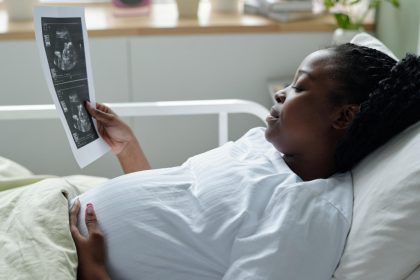
Early pregnancy costs Kenya $879 million (Ksh114.2 billion) annually, Rwanda $175 million (Ksh22.6 billion), and Uganda $210 million (Ksh27.3 billion). These are not healthcare costs alone. The majority is lost lifetime earnings from girls who left school, never returned and will earn a fraction of what they would have.
HIV among young people costs Kenya $79 million (Ksh10.2 billion) a year, Rwanda $9 million (Ksh1.2 billion), and Uganda an estimated $203 million (Ksh26.3 billion). In Uganda, almost four in every five new HIV infections among young people are among adolescent girls and young women. That is not a coincidence. It is the result of entrenched gender inequality meeting inadequate services.
Gender-based violence adds a further US$235 million (Ksh30.4 billion) in Kenya, US$13 million (Ksh1.7 billion) in Rwanda, and US$19 million (Ksh2.5 billion) in Uganda — and those figures almost certainly undercount the true cost of harm.
Kenya, Uganda and Rwanda have laws mandating comprehensive sexuality education in primary schools
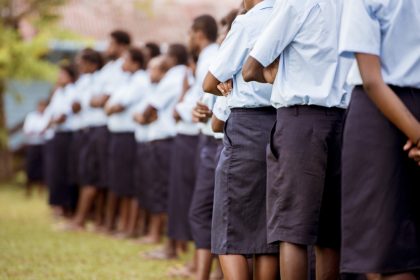
Kenya, Rwanda, and Uganda are not standing still, though. All three countries have removed the requirement for parental consent for young people to access HIV and sexual and reproductive health services. All three have laws mandating comprehensive sexuality education in primary schools. These are not small things. They represent political will that has been exercised and frameworks that have been built.
But laws and policies are only as strong as their implementation. The report is clear that current gaps in services and programmes are producing these losses in real time. It is in the distance between political commitment and young people’s actual experience of services that the billions are being lost.
These losses are not inevitable. They are the consequences of policy and investment choices. That is why the upcoming UN High-Level Meeting on Ending AIDS matters. World leaders will be meeting in New York at the end of this month to negotiate a new political declaration that will shape the global HIV response for the years ahead.
I urge African governments arriving in New York for this important meeting to unite behind a common position that places the intersection of HIV and sexual and reproductive health rights at its centre. The declaration being negotiated right now is not an abstract exercise.
The cost of a weak commitment is measured in billions of dollars, in futures foreclosed before they even begin
The language that makes it into the declaration will shape the HIV response in our region for years to come. What countries agree on in New York needs to translate into budget lines, implementation plans and accountability frameworks at home. The cost of a weak commitment, as this report shows, is measured in billions of dollars and in futures foreclosed before they even begin.

We know what works. Peer-led programmes work. Non-judgmental clinics work. Keeping girls in school demonstrably reduces early pregnancy by 75 per cent and HIV infection by 87 per cent. Community-based programmes that shift harmful gender norms reduce violence and, with it, HIV risk. Governments must act on this — and treat it as the priority the numbers demand.
She was 15, sitting in a classroom, with plans. For every year those plans are interrupted by conditions we know how to prevent, a country pays the price. Right now, across Kenya, Rwanda and Uganda, that payment amounts to nearly two billion dollars annually. The question is not whether these countries can afford to invest more in their young people. At $1.8 billion (Ksh232.9 billion) a year, the evidence is clear: they cannot afford not to.
Anne Githuku-Shongwe is UNAIDS Regional Director, East and Southern Africa.