
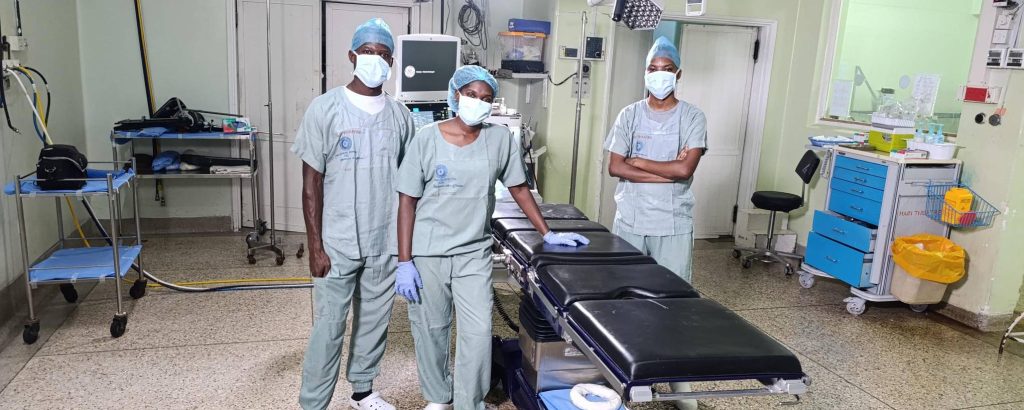
Three journalists walked into an operating theatre, only their equipment walked out unshaken.
“The scrubs felt like costumes.”
That’s what Moses Maweu, Video and Audio Editor, remembers most, standing outside Theatre 4 at Nairobi Hospital that Good Friday morning on April 18, 2025.
Dressed in surgical greens that didn’t quite fit the narrative his mind was writing: ‘You’re a journalist. You document things. You’ve done this before.’
Except he hadn’t, not like this.
I watched both my colleagues take positions and set up their equipment in the theatre, to capture the best shots of the historic facial surgery on 28- year-old Lucy Gathoni, who had been living with a massive tumour for 16 years.
I noticed Timon Abuna, the cameraperson, had two shoes in different colours. His mask was also loosely tied and loosening, almost slipping off. We laughed at him, but we all sounded nervous and excited at the same time. I helped him tighten his mask.
“The courage I walked in with,” Maweu told me, laughing but not really, “disappeared immediately.”
The Willow Health Media team is comprised of myself, Yvonne Kawira, a Multimedia Health Journalist; Timon Abuna, a Videographer and Photographer; and Moses Maweu.
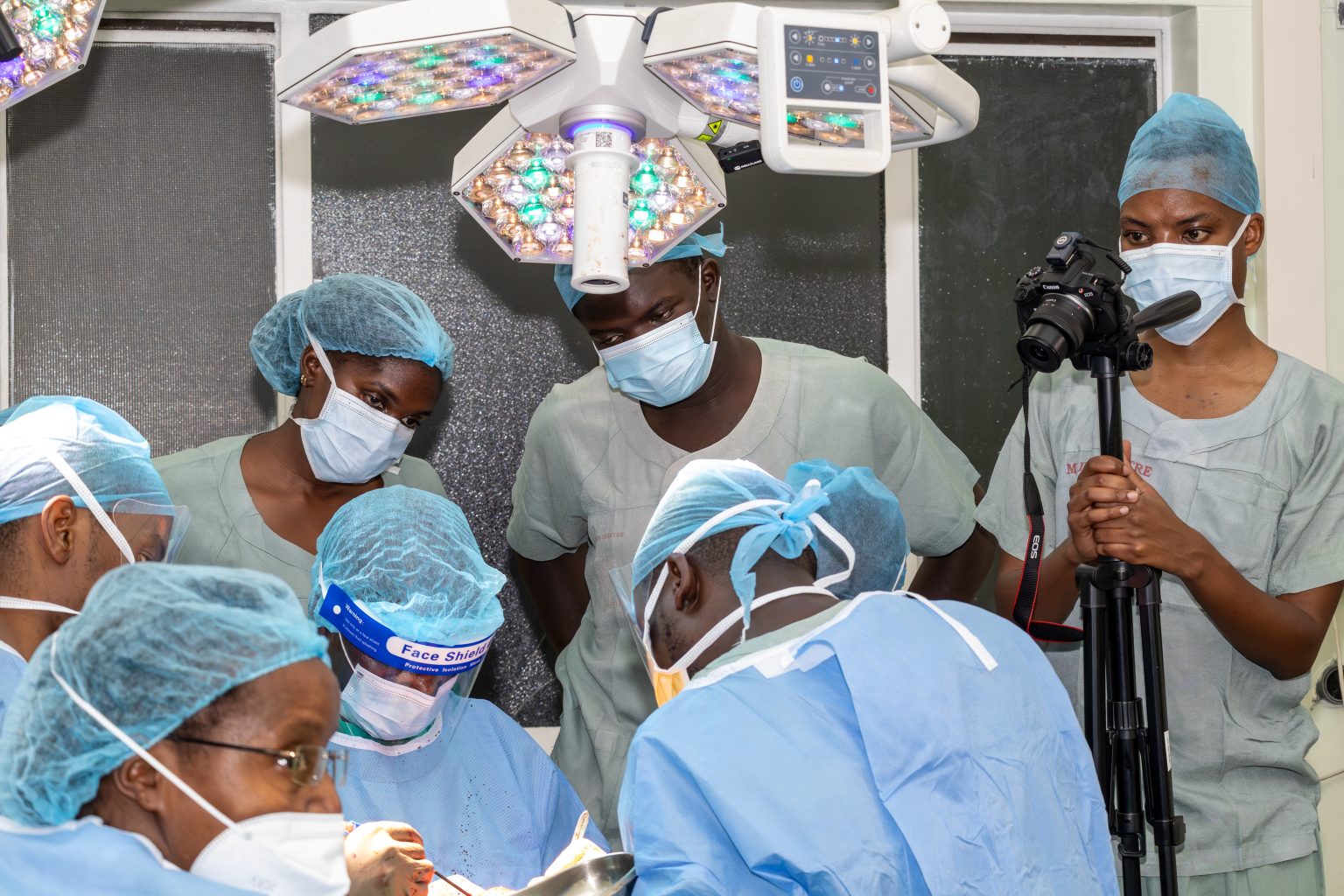
Inside the theatre, gospel music was already playing with Dr Kinyua Gathukia, the anaesthesiologist, singing along to the tunes, smiling and ready for the 18-hour marathon procedure.
I love medical drama, but this time, I was to witness everything from first incision to last suture, in person
I was running on adrenaline and ambition as the story was about: A face. Rebuilt. From scratch. In Kenya. For the first time.
I have always loved medical drama. But this time, I was to witness everything from the first incision to the last suture, in person.
Drama was what I expected, but what I got was something closer to resurrection.
Though surgeries weren’t new to Timon, this one was different as “The smell of blood was so strong at the beginning,” he says quietly. “But with time, I got used to it.”
The team walked into the Nairobi hospital at 6am to set up, to capture every step.
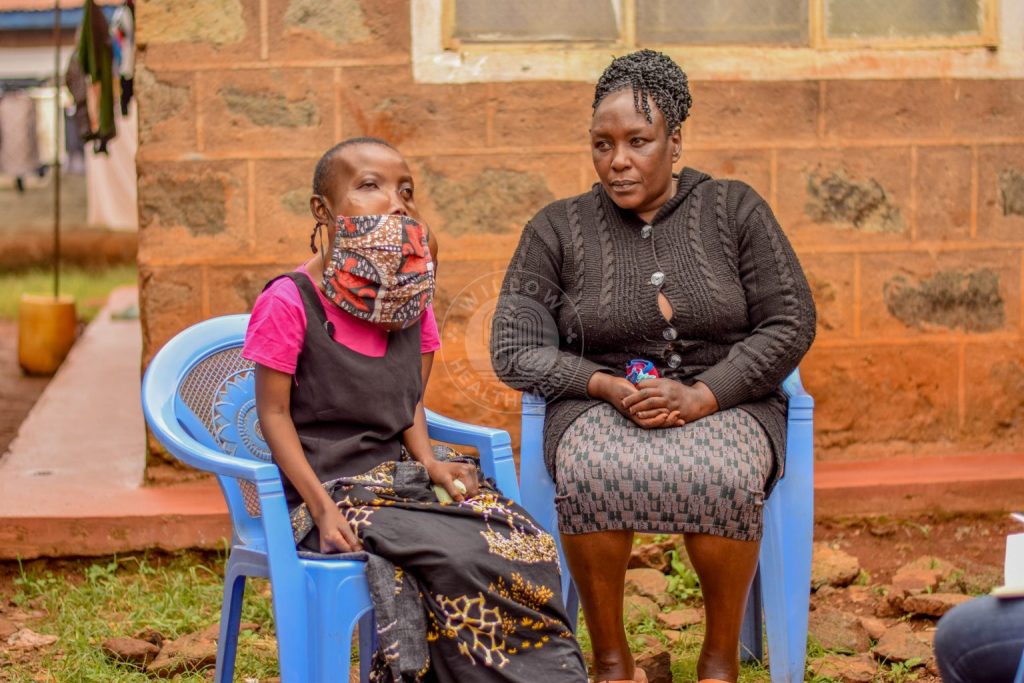
Before walking into the theatre, we found Lucy’s mother, Peris Mwaura, sitting outside the theatre’s waiting area with rosary beads wrapped around her fingers like armour.
“Please pray for my child,” she said, eyes red from no sleep and 17 years of watching tumours grow where a face should be. “Hope you don’t mind me calling you to ask if all is well.”
17 years of struggling to breathe, eat, to exist in a body that had betrayed her
“No problem at all”, I responded while pulling rosary beads from my pocket. Peris smiled. “So, you do understand, eh? You really do understand.” Then she added, “Please pray for her from in there, and I will pray for her from out here.”
We found Lucy along the corridor. She wasn’t crying or nervous. “I am not afraid,” Lucy told me. “I just want this thing out of me.”
She meant the 3.3 kilograms of tumour that had colonised her face, the ten per cent of her body weight that wasn’t hers for 17 years of struggling to breathe, eat, to exist in a body that had betrayed her.
It was about time.
From the outside, the Willow team looked professional. Cameras ready. Questions prepared. Game faces on.
“We looked like a confident media team on a historic assignment. But on the inside, we were three different panic levels. If panic had profiles: Yvonne was on “mild alarm,” I was on “full buffering,” and Timon… Timon was on “system shutdown,” recalls Maweu, laughing.
Before the surgery, the entire room went quiet after introductions as Prof Symon Guthua, the lead maxillofacial surgeon, led the team in prayer, asking God to take control during and after the surgery.
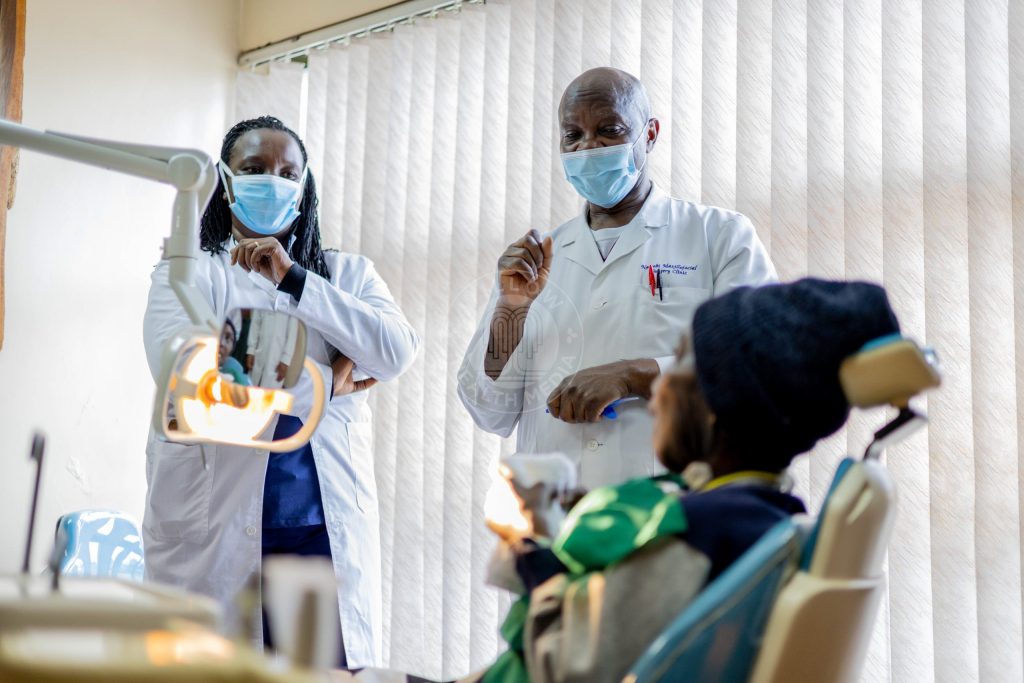
Before the surgery, they intubated Lucy in preparation for the big surgery ahead. Then suddenly, we heard: “Can you kindly stop recording. Stop. Stop.”
We all obliged and stood there, not knowing what to do. We silently watched as the team of doctors struggled to secure an airway for her.
This moment was not ours to capture. And honestly, standing there in the silence that followed, none of us argued. Some things are too sacred even for a story. It is one of the most vulnerable moments for any patient on an operating table, and one where the medical team needs complete focus, zero distraction, and absolute control of the room.
Finally, they managed to take over breathing for her, and they were ready to begin the surgery.
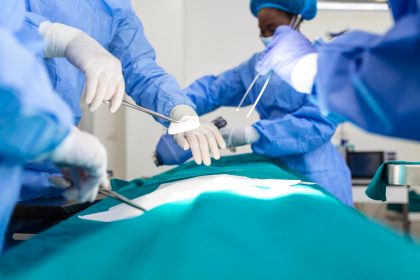
Then the operating table became a stage. Prof Guthua and Dr Margaret Mwasha, a prosthodontist, began the choreographed operation, every gesture intentional, every motion precise. Around them, nurses anticipated needs before they were spoken. The anaesthesiologist monitored screens that blinked with Lucy’s life signs. Students watched, wide-eyed, witnesses to medical history.
Stoic faces suddenly burst into clapping and cheering, some with tears in their eyes
The first tumour came out at 3:40pm. Then the second. Then the third from the upper jaw. From the lower jaw, there was a smaller mass that still stood in the way.
That too had to go.
When the final piece was lifted, the operating room erupted in applause. Surgeons who’d spent decades perfecting steady hands and stoic faces suddenly burst into clapping and cheering. Some with tears in their eyes.
But the hardest work was just beginning. The specialists were now preparing to begin reconstructing Lucy’s face.
Midway through the surgery, someone suggested the media team take a tea break. Get some fresh air. You know, something light. Maweu and I agreed, but Timon stayed in the theatre. “At that point,” Maweu says, “even the spoon felt traumatised.”
After witnessing the incredible precision and complexity of the surgeons’ work, the simple act of drinking tea felt completely out of place and absurd.
“Nothing tasted normal,” Maweu says. “The tea was fighting for its life.”
Eighteen and a half hours after the first incision, the surgery was finally over, and Lucy’s head was wrapped in gauze. Her jaw was wired shut to allow muscles to reattach. Titanium plates had replaced the bones that tumours had destroyed.
Lucy was wheeled out of theatre. Her mum was still clutching her rosary beads. Still praying
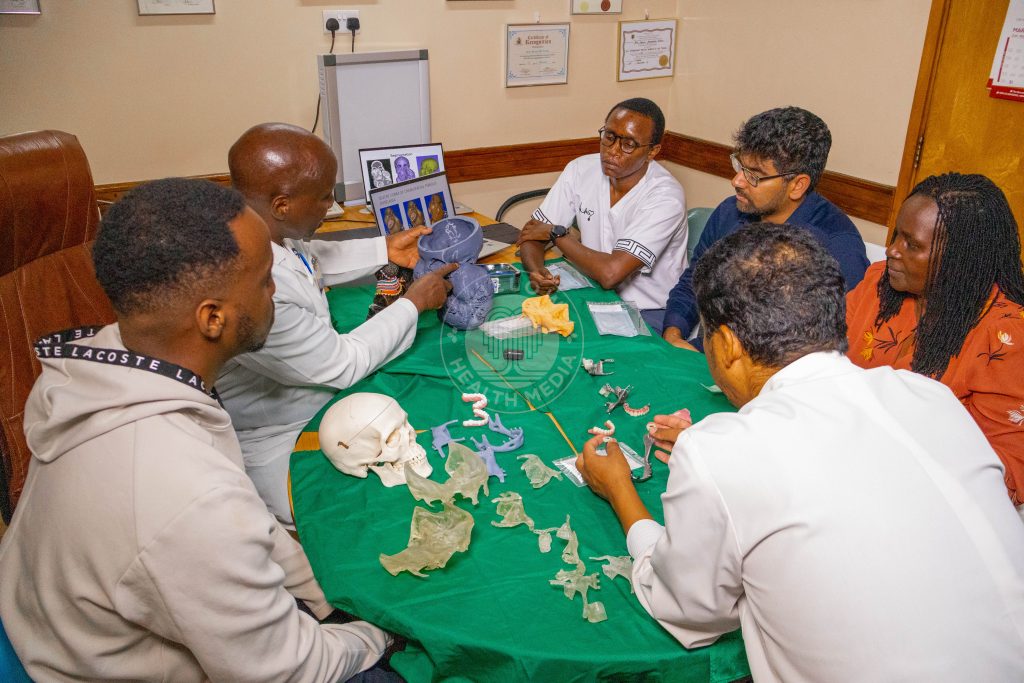
Prof Guthua and Dr Mwasha had requested that the plates be designed with special attachments where Lucy’s jaw muscles could grip and move the new titanium framework.
Every cut, every stitch, every screw placement had to be perfect.
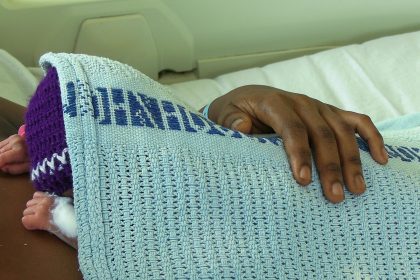
At 1:40am on Saturday, April 19, 2025, Lucy was wheeled out of the theatre. Her mum was still in the waiting bay, clutching her rosary beads. Still praying.
“I have been praying all along,” Peris said, her voice breaking with relief. “They told me it went well. I thank God. I am just grateful. She is a strong girl.”
Maweu was done, mentally, physically, spiritually. “Eating meat was out of the question,” he says. “I needed a software update.”
But he also needed to say something that had been building in his chest for 18 hours.
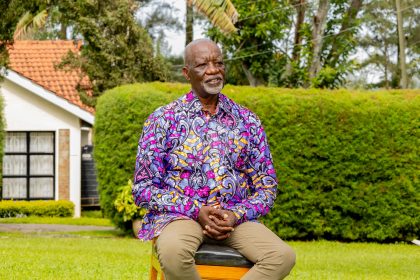
“Witnessing those doctors work was incredible. Their skill, their teamwork, and their calmness was beautiful to see. They restored hope. They rebuilt Lucy with a level of precision that felt almost divine.” Maweu said.
70 days later, Lucy saw her new face for the first time without tumours, and smiled
That night, we went looking for food in any 24-hour eateries, but the smell of roast chicken put us off. “I can’t do meat. Not today,” said Timon.
It was raining. We ended up at a pizza joint before returning footage to the office and trooping home.
About 70 days later, Lucy saw her new face for the first time without tumours and smiled.
For Brian Wekesa, the graphics designer at Willow Health Media, who worked on the post-surgery images, said the experience shifted something fundamental.
“For me, it was a humbling experience,” Brian says. “Just imagining how a person can be in that much pain and suffering for something that can be fixed if we had the resources in Kenya, and we already have the expertise.”
Lucy’s surgery was pro bono, 18 and a half hours of surgical genius, given freely. But the titanium implants from Belgium cost Ksh5 million.
Back at the Willow office, the team downloaded footage, organised notes, and tried to process the biggest story any of us had handled all year. It was also the longest to document. Months of following Lucy’s journey from Othaya to Nairobi, from tumour to titanium, from despair to hope.
As the surgery progressed, Dr Mwasha and Prof Guthua took the time to answer my questions and carefully explain each complex step, including me alongside the medical students in their teaching. This act of inclusion ensured that the full story of the operation, and the significance of Lucy’s medical miracle, would be told accurately and with the depth it deserved, not reduced to just another headline.
Lucy promised a thanksgiving mass. She made us swear to come.
“You must come and celebrate with me,” Lucy said during a post-surgery shoot in Othaya, surrounded by family, faith, and the second chance at life that titanium and determination had built.