



As Bundibugyo Ebola cases surpass 10,000 in the DRC, the World Health Organization has deployed an AI-powered platform to link data, flag surveillance gaps and help communities receive support earlier through faster, more targeted responses.
More than eight in every ten people newly diagnosed with Bundibugyo Ebola in the Democratic Republic of the Congo (DRC) were not on any contact list.
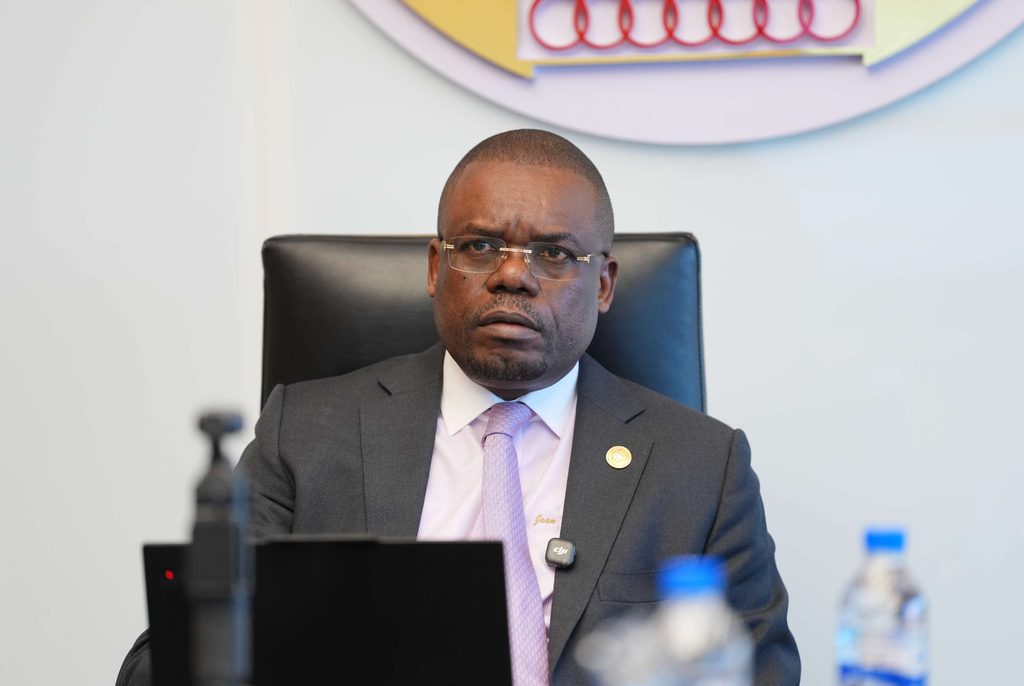
“More than 80 per cent of new cases are coming from the community, not from the contact list,” Dr Jean Kaseya, Director General of the Africa Centres for Disease Control and Prevention (Africa CDC), told a virtual meeting of African health ministers on October 28, 2026.
The virus, in other words, is outrunning the people chasing it. Response teams find infections only once they surface, with no record of who else may have been exposed.
By Kaseya’s count, this outbreak is expected to generate about 793,000 contacts, three times the 262,000 listed during the 2018-2020 epidemic in North Kivu. Only about 127,000, roughly 16 per cent, have been identified.
DRC declared the Bundibugyo outbreak on May 15. By November 1, it had recorded 10,532 confirmed cases and 5,126 confirmed deaths, according to the US Centers for Disease Control and Prevention. Cases have also been confirmed in Uganda, Kenya, and Nigeria. There is no licensed vaccine for Bundibugyo virus disease (BVD). A trial of candidate vaccines began in Bunia on October 23, but until one proves effective, surveillance and contact tracing remain the front line.
Against that backdrop, the World Health Organization (WHO) announced on October 19 that its Preparedness Data Exchange (PDX) was now in use in DRC. The AI-powered platform weighs health threats against a country’s capacity to respond, and DRC is the first country where it has been deployed.
Think of PDX as a dashboard with two gauges, one showing the danger on the road ahead, the other the fuel left in the tank
WHO’s Regional Office for Africa launched PDX in Nairobi on March 3, 2026, as a regional platform serving all 47 Member States in the WHO African Region. The DRC deployment connects the country to that regional system, and WHO says further deployments are planned for other countries.

Think of PDX as a dashboard with two gauges, one showing the danger on the road ahead, the other the fuel left in the tank. It combines risk scores for every kind of hazard with data on laboratories, health workers, emergency operations, climate, and the readiness of primary health care.
“It is able to analyse what is happening in real time and also try to assess if the country is ready to actually respond to those hazards,” said Dr Dick Chamla, Team Lead for Emergency Preparedness and Response at the WHO Emergency Hub in Nairobi.
That pairing lets decision-makers see beyond case counts. A rising threat in one province can be read alongside the health facilities, laboratories, and trained staff available to meet it. Chamla said the system should help communities get support earlier and make responses quicker and smarter.
Dr Marie Roseline Belizaire, WHO Regional Emergency Director for Africa, explained the speed required with a racing image.
“Do you watch Formula One? Have you seen the time they take to change one tyre? Twenty people in 2.5 seconds,” she said, arguing that a health emergency demands the same split-second teamwork.
Information must move fast, and decisions must be made before a situation spins out of control. AI, she said, is being used “to connect the dots”, so that health systems stop “being reactive” and start moving ahead of the threat. At the March launch, WHO reported her describing the use of “federated learning, integrated surveillance, and high-performance computation to move from reactive response to anticipatory intelligence.”
PDX remains on trial, however. Its value will depend on whether the information it gathers leads to earlier warnings, better decisions, and faster action on the ground.
AI could spot patterns across those records and point teams to areas that need a closer look
Digital tools could matter most in closing the contact-tracing gap. They can help record and monitor contacts, link reports from different places, and flag missing information. AI could spot patterns across those records and point teams to areas that need a closer look.
But no algorithm can knock on a door; every platform still depends on community health workers, surveillance officers, and contact tracers who find people, collect accurate information, and follow up with those who may have been exposed.

Those workers also need a signal. In Ituri Province, the outbreak’s epicentre, poor internet access has delayed surveillance data. In June, Starlink delivered 150 satellite internet kits to Africa CDC to link frontline teams there with response centres.
People cross borders for work, trade, and family, often moving between surveillance systems that do not talk to each other, and technology is helping scientists follow the virus along those routes. At the ministers’ meeting, researchers described a collaboration of 22 participants from institutions in DRC, Uganda, Kenya, and Nigeria. Together, they shared 1,126 viral genomes, the genetic fingerprints of the virus, to compare samples collected in different countries.
The analysis linked some cases in Kenya and Nigeria to a sequence from Beni in North Kivu Province, yet researchers warned that a genetic match cannot show exactly where, when, or from whom someone was infected.
“Genome identifies a chain, not a place, a moment, or a person,” one researcher said.
Sequencing must therefore be combined with epidemiology, travel histories, and contact tracing to rebuild how the virus moved. The work also shows why sharing matters, as a sequence analysed in one country can explain an outbreak in another.
Closing formal crossings could push people onto informal routes that are harder to monitor
The experts’ recommendations show where AI and digital tools fit best. Kaseya urged countries to strengthen cross-border agreements on surveillance, information sharing, and contact tracing. He warned against relying on travel and trade bans, arguing that closing formal crossings could push people onto informal routes that are harder to monitor.
Uganda offered one model, describing its cooperation agreement with DRC on joint preparedness, information sharing, and Ebola response. On September 7, it also signed a memorandum of understanding with South Sudan, backed by Africa CDC, WHO, and the UK Health Security Agency, covering cross-border surveillance, early warning, laboratory readiness, and coordinated response.

“These two agreements are important, but their greatest value lies not in the documents themselves; it lies in what we do with them,” said Dr Chris Baryomunsi, Uganda’s Minister of Health.
AI-powered risk analysis can give such deals teeth by combining data on population movement, transport routes, geography, and disease trends to show where surveillance needs strengthening. The joint Africa CDC and WHO continental preparedness and response plan, launched on June 5 with a US$518 million (Ksh 67 billion) budget, includes a focus on AI analytics and threat assessment to map likely transmission corridors before the virus arrives.
Even the sharpest analysis rests on the basics, where information must be accurate, available, and shared on time. Health workers need reliable connectivity and training, and national systems must be able to exchange data while keeping proper safeguards over patients’ information. Above all, authorities need the money and staff to act on warnings.
Belizaire’s pit crew works because every member is ready the moment the car stops. Africa’s challenge is to build systems that see the car coming, spotting threats early, tracking them across borders, and getting help to communities before an emergency escalates.
We believe in the free flow of information
Republish our articles for free, online or in print, under Creative Commons licence.