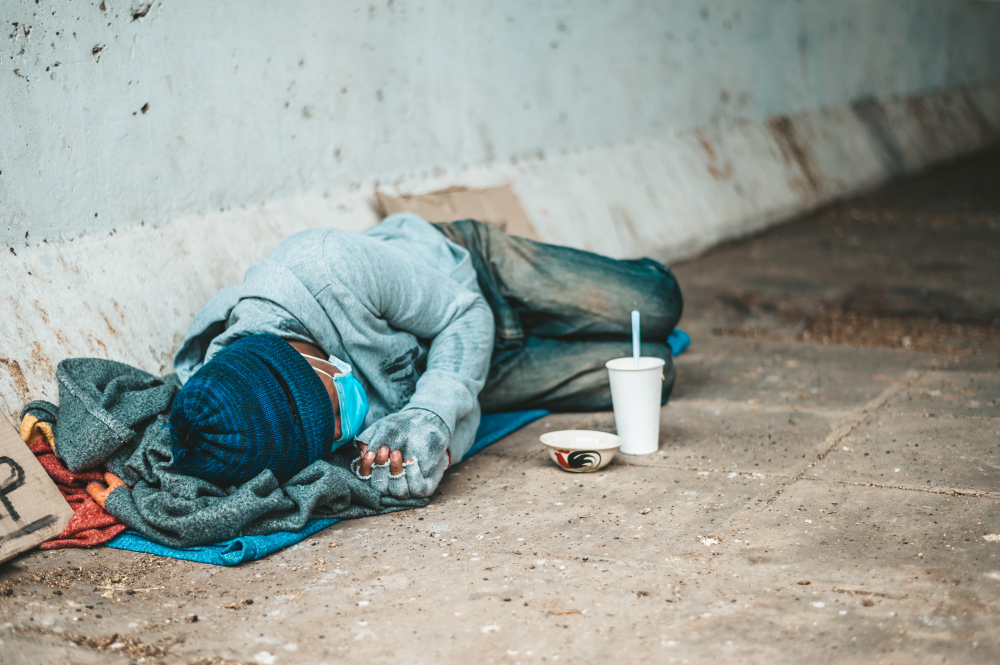

The tool designed to identify Kenya’s poorest citizens requires them to show up, take time off, and prove their poverty. For those living hand to mouth, that ask is already too much.
Kenya set aside Ksh6 billion to buy health insurance for one million of its poorest households in 2021. Four years later, only one in four of those households could use that cover under the National Hospital Insurance Fund (NHIF). The Kenya Medical Research Institute (KEMRI) has since documented how that happened, and why the Social Health Authority (SHA) built to replace NHIF may be repeating the same mistakes.
The findings by KEMRI researchers, published in the International Journal for Equity in Health in January 2026, tell a story of missed targets, misdirected funds, political interference, and a bureaucratic system that consistently failed the people it was designed to protect.
In 2020/21, the government allocated Ksh6 billion, equivalent to US$46.4 million, to enrol one million of Kenya’s poorest households under NHIF to ensure poverty was no longer a barrier to healthcare. It was framed around the ideals of the United Nations Sustainable Development Goals (SDGs) and the World Health Organization’s (WHO) Universal Health Coverage (UHC) framework.
County governments were given the task of identifying and submitting names of qualifying poor households for enrolment.
Counties submitted 1,509,037 household names for verification. After the first round of checks, 882,291 households were enrolled, already 117,709 short of the one million target. Of those enrolled, only about 382,000 individuals completed the biometric registration needed to identify themselves at a health facility. The remaining roughly 500,000 people were enrolled on paper but could not access any services. They existed in the system but were invisible at the clinic door.
That gives a final coverage rate of about 25 per cent of all households submitted. Three in four fell through.
Funds set aside for households that were never enrolled did not go back to the poor
The funds set aside for the households that were never enrolled did not go back to the poor. According to the Health Sector Medium-Term Expenditure Framework for 2024/25 to 2026/27, the money was redirected to finance health insurance for 200,000 boda boda motorcycle taxi riders. Counties that had submitted additional lists of qualifying poor households and were waiting to hear from the then NHIF were never told this had happened.
The programme was designed to use a centralised tool called the Harmonised Testing Tool, which would identify beneficiaries based on objective household criteria. That plan did not survive contact with local politics.
Local leaders quickly recognised that controlling who got subsidised health cover was a form of political power. Instead of using the standardised tool, lists were drawn up using community poverty ranking, a subjective process easily shaped by whoever held influence in the ward. The rushed December timeline made this worse.
Counties were told to submit additional beneficiary lists within 24 hours, and that instruction arrived on December 21, during the festive season. A key informant quoted in the KEMRI report described the chaos plainly: “The information came on 21st December, and people were required to submit a list within 24 hours.”
The people who lost out most were those with the least political visibility: elderly people living alone, women heading households without formal identity documents, and daily wage workers who could not afford to take a day off to attend an assessment.
The system frequently failed to register dependants at all, leaving families with no cover
This is consistent with a 2024 policy analysis in Health Systems and Reform, which found that political affiliations and positions of power heavily influence health financing decisions in Kenya, including purchasing and payment decisions riddled with inefficiencies and favouritism towards specific providers.
The programme was designed to cover entire households, meaning that once a household head was registered, their children and other dependants should have been covered too. In practice, the system frequently failed to register dependants at all, leaving families where one adult was on the books but the rest had no cover.
The most striking illustration of how unequally the programme worked is the comparison between Kisumu and Kiambu.
Kisumu has a population of 1.16 million and a poverty rate of 36.3 per cent. It was one of the four counties chosen for Kenya’s original UHC pilot in 2018 and already had a county-funded scheme, known as Marwa, covering about 45,000 poor households before the national programme arrived. Despite that head start, Kisumu’s health insurance coverage stands at just 18 per cent.
Kiambu, a peri-urban county bordering Nairobi, has a population of 2.42 million and a poverty rate of 20.5 per cent, meaning it has proportionally fewer poor residents than Kisumu. Yet its health insurance coverage stands at 39.1 per cent, more than double Kisumu’s rate. Meanwhile, Kiambu, a peri-urban county with a population of 2.42 million and a poverty rate of 20.5 per cent, had health insurance coverage of 39.1 per cent.
Political geography, administrative capacity and local power structures shaped who benefited from health
A poorer county with more experience and an existing programme ended up covering fewer people than a wealthier one. That gap is not accidental. It reflects how political geography, administrative capacity, and local power structures shaped who benefited and who did not. Kisumu has about half the population of Kiambu, but nearly twice the poverty rate and less than half the health insurance coverage.
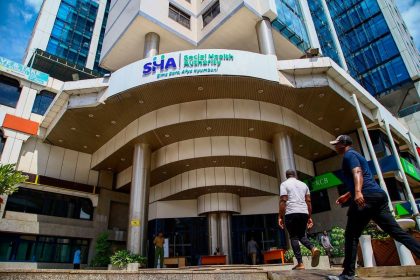
Kenya officially replaced NHIF with SHA on October 1, 2024. The SHA operates through three funds: the Primary Healthcare Fund (PHC), the Social Health Insurance Fund (SHIF), and the Emergency, Chronic and Critical Illness Fund (ECCIF). It carries the same mandate to cover the poor, now under a revised approach to identifying indigent households.
The new tool for identifying the poor is called Proxy Means Testing, which estimates how poor a household is by looking at visible indicators such as the materials used to build their home, what assets they own, and what services they can access. SHA contributions are set at 2.75 per cent of household income. For the eight in ten Kenyans working in the informal sector, there is no payslip, no employer record, and no automatic deduction. Proxy Means Testing becomes the only way to determine what they owe and whether they qualify for a subsidy.
According to Dr Daniel Mwai, Senior lecturer of Health Economics at the University of Nairobi and presidential adviser on health, argues that a flat premium is the greater injustice. “Every time you fix a value, you disadvantage the poor,” he said in a recent interview with Willow Health Media, adding that: “You go back to the NHIF system that was regressive. Regressive means the poorer you are, the higher the proportion of your income you pay.”
Under the old NHIF rate of Ksh500, a person earning Ksh10,000 a month was paying five per cent of their income. The official setting that rate, Dr Mwai points out, was likely paying closer to 2.75 per cent.
The model was trained on household data then tested through a ground-truthing exercise
“We look at this as a lower-bound estimate. You underestimate the income of the rich, and you also purposefully underestimate the income of the poor.” The reasoning is that erring on the side of charging less protects household welfare in a way that overcharging cannot. The same logic applies to salaried workers, whose 2.75 per cent deduction is based only on their payroll income, leaving any additional earnings uncounted. “It is a better way to err on that side than overcharge someone,” he said.
The model was trained on data from between 16,000 and 30,000 households, then tested through a ground-truthing exercise in which enumerators visited over 2,000 households across eight counties to check whether the model’s outputs matched conditions on the ground.
The model was trained on data from between 16,000 and 30,000 households, then tested through a ground-truthing exercise in which enumerators visited over 2,000 households across eight counties to check whether the model’s outputs matched conditions on the ground.
By the most recent iteration, its accuracy had reached 97.9 per cent according to Dr Abdi Mohamed, chairman of the Social Health Authority, who pointed to the payment data as further evidence that the overcharging claim does not hold up.
“Close to 90 per cent plus are paying way below the Ksh600 mark,” he said. “You wouldn’t have that kind of number of people paying below that amount if it were overestimating the poor.”
Dr Mwai, however, acknowledged that some people have studied the tool’s questions to answer in ways that produce a lower premium. Because informal sector workers self-report their circumstances, the system is open to manipulation in ways that payroll deduction is not.
If you say you have no income from tea, we can check whether you sell tea
The solution, he argues, is data integration: cross-referencing what households declare against government records on agricultural sales, trading licences, and cooperative membership. “If you say you have no income from tea, we can check whether you sell tea,” he said, pointing to government data on cooperative trading as one potential source. That infrastructure does not yet exist at the required scale.

The Ministry of Health acknowledged related difficulties in January 2025, saying the initial SHA indigent rollout would lean on existing government databases, particularly the Social Registry and the Inua Jamii cash transfer programme managed by the Ministry of Labour and Social Protection, rather than conducting fresh assessments.
Last year, Kenya’s health sector received a record Ksh138.1 billion allocation in the 2025/26 budget, an 8.74 per cent increase from the previous year’s Ksh127 billion and the largest boost to the health budget in the country’s history.
Kenya’s national health budget for the current year stands at about Ksh232 billion. The Abuja Declaration, which Kenya signed, commits governments to allocate at least 15 per cent of total government expenditure to health. Kenya’s actual allocation remains below six per cent. The WHO has consistently found that when governments underinvest in public health, out-of-pocket costs rise and the poorest are hardest hit.
Kenya is experiencing both. The biggest winners were UHC coordination, the Ministry of Health unit that handles UHC planning, monitoring and stakeholder engagement which received Ksh6.2 billion, primary healthcare, which got Ksh13.1 billion, almost double last year’s Ksh7.1 billion, and major referral hospitals, which together were allocated Ksh42.4 billion.