The two-year investment will support AI tools that work in the languages patients actually speak, helping close healthcare gaps that have left African languages, including Kenya’s, largely excluded from AI.
If you ask a woman in labour in rural Malawi to describe what is happening to her in Chichewa, the local dialect, she might say her “water has broken.” Translated literally into English, that phrase can come out as “thrown away water,” turning an urgent medical signal into gibberish.
It is exactly this kind of gap that the Gates Foundation is targeting with a US$1 billion (Ksh129.5 billion) commitment over the next two years to build artificial intelligence (AI) tools in the languages that patients, farmers and students actually speak and understand.
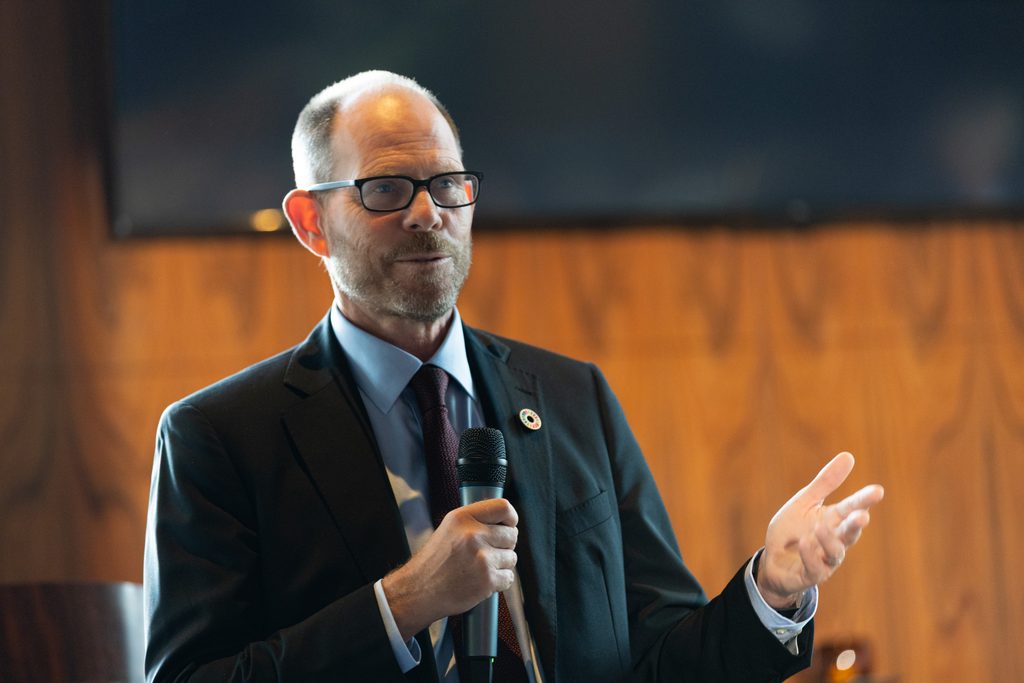
Speaking ahead of the launch of the foundation’s 10th annual Goalkeepers Report, Gates Foundation CEO Mark Suzman said AI “could be a great equaliser but only if it is built intentionally to benefit the people who need it most.” Folding AI into healthcare, education and agriculture is inevitable, he said, but whether it narrows or widens the gap between rich and poor depends on how deliberately it is built, and for whom.
The tools available today mostly fail that test. Most cutting-edge AI systems used in healthcare are developed largely in the Global North and trained on English, European and Chinese-language data, according to the 2026 Goalkeepers Report, Make This Matter: AI, Equity, and the Choice We Can’t Delay.
The report further shows that more than 90 per cent of the data that trained early large language models came from English-language sources alone. The gap is measurable. Leading AI speech-recognition systems get English wrong less than 6 per cent of the time but fail more than 60 per cent of the time in Yoruba, one of Nigeria’s major languages.
The people with the greatest needs often have the least power to shape where innovation and investment go
For healthcare, that failure rate is not academic. It shows up as misdiagnosis, poor recognition of local accents, and tools built without any sense of clinics that often lack basic diagnostic and treatment equipment. Most African languages remain severely underrepresented online, starving AI developers of the digital text and speech records they need to train tools that work for African patients in the first place.

“The Gates Foundation was created in part to address a basic market failure: the people with the greatest needs often have the least power to shape where innovation and investment go,” writes Bill Gates, the foundation’s chair, in the report. “Left to the market alone, the most capable tools will be built first for the people and institutions most able to pay for them, not necessarily for those who could benefit most.”
A network of African computer scientists, linguists and language specialists is already working to close that gap. Under the Gates Foundation-backed African Next Voices project, researchers across Kenya, Nigeria and South Africa have assembled the largest voice dataset of its kind, capturing more than 9,000 hours of everyday speech in farming, health and education settings across 18 languages, including Kenya’s own Kikuyu and Dholuo.
The US$2.2 million (Ksh285 million) project is a direct answer to Suzman’s call for AI developers to treat their tools as a bridge between rich and poor, not a wall. Kenya is where that bridge is being stress-tested.
The country’s AI Strategy 2025-2030, drafted by the Ministry of Information, Communications and the Digital Economy, names healthcare among its priority sectors and explicitly calls for multilingual chatbots for public health services.
But strategy has outpaced delivery. The World Health Organization (WHO) estimates that only 30 per cent of telemedicine projects across Africa are ever fully implemented, even as investors are still circling the gap. East African startups raised US$865 million (Ksh112 billion) between January and August 2025, with roughly US$150 million (Ksh19.4 billion) of that going to health technology specifically, according to a 2026 regional review of Briter Bridges data.
Penda Health has recorded a 16-percentage-point improvement in diagnostic accuracy since adopting the tool across its clinics
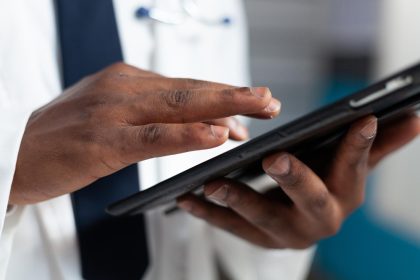
That investment is already reshaping care in Nairobi. Penda Health, which runs more than 20 clinics across Nairobi, Kajiado and Kiambu counties, has embedded an AI tool called AI Consult directly into its electronic medical records, which the Gates Foundation and OpenAI helped develop.
The tool acts as a real-time clinical co-pilot, with a green mark meaning no issues, a yellow flag inviting the doctor to review a suggestion, and a red flag demanding attention before the doctor can proceed. Across its clinics, the Goalkeepers Report notes, Penda Health has recorded a 16-percentage-point improvement in diagnostic accuracy since adopting the tool.
“The tool works in the background and flags concerns in clinical assessment. It has three signal types that ensures clinicians pay attention to urgent concerns without slowing the workflow,” said Dr Jean Kyula, Penda Health’s director of clinical innovation and strategic partnerships, on the foundation’s conference call. “A red signal pops up for safety-critical concerns requiring immediate review and acknowledgement before the doctor proceeds.”
Clinicians stay in charge of diagnosis and treatment, Kyula said, and are free to decline the tool’s suggestions. “The system wasn’t established to replace clinicians but acts a safety net and an extra pair of hands. Healthcare workers are the driving force and provide hands-on care to patients.”
Patients give feedback too. “It allows patient follow-up, which is vital in how we continue to offer care. We get up to over 100,000 chats a month and over 160,000 AI calls,” Kyula said. Health institutions eyeing similar tools, she added, should bring clinicians into the design process from the start. “Co-creation with the team is important. Carry them along, don’t bring technology and dump it on them without properly communicating benefits.”
Healthcare gets 40 per cent, covering diagnostics, clinical decision support, maternal and newborn care tools, and the discovery of new drugs and vaccines
Michelle Odemwingie, chief executive of the Achievement Network, made the same argument from education. “Cultural, community and local contextualisation of data is progressive,” she said. “We should not erase things that make us distinct and unique.”
The foundation will direct its US$1 billion (Ksh129.5 billion) in four rough shares. Healthcare gets 40 per cent, covering diagnostics, clinical decision support, maternal and newborn care tools, and the discovery of new drugs and vaccines. Education gets another 40 per cent, including AI tutoring. Agriculture and the digital foundations that equitable AI depends on, including local-language datasets, get 10 per cent each.

The Goalkeepers Report frames the fix as three overlapping jobs. First, make AI work in every language people speak, not just the handful that dominate the internet. Second, ground tools in local data and local realities, since a community health worker like Gaudence Ngendahayo, whom Gates met in Rwanda, needs different support from an AI tool than a clinician in a well-resourced hospital would.
Third, invest in the people who will use AI, giving doctors, farmers and teachers the training and affordable access to evaluate these tools and adapt them to their own contexts, a cost the report says governments and philanthropy will need to help carry.
Gates puts that responsibility on governments and companies, not markets, to meet. “We can harness AI for good. But it won’t happen by accident,” he writes. “It requires a deliberate, specific commitment from government leaders and the companies developing the technology: to measure success not only by what AI can do for the most profitable users but by what it can do for the people who stand the most to gain.”