

Government says Kenya has an obligation to global health security as Katiba Institute files case to block the arrangement.
Africa CDC Director General Dr Jean Kaseya has raised concerns about Kenya potentially hosting a quarantine and treatment centre for Americans exposed to Ebola, warning of pressure on the country’s health system, even as global funding for the ongoing Bundibugyo Ebola outbreak continues to fall sharply.
The remarks come amid a court petition filed by Katiba Institute, a Kenyan civil society group, to halt the Kenya-US quarantine plans.
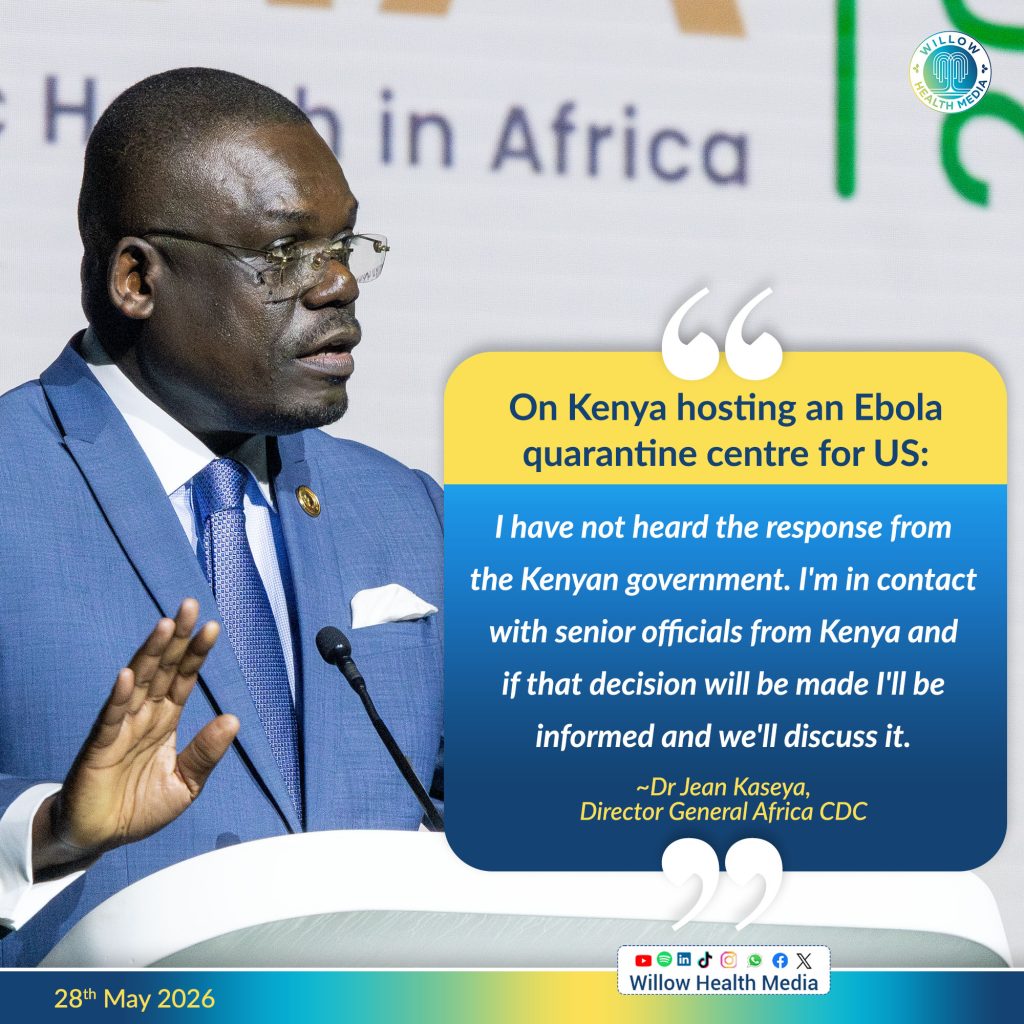
Dr Kaseya said he had not yet received an official response from Kenyan authorities on the proposal and was awaiting communication before offering formal recommendations. He was speaking at a press conference with stakeholders and the media.
“I have not heard the response from the Kenyan government. I am in contact with senior officials from Kenya, and if that decision will be made I’ll be informed, and we’ll discuss it,” he said.
Quarantine facilities require sophisticated systems for infection prevention, control, intensive care
Dr Kaseya acknowledged Kenya’s standing as a regional hub but questioned whether the country’s health system could absorb the added responsibility without extra resources. Kenya is a regional and logistical hub. It’s also listed among the high-risk countries for Ebola. My question would be, how much pressure would establishing a quarantine centre there put on the health system if not backed with additional resources?” he posed.
He noted that quarantine facilities require highly sophisticated systems, spanning infection prevention and control, intensive care, and the safe disposal of hazardous waste. He also flagged a perception concern: that when an outbreak begins in Africa, it should end in Africa, a position Africa CDC shares.
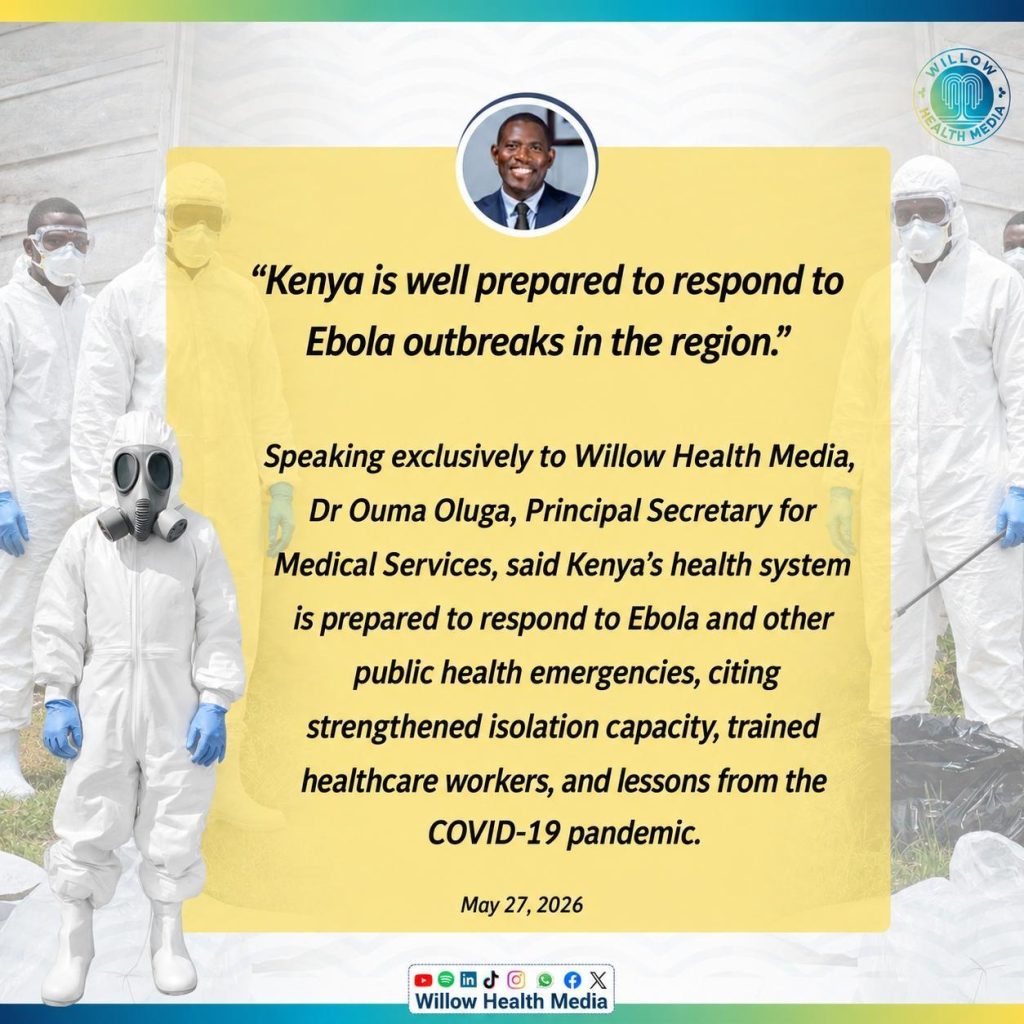
Kenya’s Medical Services Principal Secretary, Dr Ouma Oluga, defended the plan on May 28, 2026, saying the government’s first duty was to protect Kenyans while also extending the country’s recognised health expertise globally.
“Just like we responded in 2013 and 2015 by having experts go to those countries, we are ready to protect Kenyans, but we are also ready to assist the world tackle these global challenges as outbreaks know no barriers,” Dr Oluga said. He urged Kenyans to take pride in the international confidence placed in the country’s health system rather than respond with fear.
On funding, Kaseya was visibly frustrated, accusing several international organisations of violating the spirit of the World Health Organization Pandemic Agreement, adopted by consensus at the 78th World Health Assembly on 20 May 2025. The agreement, he said, included a commitment by WHO member states to redirect development funds towards outbreak response during a major health emergency.
Three young medical doctors in the DRC were among those who died of Ebola
He disclosed that partner pledges had dropped from about $498 million (Ksh64.4 billion) to $219 million (Ksh28.3 billion) in recent weeks.
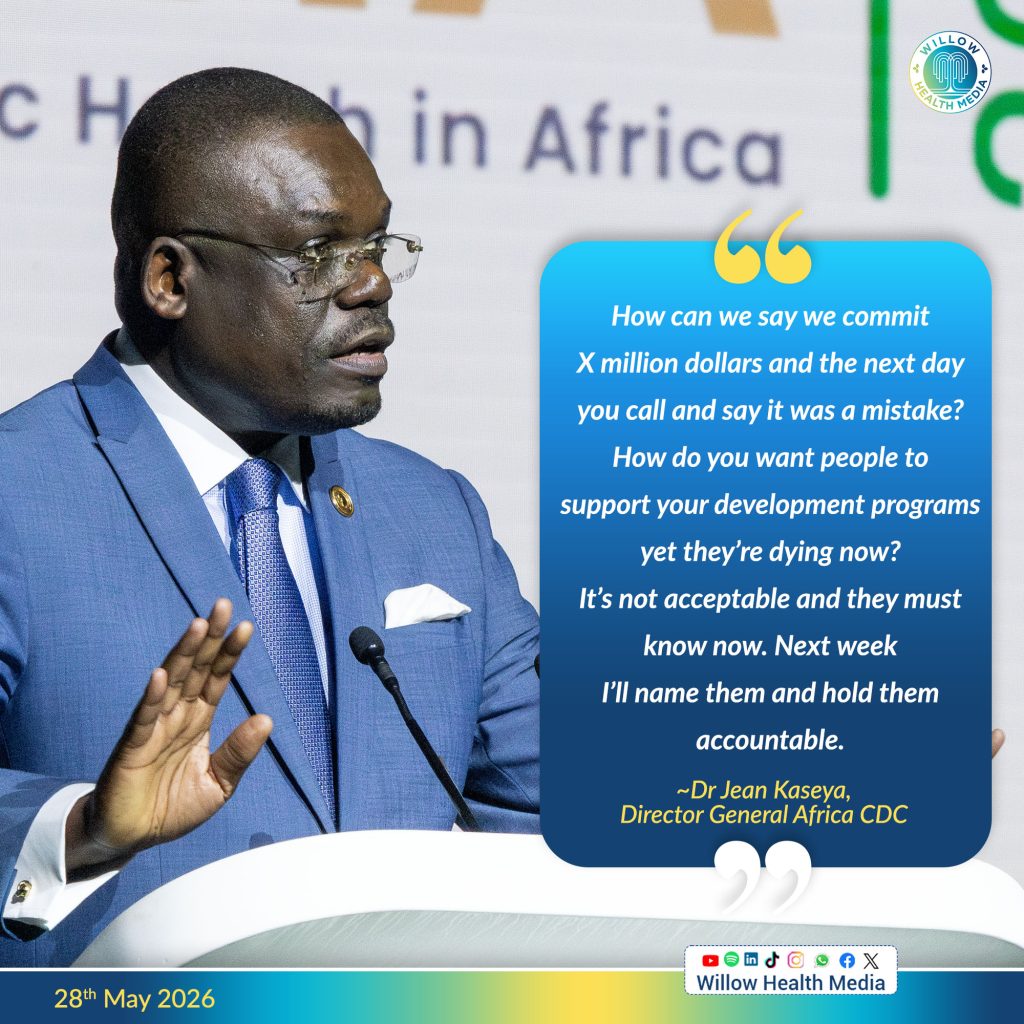
“People are dying. Why would you say you are committing this amount of dollars, then call me tomorrow and say it was a mistake and that you’ll give a different amount?” Dr Kaseya asked. He gave organisations that had cut pledges or prioritised development funding one week to act before he publicly names them.
The World Bank and the Africa Development Bank were singled out for praise for repurposing development budgets to support the response.
Dr Kaseya also raised concern about the number of health workers infected at the outbreak’s onset. Three young medical doctors in the DRC were among those who died. He noted that in a previous West Africa outbreak, the infection rate among healthcare workers ranged between 2 and 15 per cent, with 68 per cent of nurses and aides who contracted the disease dying.
In the DRC, misdiagnosis contributed to early spread among health workers. An initial test conducted on 5 May using the Ebola Zaire strain returned a negative result, leading clinicians to treat patients for severe malaria.
Africa CDC, partners working to find a vaccine and therapeutic solution for Ebola
There is currently no vaccine proven effective against the Bundibugyo strain driving the outbreak. A vaccine developed by Russia’s Gamaleya Research Institute targets the Zaire strain from the 2014/15 outbreak and has not been shown to work against Bundibugyo. Africa CDC and partners said they are working to find a vaccine and therapeutic solution.

Dr Kaseya called for the finalisation of Pathogen Access Benefit discussions under the Pandemic Agreement, arguing that African nations should not have to negotiate from a position of weakness each time a new outbreak emerges. He said Africa CDC is building continental vaccine manufacturing capacity and has worked through the African Medicines Agency to facilitate technology transfers, with progress accelerating since Covid-19.
“We are all human beings living on the same planet. How will Africa feel if one day we realise that there’s a vaccine somewhere, and it wasn’t shared when people are closing borders and restricting travel?” he said.
Graphics by Arthur Mbuguah.
We believe in the free flow of information
Republish our articles for free, online or in print, under Creative Commons licence.