

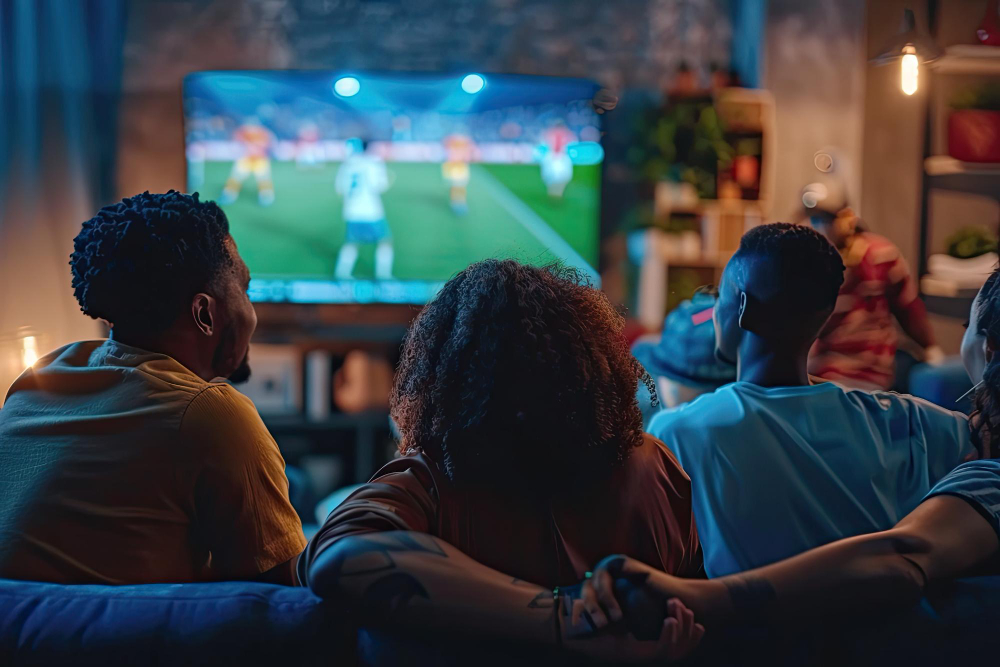

Late-night matches can be dangerous for football fans whose jobs involve operating machinery, driving long distances or making critical mental decisions.
When Portugal met Croatia in the Round of 32 at the 2026 FIFA World Cup, Maurice Mulupi, 31, a resident of Kariobangi South, had already made up his mind about who he wanted to win. An ardent Argentina supporter and lifelong admirer of Lionel Messi, he desperately hoped Croatia would send Cristiano Ronaldo’s Portugal home. It was less about Croatia and more about settling the age-old rivalry that has divided football lovers for nearly two decades.
The match kicked off long after 3am. Like millions of football enthusiasts across Africa, Mulupi knew he would barely sleep before the morning alarm sounded. But he couldn’t resist following the match. After all, the World Cup comes only once every four years.
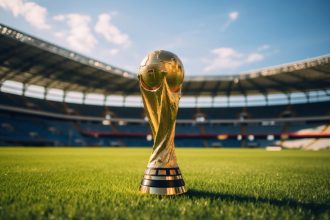
“The excitement of football’s biggest tournament has become impossible to resist, even when every late-night game steals hours of sleep and leaves me paying the price the following day,” he says.
Across Kenya, offices, classrooms and workplaces are quietly feeling the impact of the tournament as supporters sacrifice sleep to catch every match played in North America, where the time difference means many fixtures begin well after midnight East African Time. This is compounded by the tournament’s expanded scale: for the first time, the World Cup features 48 teams playing 104 matches across the United States, Mexico and Canada, up from 64 matches in previous editions, meaning more games spread over more weeks for fans determined not to miss a moment.
The disruption is not unique to Kenya. A recent analysis by The Sleep Charity, which ranked countries by their “World Cup Sleep Tax”, a measure of how disruptive this tournament’s kick-off times are for fans in different time zones, found that supporters in countries such as Algeria, Tunisia, the Czech Republic and Scotland face some of the highest levels of sleep disruption, underlining that this is a global side effect of the tournament’s North American hosting.
Every Croatian attack filled me with hope, every Portuguese chance made my heart race
Mulupi admits football has temporarily taken over his daily routine, watching almost every match regardless of which teams are playing. What started as support for Argentina has evolved into a nightly ritual driven by curiosity, passion and the fear of missing out on historic moments.
“The Portugal-Croatia encounter is one of the matches I simply could not miss. As the minutes ticked by, every Croatian attack filled me with hope while every Portuguese chance made my heart race. By the time the final whistle blew, dawn was only a few hours away,” he describes.
“The following morning felt different because the excitement had faded, replaced by heavy eyelids, sluggish thinking and an overwhelming urge to crawl back into bed. Conversations became harder to follow, ordinary tasks took longer to complete and coffee offered only temporary relief,” he notes.
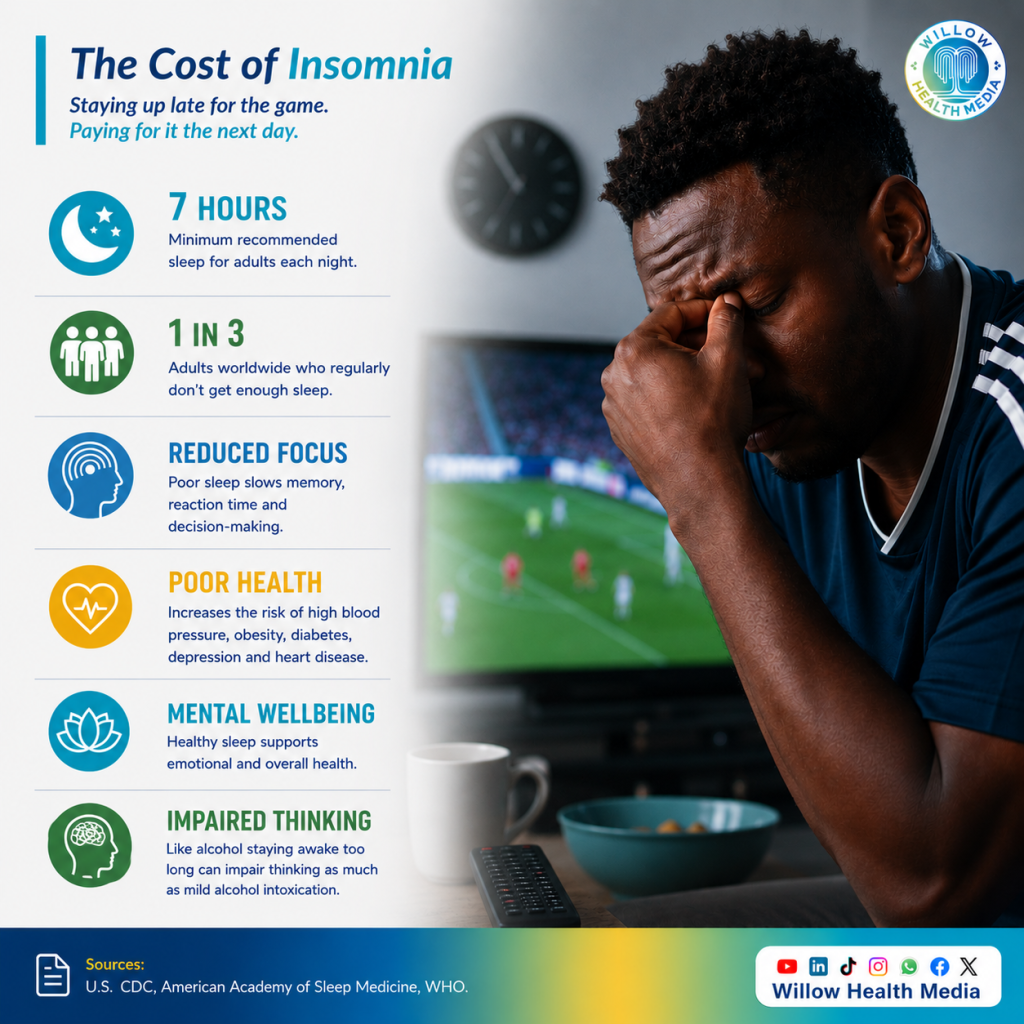
His experience mirrors what sleep researchers have documented for years. The U.S. Centres for Disease Control and Prevention (CDC), alongside the American Academy of Sleep Medicine and the Sleep Research Society, recommends that adults get at least seven hours of sleep every night for optimal health. Sleeping less than that regularly is linked to poorer concentration, impaired decision-making, weakened immunity and higher risks of hypertension, diabetes, cardiovascular disease and early death.
Studies published by the American Academy of Sleep Medicine similarly show that even a single night of restricted sleep can reduce alertness, slow reaction times and impair memory, with effects comparable in some cases to mild alcohol intoxication.
Productivity experts have long observed dips in workplace efficiency during global tournaments
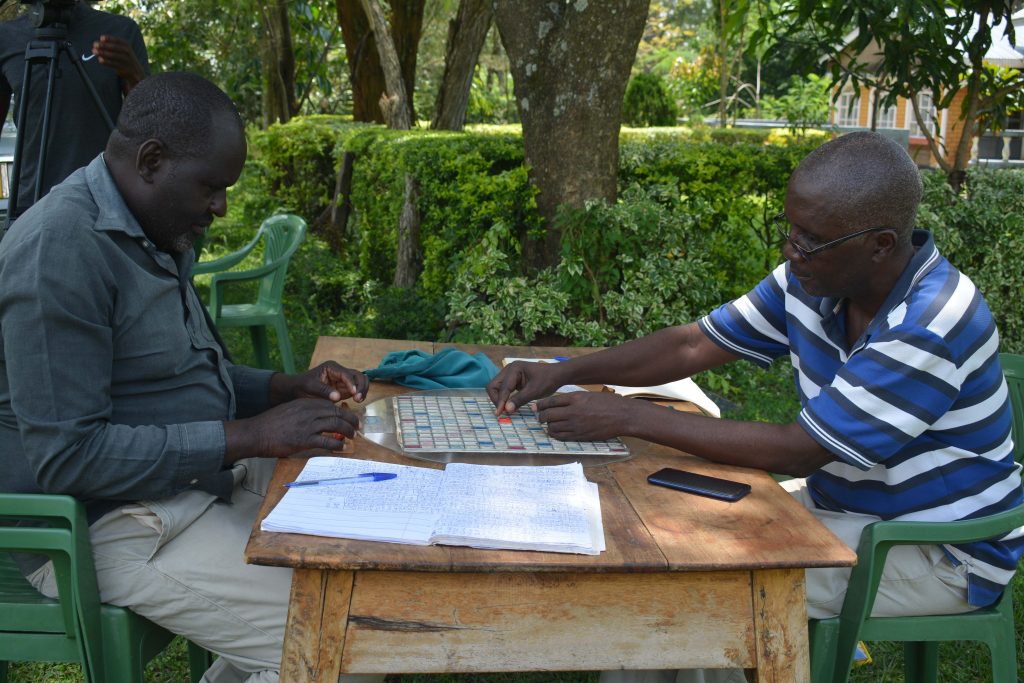
Another Kenyan supporter, Michael Keya, a resident of Donholm in Nairobi, understands that conflict all too well. Working at a pharmaceutical company requires punctuality, attention to detail and consistent performance. Yet during the World Cup, late-night football has repeatedly disrupted his work schedule. Unable to resist watching crucial matches, he has found himself sleeping only a few hours before waking up for work, resulting in several late arrivals that have strained his relationship with supervisors.
“This year’s World Cup has really put me in trouble with my seniors. While they understand there is football, they want me to get to work as usual. Some crucial games are played as late as 5 o’clock in the morning. That is really tempting people like me,” he says.
His experience reflects a broader workplace challenge during major tournaments, as employees arrive tired, spend more time discussing matches or struggle to concentrate after shortened sleep. This is not a new phenomenon: in the Netherlands, Dutch workers phoned in sick, with reported absenteeism rising 20 per cent on days when the Dutch national side played crucial matches, according to Europe Talent. HR consultancy Brightmine found that 40 per cent of UK employers expected the 2026 World Cup to disrupt their workplace, while 42 per cent admitted having no plan to manage it.
The risks extend beyond lost productivity into safety. Occupational health analysis from Medigold Health notes that fatigue is a factor in around 13 per cent of workplace injuries, with risks rising further for those working longer hours, night shifts or skipping breaks. The same analysis found alcohol consumption rising up to five times the daily average on match days, compounding lost sleep with impaired judgement and slower reaction times.
Sleep-deprived individuals more likely to make mistakes, forget simple tasks, react emotionally
Dr Cleopa Njiru, a psychologist, explains that the effects extend beyond physical tiredness. “Sleep is the brain’s opportunity to consolidate memories, regulate emotions and clear metabolic waste. When that process is interrupted repeatedly, emotional resilience begins to weaken,” he says.
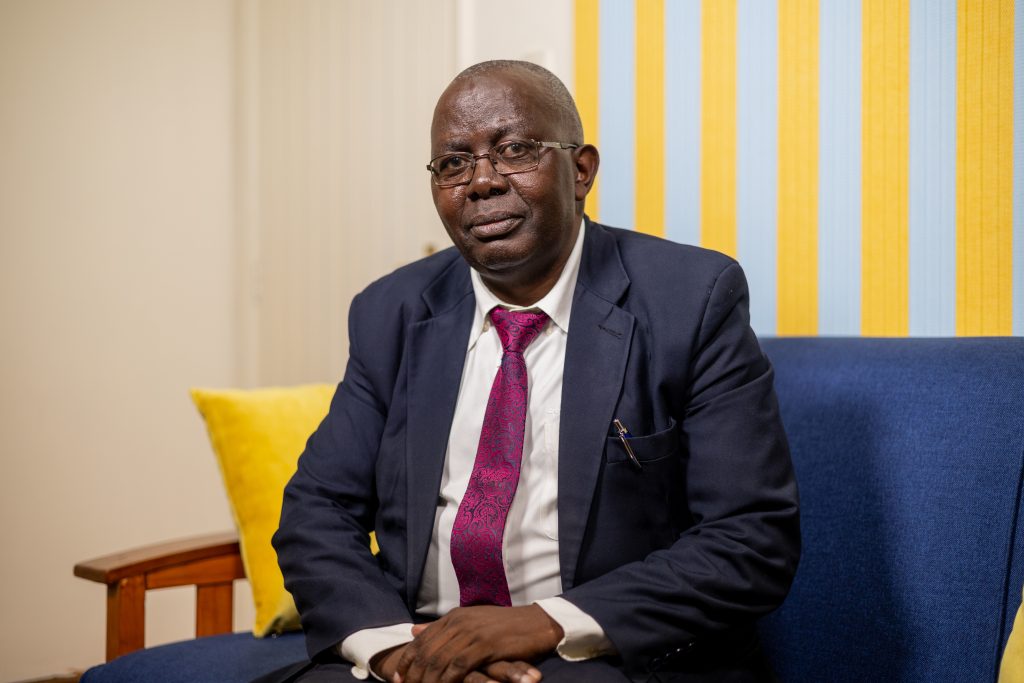
Insufficient sleep also contributes to stress, anxiety and poorer mental wellbeing, he notes. While occasional late nights are unlikely to cause lasting harm, repeatedly sacrificing sleep over several weeks, as often happens during a month-long World Cup, can accumulate into what scientists call “sleep debt”, which does not disappear simply because someone sleeps longer over the weekend. Instead, the body continues to experience slower thinking, reduced attention span and diminished cognitive flexibility.
Dr Njiru notes that sleep deprivation affects the prefrontal cortex, the area responsible for planning, judgment and impulse control. “This is why sleep-deprived individuals are more likely to make mistakes, forget simple tasks and react emotionally to situations that would normally seem manageable,” he says.
For people whose jobs involve operating machinery, driving long distances or making critical decisions, those effects can become dangerous, he adds. Road safety studies have repeatedly shown that drowsy driving significantly increases crash risk, with fatigue impairing reaction times in ways similar to alcohol consumption. One long-running CDC-linked study found that people sleeping six hours or less a night were more than twice as likely to report having fallen asleep at the wheel as those getting seven to nine hours.
The very tournament designed to bring joy can leave some supporters emotionally drained
The mental health consequences may also be more profound than many fans realise. Sleep plays an essential role in regulating neurotransmitters that influence mood. According to Dr Njiru, when sleep becomes fragmented, irritability rises while positive emotions become harder to sustain. Many people who change their sleep patterns notice themselves becoming unusually impatient after several nights of less sleep, snapping at colleagues or family members over minor inconveniences.

Others report feeling mentally exhausted despite doing little physical activity. “The combination of emotional investment and sleep deprivation creates the perfect environment for mood swings,” Dr Njiru explains. Ironically, the very tournament designed to bring joy can leave some supporters emotionally drained.
He recommends prioritising the most important matches rather than attempting to watch every fixture. Taking short daytime naps, limiting caffeine close to bedtime and maintaining consistent sleep schedules whenever possible can also reduce the impact of disrupted nights.
As the World Cup enters its decisive stages, many Kenyan fans will continue gathering around television screens in homes, restaurants and social venues long after midnight. Mulupi will undoubtedly keep cheering Argentina, while Michael will likely continue negotiating the difficult balance between football and professional responsibility.
Their experiences are reminders that behind every thrilling extra-time winner and dramatic penalty shootout lies another, quieter contest, one taking place inside the human brain and body. For millions of football lovers, the greatest challenge of this World Cup may not be choosing between Messi and Ronaldo, or predicting who lifts the trophy. It may simply be deciding whether the next midnight kick-off is worth another night’s sleep.
We believe in the free flow of information
Republish our articles for free, online or in print, under Creative Commons licence.