


Rodents carry it. Dust spreads it. Clinics miss it. And with no vaccine, no cure, and a surveillance system built for malaria, Kenya is walking into a zoonotic disease era with its eyes only half open.
With Ebola raging in the Democratic Republic of Congo (DRC) and Uganda on the back of a hantavirus outbreak that killed passengers on a luxury cruise ship near the Canary Islands this May, Kenya is confronting an uncomfortable reality: the country may be harbouring animal-borne viruses it has not yet thought to look for.
Scientists have found evidence of hantavirus in animal and human samples across East Africa, including in Nairobi’s informal settlements. There is no confirmed outbreak, but researchers warn that the absence of a confirmed case reflects the limits of Kenya’s surveillance systems as much as it reflects safety.
Kenya sits at the edge of the world’s most active Ebola outbreak, shares porous land borders with two affected countries, and is simultaneously monitoring a global hantavirus cluster with no approved vaccine or treatment.
Virologists and infectious disease experts are delivering a pointed message: Kenya’s preparedness gap extends well beyond any single outbreak, and the next threat may already be circulating in silence.
Every outbreak begins the same way. An animal carries a pathogen. A human crosses its path. A weak detection system allows transmission to continue unnoticed.
Hantavirus moved through a ship of 147 people before anyone raised alarm
That is how Ebola spread silently for weeks in eastern DRC before it was identified. It is how hantavirus moved through a ship of 147 people before anyone raised an alarm. And it is, scientists warn, exactly how the next threat will start and spread.
Prof Amu Anzala, a virologist and immunologist, says that the pattern is not random. It is the predictable consequence of how Kenya has organised – or failed to organise – its relationship with the natural world. “Prevention actually begins upstream,” Prof Amu Anzala said. “Ensuring that the habitat is protected, safe farming, vector control and sanitation. All these things are critical.”
He warned that environmental destruction, poor drainage, and unplanned urban growth are creating ideal conditions for disease spread. “When people ask how outbreaks begin, these are the environmental drivers of outbreaks. Right here in Nairobi.”
For Prof Anzala, the convergence of Ebola and hantavirus in the same news cycle is not a coincidence. It is a signal as “Sixty three percent of emerging infectious diseases have their origin in wildlife,” his colleague Dr Joseph Ogola, a veterinarian and virologist, said.
Ebola is believed to originate in fruit bats. COVID-19 crossed from animals to humans. Kenya’s dense informal settlements, porous borders, and expanding urban footprint place it squarely in the path of the next spillover.
Infection occurs through inhaling virus particles from rodent urine, saliva, or droppings
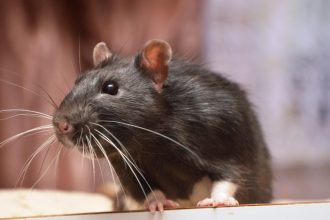
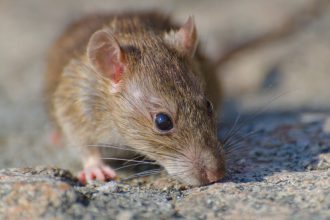
Hantaviruses are carried by rodents and rodent-like animals – rats, mice, shrews, voles, moles, and in some cases bats – the same animals that move freely through Kenya’s markets, homes, and informal settlements every day.
Infection occurs through inhaling virus particles from rodent urine, saliva, or droppings, particularly when dried waste becomes airborne during cleaning. Contaminated food, scratches, and bites can also spread it. Because the virus has a fatty outer layer, soap and detergents can destroy it.
It causes two main syndromes. Haemorrhagic Fever with Renal Syndrome affects the kidneys and blood vessels and is more common in Europe and Asia.
Hantavirus Cardiopulmonary Syndrome attacks the lungs and heart, causing breathing difficulty and circulatory collapse, and is seen mainly in the Americas.
Mortality rates vary sharply: old-world strains may fall below one per cent, while new-world strains can kill up to half of those infected. “The Andes virus may cause up to 50 per cent mortality, which is quite high,” said Dr Moses Masika, a virologist studying zoonotic diseases in East Africa.
“Hantavirus keeps emerging and re-emerging in new places because the virus is circulating in the reservoir. It just needs an opportunity to emerge,” Dr Masika said.
A 2023 study detected a novel hantavirus in Somali shrews trapped in Kenya’s North Rift Valley
The MV Hondius cruise ship provided exactly that opportunity. Departing Argentina on April 1, 2026, the ship docked in Tenerife on May 10 with three passengers dead and at least eight cases confirmed as the Andes virus – a strain capable, unlike most, of spreading from person to person and “There were 34 people infected,” Dr Masika noted. “And it was shown on average that one person was infecting two people before measures were put in place.”

A 2023 study detected a novel hantavirus in Somali shrews trapped in Kenya’s North Rift Valley, confirming the virus in local wildlife for the first time. A separate study in Kibra, one of Nairobi’s largest informal settlements, found direct evidence of human exposure.
Researchers from the University of Nairobi trapped rodents in homes across five sections of Kibra and collected blood from patients presenting with fever. Out of 124 human serum samples tested, they detected both Dobrava-Belgrade and Puumala hantavirus strains. “That points to the fact that there is potential for unrecognised opportunistic infection among febrile patients,” Dr Ogola said.
Kibra’s overcrowding, poor sanitation, and rodent infestation create conditions for zoonotic viruses
The findings expose a critical gap. Patients presenting with fever are routinely tested for malaria and sent home. “When people go for treatment and report fever, they are always treated for malaria,” Dr Ogola said. “In many cases, sometimes it is not malaria.”

Kibra’s overcrowding, poor sanitation, and rodent infestation create exactly the conditions where zoonotic viruses cross species. “Kibra has a high human population, and sanitation and waste management are really a big problem,” Dr Ogola said. “These attract more rodents.”
Hantavirus has “No widely acceptable universal vaccine,” Dr Masika said. “China has a vaccine that covers both Seoul and Hantaan viruses, but it has not been licensed globally.”
Treatment remains supportive. Early care requires early detection, and early detection requires a system actively looking. PCR testing has a very short detection window, placing a premium on clinical suspicion and rapid testing infrastructure, which Kenya does not yet have at scale.
We cannot sit in clinics and think we shall manage outbreaks
Practical steps are within reach: proper waste management, sealing holes in buildings, safe food storage, and dampening rodent-infested areas before cleaning to avoid disturbing aerosolised excreta. Healthcare workers must maintain a high index of suspicion for unusual fever cases, particularly where respiratory symptoms or rodent exposure are involved.

But individual precautions are not enough. “We cannot afford to just sit in clinics and think we shall manage outbreaks,” Prof Anzala said. “We must integrate animal health and environmental health.” The One Health approach – the same framework now urgently called for in the Ebola response next door – links human, animal, and environmental surveillance into one coordinated system. Kenya cannot wait for the next outbreak to begin building it.
“As we talk of pandemic preparedness, we must look at climate, environment, human health, animal health, and biodiversity together,” Prof Anzala said. “That is the new frontier.”
With Ebola still uncontained across the border and hantavirus already confirmed in Kenyan wildlife and human samples, that frontier is not a distant abstraction. It is already here. And the clock, as every recent outbreak has shown, starts ticking long before anyone notices.