



A high blood pressure disorder that develops silently after 20 weeks is killing thousands of African mothers every year. Three countries are now testing whether a blood test can finally outsmart it.
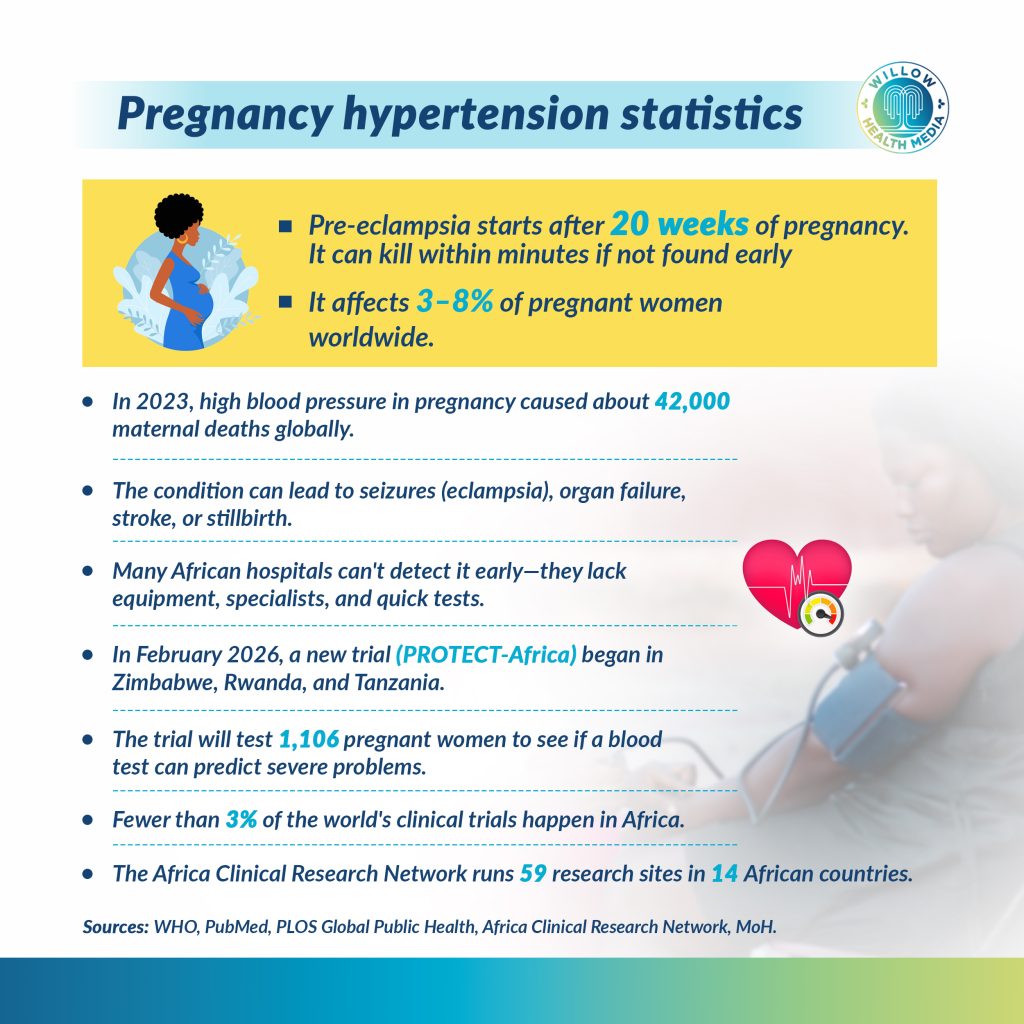
A new clinical trial launched across three African countries is testing whether a simple blood test could help doctors predict which pregnant women are most likely to develop life-threatening complications from pre-eclampsia, a high blood pressure disorder that annually kills around 42,000 mothers globally.
The PROgnostic Testing to Enhance Clinical Triage of Pre-eclampsia in Africa trial (PROTECT-Africa) is part of a growing push to bring cutting-edge maternal health research to the continent that carries the heaviest burden of the disease, but conducts less than three per cent of the world’s clinical trials.
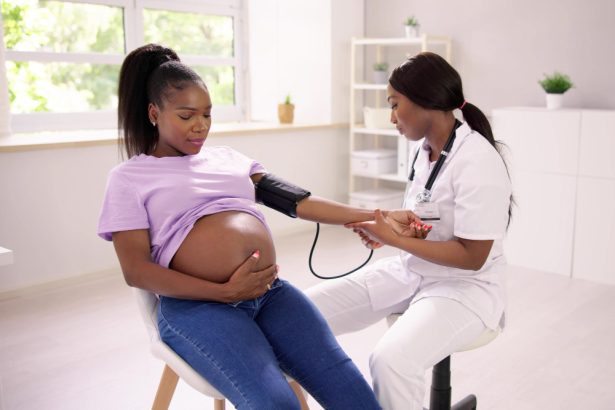
The trial, which aims to recruit 1,106 pregnant women in Zimbabwe, Rwanda and Tanzania, comes against a backdrop of mixed results from earlier technology-driven efforts to tackle pre-eclampsia across Africa. Smartwatch pilots, portable ultrasound studies and point-of-care testing programmes have shown promise in isolated settings but rarely survived beyond the pilot phase. Whether PROTECT-Africa can beat those odds and translate into real change at the hospital triage, where pre-eclampsia can turn fatal within minutes, is the question that now matters most.
Pre-eclampsia typically develops after 20 weeks of pregnancy and affects between three and eight per cent of women who give birth worldwide, according to the World Health Organization (WHO). Hypertensive disorders in pregnancy are responsible for around 16 per cent of maternal deaths globally, equivalent to approximately 42,000 deaths in 2023.
The condition can rapidly progress into eclampsia, which causes seizures, or HELLP syndrome, a serious complication involving the breakdown of red blood cells, elevated liver enzymes and low platelet counts. If not detected and managed early, pre-eclampsia can lead to organ failure, stroke, stillbirth or death.
Lack lab capacity, specialists or rapid testing systems to identify women at greatest risk
The danger is greatest in resource-limited settings across Africa, where early diagnosis remains difficult because hospitals often lack laboratory capacity, specialist staff or rapid testing systems capable of identifying which women are at greatest risk.
The PROgnostic Testing to Enhance Clinical Triage of Pre-eclampsia in Africa trial, known as PROTECT-Africa, was launched in February 2026 by the Africa Clinical Research Network. It will evaluate point-of-care diagnostic platforms designed to measure placental biomarkers, biological signals linked to pregnancy complications such as proteins, hormones or genetic material released by the placenta into the mother’s blood. The goal is to determine whether these markers can help clinicians predict severe complications among pregnant women with hypertensive disorders early enough to act.
“Our mission at ACRN is to empower African researchers to lead and participate in clinical trials that directly address the health needs of our communities,” said Tariro Makadzange, Chief Executive Officer of the Africa Clinical Research Network.
The trial is timely. A study published in PLOS Global Public Health on the challenges of diagnosing and managing pre-eclampsia in a low-resource setting in Ghana identified key obstacles, including low patient health literacy, a shortage of trained specialists and inadequate infrastructure. Addressing these challenges, the study concluded, is crucial for improving pregnancy outcomes in low-resource settings.
Currently, less than three per cent of global clinical trials are conducted in Africa. PROTECT-Africa is part of a broader effort to change that. The Africa Clinical Research Network is building a pan-African clinical research ecosystem that currently includes 59 sites across 14 countries, among them Kenya, Uganda, Ethiopia, Nigeria, Ghana, South Africa, Zambia and Senegal.
Can new digital technologies succeed where weak maternal healthcare systems persist
The network is working with Oracle Health and Life Sciences to optimise study start-up, streamline trial execution and improve data quality while maintaining patient safety.

“Our collaboration with the Africa Clinical Research Network is a significant step toward advancing modern, patient-centric research that can help accelerate scientific breakthroughs across Africa,” said Seema Verma, Executive Vice President and General Manager of Oracle Health and Life Sciences.
The trial arrives as Africa pushes toward digitalising clinical research, but the question being asked quietly in health circles is whether new digital technologies can succeed where weak maternal healthcare systems remain a persistent challenge.
The continent’s track record with health technology pilots offers a mixed picture. In 2022, health officials in Nakuru County, Kenya, piloted smartwatch-based maternal monitoring systems that tracked pregnant women’s blood pressure and sent alerts when readings became dangerous.
Researchers are studying portable point-of-care ultrasound systems to assess complications
The devices could record blood pressure measurements at intervals ranging from five minutes to one hour, allowing health workers to monitor patients remotely. However, the project remained limited in scale, and there is no publicly available evidence of long-term adoption across Kenya’s public health system.

In South Africa, researchers are studying portable point-of-care ultrasound systems to rapidly assess complications associated with severe pre-eclampsia and eclampsia. That study remains in the clinical evaluation phase.
The pattern is familiar. Many digital health innovations introduced across Africa never move beyond pilot programmes because of funding gaps, weak infrastructure, shortages of trained healthcare workers and unreliable internet and electricity access. In several countries, basic blood pressure screening during antenatal visits remains one of the simplest and most effective methods for detecting pre-eclampsia early.
Whether the PROTECT-Africa technology delivers on its promise, only time will tell. But if it does, the impact would be immediate and measurable. Pregnant women arriving at the hospital with symptoms of pre-eclampsia would receive faster, more effective triage for a condition that can turn fatal within minutes, improving survival outcomes for both mothers and their newborns.
We believe in the free flow of information
Republish our articles for free, online or in print, under Creative Commons licence.