


A teenage mother is a child carrying a child in a body not ready for motherhood, making teen pregnancies high-risk. Such girls also face social isolation from family, friends, church, school and community, spiking postpartum depression and psychosis. Just why Kilifi County banned ‘Disco Matanga’ to keep girls safe after dark.
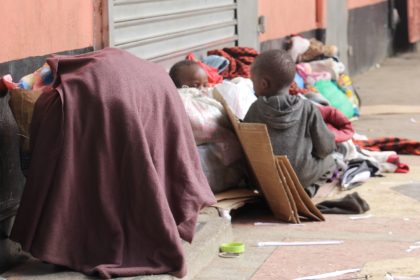
In the dead of night in Narok County, a 14-year-old Class Eight pupil, separated from her family to seek a better education, slipped out of her guardian’s house. She was in labour, having concealed her pregnancy from conception to delivery. She walked alone into the open bush, delivered the baby by herself, and abandoned the newborn to the cold and the wild.
She returned to the house with her dress soaked in blood. It was the frantic barking of dogs that alerted nearby households to a baby’s cry, saving the infant’s life.
This story opened a recent Council of Governors webinar titled “Babies Carrying Babies”. Presenting the case, Dr Josephat Maina, Sub-County Medical Officer of Health for Narok South, called it a failure at multiple levels. “For this pregnancy, maybe because of fear, was concealed from conception until the time of delivery. So, it progressed from conception to term and was concealed. No one in her immediate circles was aware. Not the guardians, not the family, not the schools, no mature adults were aware of this pregnancy,” he said.
The girl had no antenatal care visits, missing screening for hypertension, anaemia and infections, and received no iron, folic acid or tetanus vaccination. “Most importantly,” Dr Maina added, “this girl missed health education. She missed education on danger signs. There was no counselling on safe delivery or even breastfeeding.”
The infant, a live male, was born with respiratory distress and low birth weight, and survived “purely by chance”, Dr Maina said, “given that this girl delivered in the open bush surrounded by dogs. Hidden pregnancies are where preventable deaths begin.”
What young girls need is support, not judgment, access to education, a second chance
Among the panel sat Zubeda Yusuf, herself a teenage mother and now a mentor at Soraya Nurturing Teen Mums. Raised by her grandmother after being “distributed among family members” because her mother could not care for all eight children, Zubeda became pregnant in Form Two. “The person who impregnated me was not there to take the responsibility,” she said. “I used to cry every day, thinking that was the end of me.”
She attended her first antenatal clinic at eight months pregnant. After delivery, she fought to return to school, eventually completing a diploma in tourism management. “What young girls need is support, not judgment,” she said. “Access to education and a second chance. Counselling and mental health support. Teenage mothers are not failures. They are young girls with dreams, potential, and responsibility that came earlier than expected. What they need most is support, guidance, opportunity, and compassion from all of us.”
Their stories are not isolated. Teenage pregnancy remains a significant public health and socioeconomic challenge in Kenya, and the numbers point to a national pattern rather than individual misfortune.
Dr Jacqueline Kisia, from the Ministry of Health’s division of maternal, neonatal, child and adolescent health, said the national teenage pregnancy rate stands at 15 per cent. The burden is highly uneven across counties: Samburu leads at 50.1 per cent, meaning roughly one in every two girls aged 15 to 19 has been pregnant, followed by West Pokot at 36.3 per cent, Marsabit at 29 per cent and Narok at 28 per cent. In Kilifi, home to what Dr Kisia called the country’s youngest grandmother at 24, 38 per cent of girls with no education become pregnant by age 19, against less than 1 per cent at the tertiary level.
Between 2021 and 2025, adolescents accounted for roughly 10 per cent of all pregnancy-related deaths each year. “Adolescents are supposed to be in school. Adolescents are supposed to be following up with education but not dying from pregnancy-related complications,” Dr Kisia said.
A girl’s pelvis mature from 25 to 30 years so a pregnant 15-year-old ends up with prolonged labour
Dr Grace Kanyi, an obstetrician and gynaecologist working in Tharaka Nithi and Meru, outlined six risk factors that make teenage pregnancy dangerous, each significant alone but life-threatening together.
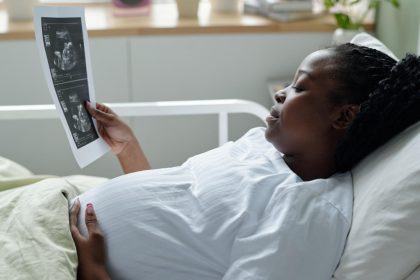
The first is an underdeveloped pelvis. “A girl’s pelvis will be mature anywhere from the ages of 25 to 30,” Dr Kanyi explained. “So, when we have a 15-year-old who has to go into labour, she will end up with prolonged labour. If the mother survives, she’s likely to end up with an obstetric fistula. Imagine a 15-year-old starting to leak pieces of faeces or urine. What does that do to her self-esteem and even integration into society?”
The second is competition for nutrients: the growing teenage body competes with the foetus for iron, calcium and protein, causing severe anaemia, low birth weight and a heightened risk of postpartum haemorrhage. Because most of these pregnancies are hidden, Dr Kanyi noted that only 5 per cent of teenagers who need antenatal care actually attend. “Out of every hundred pregnant women who come for their first antenatal clinic, only 16 are teenagers,” she said. “At the very moment when we do data analysis, only five per cent of those are teenagers attending ANC.”
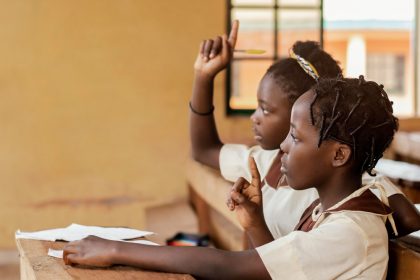
A teenage mother is still a child. Her body, biology and support system are not ready for motherhood, which is why teenage pregnancy is so high risk. She also risks social ostracism, from friends, church, school and community, raising her chances of postpartum depression and psychosis. It is a child carrying a child.
The crisis extends beyond obstetrics. Douglas Bosire, CEO of the National Syndemic Diseases Control Council, framed teenage pregnancy as part of a “triple threat” alongside HIV and gender-based violence. He said 32 per cent of new HIV infections in Kenya occur among people aged 10 to 24, with eight in ten of these among adolescent girls and young women, who face a four-times greater risk of acquiring HIV than boys of the same age. Bosire also argued that unprotected sexual encounters leading to pregnancy often constitute defilement and sexual violence. His organisation has broken down silos between health, planning and gender departments to build what he called a “total evidence-based initiative” for ending the triple threat.
Kilifi County banned ‘Disco Matanga’, night funeral gatherings, to keep girls safe after dark
“Between 2020 and 2024, we reduced adolescent pregnancies by 29 per cent in this country,” Bosire said. “We reduced new HIV infections amongst children aged 10 to 19 by 47 per cent.” But he cautioned against complacency: “This progress cannot be confused for success. We are worried about the risk of keeping on mopping the room while the tap is open.”
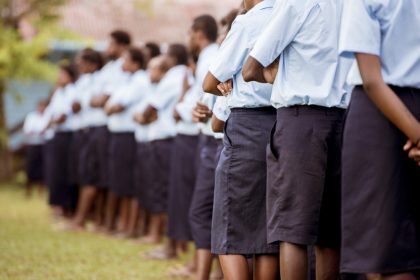
County responses show what is possible with sustained commitment. In Kilifi, once among the top ten counties for adolescent pregnancy at 26 per cent, Governor Gideon Mung’aro said the rate has since halved to 13 per cent. “This did not happen by accident,” he said. “We brought in education and gender departments together around one plan with shared budgets and indicators. We forced our return-to-school policy. The majority of adolescent mothers are now back in class.”
His administration has distributed over Ksh1.3 billion in bursaries sponsoring more than 7,000 girls to stay in school, and banned “Disco Matanga”, night funeral gatherings, to keep girls safe after dark. “No children are allowed to hang out at night during these funeral night vigils,” he said. “We want our girls to be safe.” He acknowledged the limits of the task: “While we are alive to the fact that no jurisdiction has ever reported zero teenage pregnancies, my resolve is to reach the one-digit mark for Kilifi County.”
Trans Nzoia Governor George Natembeya, represented by CECM Eliud Tormoi, recalled taking a hard line as Rift Valley Regional Commissioner. “I told Chiefs point blank, if a schoolgirl in your jurisdiction gets pregnant and you cannot identify the father, that responsibility becomes yours until a DNA test is conducted.”
The approach worked, he said, but warned that “enforcement without service creates a dangerous vacuum. We cannot arrest our way out of a problem rooted in poverty, inequality, ignorance, and neglect.” He called for school holidays to be treated as “high alert seasons, not administrative downtime,” and urged counties to fund comprehensive sexuality education “even when it is politically uncomfortable. Our girls’ lives are worth more than our discomfort.”
Molly Ochar, a senior nurse and epidemiologist from Homa Bay County, called for county governments to invest in community-based adolescent health platforms led by Community Health Promoters using real-time data to map pregnant girls and reduce the “three delays”: seeking care, reaching care and receiving care. “At the county assembly level, county governments should help pass adolescent health policies and ring-fence budget allocations for maternal health, adolescent outreach programmes, youth-friendly SRH and mental health services,” she said.
Where teen pregnancies occur, we must ensure dignity, protection, recovery and reintegration
“Without dedicated funds, the targets won’t be met.” Homa Bay now refers all complicated teenage pregnancies to sub-county hospitals with senior medical officers, and Ochar has demanded accountability for school re-entry policies. “The Ministry of Education directors must be accountable for implementation of the policies not only on paper,” she said. “They should all of us be accountable from the CS right down to the actions highlighted in the policies.”

Cabinet Secretary for Health Aden Duale, represented by Dr Janette Karimi, Reproductive, Maternal, Newborn, Child and Adolescent Health Specialist at the Ministry, said keeping girls in school remains the “strongest and most reliable shield” against teenage pregnancy, and announced a new comprehensive adolescent health policy to replace fragmented interventions.
“Teenage pregnancy is not something to be normalised,” Duale said. “It is a challenge that interrupts childhood, limits potential, and perpetuates cycles of vulnerability. Yet our response must remain humane and balanced. Where it occurs, we must ensure dignity, protection, and a pathway to recovery and reintegration.”
We believe in the free flow of information
Republish our articles for free, online or in print, under Creative Commons licence.