
Cancer survivors are turning their own journeys into a lifeline for others, offering counselling, practical guidance and hope to patients navigating the uncertainty of diagnosis and treatment.
A decade ago, while teaching at a private school in Mombasa County, Caroline Akinyi noticed her right breast had changed shape, developed a dimple, and the nipple had become sunken. Although she tried to remain positive, deep down she had her suspicions.
Cancer had devastated her family: her grandmother had died of throat cancer, her grandfather of prostate cancer, and several relatives of brain, lung and blood cancers. “We even tried to take one relative with brain cancer to India for treatment, but he died during care. I am the only living testimony,” she says.
Fear kept her from hospitals, so she relied on herbal remedies until a friend’s encouragement led her to seek medical help in 2019. Her fear was confirmed: the diagnosis was stage three breast cancer. Covid-19 complicated access to public hospitals, and given the advanced stage of her disease, she was referred to Aga Khan Hospital for urgent care.
Telling her employer cost her more than her health had.
“I went back to tell the school about my diagnosis, but management told me to go home and return only after I had recovered,” she recalls. She completed treatment but never returned. “Even after I finished treatment, I never went back. The apparent lack of compassion from my employer then made me lose passion for going back to teach,” she says. She knows other survivors who lost their jobs during treatment.
Financial pressure followed. Covered by the National Health Insurance Fund (NHIF), now the Social Health Insurance Fund (SHIF), Akinyi continued treatment at the Coast General Teaching and Referral Hospital (CGTRH) after the emergency phase at Aga Khan. After a mastectomy, relatives organised fundraisers for surgery, blood and medication NHIF did not cover, and her mother took out loans she still repays to date. That strain outlasted treatment.
“People think living with cancer is hard, but actually, even living in survivorship is really hard,” Akinyi says, recalling her mother’s devotion: “I felt so much despair seeing my mother care for me during her retirement years. She would call me regularly to check on me, asking whether I was okay.” That care continues now, funding the check-ups she needs since she does only voluntary work.
“I told myself that if older women could find a reason to smile, then why not me?”
A neighbour, also a survivor, noticed Akinyi sinking into depression after her mastectomy and introduced her to a breast cancer support group, where she found women of different ages, many living with one breast or none, carrying themselves with striking confidence. “I noticed there were no caregivers in the room; they were all survivors with scars, beautiful ladies wearing makeup,” she recalls. “I told myself that if older women could find a reason to smile, then why not me?”
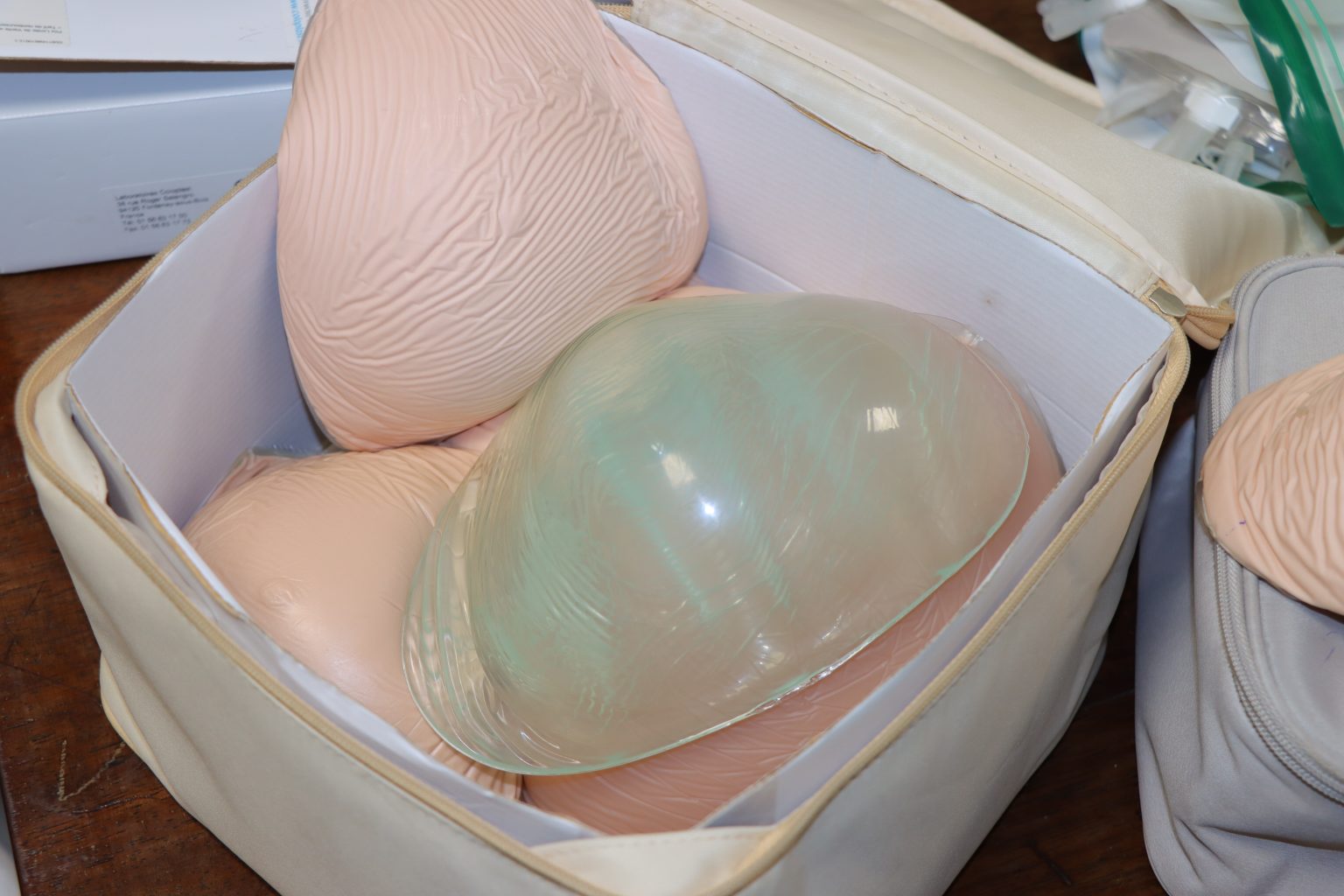
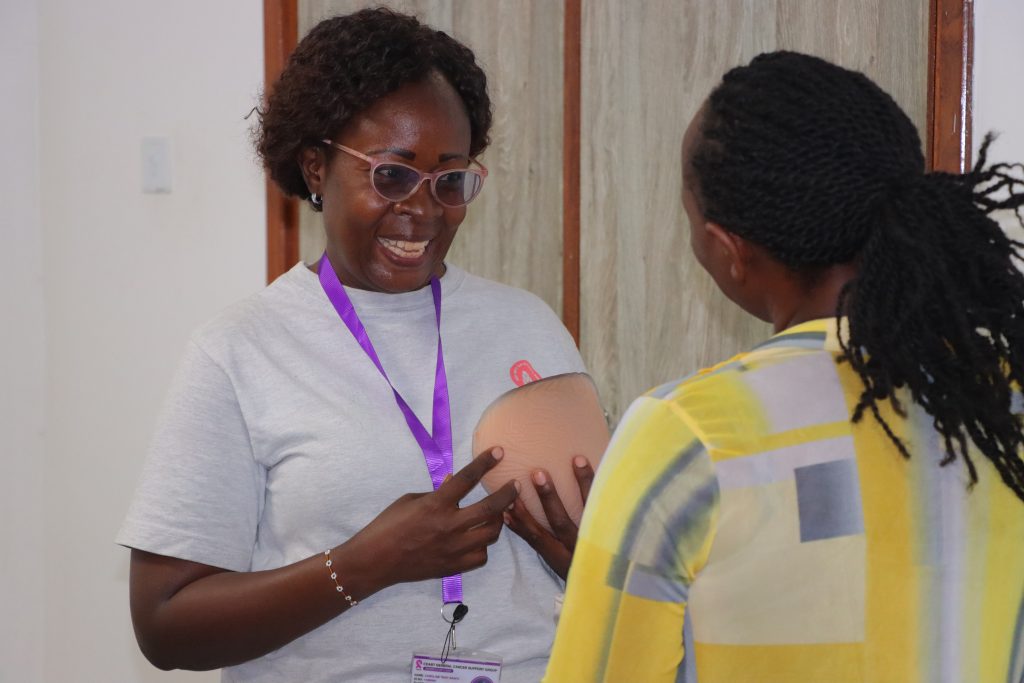
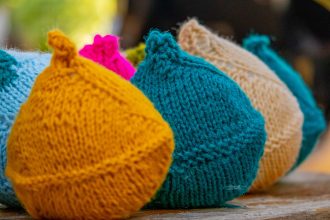
The group gave her a silicone breast prosthesis that restored her confidence in public; a second group, Sisters of Hope, gave her a lighter, knitted one. Through Coast Hospice, she trained in counselling alongside caregivers and patients, earning a Certificate in Community Training Response with a new cancer care component, then volunteered as a counsellor at CGTRH. She is secretary of the CGTRH Cancer Survivors Support Group, a registered community-based organisation.
The organisation she now helps lead began in 2022, when survivors and caregivers trained in counselling came together to offer psychosocial support and psychoeducation. It later evolved into a survivor-led group, and by early 2023 had registered as a CBO and opened membership to patients still in treatment. Recognising the financial strain of treatment, the group waived membership fees for patients and created a separate patients’ subgroup.
The CBO now has 77 members: 24 survivors and 53 patients and caregivers. Its survivors’ section remains entirely women, mostly breast and cervical cancer survivors, though it remains open to male survivors, who often show interest but rarely join. The more diverse patients’ subgroup includes men, women, and children represented by caregivers.
Members provide patient navigation, psychosocial support, cancer awareness education, and privately support women on sexual and reproductive health concerns
Members meet monthly at the CGTRH Radiotherapy Treatment Centre, with a WhatsApp platform keeping patients connected when they cannot attend in person. Oncologists, nurses, pharmacists, nutritionists and health records officers serve as co-opted members, offering technical guidance when needed. Wearing hospital identification badges, members provide patient navigation, psychosocial support and cancer awareness education, and privately support women on sexual and reproductive health concerns.
Running the CBO has not been easy. Akinyi recalls how the deaths of its first two chairpersons, a year apart, disrupted operations each time, since the chairperson was the sole signatory to the group’s bank account.
The group partners with organisations including Warriors of Hope, Coast Hospice, Breasco, the Jennifer Foundation and the Bwire Ndubi Foundation, but losing members remains its hardest burden. Amani Counselling Institute provides grief counselling during such times. “Sometimes it is not easy doing home visits because you bond with the family,” Akinyi says quietly. “When a patient succumbs, it takes a toll on you.”
Francisca Aluoch, another breast cancer survivor and now a fellow survivor-counsellor, reached the same conclusion from a different diagnosis.
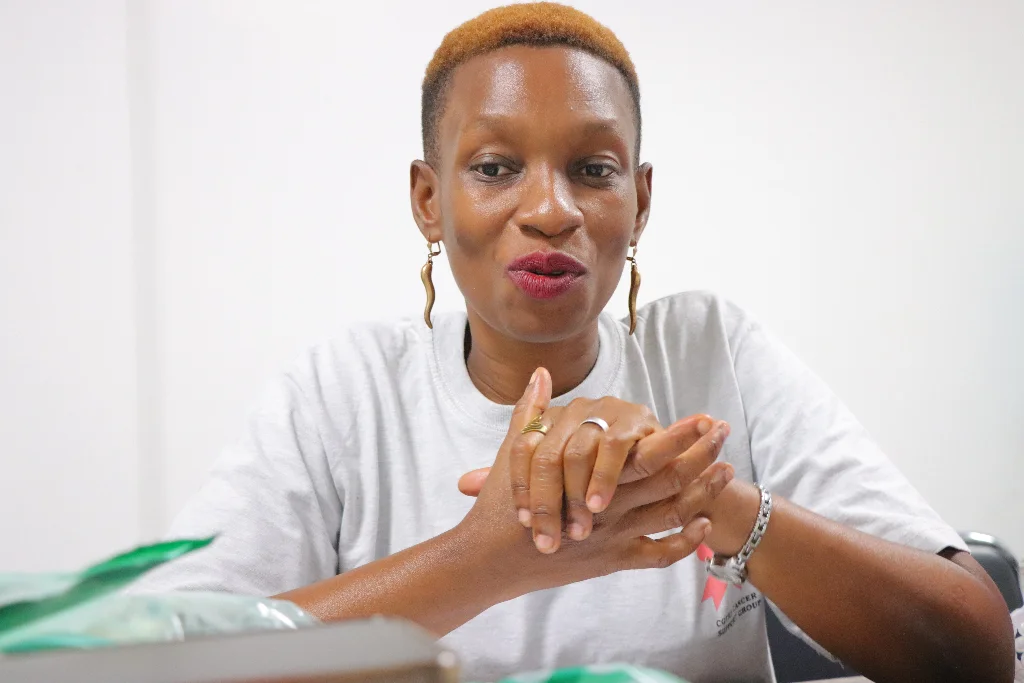
“When I was diagnosed with cancer, I was devastated and overwhelmed. I didn’t get anyone to guide me through the journey,” she recalls. Where she once had no one, she and Akinyi now ensure others do.
Akinyi and Aluoch’s journeys illustrate something clinicians at CTGRH have come to recognise: survival depends not only on chemotherapy or surgery, but on someone who has walked the same path. Clinical Oncologist Dr Abdulrahman Said Khalasy says survivor-counsellors are proving critical to how patients respond to treatment.
“Patients hear frightening stories about chemotherapy. But when survivors share their lived experiences, patients gain trust and hope. Survivors bridge the gap between the science of treatment and the compassion side of care,” he explains.
Counselling helps patients come to terms with their diagnosis, cope with challenges, and face stigma with greater resilience
It is a gap clinical care alone cannot close. The World Health Organization records over 44,000 new cancer cases in Kenya annually, the country’s third leading cause of death after infectious and cardiovascular diseases. Treatment has advanced, but psychosocial support has lagged, a gap survivor-counsellors at CGTRH have filled by organising as a CBO for counselling and advocacy.
Stigma is one of the heaviest burdens patients carry, says Nurse Matron Lucy Njoki Kingi, who oversees the CGTRH Cancer Unit. She recalls a cervical cancer patient publicly humiliated on a matatu after a fellow passenger complained about an “unpleasant smell” and asked why someone who “smelt like a dead person” was aboard.
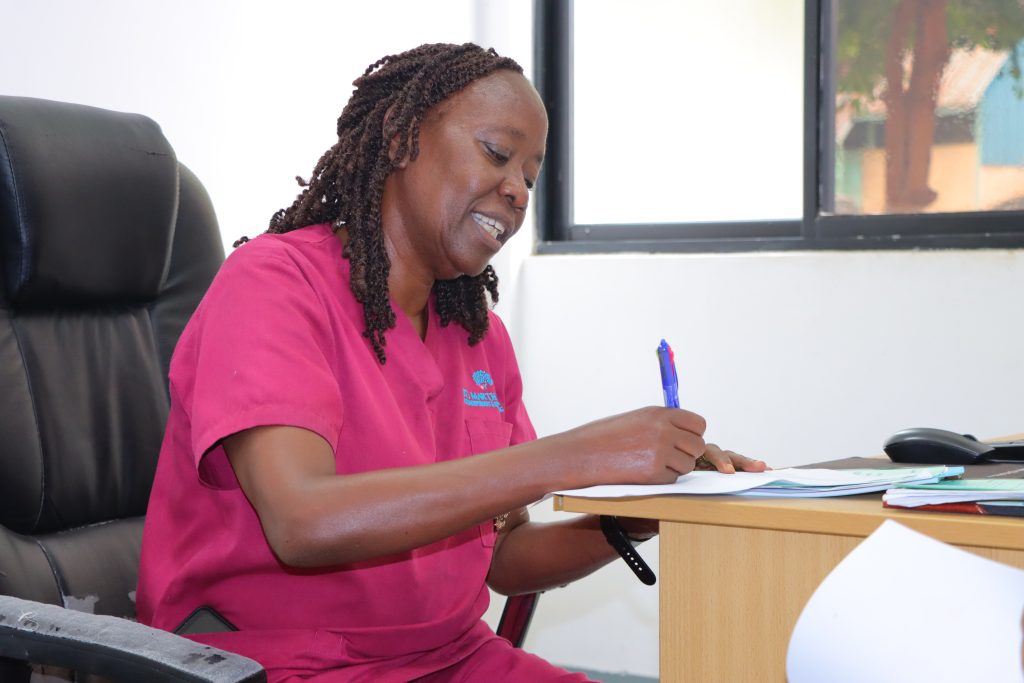
The patient arrived at the hospital in tears. “Sikuchagua kuwa hivi” (“I didn’t choose to be this way”), she told Njoki. The incident, Njoki says, shows why counselling matters beyond the clinical encounter: “Counselling helps patients come to terms with their diagnosis, cope with treatment-related challenges, and face stigma with greater resilience,” she says.
Misinformation compounds the stigma. “People fear cancer because they only hear about death. We show them survival is possible,” Akinyi says. Aluoch adds: “We always tell communities cancer is not a curse. It is a disease like others. We share our stories to show that life after cancer is real.”
Policy is catching up with what survivors have long practised. Kenya’s Cancer Control Strategy (2023-2027) prioritises patient-centred care, psychosocial support and survivorship programmes, echoing WHO calls to integrate psychosocial care into oncology.
Survivor-counsellors volunteer at their own cost, providing prostheses, counselling and advocacy without pay or protection
Dr Ali Omar, Mombasa County’s Non-Communicable Diseases Coordinator, says “true healing requires addressing the psychological, social, spiritual, and emotional needs of patients and their families,” adding that “survivor-counsellors strengthen continuity of care by bridging health facilities, patients, families, and communities.”
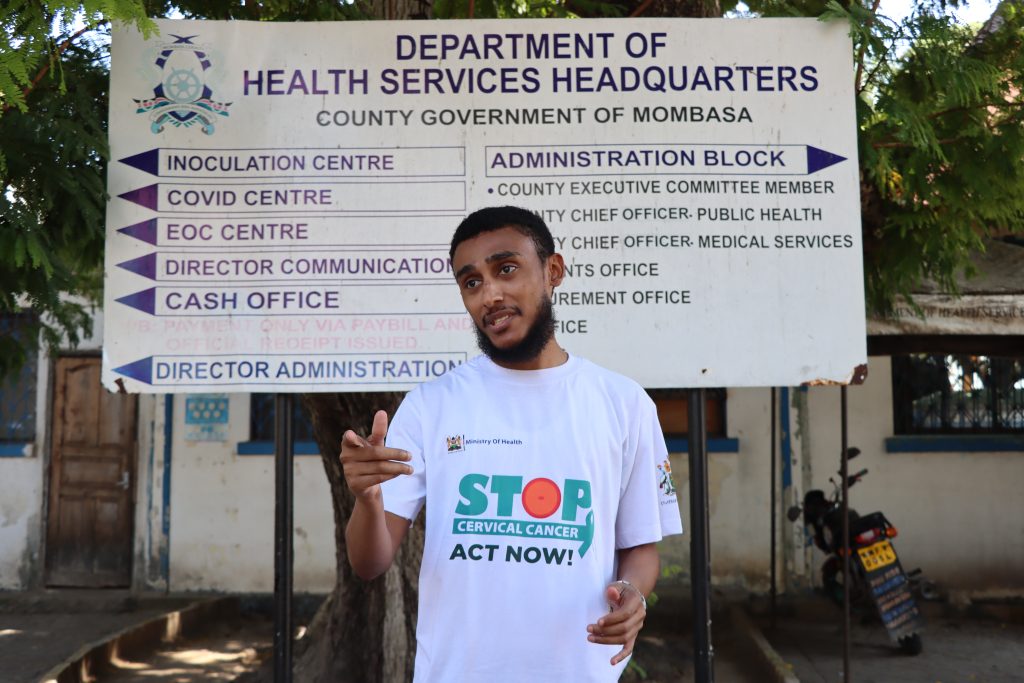
Their work supports Universal Health Coverage and Sustainable Development Goal 3 on good health and wellbeing. Mombasa County has rolled out the Mental Health Act (2022), deployed six psychiatrists with trained Community Health Promoters, and launched a 2024 wellness framework for employees.
Celina Kithinji, Head of Gender-Based Violence and Mental Health Programs, stresses support cannot stop with patients.
“Relatives and caregivers also need counselling. Some benefit from group sessions, others from one-on-one support,” she says. Community Health Promoters trained in Interpersonal Psychotherapy Group therapy, such as survivor Linet Wanyonyi in Mvita, extend this support into communities.
What remains missing is formal recognition. Survivor-counsellors at CGTRH volunteer at their own cost, providing prostheses, counselling and advocacy without pay or protection. The support group is pushing to have members integrated as paid patient navigators, institutionalising a role now sustained by goodwill alone through standardised training, accreditation and clear roles across oncology units, hospices and community programs.
Such recognition, Dr Omar says, would align cancer care with the principle of leaving no one behind. “Survivor-led organisations bring lived experience into cancer care, shaping services that respond to patient needs,” he says.
Institutionalising the role would move survivor-counsellors from informal volunteers to accredited members of multidisciplinary care teams, giving every patient access to someone who has walked the same road.
At CGTRH, that shift is already visible in the women who once sat where their patients now sit. Their scars, once symbols of loss, have become instruments of care, proof that healing, in the end, is as much a human undertaking as a medical one.
The writer was a student at the KEMRI Graduate School Health Journalism & Public Health Communication Course. The story is a collaboration of KEMRI Graduate School, University of Liverpool and Willow Health Media.
We believe in the free flow of information
Republish our articles for free, online or in print, under Creative Commons licence.