


Every shilling stolen from health is a missing nurse, an empty drug shelf, a clinic that never opens. Officials and anti-graft chiefs want newsrooms to follow the money ahead of the August 2027 polls. But majority of reporters being counted on have never covered elections before.
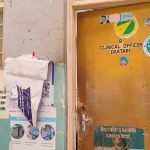
At the hospital where Kenyans go when every other door has closed, the shelves are nearly bare. Most medicines at Kenyatta National Hospital (KNH) are out of stock, staff say, and two of its three CT scanners have broken down. The workers who keep it running have been on strike since Tuesday, owed pension, loan and insurance contributions that were deducted from their pay but never remitted.
KNH’s budget for the 2026/27 financial year is about Ksh9 billion, barely more than a reported Ksh8.4 billion request for State House renovations. For investigative journalist Paul Wafula, that gap is the kind of story newsrooms should chase as Kenya heads to the August 2027 General Election.
At the ninth Annual Editors’ Convention in Mombasa, government officials, anti-graft chiefs and media leaders urged editors to scrutinise how public money, including health funds, is spent, and to give healthcare and other development issues more prominence in election coverage. Yet newsrooms are stretched thin: about 70 per cent of the journalists who will cover the 2027 polls have never reported an election before.
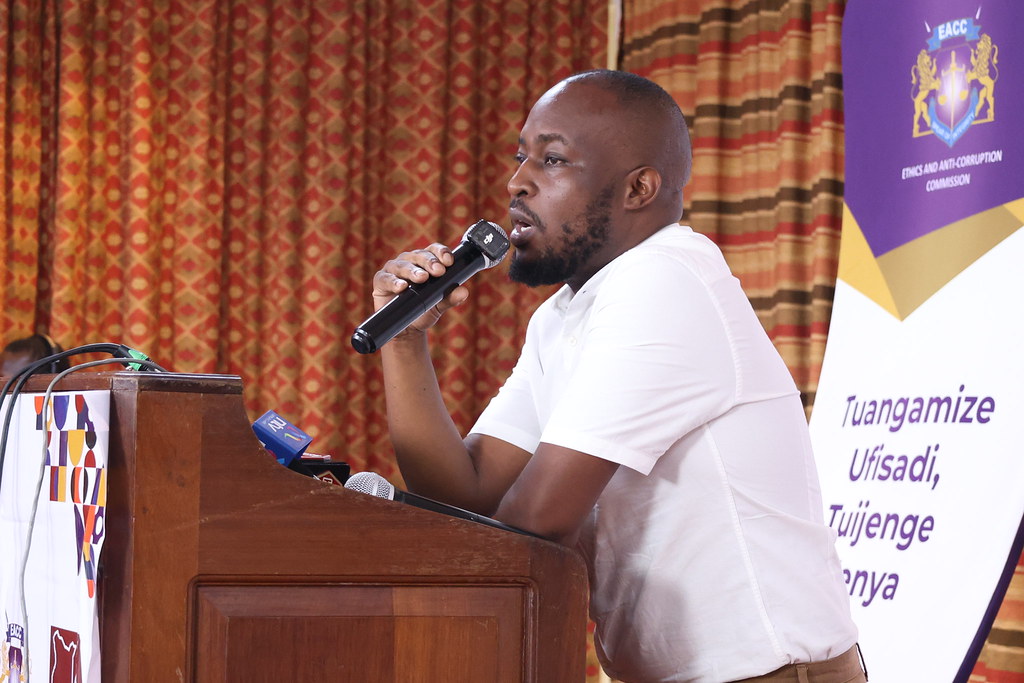
“If you walk in public hospitals, just Kenyatta National Hospital, and speak to the CEO and ask him what he will do with 8.4 billion shillings today, then you will have a totally different picture,” said Wafula, president of the Financial Journalists Society of Kenya, at an Ethics and Anti-Corruption Commission (EACC) breakfast with editors.
Kenya’s corruption is actually budgeted corruption. We plan for it, and we can see it
He said graft is no longer hidden. “Our corruption is actually budgeted corruption. We plan for it, and we can see it.” Citing a former EACC chairman’s estimate that Ksh608 billion is lost to corruption every year, against Ksh3.6 billion recovered according to the commission’s 2025 report, he put it at “roughly one shilling back for every 169 lost.”
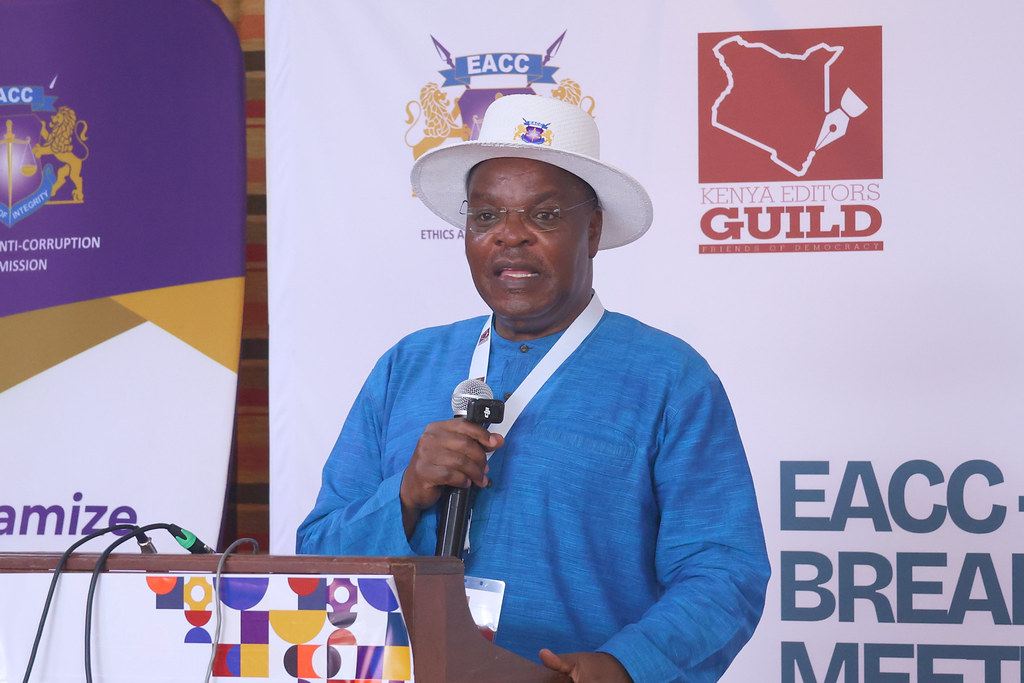
EACC chairperson Bishop David Oginde urged journalists to help voters connect vote-buying to the services they later go without. The Ksh200 a voter takes today, he said, “is going to affect whether your child is going to go to school … whether you’re going to get medical supplies in the hospital near you.”
“Once you take that 200 shillings, you deny yourself the services that would otherwise have been there because you have elected a corrupt person who is going to pocket all that money,” he said.
The human cost of diverted health money is well documented. A Willow Health Media investigation in January found that health centres built in Migori County under former Governor Okoth Obado were never stocked or staffed. The government is seeking to recover Ksh428.6 million from him, close to half the county’s Ksh1.9 billion medical services budget for 2021/22. In Nairobi, Ksh869.4 million was allocated in 2020/21 for three health facilities, but an Auditor General inspection in September 2023 found none were completed.
Development journalism is about interrogating public policies, assessing impact, exposing gaps, empowering citizens with info
Broadcasting and Telecommunications Principal Secretary Stephen Isaboke, speaking for Cabinet Secretary William Kabogo, warned that politics is crowding out the issues that most affect citizens’ lives. He cited a 2025 study in which one respondent remarked: “Politics, 90 per cent of Kenyan news is politics.”
“I therefore challenge our editors to accord greater prominence to development journalism in areas such as agriculture, healthcare, education, infrastructure, employment, enterprise development and the digital economy,” he said.
Development journalism, he added, “goes beyond publicising government achievements. It is about interrogating public policies, assessing their impact, exposing implementation gaps and empowering citizens with information that improves their lives.” Political actors’ alternative proposals deserve the same scrutiny, he said: “How will they be financed?”
In a speech read by Deputy Chief Registrar of the Judiciary Paul Ndemo, Chief Justice (CJ) Martha Koome said journalism “must interrogate political promises, examine public expenditure, investigate governance, and give citizens the information they need to assess competing claims.”
Shrinking budgets, newsroom downsizing, mental health, digital disruption among pressures facing media
The convention, organised by the Kenya Editors Guild (KEG), runs from 25 to 29 November under the theme “Navigating the Storm: Media Resilience on the Road to 2027”.
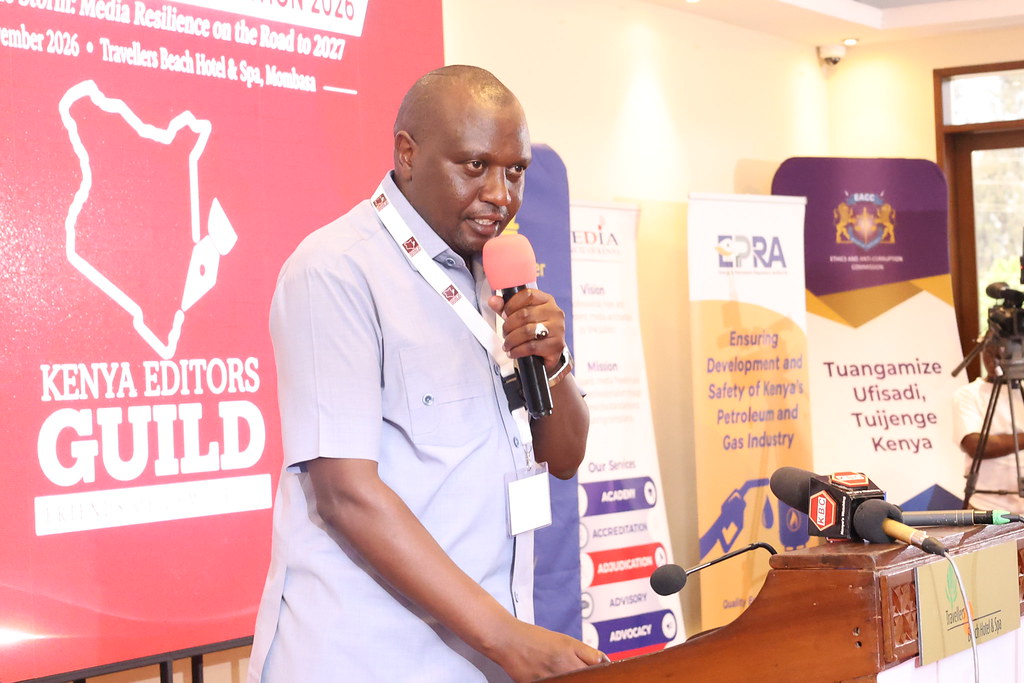
Media Council of Kenya (MCK) Chief Executive Officer David Omwoyo, who gave the 70 per cent figure, asked editors to set aside resources for training, warning that without it, “everybody” would be declaring results. “Our newsroom is not an unverified tallying centre,” he said.
Isaboke, citing an MCK estimate of 75 per cent, linked the problem to financial pressures and the departure of experienced journalists. He urged KEG, MCK, IEBC and media houses to coordinate training on electoral law, campaign financing, policy analysis and verification.
Wafula questioned whether newsrooms can follow public money. “Are we there yet in terms of just being able to understand numbers?” he asked.
KEG chief executive Linda Bach listed shrinking budgets, newsroom downsizing, mental health and digital disruption among the pressures facing the industry. She said the Guild trained more than 500 media practitioners in the past year on topics including public health, maternal and child health, and election reporting.
Deepfakes, synthetic audio, manipulated videos and fabricated info poses serious risks to electoral credibility
At its most recent forum, on maternal, newborn and child health in Nairobi, Ministry of Health data showed only 37 per cent of facilities offering delivery services provide all seven basic emergency obstetric functions.

Speakers also warned that artificial intelligence (AI) could flood the campaign with fabricated content. Isaboke said misuse of AI “through deepfakes, synthetic audio, manipulated videos and fabricated information poses serious risks to electoral credibility.” He urged editors to strengthen fact-checking, clearly label AI-generated content and correct errors promptly. “Accuracy must always take precedence over speed,” he said.
CJ Koome said AI can strengthen investigative journalism but can also enable “the production and rapid circulation of fabricated images, synthetic audio, and misleading narratives.” She added: “Editors must invest in verification, digital literacy, and responsible use of emerging technologies.”
Calls for better protection of journalists’ wellbeing, mental health, psychosocial support, insurance and safety training
Oginde said audiences still trust mainstream media to separate fact from fiction, “especially at this time of AI and fake news and deep fakes that sometimes look very real.”
Isaboke and Koome also called for better protection of journalists’ wellbeing, including mental health and psychosocial support, insurance and safety training.
The four-day meeting has drawn editors, regulators, civil society groups, tech companies such as TikTok and Huawei, and editors’ associations from Uganda and Ethiopia. Discussions are expected to cover media ownership, regulation and how newsrooms can stay afloat amid financial turbulence, which editors say independent journalism depends on. The Guild says the outcomes will shape how newsrooms prepare for the elections and their advocacy priorities ahead of the August 2027 polls.
We believe in the free flow of information
Republish our articles for free, online or in print, under Creative Commons licence.