

Health PS Dr Ouma Oluga wants public hospitals to stop collecting cash from patients. Kenyans and governors want to know who will cover what SHA does not.
A woman who runs a food kiosk falls ill, walks into a public hospital and is handed a paybill number and a Ksh50,000 bill. To Medical Services Principal Secretary Dr Ouma Oluga, that moment closes her business and turns the hospital into a driver of poverty.
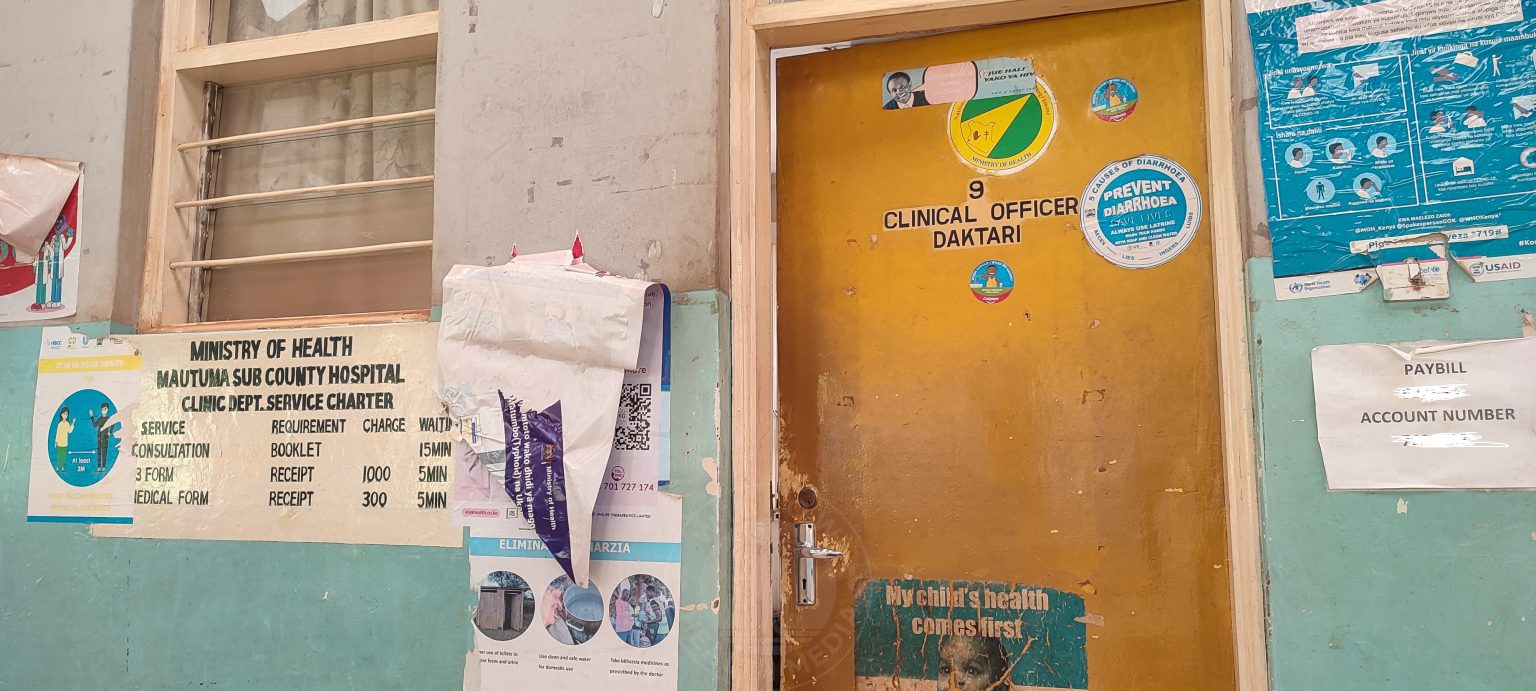
He used that image on November 22, 2026, when he ordered Social Health Authority (SHA) compliance officers to remove paybill numbers from public hospitals. Within a day, the Council of Governors (CoG) had told county facilities to ignore the directive. Kenyans online were asking a blunt question: if patients can no longer pay at the hospital, who pays for what SHA does not cover?
The row exposes unresolved gaps in Kenya’s shift to Universal Health Coverage (UHC). These include services outside SHA’s benefits package, patients not yet registered, co-payments, delayed and rejected claims, and whether the national government can dictate how devolved hospitals collect revenue. It also comes as county facilities still await the outcome of claims worth billions of shillings.
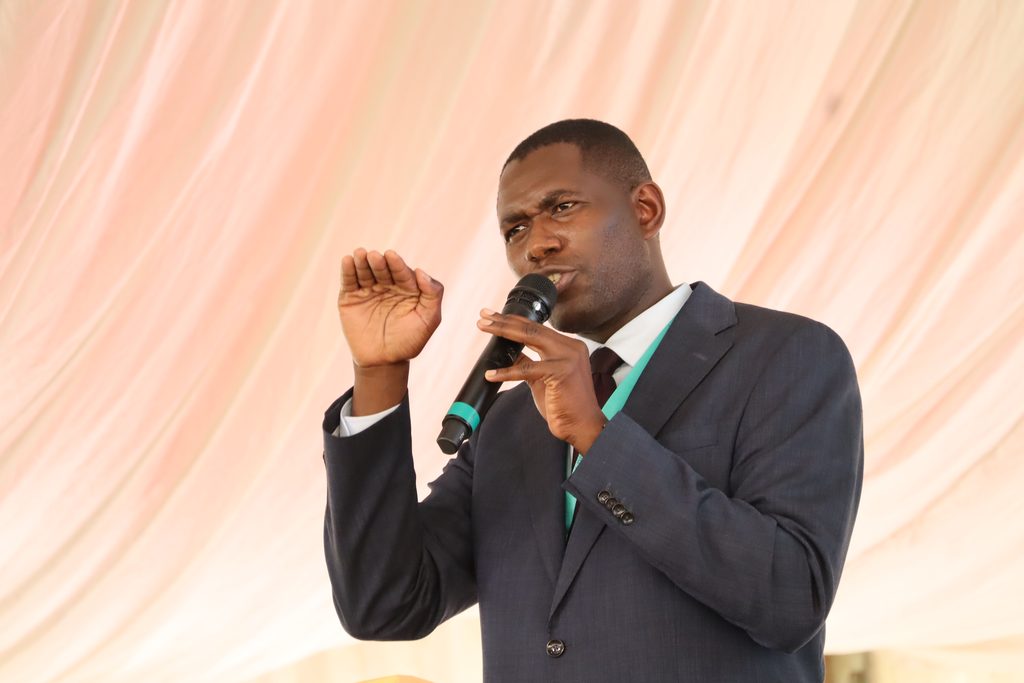
“Compliance officers, go through any public hospital, remove those things called paybills. I will give you security,” Dr Oluga said during an engagement with compliance officers and hospital officials at Vihiga Teaching and Referral Hospital.
He argued that patients should not have to raise money for treatment in facilities meant to provide affordable care, and that hospitals should be financed through health insurance rather than upfront payments. Large bills, he warned, push struggling households deeper into poverty, especially those who depend on daily income from small businesses such as food kiosks and eateries.
Greatest concern was services SHA does not cover and unregistered patients seeking treatment
“You can imagine when that woman comes to the hospital, you want to put for her a paybill to pay Ksh50,000. You are closing the business,” he said. “The hospital then is now contributing to poverty in the society.”
A section of Kenyans on social media raised several concerns, including questions on services SHA does not cover and patients who are yet to register but still seek treatment. On her X (formerly Twitter) account, Mahalon Odiambo asked how unregistered patients would be served without paybills, yet they walked “Into a facility to get treated on a cash basis…will the paybill of the facility not be applicable in such a scenario?” he posted. He added that SHA approvals are sometimes delayed, prompting frustrated patients to ask hospital staff to treat them on cash.
Another user, Ken Mak (@kenneth_ku75893) argued that “There are so many services not covered under SHA”, while @miwagaoketch6 wanted the relief applied across the country. “You know how much trouble these paybill numbers are causing. You have acted in one county, but patients across Kenya are facing the same problem. They deserve the same relief,” he posted.
Others felt the announcement was disconnected from patients’ experiences. Brayan Bauer questioned whether Dr Oluga understood county financing arrangements, while other commenters doubted the directive could be enforced.
Their reactions point to a critical gap: removing payment channels does not make every service free.
Counties support protecting patients from unnecessary charges, but argue that SHA does not cover every Kenyan or every service
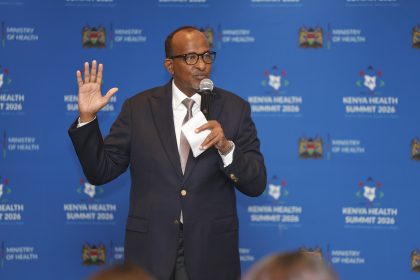
At a press conference on November 23, CoG chairperson and Tharaka Nithi Governor, Hon Muthomi Njuki, said the national government cannot unilaterally dictate how devolved facilities collect revenue. The directive, he said, ignores counties’ constitutional responsibilities and could undermine the sustainability of public hospitals.
Counties support protecting patients from unnecessary charges, he said, but SHA does not cover every Kenyan or every service. “SHA registration does not automatically translate into access to every healthcare service, especially at tertiary hospitals. SHA operates within defined benefit packages, tariffs, eligibility conditions and limitations,” he said.
The governors argue that some services fall outside the benefits package, while others carry co-payments or exceed the benefits available to individual patients.
Governor Njuki also challenged the ministry’s authority. “When did the Ministry of Health start making billing decisions for County Governments, and how was SHA enlisted as the enforcement agency?” he asked.
“County governments cannot be expected to provide services that are either not fully covered under SHA, wholly excluded in the current benefits package, have a co-pay provision, are sub-optimally reimbursed or rejected and concurrently be denied lawful mechanisms for cost recovery,” he said.
SHA maintains every claim must be verified for patient eligibility, benefit entitlement and approved tariffs
The Ministry of Health’s October 2026 Health Sector Medium-Term Expenditure Framework (MTEF) report, presented at public hearings on October 9, shows SHA had paid Ksh197.7 billion since its launch in October 2024, against claims worth Ksh234.83 billion. That is 83.87 per cent of claims, with 8.36 million claims paid.
By September 30, 2026, 33,049,501 Kenyans, or 69.5 per cent of the population, had registered. Of 11,034 contracted facilities, 9,699 had received payments. The government says providers are paid on the 14th of every month, with an average claims turnaround of 49 days, within the statutory 90-day window.
National totals, however, do not mean every hospital has been paid on time. By June 30, 2026, 8,349 county health facilities had submitted claims worth Ksh40.91 billion. Of this, Ksh27.91 billion had been paid, and Ksh6.96 billion was under review. A further Ksh1.97 billion had been returned for correction, Ksh646.2 million was awaiting supporting documents, and Ksh3.43 billion had been rejected.
SHA maintains that every claim must be verified for patient eligibility, benefit entitlement and approved tariffs, and that the required clinical and supporting documents must be provided.
Payments also differ by type of facility. Between July 2025 and April 2026, public facilities received about Ksh20.2 billion under the Social Health Insurance Fund (SHIF), compared with Ksh32.1 billion paid to private facilities and Ksh13 billion to faith-based providers. This raises questions about whether the model adequately supports public hospitals, which serve large populations and often treat patients who cannot afford private care.
Approval delays for specialised services such as cancer treatment disrupt patients’ treatment plans
The governors say the problem goes beyond paybills to how county hospitals will meet their operating costs. “Counties have not received satisfactory resolution of outstanding claims and reimbursement delays. Therefore, facilities are struggling to sustain services,” Njuki said.

They also warned that new electronic contracting requirements under the Health Management Information System (HMIS) could exclude some public facilities from SHA payments, and that approval delays for specialised services such as cancer treatment disrupt patients’ treatment plans.
Stopping hospitals from charging for services outside the benefits package before fixing reimbursement problems, the council said, could leave facilities financially exposed. It urged the national government to settle the matter through established intergovernmental consultation structures rather than unilateral declarations. “The pursuit of Universal Health Coverage must protect patients while safeguarding the sustainability of public health facilities and respecting the constitutional framework of devolution,” Njuki said.
A lasting solution will need clear rules on what patients pay, what SHA covers and how quickly hospitals are reimbursed
The dispute raises a fundamental question: how can Kenya guarantee that patients are not turned away for lack of money, while ensuring hospitals have enough predictable resources to treat them?
For patients, the distinction matters. Removing paybills could lower the financial barriers that keep poor households from care. Yet if hospitals are not reimbursed on time for services already provided, shortages of medicines and supplies could hurt the very patients the policy aims to protect.
The ministry and counties must settle not only who has authority over hospital payments, but also how excluded services, co-payments, rejected claims and delayed reimbursements will be financed. A lasting solution will need clear rules on what patients pay, what SHA covers and how quickly hospitals are reimbursed, with safeguards for facilities when claims are rejected or fall outside the benefits package.
We believe in the free flow of information
Republish our articles for free, online or in print, under Creative Commons licence.