

Days-old twins were fed porridge instead of breast milk; one did not survive to see his first birthday, the other nearly didn’t either.
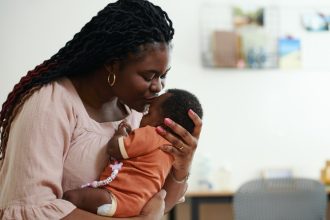
Mother-infant attachment begins to develop the moment the baby is placed on her chest after birth. Frequent breastfeeding, the silent conversations expressed through the baby’s fixed, innocent stares, the mother’s playful responses, and the constant smiles they exchange not only sustain that bond but deepen it.
Aside from the attachment it promotes, breast milk offers numerous benefits. The thick, yellow breast milk known as colostrum, produced during the first few days after birth, is as crucial as the air we breathe. It boosts the baby’s natural immunity. Continued breastfeeding enhances the effectiveness of immunisation and decreases the risk of diarrhoea and respiratory infections.

Unfortunately, not all newborns are so fortunate. Some are subjected to intentional neglect right after birth, as seen in Edwina’s case.
Edwina, a 17-year-old first-time mother, spent day one of life with her bubbly, healthy twin sons before introducing them to porridge. This necessitated nutritionist counselling, during which she was educated on the dangers of weaning too early. She continued feeding them porridge regardless. Evidently, the nutritionist’s advice fell on deaf ears, or Edwina’s understanding of it was lacking.
A decision was made to separate the mother from her twins and place the children with a foster family. This did not sit well with Edwina. She went berserk and insisted on being discharged against medical advice. Her wish was granted.
Six weeks later, Edwina’s mother returned to the hospital with one of the twins for the routine six-week immunisation visit. The chubby baby, discharged a month and a half earlier, looked different, with prominent cheekbones, sparse and brittle hair, dry lips, dry and fragile skin, and sore buttocks.

The weighing scale showed a significant drop, including a loss of 500 grams. Edwina’s mother also revealed that the second twin had died three days earlier. Worse still, Edwina had wandered away from home, and her whereabouts remained unknown.
“Caring for them has been a roller coaster of challenges. I had no choice but to feed them porridge,” she said.
Clearly, life had thrown Edwina’s mother a curveball. The second twin’s life revolved between hospital and home, with the better part of it spent in the wards. Given the circumstances, the grandmother could not afford Nan, a manufactured formula milk. By the tail end of the fourth month, severe malnutrition had won the battle.
What is severe malnutrition in babies under six months?
It is a life-threatening condition caused by insufficient breastfeeding or formula feeding, characterised by extreme weakness, diarrhoea, poor weight gain or weight loss, visible wasting, and feeding difficulties, as observed in Edwina’s son.

The World Health Organization (WHO) recommends breastfeeding newborns on demand, starting within an hour of delivery. For the first six months, breastfeeding should be exclusive, meaning the baby receives only breast milk, with no other foods, including water.
According to the WHO, exclusive breastfeeding among infants under six months in Kenya increased from 13 per cent to 60 per cent between 2003 and 2022, surpassing the World Health Assembly’s target of at least 50 per cent by 2025 and exceeding the global average of 48 per cent recorded in 2023.
How is breastfeeding beneficial?
Breastfeeding benefits both mother and baby.
To the baby, it is described as “powerful medicine,” rich in antibodies that protect against infections. It lowers the risk of developing asthma, obesity, type 2 diabetes, ear infections, and childhood blood cancers, while significantly reducing the risk of Sudden Infant Death Syndrome (SIDS) and overall infant mortality. Breast milk also provides optimal nutrition for the newborn, promoting healthy brain development.

To the mother, breastfeeding is a double-edged sword. It promotes uterine contraction, thus preventing postpartum haemorrhage, and lowers the risk of type 2 diabetes, hypertension, cardiovascular disease, and breast and ovarian cancer. It also acts as a contraceptive when practised exclusively, and helps in shedding pregnancy weight when combined with a healthy maternal diet. On the flip side, it can cause nipple soreness and pain, breast engorgement, mastitis, fatigue, breast milk leakage, emotional stress, and lifestyle or dietary and medication constraints. Significantly, it strengthens emotional bonding between mother and baby.
These challenges can be overcome through good latching education, regular breastfeeding or pumping, and strong family support.
Who is at risk of not receiving breast milk?
Babies whose mothers are seriously ill, suffer from untreated HIV, use substances, are teenage or first-time mothers without support, have low milk supply, or are separated from their babies due to work or hospitalisation.
How can inadequate breastfeeding be curbed?
To sustain the upward trend in exclusive breastfeeding in Kenya, the following should be implemented:
- Pumping and milk expression support, especially for working mothers, to ensure exclusive breastfeeding for the first six months.
- Where a mother is unable to breastfeed, support may be sought from a healthy lactating relative with adequate milk supply.
- Skilled lactation support for mothers after childbirth to improve latching techniques and avoid breast soreness and pain.
- Expanded maternity protection and mother-friendly workplace policies to enable exclusive breastfeeding and beyond. Willow Health Media has a furnished lactation room for mothers.
- Empowering Community Health Promoters (CHPs) to offer regular home visits, breastfeeding education, early identification of challenges, and timely referral.
- Strengthened breastfeeding education during antenatal and postnatal care.
- Access to safe medical care and treatment for chronic conditions such as HIV and mental illness.
- Formula milk provided through public health facilities and refilled as needed, similar to how people collect medicines such as blood pressure drugs.
Transitioning from exclusive breastfeeding to complementary foods can be daunting. Many parents worry about choking risks, food allergies, portion sizes, whether they are offering the right foods, and, ultimately, whether meals should replace breast milk.
The WHO recommends beginning complementary feeding alongside breast milk at six months of age, continuing up to two years or beyond.
When is the baby ready for solid feeds?
Once the baby reaches the following milestones, it is safer to start weaning:
Head control: the baby must be able to hold the head steady, in a stable position, to swallow safely without choking.
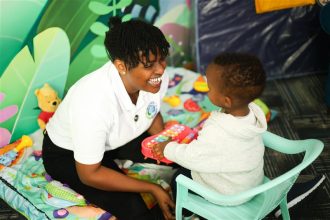
Sitting up, with or without support: this ensures eating in an upright position, making swallowing easier and safer.
Loss of the tongue-thrust reflex: younger babies under six months subconsciously push food out of the mouth; once this reflex fades, they can keep food in the mouth and swallow it.
Hand-eye coordination: this enables a child’s exploration and acceptance of food, making feeding safer.
Six months is not a strict cut-off point. Readiness also matters. If the baby has not achieved the signs above, weaning may do more harm than good. Frequent choking can lead to aspiration pneumonia or, worse, death. It is therefore advisable to continue exclusive breastfeeding while closely monitoring for readiness, and better still, to seek a paediatrician’s advice.
How to start
The transition should not be an overnight switch. Start small and gradually increase the amount to what can be comfortably accommodated.
Begin with two to three teaspoonfuls of soft, smooth, nutrient-rich food, then increase to two to three meals a day. Thereafter, the portion should be dictated by demand.
Dr Rachel Kerubo is the Resident Medical Officer – Department of Internal Medicine, Nyamira County Referral Hospital.
We believe in the free flow of information
Republish our articles for free, online or in print, under Creative Commons licence.