As the UN adopted a new pandemic declaration and Ebola spread from eastern DRC to Kenya, World Health Summit leaders in Berlin warned that agreements alone cannot secure global health. Inequity, fragmented surveillance, and reactive financing must be fixed first.
On October 12, as the United Nations General Assembly in New York adopted a new political declaration on pandemic prevention, preparedness and response (PPPR), Ebola was tearing through eastern Democratic Republic of the Congo (DRC).
According to the World Health Organization (WHO), as of October 12, the Bundibugyo virus disease outbreak had recorded 9,088 confirmed cases and 4,364 confirmed deaths across affected countries, representing a case fatality rate of 48 per cent. The deadliest Ebola outbreak in the country’s history, second only to the 2014 epidemic in West Africa, it has spread to Uganda and Kenya, and a case has been confirmed in France.

That same day, the World Health Summit 2026 in Berlin delivered a blunt verdict: Monumental, meticulously crafted and legally sound agreements cannot guarantee global health security unless action backs them.
Global leaders, policymakers, scientists and industry experts attended the 11-13 October summit, themed “From Crisis to Resilience: Innovating for Health”, where delegates agreed the world will be secure only when PPPR moves from agreement to action, and that the declaration will bear fruit only if acted upon.
No licensed vaccines or treatments exist for the Bundibugyo species, yet experts called the outbreak a failure of preparedness, not of medicine. Eastern DRC is a real-time case study of how delayed data sharing, unequal access to care, political barriers to transparency and conflict weaken early detection and coordinated response.
The summit traced those weaknesses to deeper causes. Structural inequalities, weak governance and fragmented surveillance amplify pandemic risks, it acknowledged, while underfunded preparedness, reactive financing and dependence on donor-driven priorities compound them.
“The Ebola outbreak is a powerful reminder of the vital importance of coordination and solidarity”
The declaration concedes as much, warning that PPPR financing “remains fragmented, underfunded and overly reliant on development financing” and recalling the urgent need to close an estimated US$15 billion (Ksh1.9 trillion) annual preparedness gap.
The Bundibugyo response shows what that looks like in practice. WHO and Africa CDC launched a six-month, US$518 million (Ksh66.8 billion) continental response plan in June. The US has since committed US$886 million (Ksh114.3 billion), including US$267 million (Ksh34.4 billion) pledged on the sidelines of the UN General Assembly in September, and wants donors to reach US$2 billion (Ksh258 billion).

Yet a WHO outbreak notice in late September still cited “critical funding gaps”, and Cristina Stefan of the Centre for Disaster Protection wrote that an independent review could not establish how much of the response remains unfunded, with money raised appeal by appeal.
At a PPPR session in Berlin on 12 October, Georg Kippels, Parliamentary State Secretary at Germany’s Federal Ministry of Health, said preparedness had improved since Covid-19, “but we need stronger institutions, sustainable financing, better coordination and political commitment to move forward”. The DRC’s shortcomings, he said, showed why.
“The Ebola outbreak is a powerful reminder of the vital importance of coordination and solidarity. It underscores the necessity of making funds available in times of crisis,” he added.
Professor Victor J. Dzau, a board member of the Global Preparedness Monitoring Board (GPMB), praised investments such as the WHO Hub for Pandemic and Epidemic Intelligence, established in Berlin in 2021, the amended International Health Regulations and global laboratory networks for timely detection.
Although the global architecture has improved since Covid-19, critical gaps in equity, financing and health system resilience still remain
“Despite these investments we have still fallen short and we need to action ending of vaccine nationalism and inequity, supply chain disruption and address major gaps in financing,” he said. Trust, misinformation, institutional legitimacy and effective leadership, he added, also need addressing.
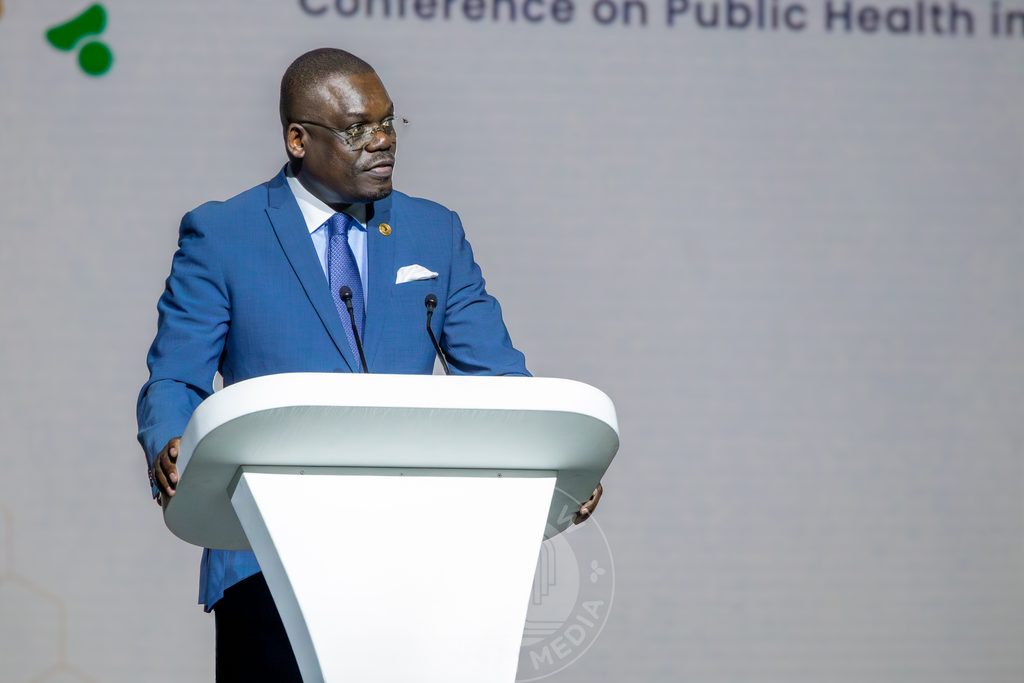
Africa CDC Director General Dr Jean Kaseya said concepts alone could not confront pandemics and urged the world to walk its talk on preparedness and response.
Dr Frederik Kristensen, Managing Director of the Regionalized Vaccine Manufacturing Collaborative (RVMC), was blunter. “We have a lot of diagnosis and prescription but the question is how do we get there?” he said. “Countries need to agree on coming together as we need a system that works on Tuesday if the pandemic will be there on Wednesday.”
Kenya had carried that urgency to New York. “Although the global architecture has improved since Covid-19, critical gaps in equity, financing and health system resilience still remain,” its delegate to UNGA81 said, speaking from “hard-won frontline experience” with cholera, mpox, Ebola and Marburg.
Kenya set out four demands. First, the access and benefit-sharing system “must ensure that countries sharing pathogens and sequence information receive timely and predictable access to vaccines, therapeutics and diagnostics.” Kenya backed rapid WHO access to at least 20 per cent of real-time production and enforceable arrangements that deliver benefits “when they are most needed”. The Pandemic Agreement treats 20 per cent as a target rather than a floor, with at least 10 per cent donated to WHO and the rest sold at affordable prices.
Nations that report outbreaks promptly, it warned, “must not face disproportionate, non-evidence-based measures that harm their people and economies”, penalties African countries have faced for transparent reporting.
Second, Africa must be able to “research, develop, manufacture, regulate and procure essential medical countermeasures”, backed by technology transfer, pooled procurement and reliable markets. Third, funding should be predictable before a crisis and fast during one, and international financing “must complement domestic investment without diverting resources from universal health coverage or essential services.”
The Pandemic Fund, Kenya added, must be “adequately capitalised, accessible and responsive.” Finally, it linked health security to strong primary care, laboratories, immunisation, sanitation, One Health coordination and a well-supported, ethically recruited workforce.
Since 2022 the Pandemic Fund has drawn commitments of more than US$2.1 billion (Ksh271 billion) and awarded about US$1.4 billion (Ksh181 billion) to 67 projects over three rounds. Its entire commitments to date amount to less than a sixth of the annual preparedness gap.
Today, anyone who has been in the DRC within the previous 21 days cannot board a commercial flight to the US
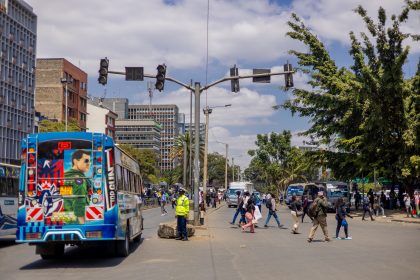
Less than two weeks later, those demands stopped being abstract. A Kenyan citizen who had lived in the DRC travelled by road to Kampala and flew on to Nairobi, arriving on October 3. He was isolated in hospital and died on October 5. It was confirmed he had Bundibugyo Ebola the next day, and Kenyan authorities traced 28 contacts, including family members and health workers.
Kenya’s warning about penalties also has precedent. When South Africa and Botswana reported the Covid-19 Omicron variant in November 2021, the US, Canada, Australia and others imposed travel bans, and WHO Director-General Dr Tedros Adhanom Ghebreyesus said it was deeply concerning that the two countries were being penalised. Today, according to the US Centers for Disease Control and Prevention, anyone who has been in the DRC within the previous 21 days cannot board a commercial flight to the US.
Insufficient preparedness was why world leaders convened the second UNGA High-level Meeting on PPPR on September 25, where member states considered the declaration and referred it to the full General Assembly. After objections from the US, Israel and Argentina blocked consensus, the Assembly adopted it on October 12 by 153 votes to three, with two abstentions.
Building on research and coordination advances since Covid-19, including the WHO Pandemic Agreement adopted by the World Health Assembly in May 2025 and the amended International Health Regulations (2005), the declaration calls for sustained investment and action to strengthen national, regional and global capacities against pandemic threats. Leaders renewed their commitment to a world safer from pandemics and stressed the need for a whole-of-government, whole-of-society approach with community involvement.
The Agreement ties pandemic readiness to resilient health systems anchored in universal health coverage, backs expanded local manufacturing, research and development, embraces One Health and supports social protection. The declaration adds commitments to mainstream gender equality and protect sexual and reproductive health services.
Addressing the September meeting, Tedros said the declaration reflected painful lessons from how Covid-19 exposed and exacerbated the fault lines of global health security, and that continued action and investment were needed to prepare for threats like it.
The World Health Assembly will consider the PABS outcome in May 2027, or earlier at a special session
“The commitment also includes important pledges to concrete, measurable and urgent action to build and strengthen local and national capacities, to invest in resilient health systems, and to expand equitable access to products, tools and resources,” he said.
The Pathogen Access and Benefit-Sharing (PABS) annex would operationalise the timely sharing of pathogens with pandemic potential and the equitable sharing of vaccines, medicines and diagnostics developed from them.
Without it, the Pandemic Agreement cannot be opened for signature or ratified, and it takes effect only after 60 countries ratify. The World Health Assembly will consider the PABS outcome in May 2027, or earlier at a special session.
UN Deputy Secretary-General Amina Mohammed, speaking for Secretary-General António Guterres, called the talks critical to unlocking the agreement’s full potential. “Let’s get it done. Let’s deliver the Pandemic Agreement the world is waiting for,” she said.
WHO hailed the vote as reaffirming the solidarity needed to protect future generations. “We urge countries to now fulfil the commitments they have made,” Tedros said, singling out PABS, “so the WHO Pandemic Agreement can be opened for signature, begin the process of ratification and enter into force as international law.”
The proposed fixes map onto the DRC’s failures, starting with fragmented surveillance. At the summit, WHO launched a five-year strategy for its Hub for Pandemic and Epidemic Intelligence so that by 2030 every country can detect and understand emerging threats within 24 hours.
A concluded PABS annex would secure WHO a share of real-time production in a future pandemic
Calling rapid detection a cornerstone of global health security, WHO will help countries build the systems, capacities and partnerships to contain outbreaks before they escalate or cross borders. The Hub already works with more than 160 member states and 190 partner organisations.
Next door, Uganda shows that spill-over can be contained. It recorded 20 cases and two deaths, saw its last confirmed case on June 21 and discharged its last patient on July 16. Its Health Ministry declared the outbreak over on July 28, and WHO confirmed the end in late August after 42 days without a new case.
Missing Bundibugyo vaccines point to the second fix. The pipeline is moving, but only after the outbreak began. CEPI has committed more than US$60 million (Ksh7.7 billion) to four vaccine candidates. The first vaccine designed for Bundibugyo, Oxford’s ChAdOx1 BDBV, entered human trials in the UK in July and reached volunteers in Uganda on 6 October.
A DRC trial of remdesivir and the antibody MBP-134 aims to enrol about 1,000 patients, and WHO expects vaccine efficacy trials in the DRC in October or November. A concluded PABS annex would secure WHO a share of real-time production in a future pandemic, and the declaration backs regional manufacturing that can deliver countermeasures within 100 days.
Reactive, donor-driven financing is the third. The declaration commits countries to operationalise a Coordinating Financial Mechanism to align emergency funding that is “often fragmented, slow, and uneven”, and to domestic financing that will “reduce aid dependency”.
The UN Secretary-General must report on progress during the General Assembly’s 83rd session. In eastern DRC, the test of every pledge made in New York and Berlin is already underway.
We believe in the free flow of information
Republish our articles for free, online or in print, under Creative Commons licence.