

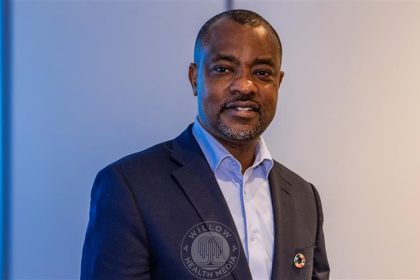
Gates Foundation Africa Director Dr Paulin Basinga says AI can make clinics faster and smarter. But without nurses, medicines and data, the technology has nothing to work with.
Africa must strengthen its health systems, digital infrastructure and data capacity before artificial intelligence (AI) can deliver its full potential in healthcare, Gates Foundation Africa Director Dr Paulin Basinga has said.
Dr Basinga said AI could help African countries improve efficiency, support overstretched health workers, reduce medical errors and improve the distribution of medicines. But he warned that technology cannot substitute for investment in basic health services, and that countries must build the data, skills and evidence to shape AI around their own needs rather than simply consume tools developed elsewhere.
“AI is not going to replace the need for investment in health facilities. You really need to do that work first before you can benefit from AI,” he said.
He was speaking in New York on the sidelines of the 81st United Nations General Assembly, where AI, global health and equitable access to technology featured prominently in discussions on the future of development.
His comments come as the Gates Foundation places greater emphasis on ensuring that AI benefits communities historically underserved by technological advances. The foundation has committed at least $1 billion (Ksh130 billion) over the next two years to expand access to AI and AI-enabled solutions. Of this, 40 per cent is directed to healthcare, 40 per cent to education, 10 per cent to agriculture and 10 per cent to digital foundations.
AI could either accelerate progress towards greater equity or deepen existing inequalities
Its 2026 Goalkeepers Report, released around the General Assembly, warns that AI could either accelerate progress towards greater equity or deepen existing inequalities, depending on how the technology is developed and deployed.
“We’ve been in global health and global development for the past 25 years, and these are the areas we will continue to invest in for the next 19 years of the foundation,” Dr Basinga said. “Artificial intelligence is coming at a moment when global health is changing and accelerating very quickly.”

For Africa, Dr Basinga said the most immediate opportunities are in healthcare.
The first is clinical decision-making. AI tools can help doctors, nurses and other clinicians review medical information, consider differential diagnoses and access scientific literature more quickly. He cited Penda Health as an example, saying its AI-supported diagnostic tools had improved diagnostic accuracy by about 16 to 17 per cent and reduced medical errors by nearly 13 per cent.
“These are tools that are helping medical doctors, nurses and clinicians to be able to make differential diagnoses very fast, to scan literature very fast, to get advice in terms of diagnosis,” he said.
AI could also ease the administrative burden on frontline workers, saving time through faster transcription, translation and access to information.
If you digitalise and analyze data quickly, you can understand which facilities have stock-outs
For health managers, the technology could turn increasingly digitised health information into actionable decisions. “If you are able to digitalise and analyze your data very quickly, you can understand which facilities are having stock-outs,” he said. This would allow health authorities to respond more quickly to medicine shortages and improve distribution across facilities. “We think that it has huge potential if Africa is ready and prepared to actually increase efficiency in a very big way,” he said.

But Dr Basinga stressed that AI is only as useful as the systems surrounding it. “To optimize AI, you need to have your system in place,” he said. That means functioning digital systems, reliable data, adequate staffing, and medicines that are available when patients need them.
“In places where digitalization is there, the data is actually digitised, the nurses are showing up, the medicines are there, then you’ll be able to optimize and use AI in a very effective way,” he said.
The warning is particularly relevant in Africa, where technology projects are sometimes introduced into facilities still facing basic shortages of staff, equipment, connectivity and medicines. For Dr Basinga, AI should complement, not replace, the investment required to strengthen healthcare.
The foundation’s wider AI strategy reflects a similar emphasis on building systems around local needs.
Africa should develop expertise to shape AI around its own development priorities
The Goalkeepers Report highlights concerns over the representation of African languages and communities in AI systems. More than 90 per cent of the data used to train early large language models came from English-language sources, according to the foundation.
This is a challenge for countries where health workers and patients use multiple local languages, and where health conditions, service delivery and social realities may differ significantly from those reflected in the data used to build AI tools.

Dr Basinga said African countries should not simply become consumers of technologies developed elsewhere. Instead, the continent needs the digital foundations, data systems and expertise to shape AI around its own development priorities.
The foundation has increasingly backed initiatives aimed at building that capacity. In May, it announced a four-year, $200 million (Ksh26 billion) partnership with Anthropic to develop AI tools and public goods for health, education and agriculture. The work includes making complex health datasets more accessible to researchers and decision-makers, modernising disease surveillance systems and supporting research into vaccines and treatments.
It has also committed $60 million (Ksh7.8 billion) to its Evidence for AI in Health initiative, which will test whether AI-enabled health tools work effectively in low- and middle-income countries. This matters because much of the existing evidence comes from high-income countries. According to the foundation, of 86 randomised clinical trials of AI health tools conducted globally between 2018 and 2023, only four took place in low- and middle-income countries.
AI tools are accurate, safe, affordable and useful under local conditions
African countries therefore need research within their own health systems to establish whether AI tools are accurate, safe, affordable and useful under local conditions.
The issue is growing in importance as governments explore AI for public services. In health, applications range from diagnosis and clinical decision support to supply-chain management, disease surveillance, patient records and health-worker training.

A county health manager, for example, could use an AI-enabled system to identify facilities with repeated medicine stock-outs. A clinician could use another tool to quickly review possible diagnoses. A health worker could use automated transcription and translation to cut documentation time. Each application, however, depends on reliable data and functioning infrastructure.
The same principle applies beyond health. Dr Basinga said AI could raise the productivity of smallholder farmers and teachers by giving them information and decision-support tools that help them achieve more with limited resources, while also reducing the cost of delivering development programmes. The challenge is ensuring those tools reach the communities that need them most.
Africa can use AI to extend capacity of its health workers and improve efficiency of its health systems
For Africa, the question is increasingly not whether AI will become part of healthcare and development, but whether countries will have the infrastructure, skills, data and safeguards to make it useful.

“Africa can use AI to extend the capacity of its health workers and improve the efficiency of its health systems,” Dr Basinga said. But technology cannot compensate for a missing nurse, an empty medicine store, an unreliable electricity supply, or a health facility without the basic equipment to treat patients.
As he put it: “AI is not going to replace the underinvestment in health facilities.”