



The continent carries the heaviest disease burden but makes little of its own medicine. At UNGA81, Kenya and Africa CDC set out a roadmap to change that.
African leaders, manufacturers and financiers have called for binding commitments to make 60 per cent of the continent’s health products on African soil by 2040, warning that the region carrying the heaviest burden of disease still imports most of what it needs to treat it.
Meeting on the margins of the 81st UN General Assembly, speakers pointed to signs of progress: a once-monthly HIV prevention pill licensed to manufacturers in Kenya, Uganda and South Africa, a pooled procurement mechanism that has cut some prices by 45 per cent, and faster regulatory approvals. But manufacturers warned that without guaranteed orders, African factories cannot yet compete with Indian generic producers on price.
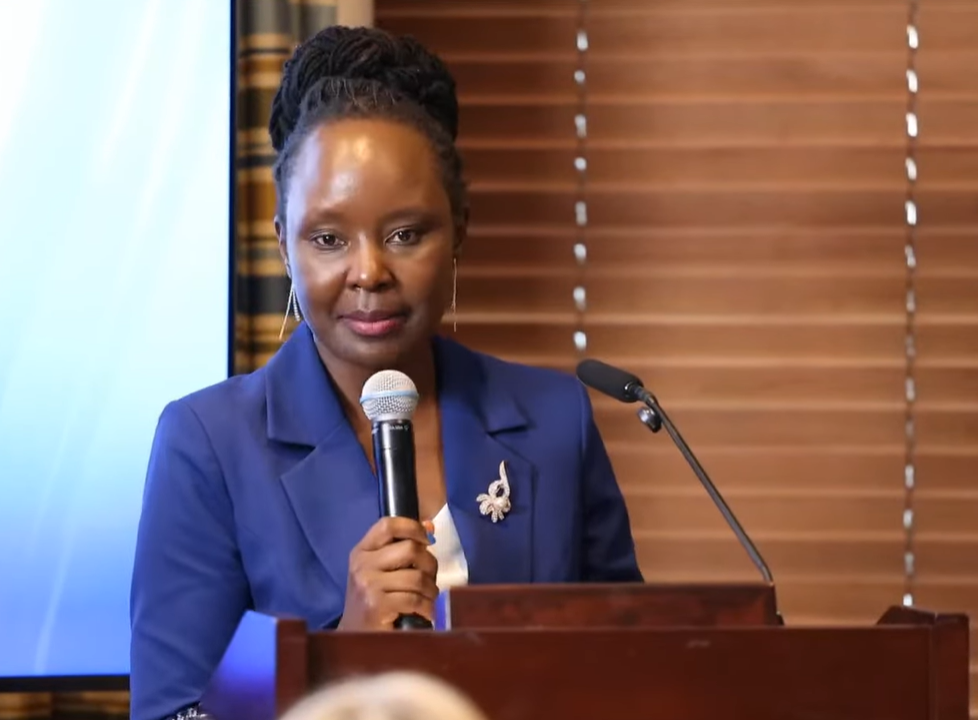
The side event, titled “Roadmap to Self-Reliance: What’s Needed for Sustainable Pharmaceutical Manufacturing in Africa,” was held at the Yale Club of New York City on September 25. It was hosted by the Government of Kenya and the Africa Centres for Disease Control and Prevention (Africa CDC) and moderated by Dr Mercy Korir, CEO and Editor-in-Chief of Willow Health Media. Representatives of the Global Fund, PEPFAR, Unitaid, the French government and several African manufacturers attended.
Kenya used the platform to position itself at the front of the push. Dr Ouma Oluga, Principal Secretary for Medical Services at the Ministry of Health, framed the stakes bluntly: “Health sovereignty, which includes security of commodity availability, which, if you make it simple, is local manufacturing of pharmaceutical products.”
Africa’s dependence on imported medicines was not accidental but the result of decades of policy choices
President William Ruto currently holds the African Union’s mandate as champion for local manufacturing. Reading his speech, Health Cabinet Secretary Aden Duale said Africa’s dependence on imported medicines was not accidental but the result of decades of policy choices, and could therefore be reversed. The speech cautioned that “ambition without architecture produces monuments and not systems.”
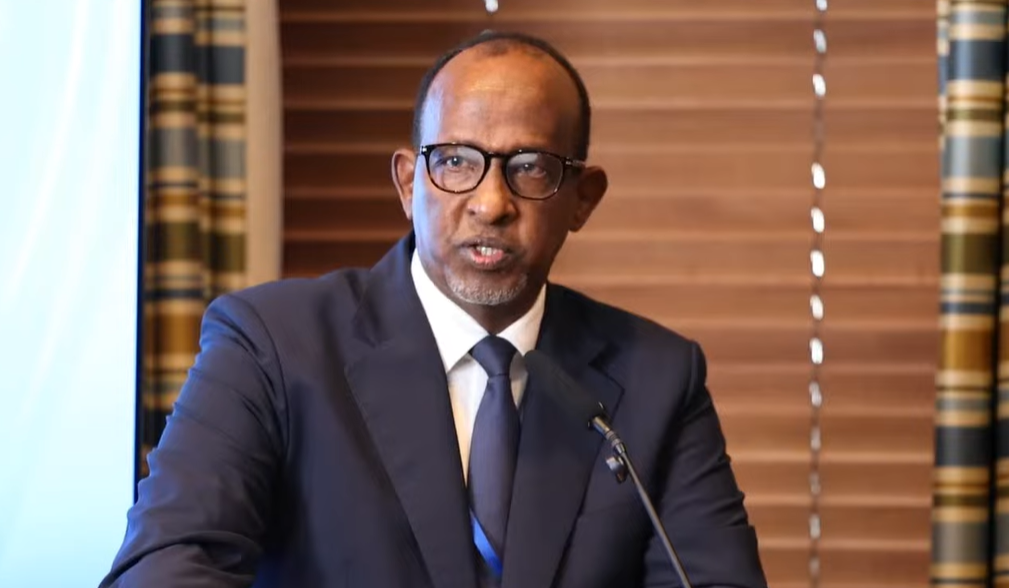
The president noted that Kenya’s Universal Corporation Limited had been selected as one of only three African manufacturers under MSD’s voluntary licensing framework for the new HIV prevention pill. Kenya, he said, is preparing to manufacture it in parallel with ongoing clinical trials, an approach meant to shorten the gap between regulatory approval and patient access.
The speech set out five conditions for the 60 per cent target to become commercially real. The first is regulatory efficiency and harmonisation through the African Medicines Agency (AMA). The second is predictable demand through pooled procurement. The third is patient, long-term financing suited to a development cycle that can run seven to ten years.
The fourth is genuine technology transfer rather than a single product tied to a single production line. The fifth is policy coherence across health, industrial, trade and procurement frameworks. “African manufacturers face a very profound market failure,” the speech said, pointing to firms forced to “seek approval country by country at a very enormous cost and delay.”
You tick the box when you are asked to tick the box. You provide right info when asked for
It urged African heads of state to make binding commitments at the General Assembly rather than aspirational statements, and to produce national implementation plans within 90 days. It called on Africa CDC and AMA to accelerate regulatory harmonisation, development finance institutions to restructure manufacturing-specific financing, and multilateral bodies, including the World Health Organization (WHO), to recalibrate frameworks on licensing, technology transfer and procurement preference.
Speaking afterwards in his own capacity, Duale said Kenya expects to attain WHO Maturity Level 3 regulatory status in November, a process that took 15 years elsewhere on the continent but roughly six months in Kenya. “We call it leadership,” he said. “You tick the box when you are asked to tick the box. You provide the right information when you are asked for. You create a timeline and you work 24/7.”
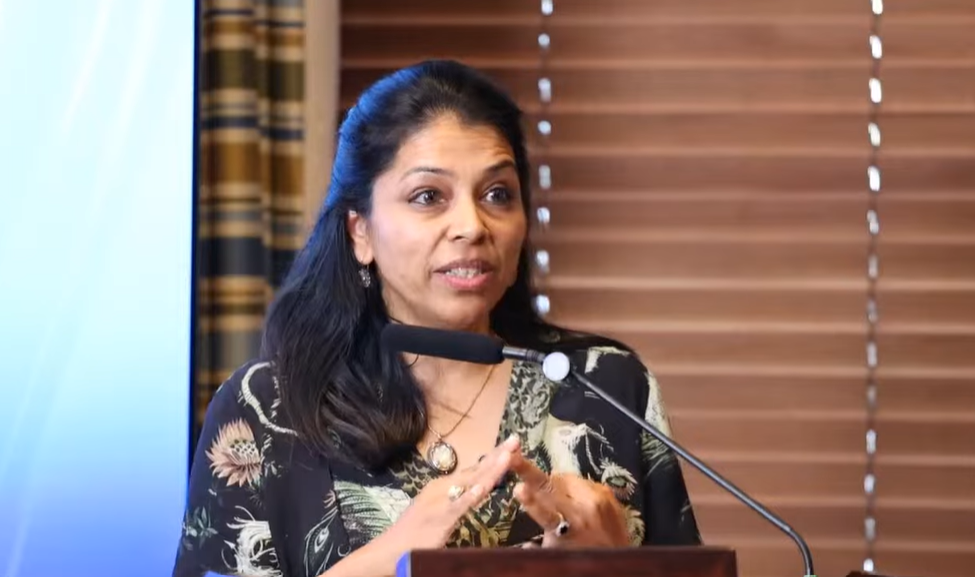
Dr Priya Agrawal, Vice President of Health Equity and Partnerships at MSD (Merck), introduced alimatravir, an investigational once-monthly oral HIV prevention pill in phase three trials. Its target profile, she said, is “four ones”: one pill, once a month, effective within one hour, with a one-week grace period for a missed dose.
MSD chose to license the product to African manufacturers in the same countries running the trials, rather than centralise production abroad. But a licence alone solves little, she cautioned. Handing one over without support is “like you chuck it over the fence and you hope your neighbour deals with it.” African manufacturers need real help to compete with Indian generic producers on cost, quality and reliability.
Africa is home to so many clinical trials, more than 20,000 participants but products are manufactured outside the continent
Dr Jean Kaseya, Director-General of Africa CDC, voiced the continent’s frustration with trials conducted in Africa and products made elsewhere. “My continent is home for so many clinical trials,” he said, noting that more than 20,000 participants across four countries had taken part in trials whose products were then manufactured outside Africa. Africa, he said, was “losing not only money, but we are losing also intelligence and technology.”
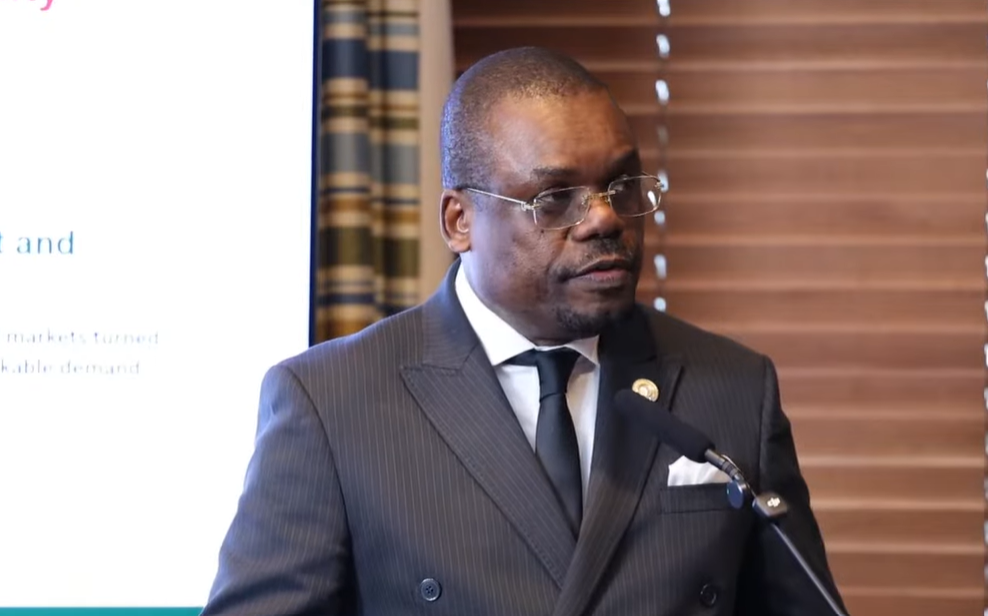
He recalled that the treaty establishing AMA was approved more than five years before the agency became operational, partly because member states took years to grasp that manufacturing needs both a functioning regulator and an aggregated market. He said he had appointed an Africa CDC staff member as AMA’s acting Director-General for eight months to get it moving.
Dr Kaseya confirmed that Africa CDC is investing in the three manufacturers licensed to produce alimatravir. “Africans must start investing in Africa,” he said, citing the Dangote Refinery as proof of what domestic capital can achieve. Local manufacturing, he said, amounted to “the second independence of Africa,” tied to job creation and poverty reduction as much as health security. “We need to procure our own product because we don’t want to see African manufacturers making available product and no one using that,” he added.
Dr Alex Juma Ismail, Technical Lead for Products Evaluation at AMA, representing Director-General Dr Delese Mimi Darko, described the agency’s hub that lets manufacturers engage it before research and development begins. Pressed by Dr Korir on results, he cited Ebola vaccine developers: “Within 11 days one of the manufacturers was able to get the approval to start the trial.”
A plant making tablets to WHO pre-qualification standards needs volume to compete
Dr Raji Tajudeen, Acting Deputy Director-General of Africa CDC, confirmed that pooled procurement is under way. “In May 2026, the first APPM tender actually went out,” he said, referring to the African Pooled Procurement Mechanism. The tender covers ten priority reproductive and child health products, with Namibia and Botswana signed on and Ghana in process.

Dr Anne-Claire Amprou, French Ambassador for Global Health and Chair of the Unitaid Executive Board, said manufacturers need sustainability and predictability. “A plant making tablets to WHO pre-qualification standards needs volume to compete,” she said, noting that Unitaid had invested close to $100 million (Ksh13 billion) to help build that volume. She called for multi-year purchasing commitments for African-made products and for demand to be built ahead of approval. “The Global Fund bought its first African-made first-line HIV treatment in May 2025 from a Kenyan manufacturer,” she said.
Palu Dhanani, CEO of Universal Corporation Limited, welcomed MSD’s licensing decision as unprecedented but warned that a single order is not sustainable, especially as donor funding, still covering roughly 65 per cent of African health budgets, declines. Although Africa carries most of the global HIV and malaria burden, African manufacturers supply under 2 per cent of the continent’s HIV commodities.
Let’s not shy away from the problem that we will be cheaper than imports. It’s not going to be possible. For now.
“We cannot fight Indian manufacturers today because of incentives, both financial and export benefits,” he said, urging governments and the Global Fund to reserve 25 to 30 per cent of procurement for local products where capacity exists. Pooled procurement, he said, had not yet reached his company, though a small tender was understood to be imminent. On price, he was frank: “Let’s not shy away from the problem that we will be cheaper than imports. It’s not going to be possible. At least not in the near future, but given time, yes.”

Ikechukwu Anoke, Co-Founder and CEO of Zuri Health, said the pill “doesn’t just solve a biology problem. It solves a behavioural problem,” cutting dosing from 365 pills a year to 12. Monisha Ashok, Director of Health Investments at the US International Development Finance Corporation (DFC), said investment “has to be commercially sustainable for the manufacturers,” naming regulatory approval and long-term procurement commitments as the main barriers.
Chanel Hall of Africa CDC said the APPM has launched seven tenders, including the maternal and child health tender, where “we were able to reduce prices by 45 per cent.” It has also qualified ninety manufacturers across roughly eighty products, the largest exercise of its kind so far.
Dr Korir closed by noting that the road to self-reliance runs through development, manufacturing, regulation, procurement and scale, and that each stage depends on the others holding.