


Kenya has the policy, the law and the language. What it does not have is a system capable of turning any of it into care for the people who need it most.
Tatiana Gicheru walked into Mathari National Teaching and Referral Hospital in Nairobi with one question: can an ordinary Kenyan access mental health care using Social Health Authority (SHA) cover?
Before leaving home, the reporter had checked online. Technically, SHA covered mental health services. She confirmed her registration by dialling *147#, and set off with cautious optimism. Inside Kenya’s largest public mental health referral facility, that optimism quickly faded.

“I queued. Opened a file. Went to billing. Paid consultation fees of Ksh200 out of pocket even though I expected SHA to cover them. Then I waited. And waited. And waited,” she recalled. “By evening, after nearly five hours, I still had not seen a doctor.”
Speaking at a Sauti Sessions town hall titled Does SHA Cover Mental Health?, Gicheru described a waiting area that included people in handcuffs and others tied to benches alongside patients seeking psychiatric care. “It felt unsafe and triggering. Even for someone who might already be suicidal, that environment could worsen their condition,” she said.
A security guard explained that files were processed on a first-come, first-served basis, but the system was fragile. “Sometimes people go to check file numbers and end up switching them,” Gicheru said. Only three consultation rooms were operational, and each patient spent about 30 minutes with a doctor. By the time her number, 74, was called, the queue had barely reached 50. She left without being seen.
Under SHA, patients are entitled to psychiatric consultations, diagnosis and counselling for depression, anxiety
She was careful, however, to separate the system from the people holding it together. “The doctors and nurses at Mathari are really top notch, especially in the psychiatric department,” she said. “But the administration and systems still need a lot of work.”
Her experience exposed a deeper contradiction at the heart of Kenya’s mental health system: skilled professionals operating within overstretched, inefficient structures that delay care for the patients who can least afford to wait.

Under SHA, patients are entitled to outpatient services including psychiatric consultations, diagnosis, counselling and follow-up care for conditions such as depression, anxiety, bipolar disorder and schizophrenia at accredited facilities. Inpatient care is covered for severe cases requiring admission, including acute psychosis, suicidal risk and manic episodes, primarily at designated psychiatric units or referral hospitals such as Mathari, Kenyatta National Hospital (KNH) and Moi Teaching and Referral Hospital (MTRH).
Emergency stabilisation services are also included for acute mental health crises. Yet shortages of psychiatrists, limited counselling services and inconsistent availability of psychiatric drugs, particularly in rural areas, mean many patients continue to rely on out-of-pocket payments despite SHA coverage. Kenya has one psychiatrist for every 500,000 people, against a recommended ratio of 1:30,000, and allocates less than one per cent of its health budget to mental health, leaving a treatment gap that exceeds 75 per cent of those in need.
The statistics were cold on paper. Then came the human cost.
What ignited my passion for mental health was surviving suicide over 10 or 11 times
When Wanjiru Karanja lifted the microphone at the town hall, the room shifted. She began speaking about death, loneliness and the exhausting work of staying alive.
“I’m 34 now, but this started when I was 20,” she said. “What ignited my passion for mental health was surviving suicide over 10 or 11 times.” For a moment, the auditorium seemed suspended between grief and survival.

Karanja, a global mental health advocate and wellness consultant, has turned years of personal struggle into public advocacy for suicide prevention, emotional wellbeing and access to care. But before the conferences and policy spaces, there was only a young girl trying to survive herself.
She described growing up as a “third culture kid,” born in Kenya, raised partly in the United States, and later living in London, caught between worlds without fully belonging to any. “Being a Kenyan-American kid is very daunting,” she said. “I was having a very hard emotional experience.”
In 2019, at a Burna Boy concert, joy turned abruptly to tragedy. “We got three calls,” she recalled. “One friend had died by suicide, another had harmed himself, and another had died from a heroin overdose.” What hurt most was the response. “People would say these are bad kids. It became very personal to me.”
Kenyans still struggle to seek therapy because of shame, stigma and cultural conditioning
As a pastor’s child, she had grown up under the weight of expectation and silence. “People already expect you to be someone,” she said. In one of her darkest moments, she attempted suicide in Nairobi. “I mixed Coke and bleach,” she said quietly. She survived by chance after meeting a family friend. “My pain became purpose,” she said.
Clinical psychologist Melissa Kioko said many Kenyans still struggle to seek therapy because of shame, stigma and cultural conditioning. “As Africans, we are collectivist,” she explained. “We gather for weddings, celebrations and funerals, but we rarely sit with grief itself.” She argued that many mental health conditions hide behind softer language. “We call it stress when maybe you are anxious. We call it tiredness when maybe it is depression.”

Kioko also spoke from inside the system she is trying to fix, recalling her experience working across multiple government clinics simultaneously. “Even the people working inside the system are overwhelmed,” she said.
The discussion grew deeply personal when audience members shared their own experiences. One described watching his mother struggle with mental illness throughout his childhood while relatives dismissed her as “mad.” Another, a pastor’s child, asked: “How do you forgive someone who caused your trauma and is not sorry?” Kioko’s response was firm. “Reconciliation cannot happen without accountability,” she said.
Speakers throughout the evening repeatedly warned that silence remains one of the biggest barriers to mental healthcare in Kenya, with stigma, cultural expectations and fear of judgement forcing individuals to hide their struggles for years. “Mental health is not just mental illness,” Kioko said. “But too many people are still suffering silently because they do not know where to go, cannot afford help, or are too afraid of being judged.”
Kenya’s outdated mental health laws were once rooted in colonial-era concepts of ‘lunacy’
Former nominated Senator Sylvia Kasanga, who championed the Mental Health Amendment Act of 2022, admitted that her understanding of mental health only began in 2018 while working with young people in Makueni County. “To me, mental health was what people called madness on the streets,” she said.
Through conversations with psychiatrists and young people struggling with substance abuse and trauma, she realised she too had experienced post-traumatic stress disorder. “I got treatment. I healed,” she said. “And I said, if I now understand this thing, then Kenyans must understand it too.”
Kasanga acknowledged progress in reforming Kenya’s outdated mental health laws, which were once rooted in colonial-era concepts of “lunacy,” but warned that implementation remained weak. “The frameworks are there,” she said. “It is now up to us to hold governments accountable.” She credited the young for driving the shift. “They are speaking openly about things our generation never understood.”
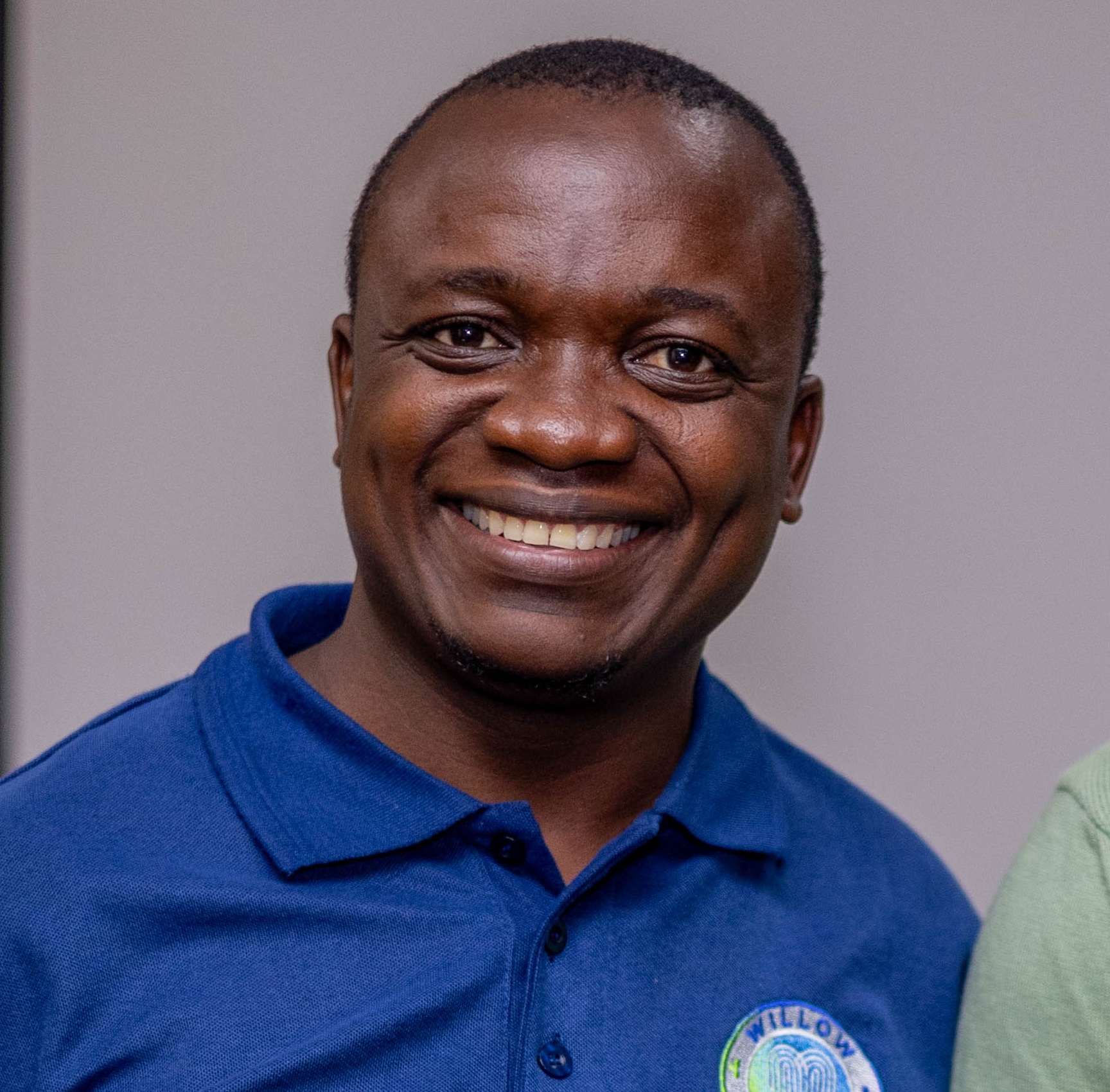
Dr Mercy Korir, Editor-in-Chief of Willow Health Media, argued that one of Kenya’s biggest healthcare challenges is that citizens do not understand how the system is supposed to work. “If you do not know your rights, how do you demand them?” she asked. She urged Kenyans to engage with public healthcare rather than only criticise it from a distance. “We cannot improve a system we do not use.”
In mental health, failure is not abstract. It is personal, immediate, sometimes irreversible
Under SHA reforms, Level Two and Level Three facilities are expected to provide preventive and primary mental healthcare before referring severe cases to specialised institutions. But Dr Korir acknowledged that mental healthcare remains severely underfunded. “How do you expect the system to work properly when preventive care itself is underfunded?”
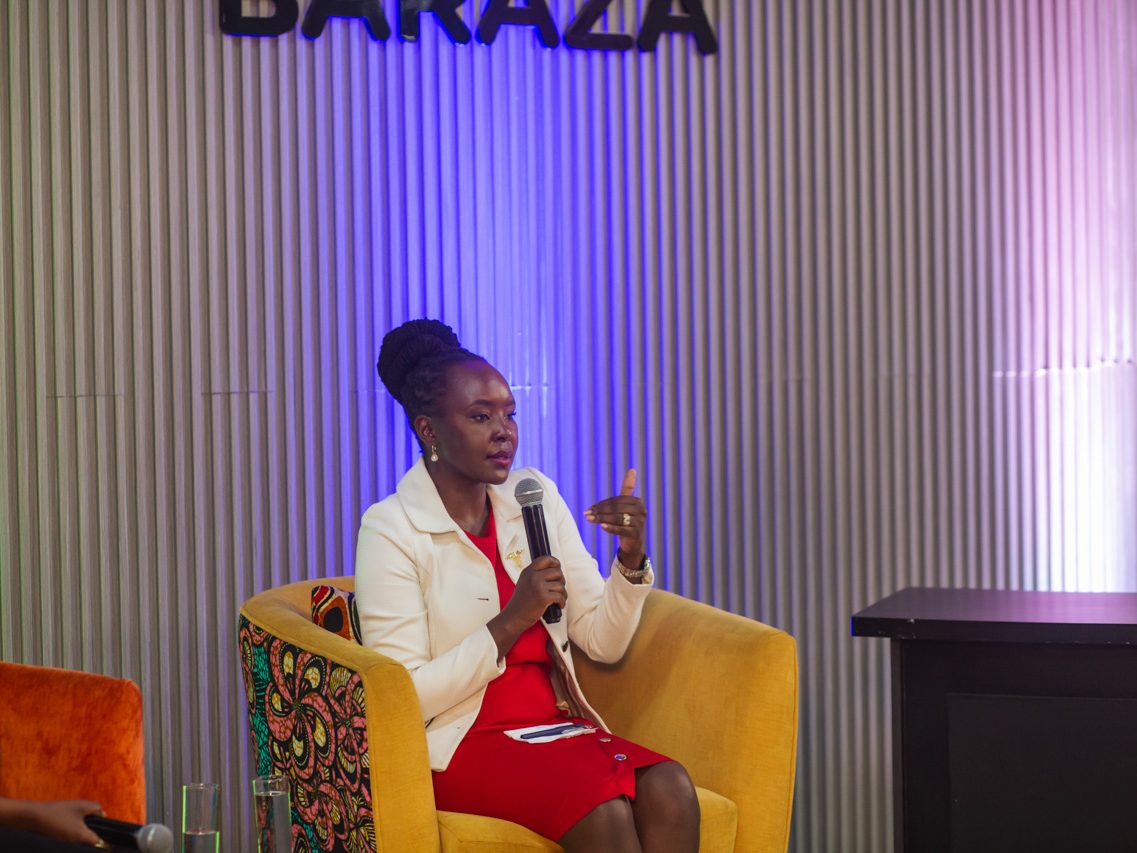
She described the structural tension precisely. “A patient hears ‘mental health is covered,’ but arrives at a facility where the interpretation is different. One desk says yes, another says no. One service is included, another is excluded. And the patient is left to navigate a system that was never designed to be navigated alone.”
In mental health specifically, she said, that uncertainty becomes a barrier of its own. “If someone is already in distress, the worst outcome is not just denial of service. It is delayed care because the system is unclear.”
Dr Korir did not dismiss the reforms. “We are not where we were ten years ago. There is expansion. There is digitisation. There is policy intent. That must be recognised.” But intent, she said, is not enough. “A system can only be judged at the point where the patient meets it. That is where policy becomes real or irrelevant.”
Her final warning was blunt. “In mental health, failure is not abstract. It is personal. It is immediate. And sometimes, it is irreversible.”