


Armed conflict and the displacement of over a million people are fueling the crisis, while some communities believe the outbreak is fabricated by foreign forces. With limited access to vaccines, contact tracing, and treatment, the virus spreads through lies and dangerous beliefs.
The World Health Organization has warned that the rapidly expanding Ebola outbreak in eastern Democratic Republic of Congo (DRC) remains ahead of containment efforts, with health officials citing a dangerous combination of insecurity, population displacement, community mistrust, weak surveillance systems, and the absence of approved vaccines and treatments.
Speaking after a visit to the outbreak epicentre in Ituri Province, WHO Director-General Dr Tedros Adhanom Ghebreyesus said the response was beginning to gain momentum but acknowledged that health authorities are still racing to catch up with a virus that spread undetected for weeks, and possibly months, before it was officially identified.
“The outbreak had a big head start, and we’re still behind, but under the leadership of the government of DRC, we’re catching up,” Dr Tedros said during a WHO press briefing.
WHO has reported 344 confirmed Ebola cases and 60 confirmed deaths across 24 health zones in Ituri, North Kivu, and South Kivu provinces. Uganda has recorded 15 confirmed cases and one death. Health authorities are also investigating the movement of a Congolese resident who travelled through the United Arab Emirates before entering Uganda, with contact tracing ongoing in collaboration with authorities in both countries.
One of the most urgent priorities identified by WHO is expanding diagnostic capacity. Dr Tedros said faster testing is critical for identifying cases, isolating patients, and interrupting chains of transmission. “One of our key priorities is to scale up laboratory and diagnostic capacity to reduce delays in case confirmation and support faster response decisions,” he said.
Significant progress has been made in clearing a backlog of suspected cases
WHO is decentralising laboratory services to priority locations, including Mongbwalu, Beni, Aru, Nyakunde, and Tchomia, to shorten turnaround times and bring testing closer to affected communities. WHO’s Director of Health Emergency Alert and Response Operations, Dr Abdirahman Mahmoud, said significant progress has been made in clearing a backlog of suspected cases. “The laboratory has done 1,445 tests that cleared almost all the backlog we had,” he said. Five laboratories are expected to be operational by early next week, allowing authorities to process as many as 1,000 tests per day.

WHO Incident Manager Dr Marie-Roseline Bélizaire reported that 2,000 Ebola test kits have been deployed to Bunia, while a mobile laboratory has been established in Mongbwalu, one of the outbreak hotspots.
While testing capacity is improving, WHO officials expressed serious concern about contact tracing, one of the most critical tools for controlling Ebola outbreaks. Only about 45 per cent of identified contacts are currently being monitored. “To get ahead of the outbreak, we need to get that number up to above 90 per cent,” Dr Tedros said.
WHO Regional Director for Africa, Dr Mohamed Yakub Janabi, said tracing efforts are improving but remain far below the required level. “We started at 20 per cent. Now we’re at 45 per cent,” Janabi said. “Our target is to reach 95 per cent.” He added that ongoing conflict and instability continue to undermine surveillance activities in affected communities.
The challenge is made worse by active armed conflict, population movement, and displacement. The violence has forced nearly one million people from their homes, with more than 100,000 newly displaced in recent months alone. The constant movement of people makes it more difficult to identify cases, monitor contacts, and maintain treatment continuity. “Insecurity, displacement and mobile populations make contact tracing especially difficult,” Dr Tedros noted.
Some community leaders believe Ebola is not real, others attribute it to poisoning or external interference
Beyond logistical challenges, WHO officials repeatedly returned to what they described as one of the most serious threats to containment: community mistrust. During his visit to eastern DRC, Dr Tedros encountered widespread scepticism about the outbreak itself. “Some community leaders told me that they believe Ebola is not real,” he said. Others attributed illnesses to poisoning or external interference. “When we spoke to communities, they told us that Ebola is not real. It doesn’t exist. This is something that’s being fabricated by foreign forces,” he said.
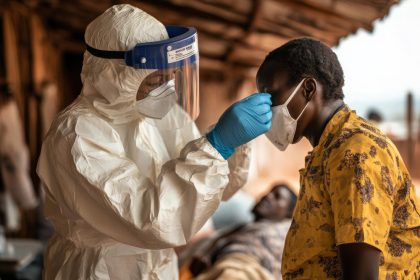
The scepticism has made people reluctant to seek care, report symptoms, or cooperate with response teams. “Building trust with the communities is therefore critical to bringing the outbreak under control,” Dr Tedros said.
Dr Mahmoud said WHO has deliberately placed communities at the centre of its response strategy. “What is critically different in this response is starting with the community because we know very well it is community ownership and leadership,” he said.
WHO’s Humanitarian Operations lead, Dr Teresa Zakaria, argued that trust cannot be built through Ebola interventions alone, given the broader suffering across the three affected provinces. More than 50 humanitarian health partners, most of them Congolese organisations, are currently supporting nearly 500 health facilities across the affected area.
A major complication is that the outbreak is caused by the rare Bundibugyo species of Ebola, for which no approved vaccine or treatment currently exists. “As you know, we’re fighting this outbreak without vaccines or therapeutics,” Dr Tedros said. The Bundibugyo species has caused only two previous outbreaks since it was first identified in 2007, limiting opportunities for vaccine development and clinical research.
Most promising treatments support the body’s immune system in fighting the Ebola virus
Nevertheless, WHO says research is advancing rapidly. Dr Vasee Moorthy, who leads WHO’s Research and Development Blueprint programme, said three vaccine candidates are under development, including candidates from Oxford University and the Serum Institute of India, Moderna, and IAVI. “We’re looking at two to three months before the vaccine doses could be available for clinical trial,” Moorthy said.

Clinical trials for potential treatments are also being integrated into outbreak operations. The most promising treatments under study are MBP134, which supports the body’s immune system in fighting the virus, and the antiviral drug Remdesivir. Moorthy also highlighted a potentially significant development: the possible use of an oral antiviral drug known as obeldesivir for people exposed to Ebola through contact tracing. “We haven’t had this before in any previous outbreaks,” he said.
Even as the response expands, funding remains far below what is needed. At the start of the outbreak, Dr Tedros authorised the release of $3.9 million (Ksh505 million) from WHO’s Contingency Fund for Emergencies. But WHO Executive Director for Health Emergencies Dr Chikwe Ihekweazu said the scale of the crisis now requires substantially greater investment. “We estimate our costs, our needs for the initial three months of the outbreak to be $115 million (Ksh14.9 billion),” he said. Only 35 per cent of that amount has so far been secured.
The crisis has also been complicated by blanket travel restrictions imposed by some countries, which Dr Tedros argued are hindering rather than helping response efforts. “Blanket travel restrictions imposed by some countries are disrupting supply chains and hindering the response,” he said. WHO is recommending targeted screening measures at airports, ports, and border crossings instead.
Emergency teams deployed, simulations conducted, protective equipment pre-positioned, contingency plans updated
On the United States’ plans to establish a quarantine and early treatment facility in Kenya for Americans potentially exposed during the outbreak, Dr Tedros acknowledged close cooperation with US authorities without endorsing or criticising the proposal. “We’re working with the U.S. We collaborate at all levels,” he said. “They’re supporting financially, and I know they will increase their support.”
Preparedness efforts have been intensified across ten high-risk African countries, with emergency teams deployed, simulation exercises conducted, protective equipment pre-positioned, and contingency plans updated.
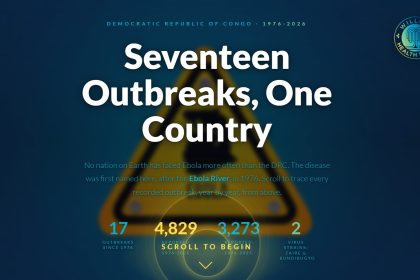
Despite the daunting challenges, Dr Tedros insisted the outbreak can be stopped. “The government of DRC has extensive experience with Ebola and has stopped 16 previous outbreaks,” he said. “It’s just a matter of how quickly we can do it.” But he argued that ending transmission should not be the only goal. “The real measure of success is what we do to prevent the 18th outbreak and the 19th.”
Ihekweazu, speaking from Bunia, offered a note of cautious optimism. “There is a response growing. There is energy growing. There is hope growing. And I am confident that with all of this together, we will get on top of this.”